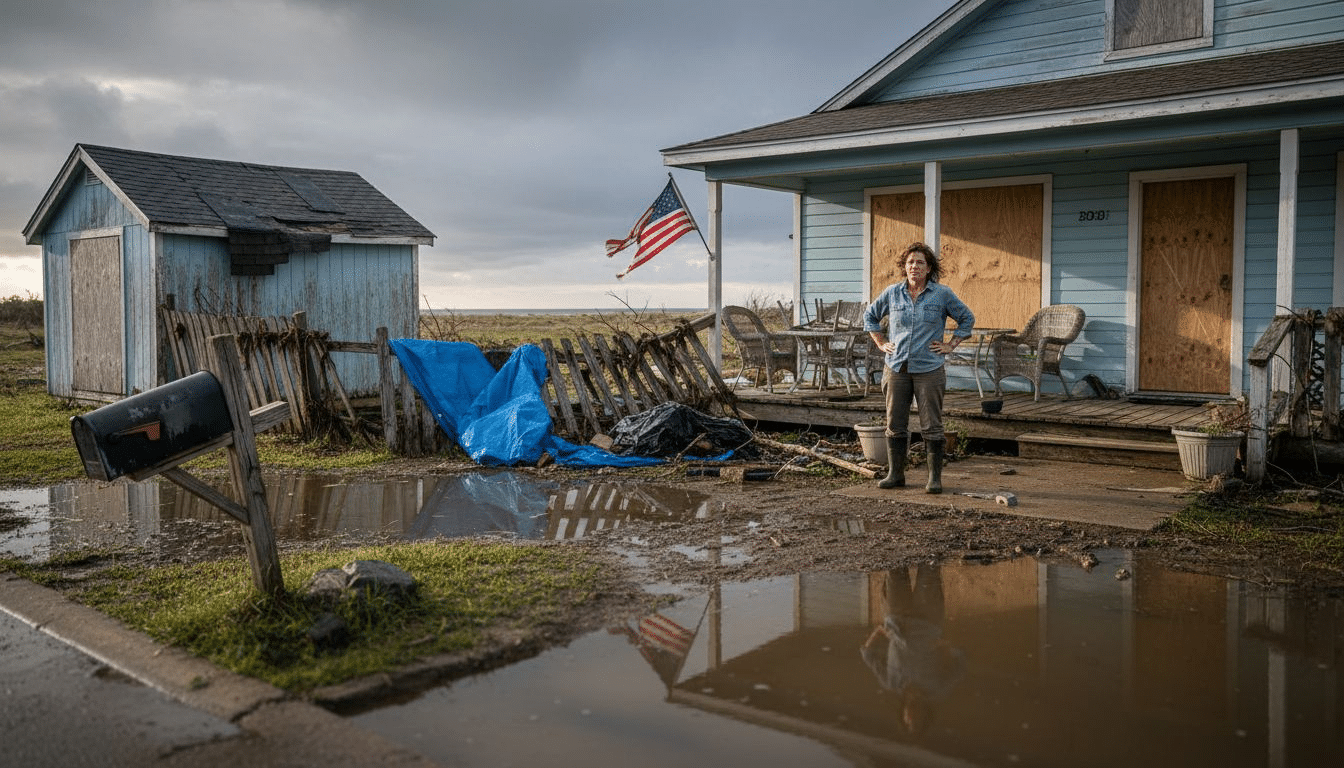
Waking up after a storm in Coastal Texas, especially in Corpus Christi or San Antonio, means confronting missing shingles, damaged siding, and broken windows that threaten your family’s comfort and safety. Restoring your home goes beyond quick fixes. It matters because repairs must meet windborne debris protection standards and secure exterior elements to safeguard against future storms. Here you will find guidance to help you achieve code-compliant repairs that reinforce your property and prevent hidden risks.
Table of Contents
- Storm Damage Repair Defined for Texas Homes
- Types of Storm Damage Affecting Roofs and Exteriors
- How Repair Prevents Further Property Loss
- Hidden Risks and Delayed Damage from Storms
- Financial Implications and Insurance Concerns
Key Takeaways
| Point | Details |
|---|---|
| Importance of Compliance | Storm damage repairs in Texas must meet current building standards to ensure homes are safer and more resilient against future storms. |
| Hidden Damage Risks | The potential for hidden damage is significant; prompt inspection and repair are crucial to prevent secondary issues such as mold and structural decay. |
| Financial Preparedness | Understanding your insurance coverage, including deductibles and depreciation, is vital to avoid unexpected out-of-pocket costs when making claims. |
| Timely Action | Quick documentation and repair after storm damage can significantly reduce total repair costs and protect your insurance claims from delays or denials. |
Storm Damage Repair Defined for Texas Homes
Storm damage repair in Texas means restoring your home after windstorms, hail, or other severe weather while bringing it up to current building standards. It’s not just about fixing what broke—it’s about making your home stronger and safer for the next storm.
In coastal Texas, especially around Corpus Christi, your repairs must comply with updated building codes that emphasize windborne debris protection and secure fastening of exterior elements. The Texas Department of Insurance outlines specific windstorm requirements that focus on reinforcing homes to withstand future storms, not merely restoring them to pre-damage conditions.
What Storm Damage Repair Actually Includes
Proper storm damage repair involves three main phases:
- Assessment and documentation of all visible and hidden damage from wind, hail, or debris impact
- Debris removal and securing your home from further weather exposure
- Permanent restoration that meets current Texas and International Building Codes (IRC and IBC)
Each phase matters. Skipping any step leaves your home vulnerable to additional damage and potential code violations.
The process starts with safety. Cleanup involves removing debris safely using protective equipment and systematic approaches to restore your home’s basic functions and structural integrity.
Your roof often takes the first hit during storms. Damaged shingles, missing flashing, or compromised decking expose your interior to water infiltration. Siding damage can seem minor—a few dents here, a cracked panel there—but gaps allow moisture into walls, risking mold and structural rot.
Windows and doors require careful attention. Storm-damaged seals let wind and water penetrate deeper into your home, affecting insulation and foundation stability over time.
Why Texas Coastal Codes Matter
Coastal Texas homes face unique pressures. Your repair work must address wind resistance and water intrusion prevention, not just cosmetic restoration. This means upgraded fastening systems, reinforced framing connections, and materials rated for high-wind zones.
These aren’t optional upgrades—they’re code requirements in areas classified for significant windstorm risk. Meeting these standards protects your investment and significantly reduces damage during the next storm.
Storm damage repair in Texas means restoring your home to code-compliant standards that actually prevent future damage, not just fixing what’s broken today.
Pro tip: Document all damage with photos and videos before cleanup begins, and request that your contractor identify all repairs required to meet current Texas Building Code standards—this prevents costly omissions that inspectors catch later.
Types of Storm Damage Affecting Roofs and Exteriors
Storms hit your home in multiple ways, and understanding the specific damage types helps you know what to look for after severe weather strikes. Roofs and exterior walls take the brunt of wind and hail, leaving visible and hidden damage that affects your home’s weatherproofing.
Roof Damage from Storms
Your roof is your first line of defense, which is why storms often target it first. Lifted shingles, broken tiles, and missing materials expose the decking underneath, allowing water infiltration that spreads throughout your home’s interior.
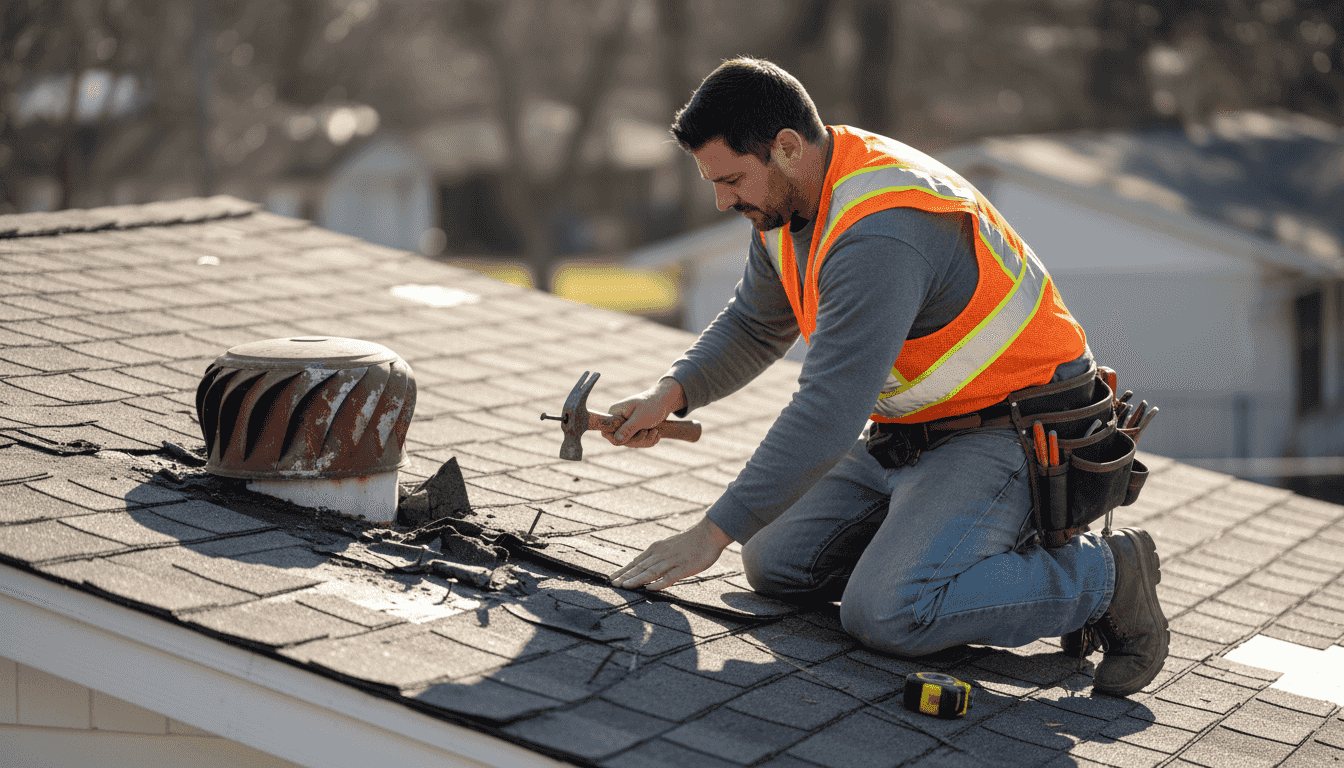
Hail creates dimpling or punctures on asphalt shingles. These impact marks seem small at first, but they compromise the protective granule coating and lead to accelerated deterioration within months. Metal roofing dents under hail impact, while tile roofs crack or shatter completely.
Flashing damage—where the roof meets walls, chimneys, or valleys—creates gaps that funnel water directly into attics and walls. Displaced or bent flashing is one of the most common causes of hidden water damage in Coastal Texas homes.
Wind-driven pressure can physically lift entire roof sections if fastening systems fail. The Texas Department of Insurance emphasizes that roof fastening systems must meet updated impact-resistant standards to prevent this catastrophic failure.
Siding and Wall Damage
Your home’s siding protects the wooden framing underneath. Storm damage to siding includes:
- Punctures and tears from windborne debris like branches or roof material
- Dents and cracks that crack the protective surface layer
- Lifted or displaced panels that expose the house wrap and insulation
- Corner damage where wind pressure concentrates its force
Small gaps in siding let moisture creep behind the walls, where it damages framing, insulation, and promotes mold growth. This hidden damage often costs more to fix than the visible siding replacement.
Window and Door Failure
Windows represent your home’s weak points during storms. Glass breaks under pressure or from windborne debris impact, creating openings that allow wind and rain directly into your home’s interior.
Once windows fail, interior pressure builds, potentially pushing walls outward. Doors warp, seals crack, and frames shift, compromising structural integrity.
Storm damage spreads beyond what you initially see—hidden damage in walls and under roofing often costs as much as visible repairs combined.
Pro tip: After any significant storm, climb safely onto your roof or use binoculars to inspect for lifted shingles, missing flashing, or visible impact damage before water infiltration compounds the problem.
How Repair Prevents Further Property Loss
Delaying storm damage repair is expensive. Every day your roof leaks or windows remain broken, secondary damage spreads deeper into your home’s structure. Water infiltration, mold growth, and pest entry compound the original damage exponentially.
The Water Damage Cascade
Water is relentless. A small roof leak seems manageable until it reaches your attic insulation, drywall, and framing. Within weeks, hidden moisture promotes mold growth that spreads through walls and air ducts, affecting your family’s health and requiring expensive remediation.
Timely protective repairs like board-ups and tarps stop this cascade immediately. They create a temporary barrier while you arrange permanent repairs, preventing thousands of dollars in secondary water damage.
Water also destabilizes foundations. Moisture seeping into crawl spaces or basements weakens soil, causing settling and structural shifts. These problems compound over months, turning a repairable roof issue into a major foundation problem.
Mold and Health Risks
Mold thrives in damp environments created by unrepaired storm damage. Prompt cleaning and drying prevent mold colonization that would otherwise require professional remediation costing thousands.
Mold spreads through:
- Damp insulation and building materials
- Air circulation through walls and ducts
- Porous surfaces like drywall and wood framing
- Crawl spaces and attics with poor ventilation
Once mold establishes itself, removal becomes invasive and expensive. Prevention through immediate repair is dramatically cheaper and healthier.
Pest Infestation and Structural Decay
Open gaps in siding, broken windows, and compromised roofing invite rodents, insects, and birds into your home. These pests nest in insulation, chew electrical wiring, and damage structural components.
Wood-boring insects like carpenter ants and termites accelerate decay in moisture-damaged framing. What started as repairable storm damage becomes structural failure requiring replacement of major components.
Insurance and Liability Concerns
Your homeowners insurance covers storm damage, but it doesn’t cover damage that results from negligent delay. If you ignore repair needs and secondary damage occurs, your insurer may deny claims for the expanded damage.
Documenting damage immediately and making necessary repairs protects your coverage and prevents out-of-pocket costs for damage you could have prevented.
Repairing storm damage within days costs a fraction of repairing the secondary damage that develops over weeks and months.
Pro tip: Call a contractor within 48 hours of storm damage to arrange temporary protective measures, then schedule permanent repairs—this protects your insurance coverage and prevents secondary damage that significantly increases total repair costs.
Hidden Risks and Delayed Damage from Storms
The damage you see after a storm is only part of the problem. Hidden risks lurk behind walls, under roofing, and within structural systems—damage that develops over weeks or months if left unaddressed. These invisible threats often cost more to fix than the initial visible damage.
Moisture Intrusion and Structural Weakening
Water entering through small cracks or lifted shingles travels deeper into your home’s structure than you realize. Moisture intrusion leading to mold and fastener deterioration weakens roofing components and attachment systems over time.
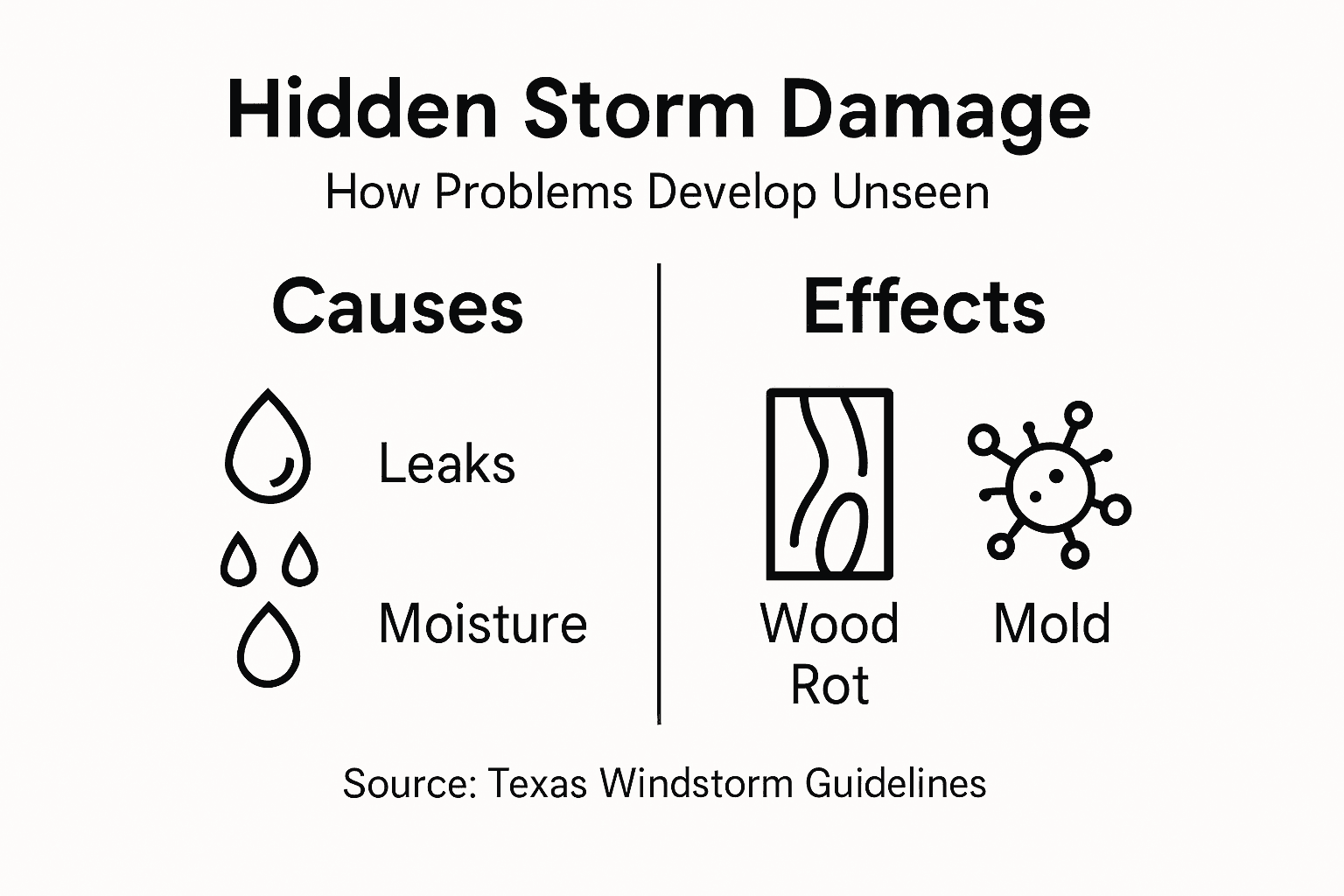
Once moisture reaches framing lumber, it begins rotting wood fibers. This weakening happens silently—you won’t see it for months. By the time visible signs appear (sagging, soft spots), structural damage is severe and expensive to repair.
Attic insulation absorbs moisture like a sponge. Wet insulation loses its thermal value, reduces energy efficiency, and promotes mold colonization throughout your attic space.
Latent Damage You Can’t See Immediately
Storms often cause damage that doesn’t reveal itself for weeks. Roof decking underneath shingles may crack without visible surface damage. Fasteners corrode slowly, gradually loosening over time until another storm causes catastrophic failure.
Hidden structural compromises may require detailed inspections to uncover and monitoring to fully assess. Professional inspectors use thermal imaging, moisture meters, and systematic assessment techniques to detect what your eyes cannot.
Framing connections weaken as fasteners rust or pull loose. What seemed like minor damage becomes major failure when wind pressure tests these compromised connections.
Building System Failures
Storm damage cascades through interconnected systems:
- Roof leaks compromise attic ventilation and insulation
- Damaged gutters prevent water drainage, causing foundation issues
- Compromised siding allows moisture into wall cavities
- Deteriorating seals around windows and doors reduce thermal efficiency
- Weakened fasteners gradually fail under normal wind pressure
Each system depends on others functioning properly. Ignoring one problem triggers failure in connected systems, multiplying repair costs exponentially.
The Timeline of Hidden Damage
Damage doesn’t happen all at once after initial storm impact. Secondary failures develop gradually. Mold takes weeks to establish. Wood rot accelerates as moisture persists. Pest infestation increases as gaps widen.
By the time homeowners notice problems, damage has spread far beyond the original impact zone. What could have been repaired for thousands now costs tens of thousands.
Here’s a comparison of visible vs. hidden storm damage risks for Texas homes:
| Damage Type | How It’s Detected | Typical Consequence | Professional Inspection Needed |
|---|---|---|---|
| Roof Leaks | Water stains, visible leaks | Mold, structural rot | Sometimes |
| Hidden Moisture | No obvious signs | Wood rot, insulation loss | Always |
| Siding Gaps | Warping, misalignment | Pest entry, mold growth | Sometimes |
| Fastener Failure | Not visible until failure | Roof blow-off | Always |
| Window Seal Loss | Drafts, fogged glass | Energy loss, water entry | Sometimes |
Hidden storm damage spreads silently through your home’s structure—catching it early requires professional inspection, not just visual assessment.
Pro tip: Schedule a professional inspection within one week of any significant storm, using a contractor experienced with hidden damage detection, to identify latent problems before they compound into major structural failures.
Financial Implications and Insurance Concerns
Storm damage repair costs add up fast, and understanding your insurance coverage before disaster strikes makes a critical difference. Without proper documentation and timely action, you could face significant out-of-pocket expenses that should have been covered.
Understanding Your Coverage and Deductibles
Your homeowners insurance policy covers storm damage, but coverage limits and deductibles vary widely. A typical policy might carry a 1% or 2% deductible on your home’s value—meaning a $300,000 home could have a $3,000 to $6,000 deductible you pay before insurance kicks in.
Filing claims requires understanding policy coverage, timely reporting, and accurate documentation of all losses. Many homeowners underestimate total damage, missing items that should be claimed.
Depreciation affects payouts significantly. Insurance companies may subtract depreciation from replacement costs, especially on older roofs and siding. A 20-year-old roof might receive only partial replacement value, leaving you responsible for the gap.
The Windstorm Certification Requirement
Coastal Texas homeowners face a unique requirement: windstorm certification. Windstorm certification verifies compliance with building codes designed to reduce risk, which impacts insurance eligibility and claims handling.
Homes not meeting current building code standards may be uninsurable through regular carriers or face significant surcharges. Repairs that bring your home up to code during storm damage restoration improve your insurability for future coverage.
The Texas Windstorm Insurance Association (TWIA) serves as the insurer of last resort for coastal properties. TWIA policies typically cost more and offer less coverage than private insurers, making code compliance essential.
Claim Process Challenges
Insurance claims for storm damage involve several critical steps:
- Document all damage with photos and videos before cleanup
- Report claims promptly to avoid coverage delays
- Cooperate fully with insurance adjusters during assessment
- Request itemized estimates from contractors
- Address discrepancies between adjuster estimates and contractor bids
- Protect your property against further damage during the claim process
Delays in the claims process extend your financial exposure. The longer repairs wait, the more secondary damage develops, increasing total costs and potentially exceeding coverage limits.
Out-of-Pocket Costs You May Not Anticipate
Beyond deductibles, homeowners often face unexpected expenses. Temporary protective measures (tarping, boarding up) are sometimes not covered. Code-upgrade costs—the expense of meeting updated building codes—may exceed your policy’s coverage.
Your contractor may discover additional damage during repairs not visible during the initial inspection. These “hidden damage” repairs may not be pre-approved by your insurer, creating billing disputes.
Below is a summary of storm damage insurance factors to consider for Texas homeowners:
| Insurance Factor | What It Means | Impact on Homeowner |
|---|---|---|
| Deductible Amount | Portion you pay out-of-pocket | Affects claim affordability |
| Code Upgrade Coverage | Pays for new code compliance | May avoid extra expenses |
| Depreciation Policy | Reduces payout for old items | Higher replacement costs |
| Windstorm Certification | Verifies code compliance | Required for most coverage |
| Claim Filing Timeline | How soon you must report | Delays risk denied claims |
Proper documentation and prompt action protect your insurance claim, reducing the financial burden of storm damage repairs on your family.
Pro tip: Take detailed photos of damage immediately after a storm, file your claim within 24 hours, and provide your contractor with a copy of your policy limits so they can identify potential coverage gaps before work begins.
Protect Your Coastal Texas Home with Trusted Storm Damage Repair Solutions
Severe weather can leave lasting hidden damage that threatens your home’s safety and value. From lifted shingles to compromised siding and window seals, immediate and code-compliant repairs are critical to prevent costly water infiltration, mold growth, and structural failure. At Buffalo Roofing & Exteriors, we specialize in durable storm damage restoration that meets Texas coastal building codes to protect your home against future storms.
We understand the urgency of restoring your roof, siding, and windows to withstand windborne debris and intense weather. With quick estimates, reliable repairs, and comprehensive exterior services, our team helps you safeguard what matters most. Learn more about our expert roofing solutions in the Roofing Archives | Buffalo Roofing & Exteriors and discover how thorough repairs can halt hidden damage by visiting our Repairs Archives | Buffalo Roofing & Exteriors.
Don’t wait until hidden moisture and structural issues escalate. Trust Buffalo Roofing & Exteriors to provide prompt, high-quality storm damage repair with warranties and financing options designed for Coastal Texas homeowners. Get your free quote today at https://buffaloroofingandexteriors.com/ and protect your home against the next storm.
Frequently Asked Questions
What is involved in storm damage repair for homes?
Proper storm damage repair includes assessing and documenting damage, removing debris and making the home secure, and restoring the home according to the latest building codes to prevent future damage.
Why are updated building codes important for storm damage repair?
Updated building codes are crucial because they ensure that repairs enhance the structural integrity of the home, improving wind resistance and preventing water intrusion, thus protecting against future storms.
How can I identify hidden storm damage after severe weather?
Hidden storm damage may not be visible right away. It’s essential to conduct a thorough inspection, checking for leaks, mold, and compromised structural components, or consider hiring a professional inspector to identify latent issues.
What steps should I take immediately after a storm to minimize damage?
Immediately after a storm, document the damage with photos and videos, secure your property with protective measures like tarps or boards, and contact a contractor to arrange for repairs within 48 hours to prevent secondary damage.
Recommended
- Damaged Siding Replacement – Protecting Coastal Texas Homes
- Storm Damage Restoration Explained: Texas Essentials
- Storm Damage Restoration Guide for Complete Recovery
- How We Protect Your Deck from Hurricanes and Tropical Storms | Buffalo Roofing & Exteriors | San Antonio to Corpus Christi, TX
- Storm Damage Insurance Claims—What Atlanta Homeowners Must Know
- Roofing Company Corpus Christi TX
- Roofing Company San Antonio TX
- Roofing Company Victoria TX