


TL;DR:
- Window U-value indicates how much heat escapes through a window, with lower numbers providing better insulation. The whole-window Uw considers glass, frame, and edge effects and is essential for accurate performance assessment. Upgrading to windows with low Uw and proper installation improves energy efficiency, especially when combined with good building insulation.
Window U-value is the rate at which heat passes through a window, measured in watts per square meter per degree Kelvin (W/m²K). The lower the number, the better the window holds heat inside your home. Single-pane windows carry a U-value around 5.5 W/m²K, while modern triple glazing reaches as low as 0.8 W/m²K. That gap translates directly into your heating and cooling bills. Understanding this number is the single most useful thing you can do before buying replacement windows or planning an exterior renovation.
What is window U-value and how is it measured?
Window U-value, known in the building industry as thermal transmittance, tells you exactly how much heat escapes through a window per square meter for every degree of temperature difference between inside and outside. The unit is W/m²K. A lower number means less heat loss and better insulation.
The calculation follows a straightforward formula: divide the rate of heat transfer by the product of the window area and the temperature difference across it. In practice, manufacturers measure this in certified labs under controlled conditions, so the numbers on a spec sheet are standardized and comparable.
In North America, you will often see the term “U-factor” instead of U-value. These measure the same thing, but U-factor uses imperial units (Btu/h·ft²·°F). To convert, multiply U-factor by 5.678 to get U-value in W/m²K. A U-factor of 0.20 equals roughly 1.14 W/m²K. Knowing this conversion prevents confusion when comparing American and European window specs.
There are also three distinct U-value measurements you need to know:
- Ug (center-glass U-value): Measures heat loss through the glass only, ignoring the frame. This is the number manufacturers most often advertise.
- Uf (frame U-value): Measures heat loss through the frame material alone. Frame U-values range from 0.9 to 3.0 W/m²K depending on the material used.
- Uw (whole-window U-value): A weighted average of glass, frame, and edge effects. This is the number that reflects real-world performance.
Pro Tip: Always ask for the Uw value, not just the Ug. A window advertised with a Ug of 0.6 can still have a Uw above 1.4 once the frame is factored in.
What factors affect window U-value?
The whole-window U-value is a product of several components working together. Improving any one of them moves the number in the right direction, but no single component tells the full story.
Glass type is the most obvious factor:
- Single-pane glass: approximately 5.5 W/m²K. Almost no insulation value by modern standards.
- Double-pane glass: typically 1.2–2.8 W/m²K depending on gas fill and coatings.
- Triple-pane glass: can reach 0.5–0.8 W/m²K, the standard for Passive House construction.
Low-emissivity (Low-E) coatings on the glass surface reflect radiant heat back into the room. Argon or krypton gas fills between panes slow conductive heat transfer. Both improvements lower the Ug without changing the glass thickness.
Frame material has a bigger impact than most homeowners expect. Vinyl (PVC) frames insulate well, with frame U-values around 1.3–2.0 W/m²K. Wood frames perform similarly. Standard aluminum frames conduct heat rapidly, pushing frame U-values above 3.0 W/m²K. Thermally broken aluminum frames interrupt that conduction path with a plastic insert, bringing frame U-values down to roughly 1.5–2.0 W/m²K. For a deeper look at how frame choices affect your home’s energy performance, see this guide on window frame materials.
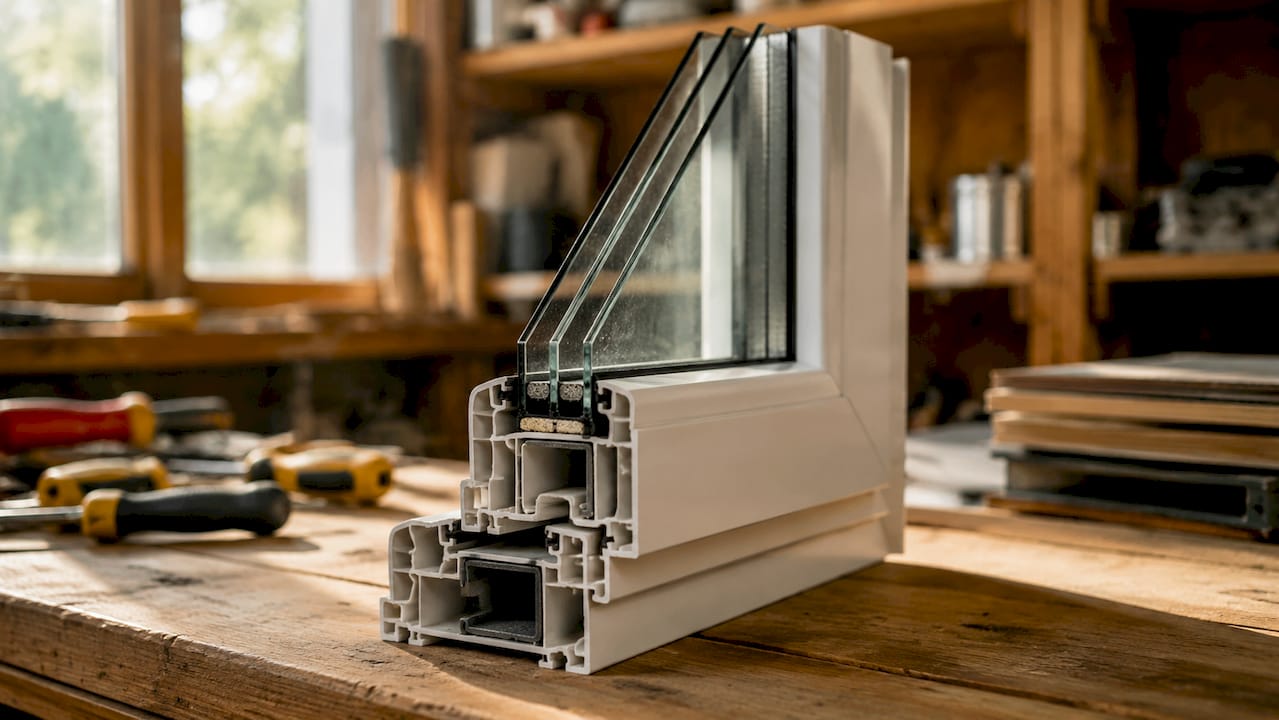
Spacers hold the panes apart at the edges. Traditional aluminum spacers create a thermal bridge right where the glass meets the frame. Warm edge spacers made from stainless steel or composite materials reduce that bridging and improve the Uw by approximately 0.1 W/m²K. That improvement can be the difference between meeting a building code and falling short.
Installation quality is the factor that spec sheets cannot capture. Real-world performance depends on airtightness around the window frame. Gaps in the sealant or foam backing allow air infiltration that bypasses the window’s insulation entirely. A 0.8 W/m²K window installed poorly can perform worse than a 1.4 W/m²K window installed correctly.
Pro Tip: Request third-party certification from NFRC (National Fenestration Rating Council) when buying windows in the United States. NFRC labels show the whole-window Uw, not just the center-glass value.
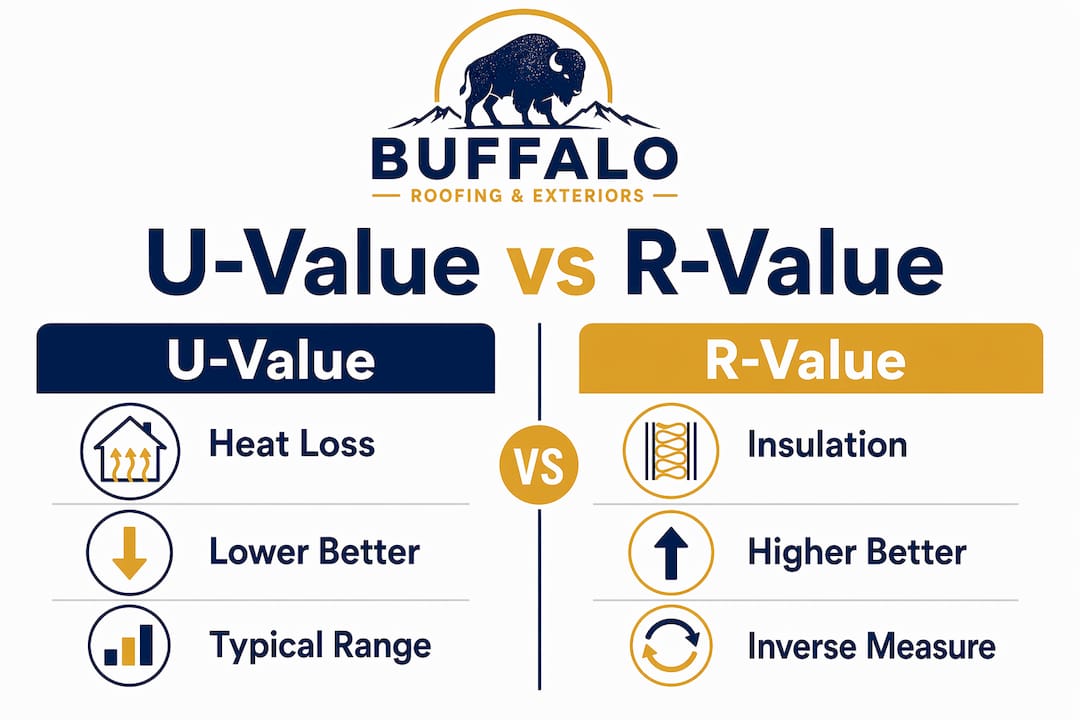
U-value vs R-value in windows: what is the difference?
These two metrics measure opposite sides of the same coin. Understanding both prevents costly mistakes when comparing products.
| Metric | What it measures | Better when | Typical window range |
|---|---|---|---|
| U-value (W/m²K) | Rate of heat loss | Lower | 0.8–5.5 W/m²K |
| R-value (ft²·°F·h/Btu) | Resistance to heat flow | Higher | 0.5–6.0 |
| SHGC | Solar heat gain fraction | Depends on climate | 0.20–0.70 |
U-value and R-value are mathematical inverses of each other. A window with a U-value of 1.0 W/m²K has an R-value of roughly 1.0 in metric terms. In American units, a U-factor of 0.25 corresponds to an R-value of about 4. The two systems describe the same physical property from opposite directions.
Solar Heat Gain Coefficient (SHGC) is a separate measurement entirely. SHGC measures how much solar radiation passes through the glass as heat. A low SHGC (around 0.25) blocks most solar heat, which is ideal for hot climates like South Texas where summer cooling costs dominate. A high SHGC (around 0.60) lets solar warmth in, which benefits cold climates where passive solar heating reduces heating bills.
U-value alone does not capture total window energy performance. A window with an excellent U-value of 0.9 but a high SHGC of 0.65 will overheat a home in Corpus Christi during summer. Selecting windows requires balancing both numbers against your local climate. Homeowners in Texas generally want a low U-value paired with a low SHGC. For more on how these ratings interact with current building standards, see why window ratings matter.
What is a good U-value for residential windows?
The answer depends on your climate and your building standard, but clear benchmarks exist.
New residential construction in most American markets targets a whole-window Uw of 1.2 W/m²K or lower for code compliance. Passive House certification, the most demanding residential energy standard, requires a Uw at or below 0.8 W/m²K. These numbers give you a practical target range.
The savings from upgrading are concrete. Moving from old double glazing with a Uw of 2.4 to modern triple glazing at Uw 0.9 can save hundreds of dollars annually in heating costs. For a home with 25 square meters of window area, that upgrade can cut window-related heat loss by more than 60%. The payback period depends on energy prices and installation costs, but most homeowners in colder climates recover the investment within 7–12 years.
For Texas homeowners, the calculus shifts slightly. Heating seasons are shorter, so the primary driver of window upgrades is often cooling efficiency and comfort near large glass surfaces. A Uw below 1.4 W/m²K combined with a low SHGC delivers meaningful reductions in air conditioning load during the long Gulf Coast summers.
Here is a practical reference for common window types:
| Window type | Typical Uw (W/m²K) | Performance level |
|---|---|---|
| Single pane | ~5.5 | Poor |
| Old double pane | 2.4–3.0 | Below standard |
| Modern double pane (Low-E, argon) | 1.2–1.6 | Good |
| Triple pane | 0.8–1.0 | Excellent |
| Passive House triple pane | ≤0.8 | Best available |
One important caution: window U-value improvements deliver their full benefit only when the rest of the building envelope is also performing well. Upgrading windows while leaving poorly insulated walls or a leaky attic means a significant portion of your investment goes toward offsetting losses elsewhere. Pair window upgrades with attic and wall insulation for maximum return. You can also explore how attic venting supports overall home energy performance as part of a complete thermal strategy.
For guidance on selecting windows that match your home’s specific needs, the energy-efficient window replacement resource from Buffaloroofingandexteriors walks through the decision in practical terms.
Key Takeaways
The whole-window U-value (Uw) is the only number that accurately reflects how well a window insulates your home, because it accounts for glass, frame, and edge losses together.
| Point | Details |
|---|---|
| Lower U-value means better insulation | Target a Uw of 1.2 W/m²K or below for standard homes; 0.8 or below for Passive House. |
| Whole-window Uw matters most | Center-glass Ug values are always better than Uw; always compare Uw figures across products. |
| Frame material changes the number | Vinyl and wood frames outperform standard aluminum; thermally broken aluminum is a solid middle option. |
| SHGC completes the picture | In hot climates like Texas, pair a low U-value with a low SHGC to control both heat loss and solar gain. |
| Installation quality is non-negotiable | A poorly sealed window loses much of its rated performance regardless of its U-value on paper. |
What I have learned from years of window specs and real installs
Most homeowners walk into a window showroom focused on the glass. That is understandable. The glass is what you see, and manufacturers know it, which is why they lead with Ug values that look impressive on paper. The frame is where the real story often hides.
I have seen projects where a homeowner paid a premium for triple-pane glass with a Ug of 0.6, only to end up with a whole-window Uw above 1.5 because the aluminum frame was pulling the number up. The glass was doing its job. The frame was not. That gap between advertised and actual performance is the most common source of disappointment I encounter.
The other thing I would push back on is the idea that windows are the first upgrade you should make. If your attic has R-19 insulation when it should have R-38, or your walls have no vapor barrier, window upgrades alone will not move your energy bills as much as you expect. Windows are a high-visibility, high-cost upgrade. They deserve to be the finishing touch on a well-sealed envelope, not a patch over a leaky one.
Ask for the NFRC label. Ask for the Uw. Ask how the installer seals the rough opening. Those three questions will tell you more about a window’s real-world performance than any marketing brochure.
— Buffaloroofingandexteriors
Ready to upgrade your windows in South Texas?
Buffaloroofingandexteriors works with homeowners across Corpus Christi, San Antonio, and Victoria to select and install windows that match both the local climate and current energy standards. Choosing the right U-value for a Gulf Coast home is not the same as choosing for a northern climate, and the team at Buffaloroofingandexteriors understands that difference.

Whether you are replacing aging single-pane windows or upgrading to modern double-pane units with Low-E coatings, Buffalo Roofing and Exteriors provides free estimates and financing options to make the process straightforward. The same expertise that goes into weather-resistant roofing applies to every window installation. Visit the windows service page to request a consultation and get a quote tailored to your home.
FAQ
What does window U-value mean?
Window U-value measures how quickly heat passes through a window, expressed in W/m²K. A lower number means the window loses less heat and insulates better.
What is a good U-value for a residential window?
A whole-window Uw of 1.2 W/m²K or lower meets most residential building codes. Passive House construction requires 0.8 W/m²K or below for maximum energy efficiency.
What is the difference between U-value and U-factor?
U-value and U-factor measure the same thermal transmittance but use different units. Multiply U-factor (Btu/h·ft²·°F) by 5.678 to convert it to U-value (W/m²K).
Does the window frame affect U-value?
Yes, significantly. Frame U-values range from 0.9 to 3.0 W/m²K depending on material. Standard aluminum frames perform far worse than vinyl or thermally broken aluminum frames.
Can a low U-value window still perform poorly?
Yes. Poor installation that leaves gaps around the frame allows air infiltration that bypasses the window’s insulation entirely, reducing real-world performance regardless of the rated U-value.