TL;DR: San Antonio’s extreme heat, intense UV, and spring hail make material choice critical for siding that lasts. Fiber cement — especially James Hardie HZ10 — is the top performer for most homes, with insulated vinyl and metal as solid alternatives depending on budget and goals. Getting installation right matters just as much as the material you choose.
San Antonio homeowners deal with a punishing combination of weather extremes: brutal summer heat, relentless UV radiation, and hailstorms that roll through the Hill Country with little warning. Your siding takes all of it — every single day.
Choose the wrong material and you are looking at warped panels, faded color, or cracked boards within just a few years. Choose wisely and your siding will protect and beautify your home for decades.
This guide breaks down the best siding materials for San Antonio’s specific climate, what they cost, and what to look for when hiring a contractor.
Why San Antonio’s Climate Is Hard on Siding
San Antonio sits in a hot, semi-arid climate zone with conditions that are genuinely tough on exterior cladding. Here is what your siding faces year-round:
- Intense UV radiation. San Antonio typically experiences UV index values of 10–12 during peak season (May–September). That sustained UV degrades paint, bleaches color, and breaks down materials that are not engineered for it.
- Extreme surface heat. The 100°F+ ambient temperatures get attention, but the real damage driver is surface temperature on dark south- and west-facing walls — which routinely reach 165°F or higher under direct summer sun.
- Spring hail. Hailstorms are a real and recurring threat across the San Antonio metro and the surrounding Hill Country. The wrong siding material can mean a costly insurance claim after just one storm.
- Thermal cycling. Daily temperature swings cause siding to expand and contract repeatedly. Over time, materials that cannot handle this cycle crack, gap, or pull away from the wall.
The bottom line: this is not a climate where you can install bargain siding and hope for the best. Material selection and installation quality both matter enormously here.
The Best Siding Materials for San Antonio Homes
1. Fiber Cement Siding — Best Overall
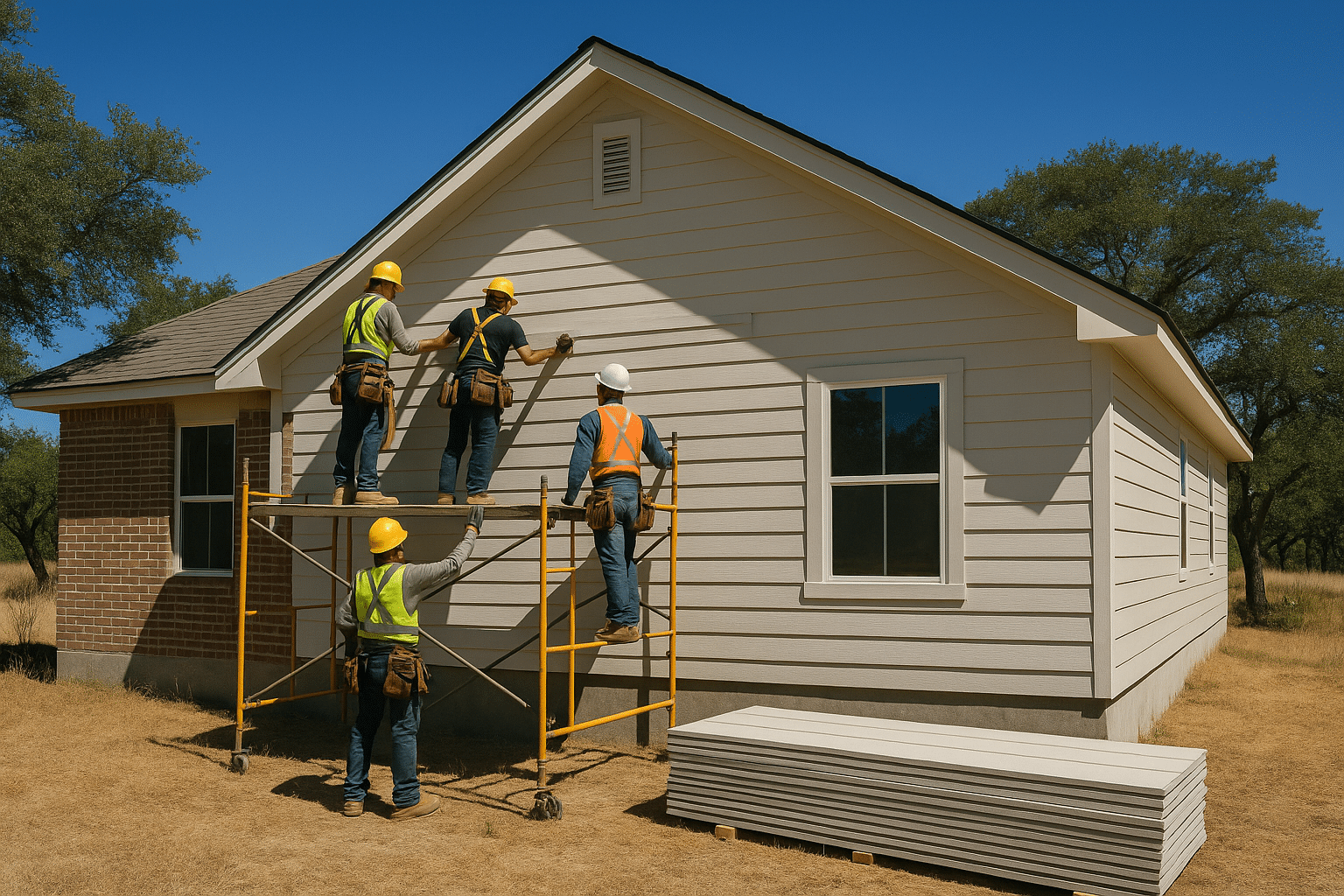
Fiber cement siding — most commonly associated with brands like James Hardie — is one of the most popular choices in the state because it resists moisture, pests, rot, and fire while holding up exceptionally well against hail and UV exposure.
For San Antonio specifically, James Hardie’s HZ10 product line is engineered for the local climate. Their HZ10 products are designed for the heat and humidity in San Antonio. They add extra binders and use a proprietary curing process that makes their boards more resistant to moisture and heat cycling — the result is siding that is less likely to crack or split over time.
Color longevity is another strong suit. James Hardie’s ColorPlus Technology bakes color into the siding during manufacturing, creating a durable finish that resists fading, chipping, and cracking — backed by a 15-year warranty. For San Antonio’s intense sun, that factory finish is far more durable than field-painted alternatives.
Pros:
- Fire-, pest-, rot-, and hail-resistant
- Dimensionally stable — does not warp or soften in high heat
- Wide range of styles: lap siding, shingles, vertical board, stucco texture
- 30-year substrate warranty on Hardie products
- Many fiber cement finishes deliver reflective qualities that keep UV rays from penetrating into the home, helping keep indoor spaces cooler in warmer months.
Cons:
- It does come with a higher upfront cost than vinyl, and it is not a DIY-friendly material — professional installation is required to get it right.
- Fiber cement is heavier than other siding materials, which can make installation more labor-intensive.
Installed cost in San Antonio: James Hardie runs approximately $10–$15 per square foot installed; generic fiber cement runs $6–$12.
Best for: Homeowners planning to stay long-term, anyone who has dealt with hail claims, and homes with significant south- or west-facing wall exposure.
2. Insulated Vinyl Siding — Best Budget-Friendly Option
Vinyl siding remains a widely used option thanks to its affordability, low maintenance requirements, and improving quality at higher product tiers. The key word for San Antonio is insulated vinyl — the standard thin stuff will not hold up as well in the Texas heat.
Three failure modes get triggered by sustained heat exposure — vinyl heat distortion being chief among them. Vinyl siding can soften and warp at sustained surface temperatures above its heat-distortion threshold. Premium “color-hold” formulations resist this better than budget vinyl, but physics still applies.
Insulated vinyl adds a foam backing that solves some of those problems. Insulated vinyl siding adds thermal performance and can help reduce energy loss — it is a strong value option for many homeowners.
Installed cost in San Antonio: Vinyl siding installation in San Antonio typically ranges between $3.75 and $8.03 per square foot, including materials and labor.
Best for: Budget-conscious homeowners, rental properties, and homes where curb appeal matters but long-term ownership is uncertain. Always choose a premium or insulated grade — not bargain-bin vinyl — for San Antonio conditions.
3. Metal Siding — Best for Longevity and Heat Reflection
Metal siding is starting to gain ground in Texas. While it is an expensive material, it stands up very well to heat and wind and is resistant to fire, mold, and pests. Metal siding is also especially good at reflecting sunlight, which helps keep cooling bills in check.
For San Antonio homeowners who already love the look of metal roofing on the Hill Country, metal siding is a natural complement. It handles thermal cycling well and carries impressive longevity — often 40-plus years with minimal maintenance.
Pros: Exceptional heat reflection, fire and pest resistant, long lifespan, low maintenance
Cons: Higher upfront cost, can dent from hail impact, limited style profiles compared to fiber cement
Best for: Modern and contemporary homes, commercial properties, and homeowners prioritizing long-term durability over initial cost.
What About Wood Siding?
Traditional wood siding is beautiful, but San Antonio is genuinely hard on it. Fiber cement siding stands up to relentless UV, heat, and humidity without warping, fading, or cracking the way old wood and vinyl do — and it will not feed termites or burn. If you love the look of wood, engineered alternatives like LP SmartSide give you that aesthetic with far better performance in the Texas climate.
LP SmartSide is engineered wood treated with the SmartGuard process — using zinc borate, waxes, and resins for termite and decay resistance. It also carries an explicit hail damage warranty up to 1.75 inches in diameter when properly installed — meaningful for San Antonio homeowners who deal with spring hailstorms.
Siding Installation Costs in San Antonio: What to Expect
The average siding installation cost in San Antonio is $5,027 to $5,883, but it could vary from $4,599 to $6,311 for a typical home. Larger homes or premium materials will push costs higher.
Here is a quick comparison by material:
- Vinyl (insulated): $3.75–$8.03/sq ft installed
- Generic fiber cement: $6–$12/sq ft installed
- James Hardie HZ10: $10–$15/sq ft installed
- Wood / engineered wood: $5.07–$13.53/sq ft installed in San Antonio
Keep in mind that these are installed prices — material plus labor. The average completion time for a siding replacement in San Antonio is two to three days, though larger homes or complex profiles will take longer.
Several factors affect your final number: total square footage, removal and disposal of old siding, condition of the wall sheathing beneath, number of windows and doors (more trim work = more cost), and the profile and finish you choose.
Buffalo Roofing & Exteriors offers free estimates on siding installation across the San Antonio area. We also offer Improvifi financing from $1,000 to $50,000 with $0 down and no impact to your credit score — so you can move forward without waiting.
5 Signs Your San Antonio Home Needs New Siding
- Warping or bubbling panels. In San Antonio’s heat, this is often a sign that the siding has reached the end of its serviceable life — or that moisture has gotten behind it.
- Significant fading or chalking. UV breakdown is real. If your siding looks washed out or chalky, it is no longer repelling UV the way it should.
- Rising energy bills. Siding that has gaps, cracks, or failed seals lets conditioned air escape. Your AC unit pays the price.
- Hail or impact damage. Cracked, dented, or punctured siding panels need prompt attention. Even small breaches let moisture into the wall assembly. If you have already dealt with hail damage on your roof, check the siding too — the same storm that hit the shingles may have hit the walls. Our team handles hail damage repair in San Antonio and can inspect your full exterior in one visit.
- Rot, soft spots, or pest damage. If you can press on a panel and feel give, or if you see insect activity at the base of the siding, the wall assembly behind it may already be compromised.
What Good Siding Installation Looks Like in San Antonio
Even the best material fails if installation is sloppy. Even the best siding fails if installation is sloppy. In Texas heat, proper installation means accounting for our specific weather — a cheap contractor follows generic instructions that do not account for those conditions.
Here is what proper installation includes:
- Weather-resistant barrier (WRB). A quality house wrap or building paper installed correctly behind the siding is the real moisture defense. Proper flashing, sealing, and weather-resistant barriers help prevent hidden water damage.
- Expansion gaps. All siding expands and contracts with temperature. Without proper gaps, panels will buckle in San Antonio’s summer heat.
- Correct fastening. Nails or screws driven too tight restrict movement; too loose and panels rattle or come free in wind. Both are wrong.
- Flashing at all penetrations. Windows, doors, outlets, and hose bibs all need properly installed flashing to keep water out.
- Color and finish selection for UV stability. In regions with extreme sun exposure, UV-resistant siding options can prevent fading and prolong the material’s lifespan. Factory-finished products like Hardie ColorPlus consistently outperform field-painted alternatives in San Antonio conditions.
Siding and Your Whole-Home Exterior
One of the most common headaches homeowners face is juggling multiple contractors for an exterior project — one for siding, another for windows, a third for painting. Buffalo Roofing & Exteriors handles siding installation alongside windows, doors, and exterior painting from a single team. You get one point of contact, one schedule, and one warranty conversation.
If your siding project is part of a broader exterior update — or if you are curious how new siding pairs with a roof replacement — our team can walk through the full picture with you. Check out our 2026 San Antonio roof replacement cost guide if you are weighing both projects at once.
Why Hire Buffalo Roofing & Exteriors for Siding in San Antonio
- Locally owned and BBB-accredited — we live and work in South and Central Texas
- Licensed and insured with 200+ five-star Google reviews
- Free estimates with no pressure
- Single-source exterior work — siding, roofing, windows, painting, and decks under one roof
- Improvifi financing: $1,000–$50,000, $0 down, no credit score impact
Ready to find out which material is right for your home? Call or contact us today for a free estimate on siding installation in San Antonio and the surrounding area.
Recommended Reads
- How to Choose the Right Roofing Contractor in San Antonio
- Hail Damage Roof Repair in San Antonio: What Homeowners Need to Know
- How Much Does a Roof Replacement Cost in San Antonio? (2026 Price Guide)