After a powerful Gulf storm, many Corpus Christi roofs need urgent attention, but confusion over warranty coverage can slow essential repairs. For American homeowners in this Texas region, knowing what your roofing warranty does—and does not—cover could mean the difference between a costly replacement and a covered repair. This guide reveals what makes roofing warranties unique in a coastal storm zone and clears up the most important details for your peace of mind.
Table of Contents
- What Is A Roofing Warranty In Texas?
- Types Of Roofing Warranties Available
- What Roofing Warranties Typically Cover
- Exclusions And Limits In Roofing Warranties
- Texas Homeowner Rights And Responsibilities
- How To Keep Your Roofing Warranty Valid
Key Takeaways
| Point | Details |
|---|---|
| Understanding Warranty Types | Homeowners should be aware of various warranty types, including Manufacturer, Workmanship, Extended, and System Warranties, to choose the best coverage for their needs. |
| Importance of Documentation | Keeping detailed records of installation, inspections, and maintenance is crucial for enforcing warranty claims and ensuring coverage remains valid. |
| Awareness of Exclusions | Homeowners must review warranty exclusions carefully, as damages from natural disasters or improper maintenance can void coverage. |
| Proactive Maintenance | Regular professional inspections and adherence to maintenance guidelines are essential for sustaining warranty validity, especially in challenging environments like coastal Texas. |
What Is a Roofing Warranty in Texas?
A roofing warranty represents a critical legal protection mechanism for Texas homeowners, specifically designed to safeguard your investment against potential manufacturing defects or installation errors. Unlike standard product guarantees, these warranties provide comprehensive coverage that addresses the unique environmental challenges facing roofs in the coastal and storm-prone regions of Texas.
In Texas, roofing warranties typically fall into two primary categories: express warranties and implied warranties. Express warranties in Texas are explicit, written promises from roofing contractors or manufacturers that specify exact terms of coverage, duration, and conditions. These written agreements outline precise details about what specific damages or failures are covered, helping homeowners understand their protection limits. Implied warranties, by contrast, are legal guarantees that exist automatically, ensuring the roof will perform as a reasonable customer would expect under normal conditions.
The scope of a roofing warranty can vary significantly, but most comprehensive plans in Texas will cover issues such as:
- Manufacturing defects in roofing materials
- Improper installation techniques
- Premature material degradation
- Wind damage within specified limits
- Structural integrity concerns
Pro tip: Always request a detailed written warranty and carefully review the specific terms, exclusions, and maintenance requirements to ensure you fully understand your coverage.
Types of Roofing Warranties Available
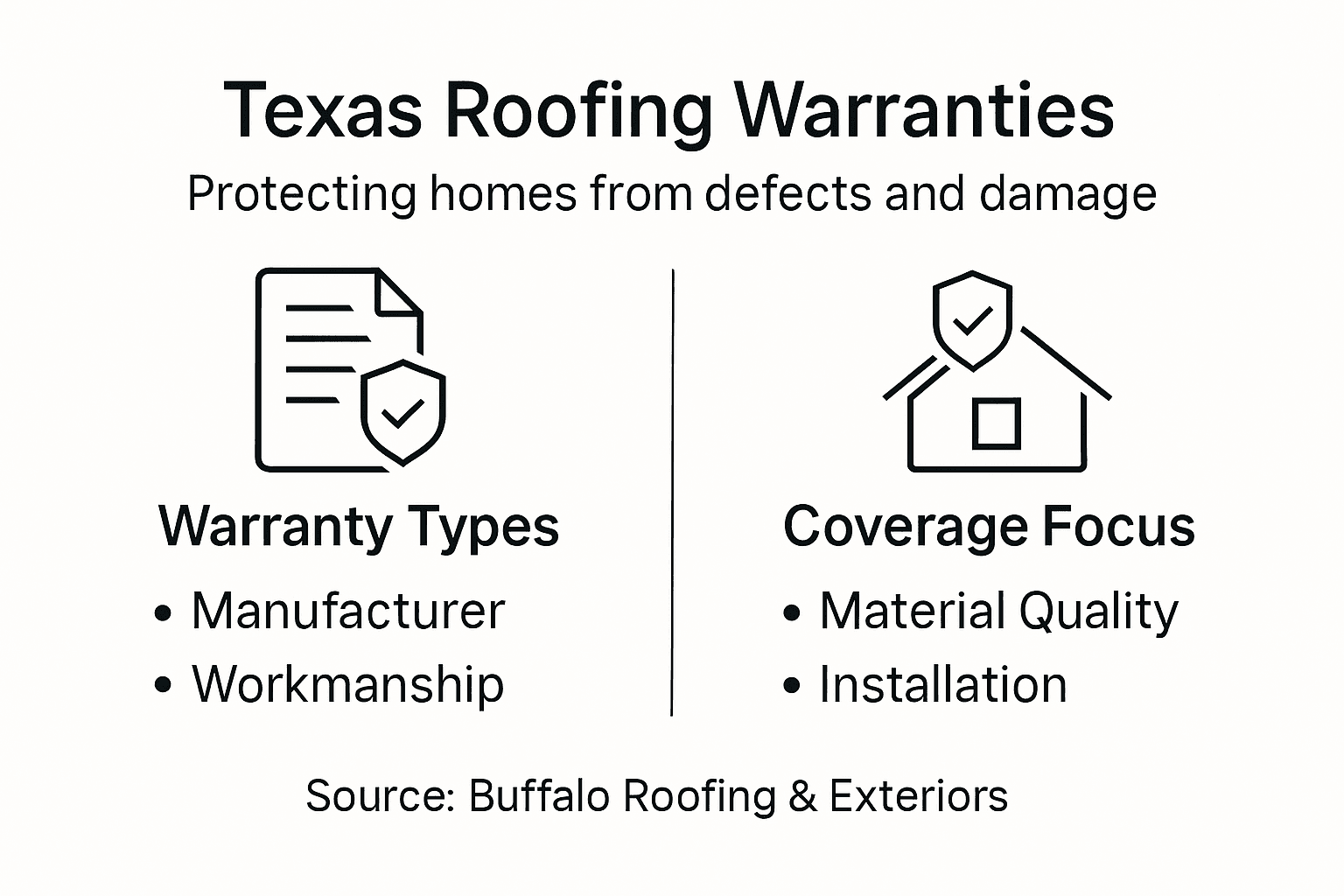
Roofing warranties in Texas are not one-size-fits-all solutions. Instead, homeowners can select from multiple warranty types designed to protect their specific roofing investment against different potential risks. Roofing warranty coverage typically ranges from basic material protection to comprehensive multi-year plans that address various potential issues.
The primary types of roofing warranties include:
- Manufacturer Warranties: Covers defects in roofing materials
- Workmanship Warranties: Protects against installation errors
- Extended Warranties: Provides additional coverage beyond standard terms
- System Warranties: Comprehensive protection for entire roofing system
Manufacturer warranties are typically the most straightforward, offering protection against material defects for a predetermined period. These warranties usually cover issues like premature material breakdown, manufacturing flaws, or unexpected degradation. Workmanship warranties, by contrast, focus on the installation process, ensuring that any errors in roof installation are rectified without additional cost to the homeowner.
For coastal Texas regions like Corpus Christi, where extreme weather conditions are common, homeowners should carefully evaluate warranty terms. Extended warranties often provide additional protection against wind damage, hail impact, and other region-specific environmental challenges. Some warranties even offer prorated coverage that can be extended through regular professional inspections and maintenance.
Pro tip: Request a detailed written warranty that specifically outlines coverage limits, exclusion clauses, and maintenance requirements to avoid unexpected expenses in the future.
Here’s a comparison of the main roofing warranty types for Texas homeowners:
| Warranty Type | Focus Area | Typical Duration | Common Limitations |
|---|---|---|---|
| Manufacturer Warranty | Material defects | 10–50 years | Prorated terms, material only |
| Workmanship Warranty | Installation quality | 1–10 years | Excludes material defects |
| Extended Warranty | Additional risks | Up to 50 years | May require regular inspections |
| System Warranty | Entire roofing system | 10–30 years | Often excludes certain components |
What Roofing Warranties Typically Cover
Roofing warranties offer comprehensive protection for Texas homeowners, addressing a wide range of potential issues that could compromise the integrity and performance of their roof. Typical warranty coverage encompasses multiple critical aspects of roofing protection, ensuring homeowners are safeguarded against unexpected repair and replacement costs.
The primary areas of coverage typically include:
- Material Defects: Protection against manufacturing flaws
- Workmanship Errors: Coverage for improper installation techniques
- Structural Integrity: Protection against systemic roof failures
- Weather-Related Damage: Specific protections for wind and hail impact
Most comprehensive warranties focus on protecting homeowners from significant financial risks associated with roof failures. This includes coverage for membrane integrity, protection against punctures, and performance guarantees that extend beyond basic material warranties. For coastal Texas regions like Corpus Christi, where extreme weather conditions are prevalent, warranties often include specialized provisions addressing wind damage, hail impact, and other region-specific environmental challenges.
Homeowners should carefully review warranty terms, paying close attention to specific exclusions and maintenance requirements. Some warranties require regular professional inspections and documented maintenance to remain valid, while others may offer prorated coverage that reduces over time. Understanding these nuanced details can help homeowners maximize their warranty protection and avoid unexpected out-of-pocket expenses.
Pro tip: Photograph and document the condition of your roof during installation and keep detailed maintenance records to support potential future warranty claims.
Exclusions and Limits in Roofing Warranties
Understanding the nuanced landscape of roofing warranty exclusions is critical for Texas homeowners seeking comprehensive protection. Warranty limitations can significantly impact the actual coverage homeowners receive, often creating unexpected financial challenges if not carefully examined.
Common warranty exclusions typically include:
- Natural Disasters: Damage from hurricanes, floods, or severe storms
- Improper Maintenance: Roof issues resulting from neglected upkeep
- Unauthorized Modifications: Changes made without manufacturer approval
- Consequential Damages: Secondary damage not directly related to roof failure
- Normal Wear and Tear: Gradual deterioration over time
In coastal regions like Corpus Christi, where extreme weather conditions are prevalent, homeowners must pay special attention to specific exclusion clauses. Many warranties will not cover damage from salt air corrosion, wind speeds exceeding certain thresholds, or improper installation techniques. Some contracts may include prorated coverage that reduces monetary protection as the roof ages, meaning homeowners could be responsible for a significant portion of repair costs as the warranty approaches its expiration.
Careful documentation becomes crucial in navigating these complex warranty restrictions. Homeowners should maintain detailed records of installation, professional inspections, and maintenance activities. This documentation can provide critical evidence when challenging warranty exclusions or seeking compensation for legitimate roof failures.
Pro tip: Request a comprehensive written explanation of all warranty exclusions during initial roof installation and annually review these terms to understand your current coverage.
Texas Homeowner Rights and Responsibilities
Texas homeowners possess specific legal protections and obligations when it comes to roofing warranties, creating a balanced framework of rights and responsibilities. Warranty consumer rights provide critical safeguards that protect homeowners from substandard roofing work while simultaneously requiring active participation in maintaining their warranty coverage.
Key homeowner rights include:
- Warranty Enforcement: Legal ability to pursue claims for defective materials or workmanship
- Transparent Documentation: Right to receive clear, comprehensive warranty terms
- Professional Standards: Expectation of quality installation and materials
- Repair and Replacement: Entitlement to necessary roof repairs under warranty conditions
With these rights come equally important responsibilities that Texas homeowners must diligently fulfill. Maintaining detailed documentation of roof installations, professional inspections, and maintenance activities becomes crucial. Homeowners must promptly report potential issues, follow manufacturer-recommended maintenance schedules, and avoid unauthorized modifications that could potentially void their warranty protection.
In coastal regions like Corpus Christi, where extreme weather conditions present unique challenges, understanding these rights and responsibilities becomes even more critical. Homeowners should proactively communicate with roofing professionals, keep comprehensive records, and thoroughly understand the specific terms of their warranty to ensure maximum protection for their roofing investment.
Pro tip: Create a dedicated file folder for all roofing documentation, including warranty papers, inspection reports, and maintenance records, to protect your legal rights and warranty coverage.
This summary helps clarify key Texas homeowner rights and responsibilities under roofing warranties:
| Homeowner Right | What It Ensures | Associated Responsibility |
|---|---|---|
| Warranty Enforcement | Pursue claims for covered issues | Report problems promptly |
| Transparent Documentation | Access clear warranty terms | Retain all paperwork and receipts |
| Professional Standards | Expect qualified installation | Use manufacturer-approved contractors |
| Repair and Replacement | Obtain covered repairs or replacements | Follow recommended maintenance schedule |
How to Keep Your Roofing Warranty Valid
Maintaining the validity of your roofing warranty requires strategic and proactive approaches specific to Texas’s unique environmental challenges. Warranty maintenance requirements demand careful attention to prevent potential coverage gaps that could leave homeowners financially vulnerable.
Key strategies for preserving warranty validity include:
- Regular Professional Inspections: Schedule annual comprehensive roof assessments
- Detailed Documentation: Maintain meticulous records of all maintenance and repairs
- Manufacturer-Approved Repairs: Only use certified professionals for any roof work
- Prompt Issue Reporting: Immediately communicate potential problems to warranty provider
- Consistent Maintenance: Follow manufacturer-recommended care guidelines
In coastal regions like Corpus Christi, where extreme weather conditions can rapidly deteriorate roofing materials, homeowners must be especially vigilant. Warranties often include specific clauses related to salt air exposure, hurricane wind speeds, and potential corrosion risks. Understanding these nuanced requirements means going beyond standard maintenance and developing a proactive approach to roof care that anticipates potential environmental challenges.
Homeowners should create a comprehensive roof maintenance portfolio that includes installation documentation, warranty terms, inspection reports, and a chronological record of all repairs and maintenance activities. This systematic approach not only helps maintain warranty validity but also provides critical documentation if warranty claims become necessary in the future.
Pro tip: Set calendar reminders for annual roof inspections and create a dedicated digital folder to store all roofing documentation for quick and easy access.
Protect Your Texas Home with Trusted Roofing Warranty Solutions
Understanding your roofing warranty is essential to protect your home from manufacturing defects, installation issues, and severe weather damage common in Corpus Christi and other Texas coastal areas. At Buffalo Roofing & Exteriors, we recognize how critical it is to have clear, reliable roofing coverage that matches the unique challenges of Texas climate. Whether you need a new roof, repairs, or expert storm damage restoration, our team ensures you receive transparent workmanship warranties and material guarantees that keep your home secure and your investment protected.
Don’t leave your home’s safety to chance. Visit our Roofing Archives | Buffalo Roofing & Exteriors to explore how our professional roofing services come backed by trusted warranty support. For ongoing repair needs, check out our Repairs Archives | Buffalo Roofing & Exteriors. Ready to safeguard your home now with expert guidance tailored for Texas weather? Contact us today at Buffalo Roofing & Exteriors to get your free estimate and start your worry-free roofing journey.
Frequently Asked Questions
What types of roofing warranties are available?
Roofing warranties typically include manufacturer warranties, workmanship warranties, extended warranties, and system warranties, each focusing on different aspects of protection against material defects, installation errors, and more.
What do roofing warranties generally cover?
Roofing warranties generally cover material defects, workmanship errors, structural integrity issues, and weather-related damage, ensuring homeowners are protected from unexpected repair costs.
How can I keep my roofing warranty valid?
To keep your roofing warranty valid, it’s essential to conduct regular professional inspections, maintain detailed documentation of maintenance and repairs, use manufacturer-approved services, and promptly report any issues to the warranty provider.
What are common exclusions found in roofing warranties?
Common exclusions in roofing warranties may include damage from natural disasters, improper maintenance, unauthorized modifications, consequential damages, and normal wear and tear, which can affect coverage availability.
Recommended
- Insurance Claims | Buffalo Roofing & Exteriors | San Antonio to Corpus Christi, TX
- How to Spot and Fix Roof Leaks Before They Lead to Major Damage | Buffalo Roofing & Exteriors | San Antonio to Corpus Christi, TX
- Roof Inspections | Buffalo Roofing & Exteriors | San Antonio to Corpus Christi, TX
- Windstorm Certification | Buffalo Roofing & Exteriors | San Antonio to Corpus Christi, TX
- Roofing Services in Corpus Christi TX