
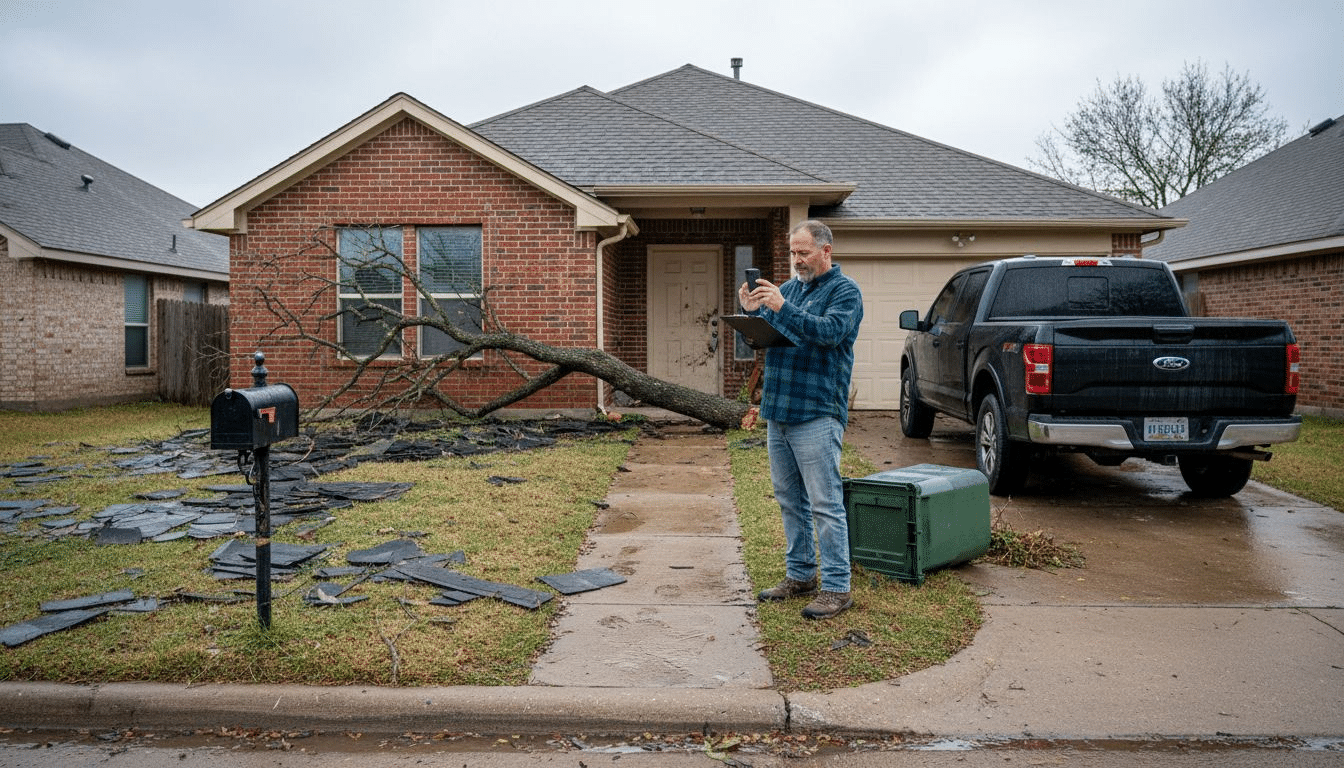
When a major storm hits coastal Texas, the aftermath can leave homeowners in Corpus Christi and San Antonio facing unexpected repairs and urgent decisions. Each year, American families across this region are forced to deal with everything from torn roofs to hazardous flooding. With severe weather on the rise and restoration needs more complex than ever, knowing how storm damage restoration truly works empowers local homeowners to protect their properties, avoid costly errors, and recover with confidence.
Table of Contents
- Defining Storm Damage Restoration in Texas
- Major Types of Storm Damage Encountered
- Step-By-Step Restoration Process Explained
- Insurance Claims And Documentation Requirements
- Cost Factors And Common Pitfalls To Avoid
Key Takeaways
| Point | Details |
|---|---|
| Importance of Documentation | Homeowners should document storm damage immediately with photographs and notes to enhance insurance claims. |
| Comprehensive Restoration Process | Storm damage restoration requires a detailed, methodical approach addressing safety, water extraction, and structural repairs. |
| Understanding Cost Factors | Restoration costs can vary significantly; homeowners must plan for emergency services and professional assessments to avoid increased expenses. |
| Avoiding Common Mistakes | Homeowners should avoid DIY repairs and hiring unlicensed contractors to prevent long-term damage and added costs. |
Defining Storm Damage Restoration in Texas
Storm damage restoration is a critical process for homeowners across the Gulf Coast, specifically addressing the comprehensive repair and recovery of properties impacted by severe weather events. In Texas, this specialized service encompasses much more than simple repairs. Disaster restoration involves a systematic approach to rebuilding and protecting structures damaged by hurricanes, tropical storms, and other extreme weather conditions.
At its core, storm damage restoration in Texas includes multiple strategic components designed to return a property to its pre-storm condition. These typically involve water extraction, structural assessment, debris removal, mold prevention, and comprehensive repair work. The process requires specialized technical skills to address the unique challenges presented by the state’s complex weather patterns, ranging from coastal hurricanes to inland severe thunderstorms.
The legal framework for these restoration efforts is grounded in the Texas Disaster Act of 1975, which provides a comprehensive system for emergency management and property recovery. This legislation ensures coordinated responses between local governments, state agencies, and professional restoration teams, enabling rapid and systematic property rehabilitation after catastrophic weather events.
Pro Tip: Always document storm damage immediately with clear photographs and detailed notes, as these will be crucial for insurance claims and restoration planning.
Major Types of Storm Damage Encountered
Texas experiences a wide range of storm damage types that can devastate residential and commercial properties. Severe weather events generate multiple destructive scenarios, including wind damage, flooding, structural impacts, and infrastructure destruction. Understanding these potential hazards helps homeowners prepare and develop effective recovery strategies.
Wind damage represents one of the most common and destructive storm impacts in Texas. Hurricane and tornado winds can generate catastrophic consequences, including roof destruction, fallen trees, broken windows, and structural compromises. The intense wind forces can lift roofing materials, shatter exterior surfaces, and create cascading damage that compromises entire building envelopes. Coastal and inland regions alike experience significant wind-related structural challenges during severe weather events.
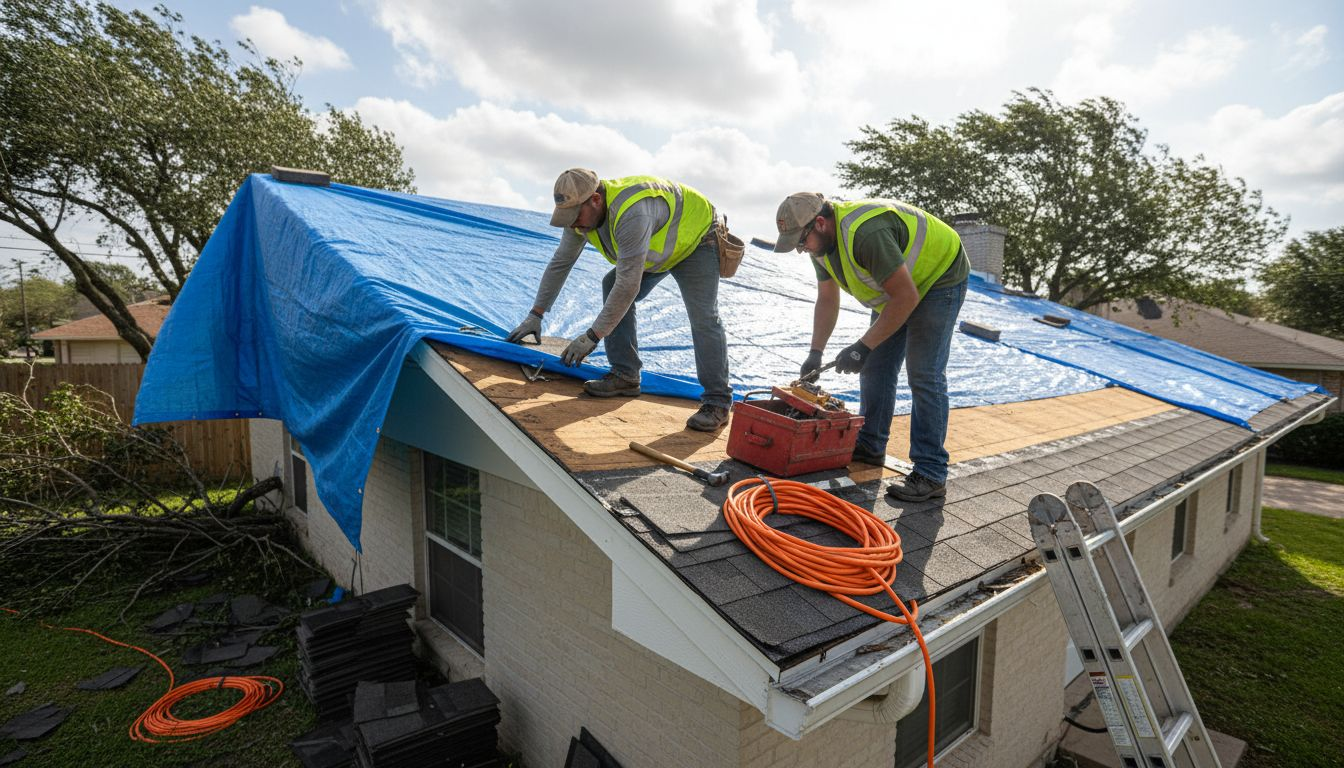
Hurricane impacts) extend beyond wind damage, introducing complex flooding scenarios that can devastate entire communities. Water damage from storm surges and heavy rainfall creates secondary destruction mechanisms, including mold growth, foundation erosion, electrical system failures, and long-term structural weakening. These water-related challenges often persist long after the initial storm event, requiring comprehensive restoration approaches that address both immediate and potential future damages.
Here’s a summary of major storm damage types and their secondary impacts in Texas:
| Storm Damage Type | Typical Cause | Common Secondary Impact |
|---|---|---|
| Wind Damage | Hurricanes, tornadoes | Roof loss, structural compromise |
| Flooding | Storm surge, heavy rain | Mold growth, foundation erosion |
| Debris Impact | High winds, falling trees | Broken windows, exterior damage |
| Infrastructure Failure | Electrical surges, flooding | Power outages, system malfunctions |
Pro Tip: Photograph and document all storm damage immediately, creating a comprehensive visual record that will support insurance claims and restoration efforts.
Step-by-Step Restoration Process Explained
Storm damage restoration follows a strategic and methodical approach designed to systematically address property damage and return structures to their pre-storm condition. Disaster restoration involves a comprehensive series of steps that prioritize safety, structural integrity, and thorough rehabilitation. Understanding this process helps homeowners navigate the complex journey of recovery after severe weather events.
The initial phase centers on comprehensive damage assessment and safety evaluation. Restoration professionals conduct detailed inspections to identify structural compromises, potential hazards, and the extent of water, wind, or debris damage. This crucial first step determines the appropriate restoration strategy, whether addressing minor repairs or preparing for extensive reconstruction. Key considerations include electrical system integrity, potential gas line damages, structural weakening, and moisture-related risks that could compromise long-term property stability.
FEMA damage assessment protocols provide a systematic approach to documenting and categorizing storm-related destruction. The restoration process typically involves multiple critical stages: water extraction, thorough drying, sanitization, mold prevention, structural repairs, and final cosmetic restoration. Each stage requires specialized equipment and technical expertise to ensure complete property rehabilitation and minimize potential future complications.
Pro Tip: Create a comprehensive digital and physical file documenting all storm damage, including time-stamped photographs, repair estimates, and communication records with insurance providers and restoration professionals.
Insurance Claims and Documentation Requirements
Navigating storm damage insurance claims requires meticulous attention to detail and comprehensive documentation. Texas Windstorm Insurance Association provides specific guidelines for policyholders seeking compensation after severe weather events, emphasizing the critical importance of thorough and timely claim submissions. Understanding these requirements can significantly streamline the recovery process and maximize potential insurance support.
Documentation serves as the cornerstone of successful insurance claims. Homeowners must compile extensive evidence including time-stamped photographs, detailed damage descriptions, repair estimates, and comprehensive inventories of affected property. Professional restoration assessments, structural inspection reports, and itemized damage lists become crucial supporting materials that substantiate insurance claims. Maintaining organized, digital, and physical records helps demonstrate the extent of storm-related destruction and supports the claim’s credibility.
FEMA damage assessment protocols recommend specific documentation strategies that can expedite the claims process. These include capturing multiple angles of damage, preserving damaged materials when possible, tracking all repair-related expenses, and maintaining clear communication logs with insurance representatives. Policyholders should be aware of critical timelines, such as reporting claims within one year of damage and submitting comprehensive documentation to avoid potential claim denials.
Pro Tip: Create a dedicated digital folder with timestamped, high-resolution photographs and systematically organize all storm damage documentation to streamline your insurance claim process.
Cost Factors and Common Pitfalls to Avoid
Storm damage restoration costs in Texas represent a complex financial landscape influenced by multiple interconnected factors. Geographic vulnerabilities, infrastructure conditions, and the specific nature of storm damage significantly impact overall restoration expenses. Homeowners must understand these dynamics to effectively budget and plan for potential recovery scenarios, recognizing that storm damage restoration goes far beyond simple repair work.
Multiple cost determinants emerge during the restoration process, including emergency response requirements, debris removal, structural assessments, and long-term rehabilitation efforts. Professional restoration teams evaluate damage severity, potential secondary complications like mold growth, and the extent of infrastructure disruption. These evaluations help determine comprehensive restoration strategies that address immediate structural needs while preventing future deterioration.
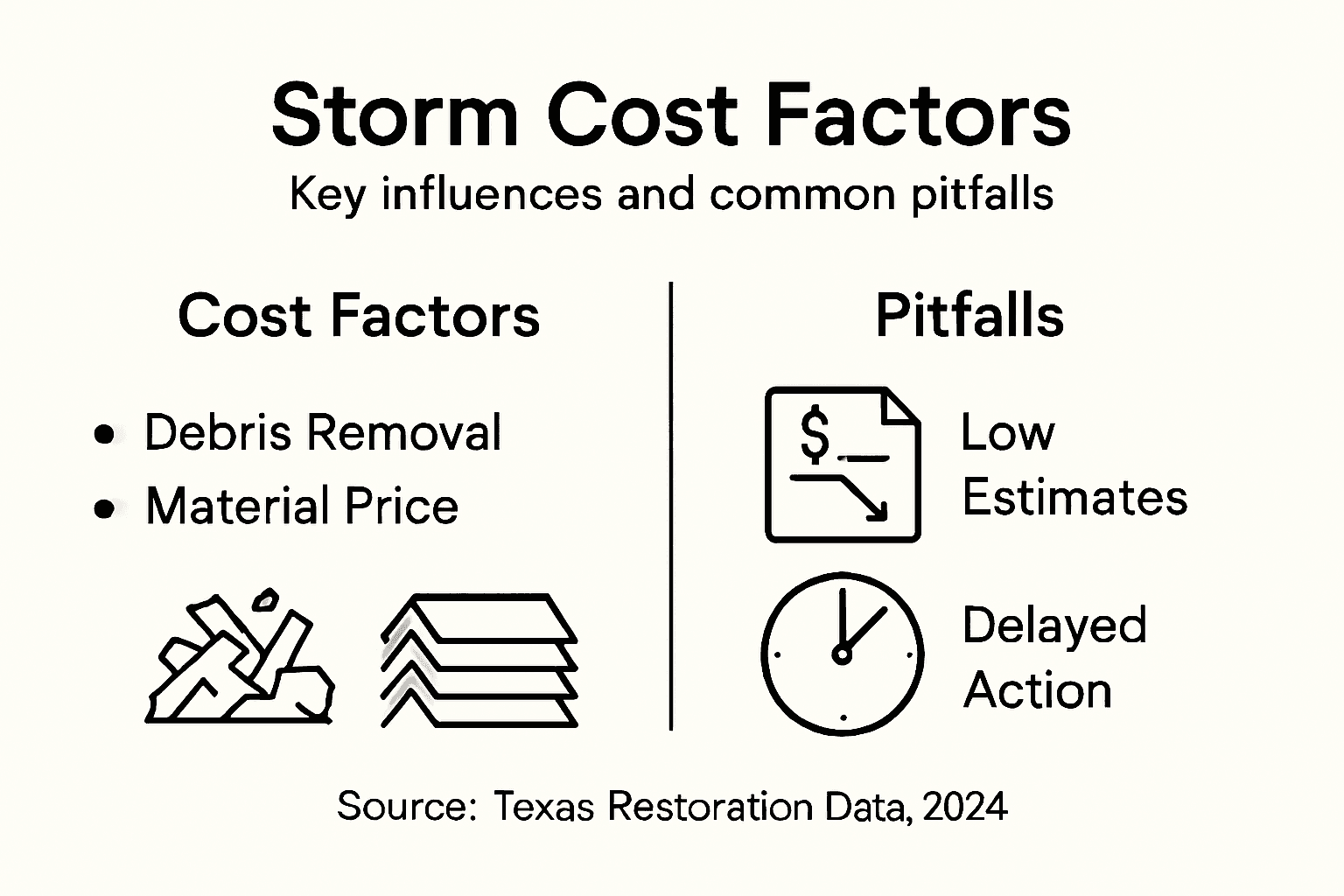
Severe weather summaries highlight critical pitfalls that can dramatically increase restoration costs. Homeowners frequently underestimate damage complexity, delay professional assessments, or attempt DIY repairs that ultimately compromise structural integrity. Common mistakes include inadequate documentation, hiring unlicensed contractors, ignoring building code requirements, and failing to address underlying moisture issues that can lead to extensive long-term damage. Proactive, informed decision-making becomes paramount in managing both immediate and potential future restoration expenses.
This table outlines key cost factors and mistakes to avoid in storm restoration budgeting:
| Cost Factor | Impact on Budget | Common Homeowner Mistake |
|---|---|---|
| Emergency Services | Increases upfront expense | Delaying professional response |
| Structural Assessment | Essential for safety | Underestimating complexity |
| Mold Remediation | Adds long-term costs | Ignoring moisture issues |
| Contractor Selection | Affects quality and price | Hiring unlicensed workers |
Pro Tip: Obtain multiple professional assessments and detailed written estimates to establish a comprehensive understanding of potential restoration costs before committing to any single repair strategy.
Protect Your Texas Home with Expert Storm Damage Restoration
Severe storms in Texas bring devastating wind and water damage that can threaten your roof and exterior. If you are facing issues like roof damage, leaking, or structural concerns from recent weather events, it is crucial to act quickly with professional help. Buffalo Roofing & Exteriors specializes in comprehensive storm damage restoration, delivering reliable repairs and new installations that restore safety and value. Our team understands the unique challenges of Texas storms and uses proven methods to ensure your home withstands harsh weather.
Don’t let storm damage disrupt your life or lead to costly repairs. Explore our Roofing Archives | Buffalo Roofing & Exteriors for insights into durable roofing solutions. Learn how we handle exterior renovations including siding, windows, and decks in the Decks Archives | Buffalo Roofing & Exteriors. Contact us today at https://buffaloroofingandexteriors.com/ for a free estimate and fast response. Protect your home with trusted experts who are ready to restore your property promptly and effectively.
Frequently Asked Questions
What is storm damage restoration?
Storm damage restoration is the process of repairing and recovering properties affected by severe weather events, including hurricanes and heavy storms. It includes water extraction, structural assessment, and comprehensive repair work to return a property to its pre-storm condition.
How can I document storm damage for insurance claims?
To document storm damage effectively, take clear, time-stamped photographs from multiple angles, write detailed descriptions of the damage, and keep records of repair estimates. A comprehensive inventory of affected property can also strengthen your insurance claim.
What are the main types of storm damage to expect in Texas?
Common types of storm damage in Texas include wind damage from hurricanes and tornadoes, flooding caused by storm surges and heavy rainfall, debris impact, and infrastructure failure. Each type can lead to significant secondary impacts, such as mold growth or structural weakening.
What factors affect the cost of storm damage restoration?
The cost of storm damage restoration can be influenced by emergency response needs, the extent of structural assessments, mold remediation, and the choice of contractor. Homeowners should be cautious of common mistakes, such as delaying assessments or hiring unlicensed workers, which can increase costs.
Recommended
- What to Do After a Storm Damages Your Roof | Buffalo Roofing & Exteriors | San Antonio to Corpus Christi, TX
- Is Your Siding Ready for Hurricane Season? | Buffalo Roofing & Exteriors | San Antonio to Corpus Christi, TX
- How We Protect Your Deck from Hurricanes and Tropical Storms | Buffalo Roofing & Exteriors | San Antonio to Corpus Christi, TX
- Windstorm Certification | Buffalo Roofing & Exteriors | San Antonio to Corpus Christi, TX
- What Is Floor Restoration and Why It Matters
- Don’t Skip Roof Maintenance: Key Risks You Need to Know – white-diamond-pressure
- Roofing Services in Corpus Christi TX