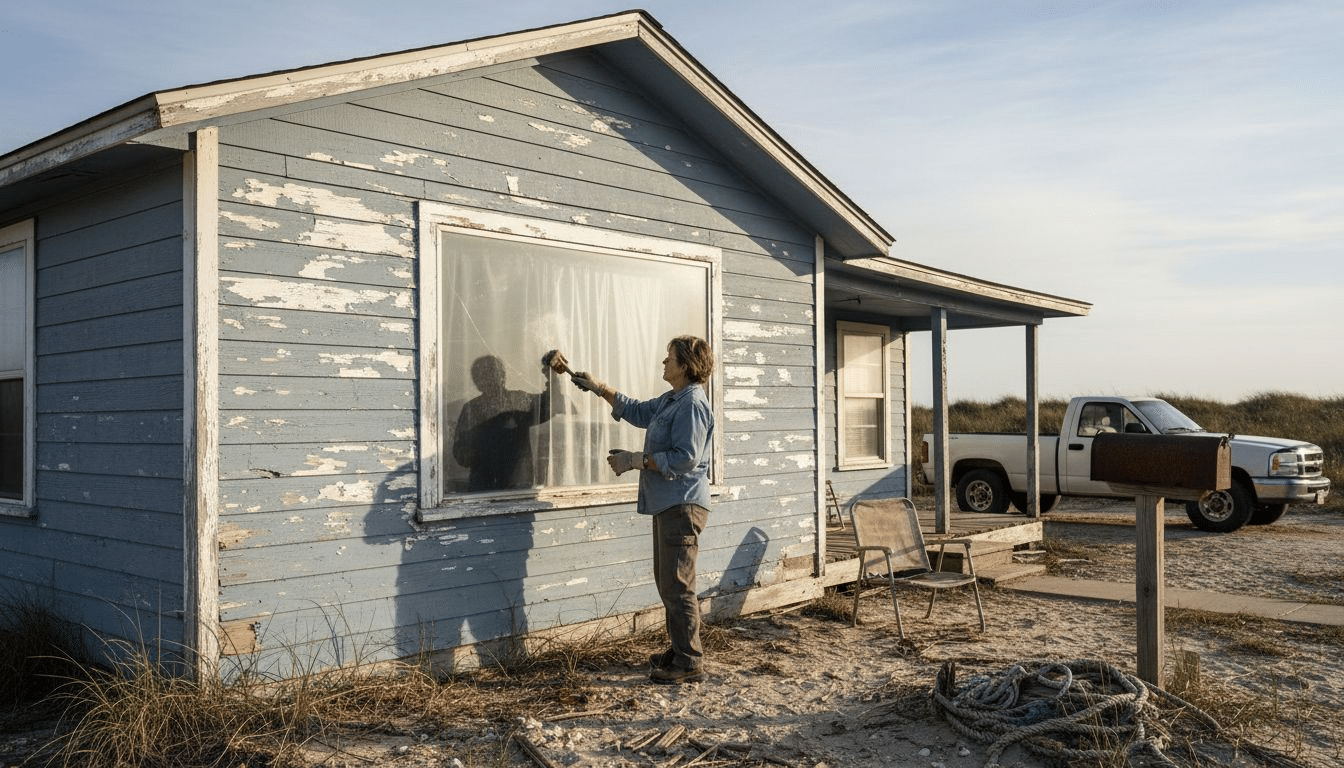
Even the toughest homes in Corpus Christi and San Antonio can suffer exterior damage after powerful Gulf Coast storms. When siding takes a hit, it is more than a cosmetic issue for homeowners. Damaged siding weakens your home’s defense against moisture, fire, and intense coastal weather, leaving the structure open to much bigger threats. Understanding what compromised siding truly means for safety, insurance, and long-term durability is vital for every homeowner living along the Texas coast.
Table of Contents
- What Damaged Siding Means for Your Home
- Types of Siding Damage in Coastal Texas
- How Damaged Siding Impacts Home Safety
- Financial and Insurance Implications of Delay
- Repairing Versus Replacing Damaged Siding
Key Takeaways
| Point | Details |
|---|---|
| Impact of Damaged Siding | Damaged siding exposes homes to moisture, pests, and structural decay, stressing the importance of immediate repairs to maintain safety. |
| Insurance Considerations | Timely professional assessments of siding damage are crucial, as delays can complicate claims and result in reduced coverage. |
| Long-Term Risks | Coastal Texas homes face unique environmental challenges that exacerbate siding damage, emphasizing the need for proactive maintenance and inspections. |
| Repair vs. Replacement | Homeowners must weigh the costs and benefits of repair versus replacement, ensuring they consider long-term durability and regulation requirements. |
What Damaged Siding Means for Your Home
Damaged siding represents more than just an aesthetic problem for Texas coastal homeowners. It creates a serious vulnerability in your home’s protective exterior, potentially exposing your property to extensive structural risks. Siding serves as a critical barrier against environmental threats, preventing water intrusion, moisture damage, and potential structural degradation.
When siding becomes compromised, your home loses its primary defense against harsh coastal weather conditions. Wind-driven rain, high humidity, and salt exposure can quickly exploit even small areas of damage, leading to wood rot, mold growth, and potential insulation breakdown. Coastal Texas homes face unique challenges, with hurricane-force winds and intense storms creating additional stress on exterior surfaces.
Insurance considerations also play a significant role in damaged siding scenarios. Damage from wind or hail typically requires prompt professional assessment to ensure potential coverage and prevent further deterioration. Homeowners should understand that delayed repairs can potentially invalidate insurance claims and lead to more expensive restoration work.
Pro tip: Schedule a professional siding inspection immediately after any significant storm to catch and document potential damage before it escalates into more complex and costly repairs.
Types of Siding Damage in Coastal Texas
Coastal Texas homes face unique and challenging environmental conditions that can rapidly deteriorate home exteriors. Coastal erosion and storm impacts create multiple types of siding damage that homeowners must understand and address proactively. Wind-driven saltwater, intense hurricane conditions, and persistent humidity combine to create a perfect storm of potential structural vulnerabilities.
The primary types of siding damage in this region include saltwater corrosion, physical impact damage, moisture intrusion, and structural weakening. Saltwater exposure can cause metal siding to oxidize, wood siding to rot, and vinyl siding to become brittle and crack. Storm debris carried by high winds can create punctures, tears, and significant physical damage to exterior surfaces. Moisture trapped behind damaged siding leads to mold growth, wood decay, and potential insulation breakdown.
Texas Coastal Resiliency Master Plan research highlights the long-term risks associated with these damage types, emphasizing that homeowners must consider future environmental projections. Rising sea levels and increasingly intense storm systems mean that siding damage is not just a current concern but a growing long-term challenge for coastal property owners.
Here’s how common types of siding damage differ in causes, appearance, and risks:
| Damage Type | Typical Cause | Visual Clues | Long-Term Risk |
|---|---|---|---|
| Saltwater Corrosion | Ocean spray, humidity | Rust, discoloration | Metal failure, leaks |
| Physical Impact | Windborne debris, hail | Dents, punctures | Entry points for moisture |
| Moisture Intrusion | Rain, poor sealing | Warping, mold growth | Structural decay |
| Structural Weakening | Aging, repeated stress | Sagging, buckling | Total wall failure |
Pro tip: Conduct quarterly exterior inspections and document any emerging damage with photographs to establish a clear maintenance record and support potential insurance claims.
How Damaged Siding Impacts Home Safety
Damaged siding represents a critical vulnerability that compromises the overall safety and structural integrity of homes in coastal Texas. Home safety depends critically on intact siding as the first line of defense against environmental threats. Small breaches can quickly escalate into significant structural risks, exposing homes to moisture intrusion, pest infiltration, and potential fire hazards.
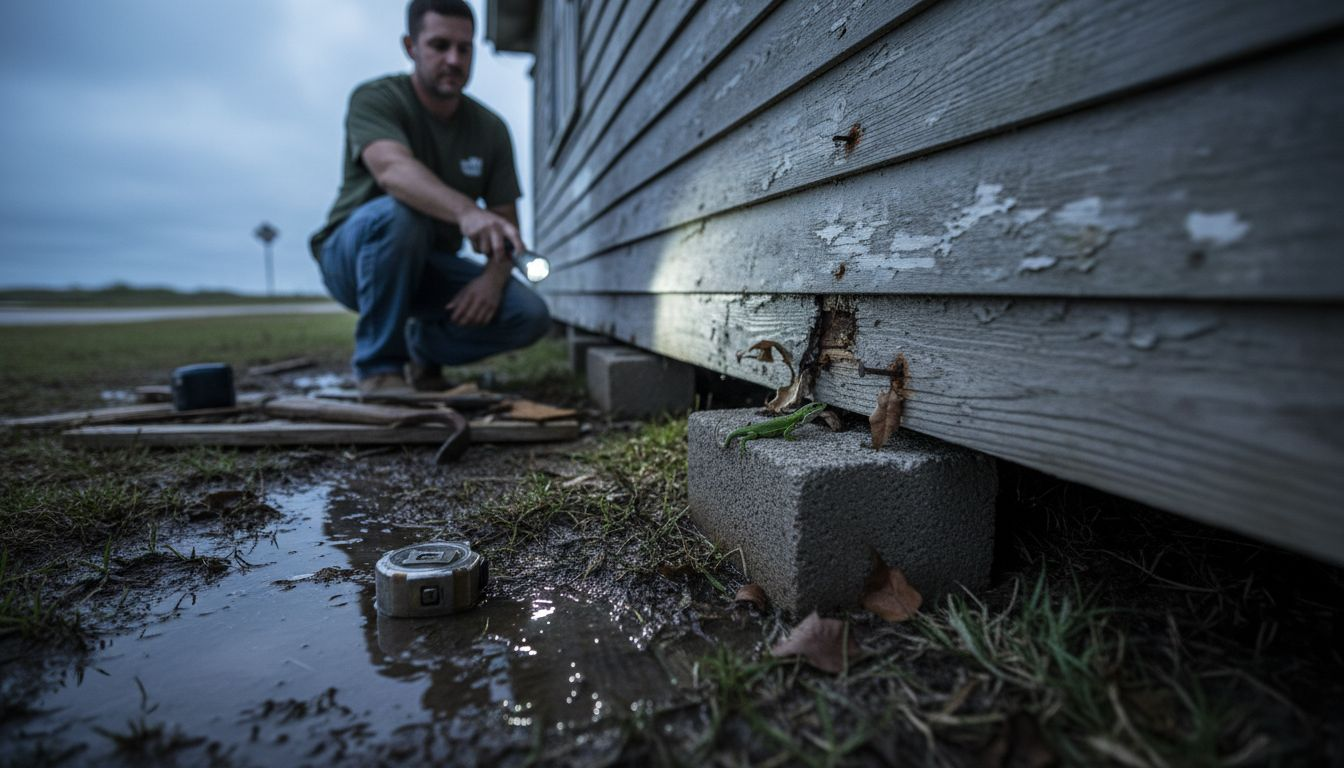
The potential dangers extend far beyond cosmetic concerns. Gaps or breaks in siding create direct pathways for moisture penetration, which can lead to wood rot, mold growth, and structural decay. These compromised areas become entry points for pests, potentially introducing additional damage and health risks to the home’s interior. In coastal regions, where humidity and salt exposure are constant challenges, these vulnerabilities can accelerate structural deterioration at an alarming rate.
Fire safety risks from damaged siding are particularly concerning for Texas homeowners. Combustible or damaged siding materials can rapidly spread flames, increasing the potential for total property loss during wildfire events or extreme weather conditions. The compromised exterior creates additional pathways for heat and flame penetration, reducing the home’s ability to resist fire and protect its occupants.
Pro tip: Invest in an annual professional inspection to identify and address siding damage early, preventing minor issues from escalating into catastrophic structural failures.
Financial and Insurance Implications of Delay
Delaying siding repairs can create significant financial risks for homeowners in coastal Texas. Insurance claims become increasingly complicated when damage is not addressed promptly, potentially reducing potential payouts and coverage. Insurers typically expect homeowners to mitigate damage quickly, and failure to do so can result in reduced compensation or complete claim denial.
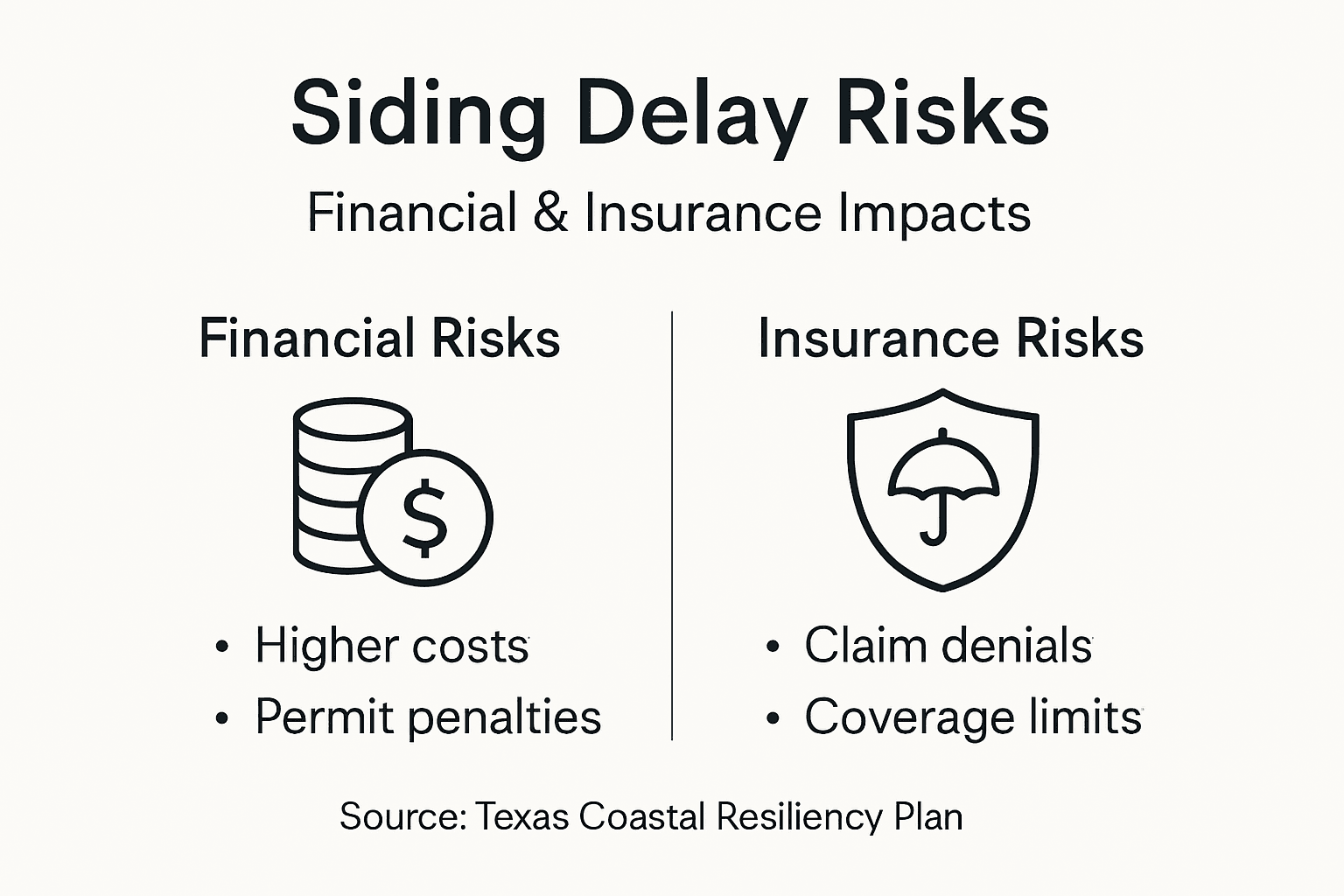
The financial consequences extend beyond insurance complications. Unrepaired siding damage accelerates structural deterioration, transforming what might have been a minor repair into a major renovation project. Moisture intrusion, pest damage, and continued environmental exposure can exponentially increase repair costs. What initially might have been a straightforward siding patch could quickly escalate into comprehensive structural repairs involving walls, insulation, and internal systems.
Permit requirements and legal complications add another layer of financial complexity to delayed repairs. Many municipalities require specific permits for significant exterior renovations, and postponing necessary repairs can lead to additional fines, potential stop-work orders, and mandatory remediation. These unexpected legal obstacles can introduce substantial unexpected expenses and project delays, further amplifying the financial burden of procrastination.
Pro tip: Document all siding damage immediately with dated photographs and professional assessments to create a clear record for insurance purposes and potential future claims.
Repairing Versus Replacing Damaged Siding
Homeowners in coastal Texas face a critical decision when confronting damaged siding: whether to repair or completely replace the exterior. Wood siding repair strategies require careful assessment of damage extent, material condition, and long-term preservation goals. Minor damage might be successfully addressed through targeted repairs, while extensive deterioration often necessitates full replacement.
The decision between repair and replacement hinges on multiple factors beyond initial damage assessment. Coastal environments present unique challenges, with salt exposure, high humidity, and frequent storm damage accelerating material degradation. Some siding sections might appear repairable but could be compromised beneath the surface. Professional evaluation becomes crucial in determining whether a patch job will suffice or if comprehensive replacement offers better protection and long-term value.
Local regulations significantly influence repair decisions, introducing additional complexity to the repair versus replacement calculation. Different damage levels trigger distinct permitting requirements, with minor repairs typically requiring less bureaucratic intervention compared to full siding replacements. Homeowners must navigate these regulatory landscapes carefully, understanding that seemingly simple repairs can unexpectedly transform into more extensive renovation projects requiring professional documentation and municipal approvals.
The table below compares the pros and cons of siding repair versus replacement for coastal Texas homes:
| Option | Main Advantage | Main Drawback | Typical Scenario |
|---|---|---|---|
| Repair | Lower upfront cost | May miss hidden damage | Minor, localized problems |
| Replacement | Complete material upgrade | Higher cost, more disruption | Widespread or severe damage |
Pro tip: Request a comprehensive professional assessment that provides a detailed cost-benefit analysis comparing repair and replacement options, considering long-term durability and potential future maintenance expenses.
Protect Your Coastal Texas Home with Expert Siding Solutions
Damaged siding poses serious risks to your home’s safety and structure, especially in the harsh coastal environment of Texas. From saltwater corrosion to moisture intrusion and storm impact damage, these issues demand prompt, professional attention to prevent costly repairs and insurance complications. At Buffalo Roofing & Exteriors, we understand the unique challenges that Texas coastal homes face and specialize in delivering durable siding repairs and replacements that restore your home’s protective barrier.
Protect your investment with trusted siding expertise from our local professionals. Whether you need targeted repairs or a full siding replacement, our team uses quality materials designed to withstand coastal weather conditions while enhancing your home’s curb appeal. Don’t wait for minor damage to escalate into structural decay or costly insurance disputes. Learn more about our comprehensive siding services in the Siding Archives and explore how we handle a wide range of home exterior repairs in the Repairs Archives.
Secure your home’s future today by scheduling a free estimate with Buffalo Roofing & Exteriors. Our Corpus Christi based team offers quick quotes, financing options, and warranties to make your siding replacement hassle-free. Visit our main site https://buffaloroofingandexteriors.com/ now to protect your coastal Texas home before the next storm strikes.
Frequently Asked Questions
What are the signs of damaged siding?
Common signs of damaged siding include rust or discoloration, dents or punctures, warping or mold growth, and sagging or buckling. Regular inspections can help identify these issues early.
How does damaged siding affect home safety?
Damaged siding compromises the home’s protective barrier, leading to moisture intrusion, pest infiltration, and fire hazards. It can result in significant structural damage if not addressed promptly.
When should I consider replacing my siding instead of repairing it?
If the damage is extensive, such as widespread deterioration or hidden issues beneath the surface, it may be more beneficial to replace the siding instead of attempting repairs. A professional assessment can provide guidance on the best approach.
How can I prevent siding damage in coastal environments?
To prevent siding damage, consider using materials resistant to saltwater and humidity, conduct regular maintenance inspections, and promptly address any signs of damage. Installing proper sealing and moisture barriers can also help protect your home.
Recommended
- What Is Siding Replacement and Why It Matters
- Is Your Siding Ready for Hurricane Season? | Buffalo Roofing & Exteriors | San Antonio to Corpus Christi, TX
- Signs Your Home Needs New Siding | Buffalo Roofing & Exteriors | San Antonio to Corpus Christi, TX
- Siding | Buffalo Roofing & Exteriors | San Antonio to Corpus Christi, TX
- Roofing Services in Corpus Christi TX