TL;DR: Have a pro check a commercial flat roof at least twice a year and after every major storm. Keep drains clear, watch for ponding and open seams, and keep a log with photos. On coastal property in Nueces and San Patricio counties, find out before a larger repair starts whether it needs a TDI windstorm inspection and WPI-8 certificate.
Commercial flat roof maintenance comes down to eight steps: gather your records, set a spring and fall schedule, clear drains, walk the membrane, check flashing and penetrations, control rooftop traffic, keep a log, and fix small problems fast. In Corpus Christi, add a check after every storm. Also find out whether a repair needs a WPI-8 windstorm certificate.
This guide is for business owners, property managers and landlords with a low-slope roof over a shop, office, warehouse or rental building. It covers what to do, what you need, and the mistakes that cost the most.
How Often Does Commercial Flat Roof Maintenance Need to Happen?
Have a pro check the roof at least twice a year, plus once after any major storm. The National Roofing Contractors Association (NRCA) recommends scheduled roof inspections at least twice per year, preferably in the spring and fall. Between those visits, someone should keep the drains clear and look at the roof after heavy weather.
In Corpus Christi and Aransas Pass, timing matters. The North Atlantic hurricane season runs June 1 to November 30, and NOAA says most storms come in August through October. A spring check gets the roof ready before the season starts. A late-fall check catches damage after the peak. Coastal roofs also face wind uplift at edges and corners. Salt air corrodes metal edge flashing and drain parts, and the humidity keeps wet spots from drying out.
Inland in Beeville, the main threats are hail and long stretches of South Texas heat. Hail can bruise or puncture a membrane. Hot days followed by cooler nights make the roof expand and shrink over and over. That puts stress on seams and flashing. Book a check after any hailstorm, and look closely at the seams at the end of summer.
| Task | How Often | Who Should Do It | What It Prevents |
|---|---|---|---|
| Clear drains, scuppers and gutters | Every few months and before forecast storms | Trained staff with safe access, or a roofer | Ponding water and extra weight on the deck |
| Walk the membrane and seams | Spring and fall | Roofer | Small punctures and open seams turning into leaks |
| Check flashing, curbs and penetrations | Spring and fall | Roofer | Leaks at the most common failure points |
| Post-storm check | After hurricanes, tropical storms, hail or high wind | Roofer | Hidden damage and gaps in your insurance records |
| Review rooftop work by other trades | After every HVAC or rooftop service visit | Property manager | Dropped screws, tool damage and cut membrane |
What Do You Need Before You Start?
You need safe roof access, a way to record what you see, and your roof paperwork. Here is the short list:
- Safe access: a fixed ladder or roof hatch, fall protection, and a second person on site. If you don’t have these, leave rooftop work to a roofer.
- A phone or camera for dated photos.
- A roof log, which can be a simple notebook or spreadsheet with dates, findings and repairs.
- Gloves, trash bags and a small bucket for debris.
- Your records: roof warranty, past repair invoices, a simple roof plan showing the drains, and any WPI-8 already on file for coastal property.
Know your roof type, too. Many commercial roofs in the area are TPO (thermoplastic polyolefin), a single-ply white membrane with heat-welded seams. Our plain-English guide to TPO roofing explains how it works and what wears it out.
How Do You Maintain a Commercial Flat Roof, Step by Step?
- Gather your records. Pull the warranty, past repairs and roof plan. Some warranties have rules about upkeep or repair methods, so read the terms before anyone patches anything.
- Set the schedule. Put a spring check and a late-fall check on the calendar. Add a check after every named storm, hailstorm or high-wind event.
- Clear every drain, scupper and gutter. Pull leaves, trash and loose gravel out of strainers and outlets. Water is heavy. Penn State engineering material on roof failures shows that one inch of rain held on a 30-by-30-foot roof bay by a clogged drain weighs almost 5,000 pounds.
- Walk the main field of the roof. Within two days after a rain, look for standing water. Water still sitting 48 hours after the rain stops counts as ponding. Also look for blisters, bubbles, cuts, punctures and open seams. Stay on walk pads where you have them.
- Check flashing, curbs and penetrations. Most leaks start where the membrane meets something else: parapet walls, HVAC curbs, pipe boots, vents and skylights. Look for gaps, lifted edges, cracked sealant and rust on metal.
- Control rooftop traffic. HVAC techs and other trades can drop screws, drag tools or cut the membrane. Ask them to sign in, stay on walk pads and report any damage. Make sure condensate lines drain off the roof and don’t drip onto one spot.
- Log and photograph everything. Date each photo and note where on the roof you took it. A clear log helps your roofer spot repeat problems. It also gives you a record of the roof’s condition if you ever file a storm claim.
- Fix small problems fast, and fix them the right way. An open seam is a small repair. Left alone, it lets water soak the insulation under the membrane. On coastal property, check the windstorm rules below first. Our flat roof repair services in Corpus Christi cover leaks, seams and flashing.
Does a Flat Roof Repair Need a WPI-8 Windstorm Certificate?
In coastal counties like Nueces and San Patricio, larger roof repairs and roof replacements usually need a windstorm inspection. TDI (the Texas Department of Insurance) runs the program. When the work passes inspection, TDI issues a WPI-8, which is a Certificate of Compliance. A building needs a WPI-8 to be eligible for wind and hail coverage through TWIA, the Texas Windstorm Insurance Association.
TDI says most roof replacements and major repairs require an inspection. It lists roof repairs under 100 square feet that don’t involve decking as an example of work that does not. TDI also asks owners or builders to notify it before a repair starts. Skipping that step on a larger job can leave you with a coverage problem down the road.
What Mistakes Shorten a Flat Roof’s Life?
- Waiting for a leak inside. By the time a ceiling stains, water has often spread through the insulation.
- Ignoring ponding. Standing water wears out membranes faster and adds weight. IIBEC, the International Institute of Building Enclosure Consultants, says ponding on low-slope roofs with parapet walls can be reduced but never fully eliminated. It names roof collapse from ponding as a key safety issue.
- Using the wrong patch. Generic caulk or tar may not bond to a single-ply membrane, and some warranties call for specific repair methods.
- Letting other trades work unsupervised on the roof.
- Skipping the windstorm paperwork on larger coastal repairs.
Signs You Need to Call a Pro
- Water still standing 48 hours after rain
- Stains, drips or musty smells inside the building
- Blisters, bubbles, wrinkles or splits in the membrane
- Seams or edge metal lifting
- Soft or spongy spots underfoot
- A hailstorm, tropical storm or hurricane passing over the building
Why Buffalo Roofing & Exteriors Is a Fit for Commercial Flat Roofs
- We are locally owned, with headquarters in Corpus Christi and four locations across South and Central Texas.
- We are BBB-accredited, licensed and insured.
- We have 200+ five-star Google reviews.
- We work on TPO and other flat roofing systems, plus siding, so one contractor can handle the outside of the building.
- We offer TDI-compliant WPI-8 windstorm certification for roof work in coastal counties.
- Our recent jobs include work in Corpus Christi and Robstown.
- Every project starts with a free estimate.
- Improvifi financing runs from $1,000 to $50,000 with $0 down, approval in under 2 minutes, and no credit score impact.
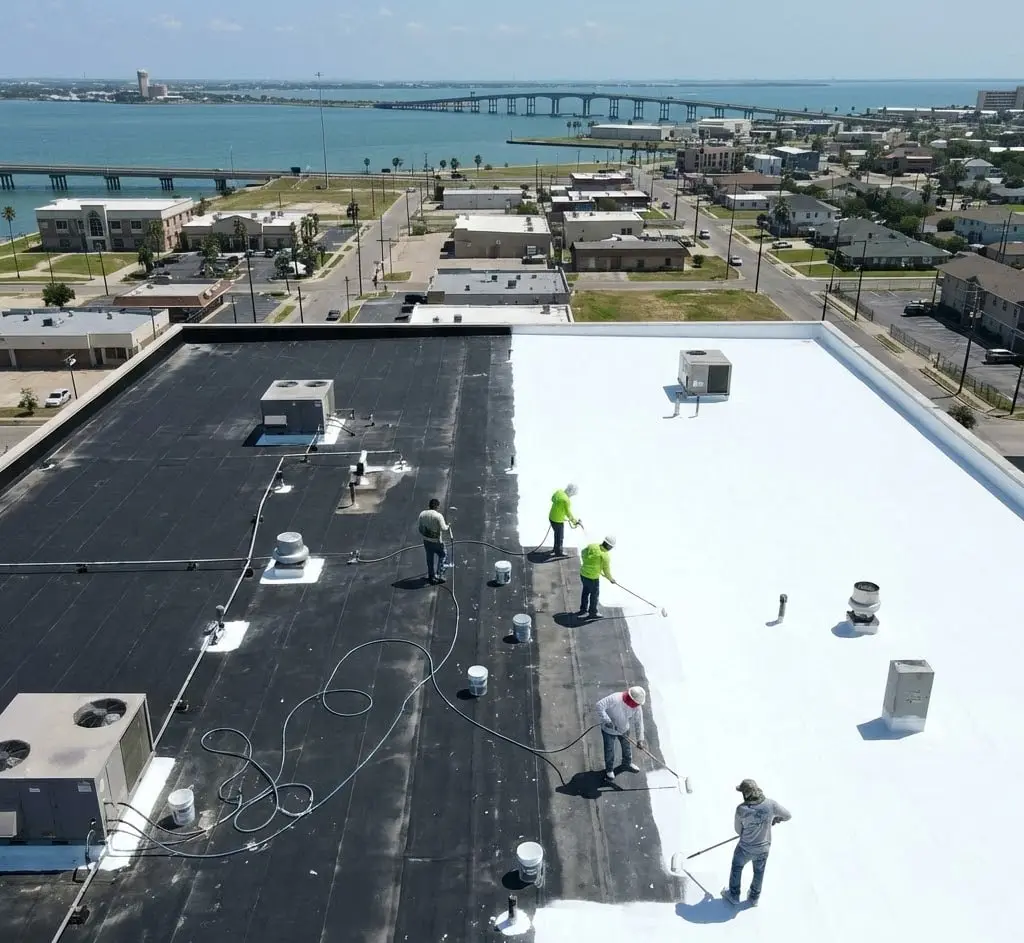
You can see one of our commercial roofing projects to get a feel for the work Buffalo Roofing & Exteriors does.
If your flat roof is due for its spring or fall check, or a storm just came through, book a free estimate with our team.
Frequently Asked Questions
Can my maintenance staff handle flat roof upkeep?
Trained staff with safe roof access and fall protection can clear drains, pick up debris and take photos. Leave seam, flashing and membrane repairs to a roofer so the repair bonds correctly and doesn’t cause warranty problems.
What should I do right after a hurricane or hailstorm passes?
Once it is safe, take photos of the roof and the inside ceilings, clear any blocked drains you can reach safely, and write down the date. Then schedule a professional check before small damage turns into a leak.
Is maintenance still worth it on an older flat roof?
Yes. Regular checks and a good roof log show whether problems are isolated or spreading, and that helps you decide between repairs and planning a replacement.
Does Buffalo Roofing & Exteriors give free estimates on commercial flat roofs?
Yes. Every project starts with a free estimate, and financing through Improvifi is available from $1,000 to $50,000 with $0 down.
Recommended Reads
- Flat Roof Repair in Corpus Christi, TX
- Commercial Image – Buffalo Roofing & Exteriors
- Roof Repair in Flat Roof Repair San Antonio, TX | Buffalo Roofing & Exteriors