TL;DR:
- Hiring the right roofing contractor prevents costly voided warranties and property damage. Verifying licenses, insurance, and reputation ensures trustworthy professionals for long-lasting, quality roofs. Transparent communication, detailed estimates, and proper certifications are key indicators of reliable roofing services.
Hiring the wrong roofing contractor costs far more than the price difference between bids. Botched installations void manufacturer warranties, create leaks that damage framing and insulation, and leave homeowners chasing contractors who’ve already moved on to the next job. Knowing the core qualities of reliable roofing contractors before you sign anything is the difference between a 30-year roof and a 3-year headache. This guide gives you ten concrete, verifiable criteria to separate trustworthy professionals from the ones you’ll regret calling.
Table of Contents
- Key takeaways
- 1. The qualities of reliable roofing contractors start with proper licensing
- 2. Verify insurance coverage directly with the insurer
- 3. Evaluate reputation through volume, ratings, and local references
- 4. Understand the difference between warranty types
- 5. Look for advanced manufacturer certifications
- 6. Review the written estimate in detail
- 7. Check for fair and structured payment terms
- 8. Assess communication and responsiveness before hiring
- 9. Confirm the contractor has a stable local presence
- 10. Require a contract with cleanup and lien waiver clauses
- What I’ve learned about roofing reliability after years in this industry
- Why Buffaloroofingandexteriors checks every box on this list
- FAQ
Key takeaways
| Point | Details |
|---|---|
| Verify licenses and insurance | Confirm active general liability and workers’ comp coverage directly with the insurer, not just via certificate. |
| Reputation signals matter | Look for 50+ verified reviews, a 4.5+ rating, and local references before committing to any contractor. |
| Warranties are not all equal | The best coverage combines manufacturer material warranties with contractor workmanship warranties through certified installers. |
| Red flags cost money | High-pressure tactics, large upfront payments, and no physical office are signs of an unreliable contractor. |
| Certifications go beyond the law | Advanced credentials like GAF Master Elite unlock extended warranties and reflect genuine commitment to quality work. |
1. The qualities of reliable roofing contractors start with proper licensing
A contractor’s license is the legal floor, not a badge of excellence. Every state has its own licensing requirements, and Texas is no exception. You can verify a contractor’s license status through the Texas Department of Licensing and Regulation. If someone can’t hand you a license number you can check online in under two minutes, that’s your answer right there.
Licensing protects you legally. It confirms the contractor has met minimum competency standards and carries accountability under state law. An unlicensed contractor exposes you to liability for accidents on your property and gives you almost no recourse if the work fails.
Pro Tip: Ask for the contractor’s license number before the first site visit. Any reliable professional will give it to you without hesitation.
2. Verify insurance coverage directly with the insurer
A certificate of insurance is just paper. Verifying coverage directly with the provider is the only way to confirm the policy is actually active and not lapsed or canceled. This one step saves homeowners from absorbing costs when a worker gets injured on their roof.
Two insurance types are non-negotiable:
- General liability insurance: Covers property damage caused by the contractor during the job. The minimum recommended coverage is $1 million per occurrence.
- Workers’ compensation insurance: Covers medical expenses if a worker is injured on your property. Without it, you could be held financially responsible.
Call the insurance company listed on the certificate and ask if the policy is current, active, and valid for residential roofing work. It takes five minutes and eliminates a category of risk entirely.
3. Evaluate reputation through volume, ratings, and local references
Online reviews are not just star counts. A contractor with 12 five-star reviews tells you far less than one with 50+ verified reviews and a 4.5+ average. Volume means actual project history. And the negative reviews often matter most. How a contractor responds to a complaint reveals far more about their character than five polished testimonials.
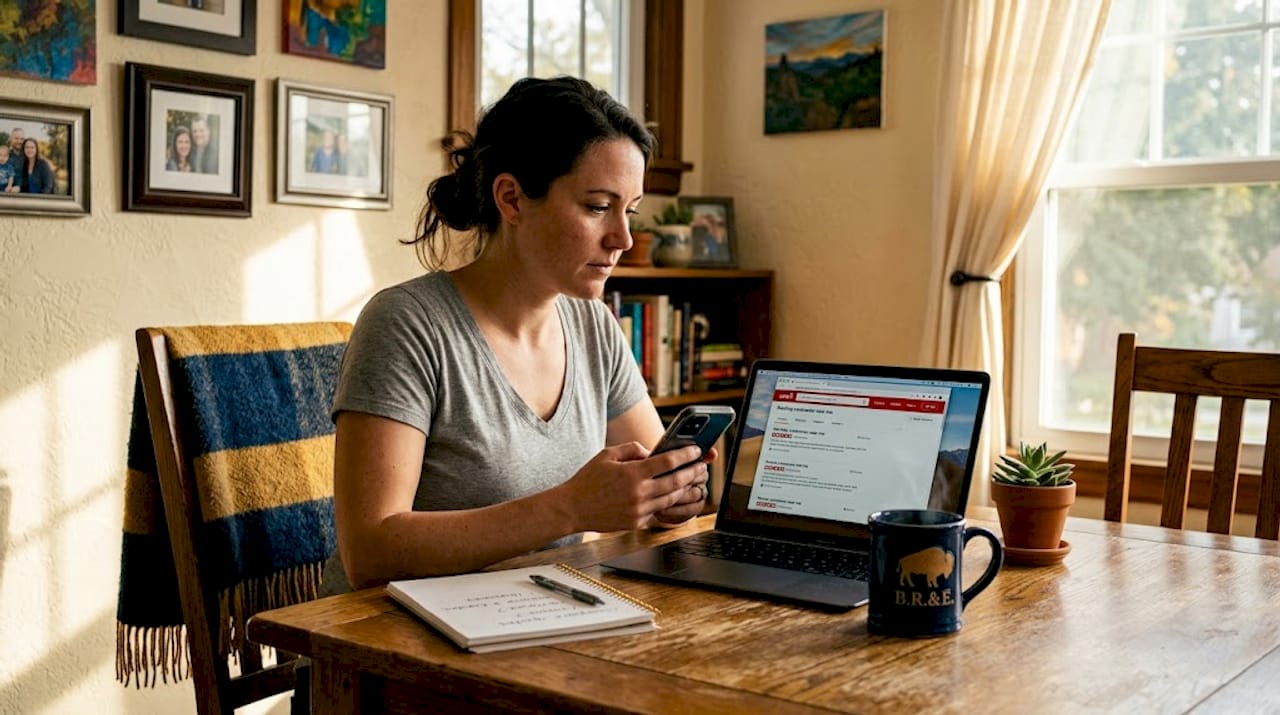
Beyond reviews, ask for at least three local references from jobs completed in the past 12 months. Call those homeowners. Ask whether the contractor showed up on time, cleaned up afterward, and addressed any concerns after the job was done. Those conversations are your best preview of what working with this contractor actually looks like.
Local contractors with a physical office and a track record in your specific area also have a reputational stake in doing good work. They live and operate where you do. That accountability doesn’t exist with out-of-town crews who show up after a storm and disappear before the first rain.
4. Understand the difference between warranty types
Most homeowners assume the manufacturer warranty on their shingles covers everything. It does not. Material warranties cover defects in the product itself. Workmanship warranties cover installation errors, which is actually where most roof failures originate. You need both.
Here’s how the two compare:
| Warranty type | What it covers | Who provides it | Typical duration |
|---|---|---|---|
| Manufacturer material warranty | Defective shingles or materials | Shingle manufacturer | 20 to 50 years |
| Contractor workmanship warranty | Installation errors and labor | Roofing contractor | 1 to 10 years |
| Enhanced combined warranty | Both materials and labor defects | Manufacturer + certified contractor | Up to 25 years |
The most valuable warranty combines both types, is transferable when you sell the home, and is only available through certified installers. Ask every contractor what workmanship warranty they provide in writing before you sign.
Pro Tip: A workmanship warranty shorter than five years is a red flag. Reputable contractors stand behind their work for the long haul, not just through the first winter.
5. Look for advanced manufacturer certifications
State licensing tells you a contractor cleared the legal minimum. Certifications like GAF Master Elite tell you they went further. Fewer than 3% of U.S. roofing contractors hold this designation. It requires ongoing training, proven insurance, and a solid local reputation. The payoff for you as a homeowner is access to extended workmanship warranties that aren’t available through uncertified installers.
This is one of the clearest roofing contractor qualifications to verify. Go to the manufacturer’s website and use their contractor locator. If the certification is listed, it’s real. If the contractor claims it verbally but doesn’t show up in the database, walk away.
Certifications from organizations like the National Roofing Contractors Association (NRCA) also carry weight. Voluntary certifications reflect a commitment to standards that go beyond what the law requires, and they translate directly into better workmanship and safer installs.
6. Review the written estimate in detail
A one-page bid with a single total number is not an estimate. It’s a guess with a handshake. Trustworthy roofing services provide itemized written estimates that break down material costs, labor, disposal fees, and the full scope of work. This protects you from surprise charges and gives you a real basis for comparing bids.
When reviewing estimates, watch for:
- Missing line items (no mention of underlayment, flashing, or drip edge)
- Vague scope descriptions like “roof repair as needed”
- No mention of cleanup or debris removal
- Estimates delivered verbally or only via text
An itemized estimate also makes it harder for a contractor to add unauthorized charges mid-project. If the scope changes, any legitimate contractor will provide a written change order before the extra work begins.
7. Check for fair and structured payment terms
How a contractor asks to be paid tells you a great deal about how they operate. Professional contractors use milestone-based payment schedules with modest deposits between 10 and 30 percent, progress payments tied to completed phases, and a final payment held until the work passes your inspection.
Any contractor demanding 50 percent or more upfront is a significant concern. High-pressure tactics like “today-only” pricing or urgency around a limited crew availability are manipulation tools, not real constraints. Legitimate contractors encourage you to compare quotes and take the time you need to decide. Artificial urgency is a signal, not a courtesy.
8. Assess communication and responsiveness before hiring
The way a contractor communicates during the sales process is exactly how they’ll communicate when there’s a problem mid-project. If they take three days to return a call before you’ve signed anything, expect the same behavior when you’re waiting on a repair completion.
Reliable roofers respond to questions clearly and promptly, keep you informed about scheduling changes, and give you a single point of contact throughout the project. Ask specifically who will be your day-to-day contact and how they prefer to communicate. Contractors without a clear answer to that question often manage projects through whoever happens to be available.
Check key questions to ask before any hire to make sure you’re covering communication expectations along with technical qualifications.
9. Confirm the contractor has a stable local presence
Storm chasers are real, and they target neighborhoods right after major weather events. They arrive with glossy marketing, low prices, and no local accountability. Once the job is done and problems appear, they’re unreachable. Local contractors with a physical office and five or more years operating in your area are substantially more accountable because their business reputation lives in the same community you do.
Ask for a physical business address and look it up. Drive by if you want. A legitimate roofing company has an actual location, not just a P.O. box and a website. Also verify how long they’ve been operating locally. A contractor new to the area isn’t necessarily unreliable, but tenure combined with local references and a physical address is a much stronger signal.
10. Require a contract with cleanup and lien waiver clauses
A signed contract is not a formality. It’s your legal protection if anything goes wrong. The contract should spell out every detail of the project scope, materials specified by brand and grade, start and completion dates, payment schedule, and warranty terms.
Two clauses that homeowners often overlook:
- Cleanup commitment: The contract should state who is responsible for removing old roofing materials, nails, and debris from your property and when it will be done.
- Lien waiver: This protects you from subcontractor claims against your property if the general contractor fails to pay them. Ask for lien waivers from the contractor and any major subcontractors upon final payment.
Without these in writing, you’re relying on goodwill. That’s not a plan.
What I’ve learned about roofing reliability after years in this industry
I’ve seen homeowners get burned not by obviously shady contractors, but by contractors who looked perfectly legitimate on the surface. They had a website, a truck with a logo, and a friendly pitch. What they didn’t have was a workmanship warranty in writing, verifiable insurance, or any real local history.
My honest take: certifications alone don’t make a contractor reliable. What they do is create accountability structures that unreliable contractors can’t access. A GAF Master Elite contractor can’t disappear after a bad install without consequences to their certification status. That friction matters.
The single trait I keep coming back to as a dividing line between trustworthy roofing services and everything else is transparency. Does the contractor answer your questions directly? Do they invite you to verify their license and insurance? Do they put everything in writing without being asked? The ones who do all of that aren’t just checking boxes. They’ve built a business model around earned trust, and that’s exactly what a $15,000 roof replacement deserves.
— Buffaloroofingandexteriors
Why Buffaloroofingandexteriors checks every box on this list
If you’ve worked through this list and you’re ready to evaluate a contractor who actually meets these standards, Buffaloroofingandexteriors is worth a close look. Based in Corpus Christi with offices in San Antonio and Victoria, the company carries verified licensing and insurance, offers detailed written estimates, and backs its work with clear warranty terms for homeowners across the Texas Gulf Coast.
Whether you’re dealing with routine maintenance, a new installation, or need help with storm damage restoration after a major weather event, Buffaloroofingandexteriors brings the local accountability and documented qualifications this article describes. You can browse completed roofing projects to see finished work firsthand, and get a free estimate with no pressure and no artificial urgency. That’s what a reliable roofing company looks like in practice.
FAQ
What licenses should a roofing contractor have?
Roofing contractors must hold a valid state license in the states that require one. In Texas, verify the license through the Texas Department of Licensing and Regulation before signing any contract.
How do I verify a contractor’s insurance?
Don’t rely solely on a certificate of insurance. Call the insurer directly to confirm the policy is active, current, and covers residential roofing. Coverage verification prevents liability surprises if something goes wrong on your property.
What’s the difference between a material and workmanship warranty?
A material warranty covers defective shingles from the manufacturer. A workmanship warranty covers installation errors made by the contractor. The best protection combines both, and is only available through certified installers.
What payment terms should I expect from a trustworthy contractor?
Reputable contractors use milestone-based payments with deposits of 10 to 30 percent and hold the final payment until work is complete to your satisfaction. Avoid any contractor asking for more than half upfront.
What are the biggest red flags when hiring a roofer?
High-pressure sales tactics, demands for large upfront payments, no physical local office, and reluctance to provide written contracts or insurance verification are all clear warning signs of an unreliable contractor.