Fierce storms and rising energy bills create ongoing concerns for homeowners in Corpus Christi and San Antonio. Protecting your home from wind-driven rain and scorching Texas heat starts with choosing the right roof underlayment. This often-overlooked layer offers a strong shield against moisture, structural damage, and temperature swings. Discover the differences between popular underlayment types—and how they can deliver both storm protection and energy savings for your coastal Texas home.
Table of Contents
- Roofing Underlayment Defined And Its Purpose
- Major Types Of Roofing Underlayment Materials
- How Underlayment Protects Against Storm Damage
- Energy Efficiency And Weather Resistance Benefits
- Selecting The Right Underlayment For Coastal Texas
Key Takeaways
| Point | Details |
|---|---|
| Importance of Underlayment | Roofing underlayment is crucial for preventing water infiltration and protecting homes in Texas from extreme weather conditions. |
| Types of Materials | Homeowners should consider asphalt-saturated felt, rubberized asphalt, and synthetic underlayments, each suited for different environmental challenges. |
| Energy Efficiency | Quality underlayment enhances energy performance by reducing cooling costs and regulating indoor temperatures. |
| Professional Guidance | It is essential to consult a local roofing professional for selecting the appropriate underlayment based on specific regional weather conditions. |
Roofing Underlayment Defined and Its Purpose
Roofing underlayment represents a critical protective layer situated between your roof deck and exterior roofing materials. Think of it as a hidden shield guarding your Texas home against moisture, wind, and harsh weather conditions. Roof underlayment serves as a secondary barrier designed to prevent liquid water infiltration even when primary roofing materials fail.
This protective membrane plays a crucial role in maintaining your home’s structural integrity, especially in regions like coastal Texas that experience extreme weather patterns. Waterproofing and moisture resistance are its primary functions, acting as an essential defensive layer against potential damage. The underlayment works silently but effectively, preventing water from seeping into your roof’s structural components.
Key characteristics of roofing underlayment include:
- Provides a water-resistant barrier beneath exterior roofing
- Protects roof deck during construction and after installation
- Enhances overall roof system performance
- Offers additional defense against wind-driven rain
- Helps maintain thermal efficiency
Roof underlayment materials are specifically designed to withstand different climatic conditions. In Texas, where temperatures can fluctuate dramatically and storms are frequent, selecting the right underlayment becomes even more critical. Some advanced underlayment materials can even provide minimal fire resistance, adding an extra layer of protection to your home.
Pro tip: Always consult a professional roofer to determine the most appropriate underlayment for your specific Texas home and local weather conditions.
Major Types of Roofing Underlayment Materials
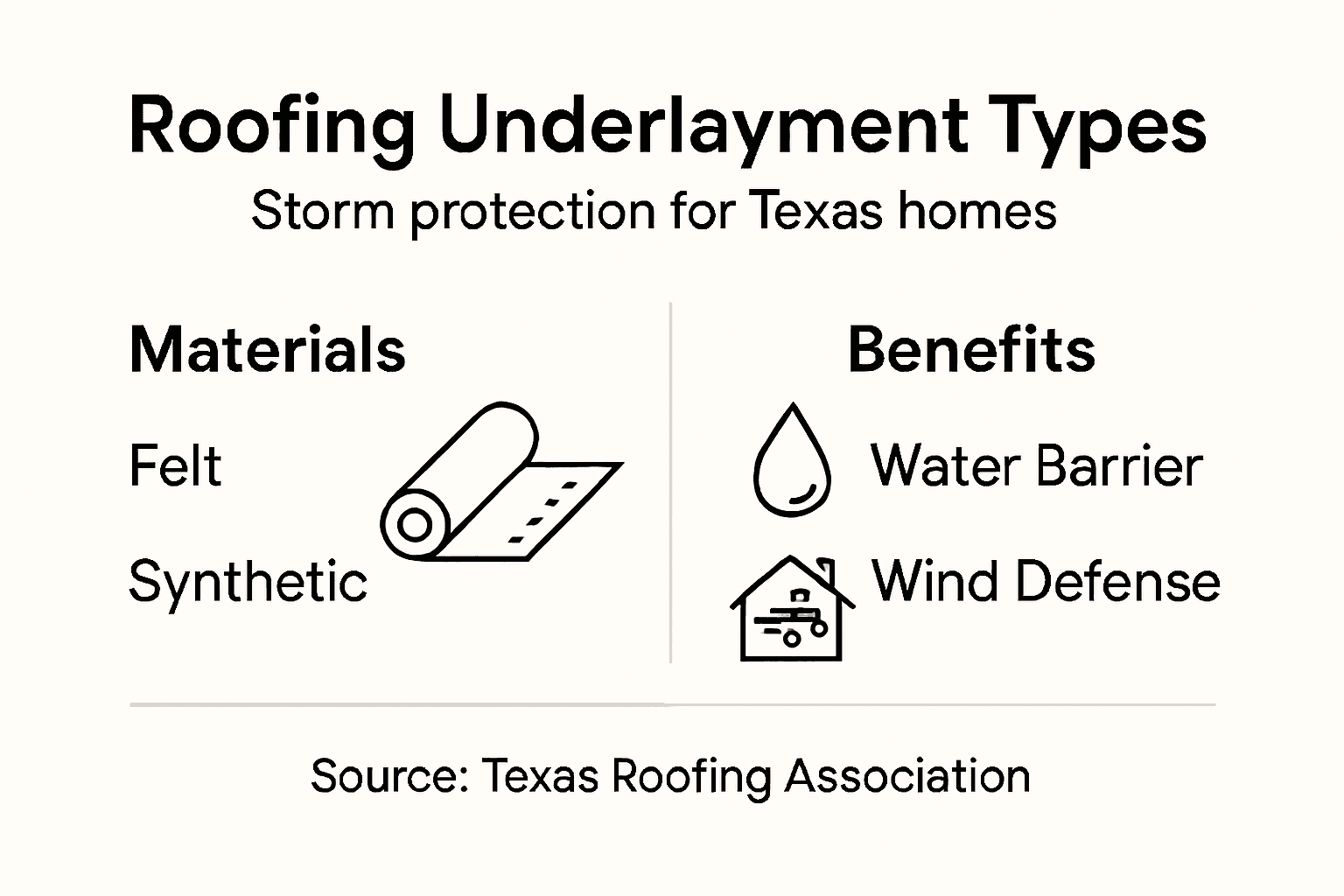
Roofing underlayment technology has evolved significantly, offering homeowners in Texas multiple protective options for safeguarding their homes against extreme weather conditions. Three primary types of roofing underlayment dominate the residential roofing market: asphalt-saturated felt, rubberized asphalt, and synthetic materials. Each type brings unique characteristics designed to address specific environmental challenges faced by coastal and inland Texas properties.
Asphalt-Saturated Felt remains the traditional choice for many homeowners. Available in 15- and 30-pound thicknesses, this water-resistant material provides a baseline level of protection. However, it’s important to note that while cost-effective, asphalt-saturated felt is not completely waterproof and may have limitations in extreme weather scenarios.
Key characteristics of roofing underlayment materials include:
- Water-resistant capabilities
- Varying levels of durability
- Different installation requirements
- Performance in temperature extremes
- Resistance to wind and moisture
Rubberized Asphalt Underlayments represent a more advanced solution, particularly suited for Texas’s challenging climate. These self-sealing membranes offer superior waterproofing and create tight seals around fasteners, making them an excellent choice for regions experiencing frequent storms and high winds. Their ability to adapt to temperature fluctuations makes them particularly valuable in coastal areas like Corpus Christi and San Antonio.
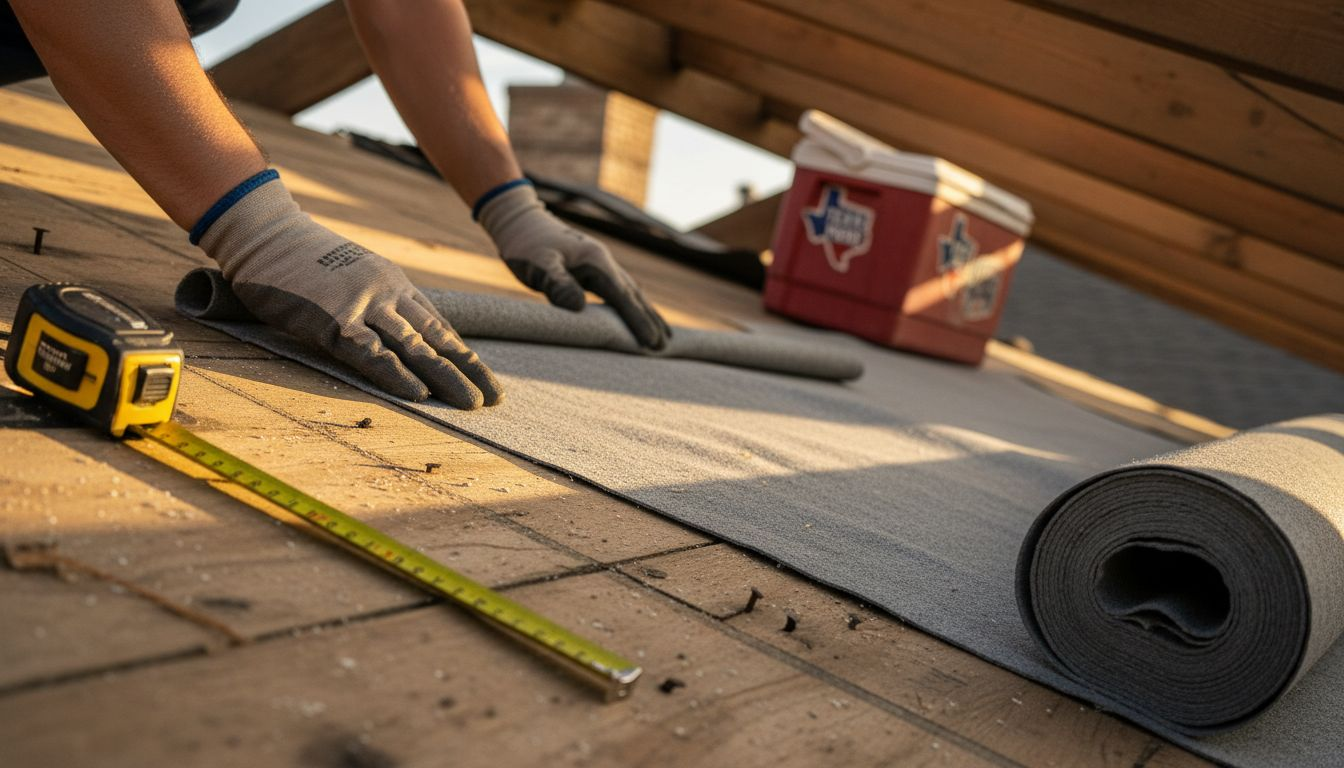
Synthetic Underlayments are quickly becoming the preferred modern option. These materials provide exceptional tear strength, UV resistance, and improved durability compared to traditional options. Lightweight and easy to install, synthetic underlayments offer enhanced protection with minimal additional weight on your roof structure.
Pro tip: Consult with a local roofing professional to determine the most appropriate underlayment for your specific Texas home’s location and weather exposure.
Here’s a comparison of the main roofing underlayment options for Texas homes:
| Underlayment Type | Typical Use Cases | Durability Level | Storm Protection Features |
|---|---|---|---|
| Asphalt-Saturated Felt | Basic home protection | Moderate, prone to tears | Limited moisture defense |
| Rubberized Asphalt | Storm-prone regions | High, self-sealing | Superior water barrier |
| Synthetic | Modern/newer homes | Excellent, UV resistant | Strong wind resistance |
How Underlayment Protects Against Storm Damage
In the harsh coastal environments of Texas, roofing underlayment serves as a critical defensive shield against severe weather challenges. Roof underlayment contributes to storm resilience by providing an essential secondary barrier that protects your home’s structural integrity when primary roofing materials fail. This protective layer becomes especially crucial during hurricane seasons and intense thunderstorms that frequently sweep through regions like Corpus Christi and San Antonio.
Wind-Driven Rain Protection represents one of the most critical functions of quality underlayment. When high-velocity winds compromise roof shingles or metal panels, the underlayment prevents water from penetrating the roof deck, stopping potential moisture infiltration that could lead to extensive structural damage. This barrier is particularly important in preventing long-term issues like wood rot, mold growth, and interior ceiling deterioration.
Key storm damage prevention features include:
- Waterproof sealing around roof penetrations
- Resistance to wind-driven rain
- Protection of roof deck structural materials
- Prevention of moisture-related deterioration
- Enhanced durability during extreme weather events
Self-Adhered Protective Shields offer advanced storm damage mitigation. Ice and water shields create specialized protection in vulnerable roof areas like valleys, eaves, and around chimneys. These specialized membranes form a continuous waterproof barrier that prevents water intrusion even when primary roofing materials are compromised during severe storms.
Proper underlayment selection can reduce potential storm damage repair costs by up to 70% over a roof’s lifetime.
Pro tip: Have a professional roofing inspection before storm season to ensure your underlayment provides maximum protection for your Texas home.
Energy Efficiency and Weather Resistance Benefits
Roofing underlayment plays a critical role in enhancing home energy performance, particularly in the challenging climate of Texas. Roofing underlayments provide additional thermal barriers that help regulate indoor temperatures and reduce cooling costs. For homeowners in coastal regions like Corpus Christi and San Antonio, this energy-efficient feature can translate into significant savings during long, hot summer months.
Heat Reflection Technology represents a game-changing aspect of modern underlayment designs. Some synthetic membranes are engineered with specialized reflective properties that actively deflect solar radiation, keeping attic spaces cooler and reducing the workload on air conditioning systems. This innovative approach can lower indoor temperatures by several degrees, creating a more comfortable living environment while minimizing energy consumption.
Key energy efficiency benefits include:
- Reduced cooling system strain
- Lower monthly energy expenses
- Improved indoor temperature regulation
- Enhanced thermal insulation
- Minimized heat transfer through roof system
Weather Resistance Mechanisms extend far beyond simple temperature management. Advanced underlayment technologies contribute to comprehensive home protection by creating a robust barrier against moisture, wind, and UV exposure. These protective layers prevent air and moisture infiltration, which can compromise both energy efficiency and structural integrity of your home.
Proper underlayment selection can reduce home cooling costs by up to 25% in extreme Texas climates.
Pro tip: Consider lighter-colored or reflective underlayment materials to maximize heat deflection and improve your home’s overall energy performance.
Review the added benefits roofing underlayments provide beyond basic weather protection:
| Benefit | Impact on Texas Homes | Long-Term Effect |
|---|---|---|
| Energy Efficiency | Lower cooling costs, less strain | Sustainable savings |
| Thermal Insulation | Improved indoor comfort | Consistent temperatures |
| UV Resistance | Prevents heat absorption | Protects roof materials |
| Fire Resistance | Extra safety in emergencies | Greater home security |
Selecting the Right Underlayment for Coastal Texas
Choosing the perfect underlayment for coastal Texas homes requires strategic consideration of the region’s unique environmental challenges. Underlayment selection demands careful evaluation of humidity levels, intense solar exposure, and hurricane-force winds that frequently impact cities like Corpus Christi and San Antonio. Homeowners must prioritize materials that can withstand extreme weather conditions while providing long-lasting protection.
Material Performance Factors play a critical role in underlayment selection. Synthetic underlayments with high UV resistance and superior water-resistant properties emerge as top contenders for coastal environments. These advanced materials offer remarkable durability, preventing moisture penetration and maintaining structural integrity even during the most severe tropical storms.
Key selection criteria for coastal Texas underlayment include:
- High UV resistance
- Superior water-repellent capabilities
- Exceptional wind damage protection
- Resistance to salt air corrosion
- Flexibility in temperature extremes
- Compatibility with local building codes
Specialized Coastal Protection Technologies are essential for Texas homeowners. Polymer-modified self-adhering membranes provide an additional layer of defense, creating tight seals around roof penetrations and preventing water intrusion. These advanced materials are specifically engineered to combat the challenging maritime climate, offering enhanced protection against wind-driven rain and potential structural vulnerabilities.
Professional-grade underlayment can reduce potential storm damage repair costs by up to 60% over a roof’s lifetime.
Pro tip: Always consult a local roofing professional who understands the specific environmental challenges of your exact coastal location before making a final underlayment selection.
Protect Your Texas Home with Expert Roofing Underlayment Solutions
Storms and harsh weather create serious challenges for Texas homeowners, especially along the coast. As highlighted in the article, roofing underlayment acts as a vital second shield against wind-driven rain, moisture infiltration, and storm damage. Protecting your home means addressing these concerns with the right materials that provide durability, waterproof sealing, and energy efficiency. At Buffalo Roofing & Exteriors, we understand that selecting the appropriate underlayment tailored to Corpus Christi and San Antonio climates is crucial for long-lasting protection and peace of mind.
Do not wait until a storm exposes vulnerabilities in your roof system. Our professional team specializes in thorough roofing inspections, precise installations, and repairs using premium underlayment materials designed to withstand Texas weather extremes. We combine quality craftsmanship with customer trust, offering free estimates, financing options, and warranties to ensure your home stays safe and energy efficient.
Take the first step now to strengthen your home’s defense with proven roofing solutions from experts who know coastal Texas. Visit Buffalo Roofing & Exteriors to schedule your consultation.
Ready for storm-proof protection that lasts? Contact us today at Buffalo Roofing & Exteriors and secure your home with underlayment solutions built for Texas weather. Don’t wait for damage to happen—act now to save on costly repairs and enhance your home’s durability.
Frequently Asked Questions
What is roofing underlayment, and why is it important?
Roofing underlayment is a protective layer placed between the roof deck and exterior roofing materials. It acts as a secondary barrier against moisture and severe weather, helping to maintain the structural integrity of your home.
What are the main types of roofing underlayment materials?
The three primary types of roofing underlayment materials are asphalt-saturated felt, rubberized asphalt, and synthetic underlayments. Each type has distinct features tailored to different environmental challenges.
How does roofing underlayment protect against storm damage?
Roofing underlayment serves as a vital shield against storm damage by preventing moisture infiltration when primary roofing materials fail. It protects the roof deck and helps mitigate issues like wood rot and mold growth, especially during intense storms.
What are the energy efficiency benefits of using roofing underlayment?
Roofing underlayment can enhance energy efficiency by providing additional thermal barriers that help regulate indoor temperatures, potentially lowering cooling costs. Some modern materials are designed to reflect solar heat, reducing the strain on air conditioning systems.