
Spotting trouble on your roof is a challenge every Texas homeowner faces sooner or later. What starts as a small issue—like a missing shingle or a damp mark on the ceiling—can quickly snowball into much bigger and costlier problems. Ignoring early warning signs doesn’t just threaten your comfort, it puts your investment and safety at risk.
You deserve a clear, straightforward guide to the real warning signs that demand your attention before disaster strikes. This article lays out exactly what to watch for, from clear visual clues to subtle signs hidden beneath the surface. Mastering these insights puts you in control of your roof’s future and helps you avoid expensive emergencies down the road.
Get ready to discover the key symptoms every Texas homeowner should check on their roof after storms, repairs, or as part of regular home care. The next few insights could make all the difference for your home’s protection and your peace of mind.
Table of Contents
- Wind Damage: Identifying Broken or Missing Shingles
- Hail Impact: Spotting Dents, Cracks, and Granule Loss
- Water Leaks: Finding Signs of Moisture and Mold
- UV Exposure: Understanding Sun Damage to Roofing Materials
- Tree and Debris Impact: Assessing Physical Roof Damage
- Poor Installation: Recognizing Faulty Roof Work
- Aging Roofs: Evaluating Wear, Tear, and Structural Weakness
Quick Summary
| Key Insight | Explanation |
|---|---|
| 1. Identify Wind Damage Signs | Look for curled shingles, gaps, or granule loss, especially after high winds, to prevent further issues. |
| 2. Schedule Post-Hail Inspections | After a hailstorm larger than marble-sized, hire professionals to check for hidden roof damage for insurance purposes. |
| 3. Watch for Water Leak Indicators | Ceiling stains, musty odors, and mold growth indicate potential leaks that can damage structural integrity if left unchecked. |
| 4. Assess UV Damage Regularly | Check for cracked or faded roofing materials due to sun exposure, as this can significantly affect longevity and waterproof capability. |
| 5. Inspect After Tree Damage | Inspect roof edges and valleys for punctures or granule loss after storms and trim overhanging branches to reduce risks. |
1. Wind Damage: Identifying Broken or Missing Shingles
Wind damage represents one of the most common and destructive threats to residential roofs in Texas. High-speed winds can create significant structural vulnerabilities that compromise your home’s primary protective barrier.
Understanding wind damage requires recognizing specific signs of shingle deterioration. Here are key indicators homeowners should watch for:
- Curled or lifted shingle edges suggesting wind has started to separate roofing materials
- Visible gaps where shingles have completely detached from the roof deck
- Granule loss showing widespread damage across roofing surfaces
- Horizontal or diagonal cracking indicating severe wind stress
Wind speeds over 50 miles per hour can cause substantial roof damage in coastal Texas regions.
When examining your roof for wind damage, pay close attention to the perimeter and corners. These areas experience the highest wind pressures and often show initial signs of structural compromise. Shingle repair strategies can help homeowners address minor issues before they escalate.
Each missing or damaged shingle creates an entry point for water and increases the risk of more extensive roof damage. Wind can lift and remove shingles in a matter of seconds, especially during severe thunderstorms common in Texas coastal areas.
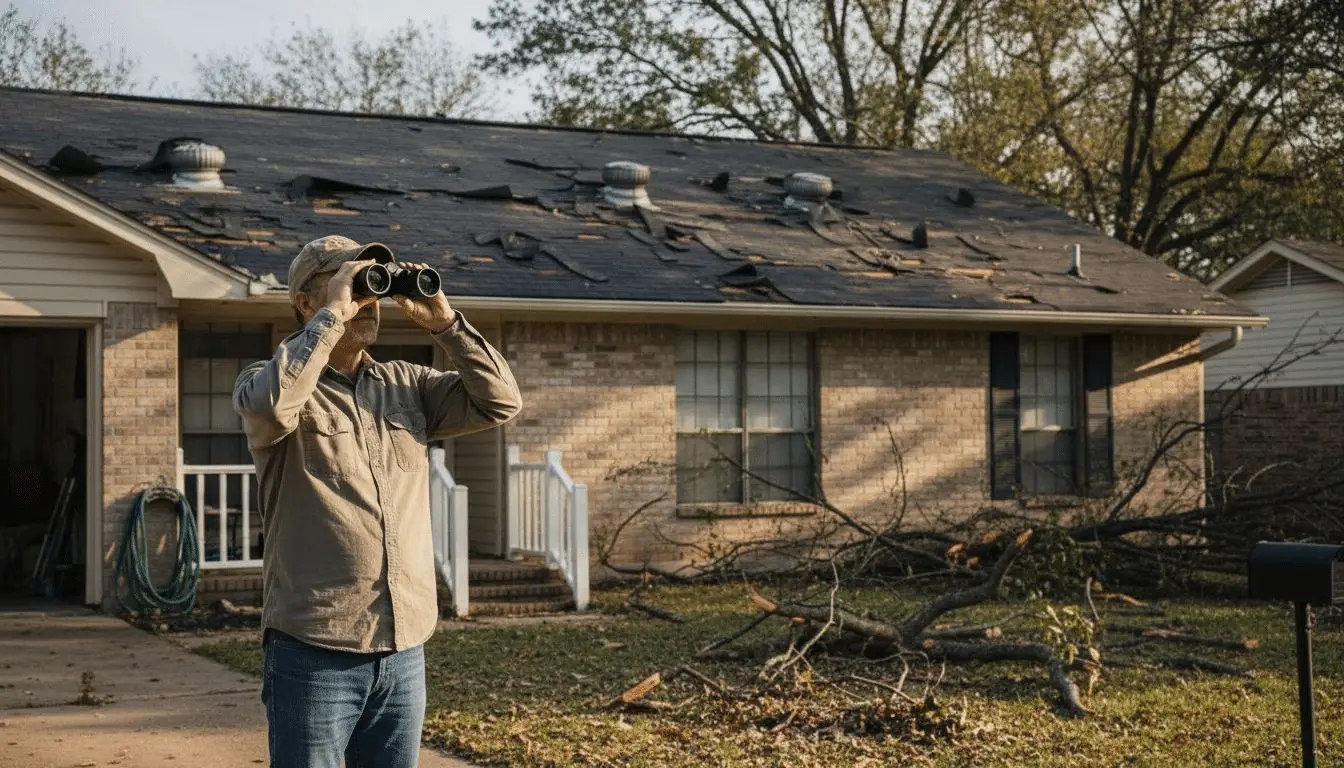
Pro tip: Conduct a visual roof inspection after any windstorm exceeding 45 miles per hour, using binoculars to safely assess potential damage from ground level.
2. Hail Impact: Spotting Dents, Cracks, and Granule Loss
Hail damage represents a serious threat to Texas roofing systems, capable of causing immediate and long-term structural problems. Understanding the nuanced signs of hail impact can help homeowners protect their most significant investment.
When hail strikes a roof, it creates distinctive patterns of damage that are critical to identify early. Roof hail damage can compromise your roof’s integrity in multiple ways:
- Soft metal surface dents on vents and flashings
- Random dark spots indicating shingle bruising
- Exposed black substrate where granules have been knocked away
- Circular impact marks with surrounding granule displacement
In Texas, hailstones can range from pea-sized to softball-sized during severe storms.
Damage occurs rapidly during hailstorms, with impacts potentially creating punctures or weakening protective granule layers. Some damage might be invisible from ground level and requires professional assessment.
Critical signs of significant hail damage include:
- Granules accumulating in gutters
- Exposed asphalt underneath shingle surfaces
- Indentations matching hailstone sizes
Pro tip: Schedule a professional roof inspection within 30 days of any hailstorm larger than marble-sized to document potential insurance claims.
3. Water Leaks: Finding Signs of Moisture and Mold
Water leaks represent one of the most insidious threats to Texas homes creating silent but potentially catastrophic damage to roofing structures. Understanding how to detect early warning signs can save homeowners thousands in potential repair costs.
Moisture intrusion can quickly transform from a minor inconvenience to a major structural problem. signs of roof leaks range from subtle discolorations to more obvious water stains.
Critical indicators of potential water damage include:
- Dark or yellowish ceiling stains
- Peeling paint around roof edges
- Musty odors in attic spaces
- Visible mold growth on interior walls
- Soft or sagging ceiling materials
Water damage can compromise your home’s structural integrity within weeks of initial leakage.
Mold growth often emerges within 24 to 48 hours in damp environments. Texas humidity accelerates this process exponentially making quick detection and intervention crucial.
Warning zones most susceptible to leaks:
- Roof valleys
- Around chimneys
- Near ventilation pipes
- Beneath skylights
Pro tip: Conduct a thorough interior and exterior roof inspection after major storms or annually to catch potential leak sources before they cause extensive damage.
4. UV Exposure: Understanding Sun Damage to Roofing Materials
Texas sunlight represents an unrelenting force that systematically breaks down roofing materials through continuous ultraviolet radiation exposure. Homeowners must understand how intense solar bombardment progressively deteriorates their roof’s protective layers.
Roof materials undergo significant stress from prolonged sun exposure, with specific vulnerabilities unique to different roofing types. The harsh Texas climate accelerates material degradation faster than in many other regions.
Key signs of UV-related roof damage include:
- Cracked and brittle shingles
- Discoloration and fading
- Warped or curling roofing edges
- Granule loss on asphalt shingles
- Chalky or powdery surface texture
Roofing materials lose approximately 30% of their protective capabilities after five years of continuous sun exposure.
Critical UV damage indicators:
- Surface material becoming increasingly porous
- Reduced reflective properties
- Accelerated material breakdown
- Compromised waterproofing capabilities
Pro tip: Consider installing UV-resistant roofing materials or applying protective coatings to extend your roof’s lifespan and minimize sun-related deterioration.
5. Tree and Debris Impact: Assessing Physical Roof Damage
Tree damage represents a significant yet often overlooked threat to residential roofing systems in Texas. Overhanging branches and falling debris can quickly transform from aesthetic landscaping features to potential roof destruction zones.
When examining potential storm damage restoration scenarios, tree impact becomes a critical assessment factor. Branches create multiple damage pathways that compromise roof structural integrity.
Key signs of tree and debris roof damage include:
- Punctured or torn shingle surfaces
- Scrape marks along roof edges
- Granule loss from direct branch contact
- Accumulated organic debris in roof valleys
- Visible indentations from fallen limbs
A single fallen branch can create thousands of dollars in potential roof repair costs.
Critical tree damage assessment zones:
- Roof edges and perimeter
- Valleys and low-slope areas
- Around chimneys and ventilation points
- Near gutter attachment zones
Pro tip: Trim trees within 10 feet of your roof annually and conduct post-storm inspections to catch potential damage before it becomes a major repair issue.
6. Poor Installation: Recognizing Faulty Roof Work
Poor roof installation represents a silent yet potentially catastrophic threat to Texas homeowners. Substandard workmanship can create vulnerabilities that compromise your entire roofing system years before its expected lifespan.
Identifying installation errors requires careful examination of specific roof repair indicators that signal underlying structural problems. Professional roofers recognize these red flags immediately.
Critical signs of faulty roof installation include:
- Uneven or misaligned shingle rows
- Visible nail pops through shingle surfaces
- Improper flashing around chimneys and vents
- Inconsistent shingle overlapping
- Gaps between roofing materials
Approximately 70% of roof failures stem directly from poor initial installation.
Key areas most prone to installation errors:
- Roof valleys and intersection points
- Chimney and skylight perimeters
- Gutter attachment zones
- Ridge and edge lines
Pro tip: Always request detailed installation documentation and manufacturer warranty information before any roofing project to protect your home investment.
7. Aging Roofs: Evaluating Wear, Tear, and Structural Weakness
Texas homeowners face unique challenges with aging roofing systems due to extreme weather conditions and intense solar radiation. Understanding the progressive signs of roof deterioration can help prevent catastrophic structural failures.
Roofs naturally degrade over time, with roof repair signs becoming increasingly critical as materials approach the end of their functional lifespan.
Key indicators of an aging roof include:
- Widespread granule loss on shingles
- Visible curling or cracking edges
- Soft or sagging roof sections
- Increased interior moisture
- Daylight visible through roof boards
The average residential roof in Texas lasts between 15 to 25 years depending on material quality.
Critical structural weakness zones:
- Roof valleys and low slope areas
- Regions around chimneys and vents
- Edges and perimeter sections
- Areas with minimal sun protection
Pro tip: Schedule professional roof inspections every two years to catch age-related issues before they become expensive emergency repairs.
Below is a comprehensive table summarizing the key issues, symptoms, and solutions for residential roof threats in Texas as discussed in the article.
| Issue | Symptoms of Damage | Solutions |
|---|---|---|
| Wind Damage | Curled, lifted shingles; visible gaps; granule loss | Inspect roof post-storm; address minor issues early. |
| Hail Impact | Dents on metal; dark spots; granule loss | Schedule inspections to assess and document potential claims. |
| Water Leaks | Ceiling stains; mold presence; musty odor | Fix leaks promptly to prevent structural damages and mold. |
| UV Exposure | Discoloration; cracking; brittle shingles | Install UV-resistant materials or apply protective coatings. |
| Tree and Debris Impact | Torn shingles; scrape marks; debris accumulation | Trim nearby branches regularly and inspect post-storm. |
| Poor Installation | Misaligned shingles; improper flashing; nail pops | Ensure proper installation by hiring qualified roofers. |
| Aging Roofs | Curling edges; sagging areas; visible wear | Conduct professional inspections biannually to monitor aging conditions. |
Protect Your Texas Home from the 7 Common Roof Damages with Expert Help
Every Texas homeowner faces unique challenges from wind damage, hail impact, water leaks, UV exposure, and more that can severely weaken your roof’s protection. Ignoring signs like broken shingles or water stains puts your home at risk of costly repairs and structural issues. Understanding what to look for is the first step, but having trusted professionals ready to respond is critical.
Our team at Buffalo Roofing & Exteriors specializes in tackling these exact problems with reliable solutions tailored for Texas weather conditions. From minor shingle repairs to full storm damage restoration you can depend on us for fast, quality work backed by warranties. Ready to safeguard your home?
Explore Roofing Services to learn how we address these issues day one
Browse Repairs Options if your roof shows signs of aging or recent storm damage
Contact Buffalo Roofing & Exteriors today for a free estimate and protect your investment before the next Texas storm strikes

Frequently Asked Questions
What are the most common signs of wind damage on roofs?
Wind damage on roofs can manifest as curled or lifted shingle edges, visible gaps, granule loss, and cracks. Inspect your roof after strong winds, focusing on the perimeter and corners where damage is most likely to occur.
How can I identify hail damage on my roof?
Hail damage often shows up as dents in metal surfaces, dark bruising on shingles, and granule loss. Schedule a professional inspection within 30 days after a hailstorm to assess potential damage before it worsens.
What should I look for to detect water leaks in my roof?
Look for dark or yellowish stains on ceilings, musty odors in your attic, and visible mold growth. Conduct a thorough inspection after heavy rain and annually to catch leak issues early and avoid costly repairs.
How can I assess UV damage to my roof materials?
Key indicators of UV damage include cracked and brittle shingles and discoloration. Check your roof regularly, especially if it’s over five years old, and consider applying protective coatings to extend its lifespan.
What preventive measures can I take against tree damage to my roof?
Trim overhanging trees to keep branches at least 10 feet away from your roof and regularly inspect for damage after storms. This practice can significantly diminish the risk of costly repairs from falling branches.
How can I tell if my roof was poorly installed?
Signs of poor installation include misaligned shingles, visible nail pops, and improper flashing. If you notice these issues, consult a roofing professional to assess your roof’s integrity and recommend necessary repairs.
Recommended
- 7 Essential Home Roofing Tips for Homeowners in Texas
- 7-Step Roof Maintenance Checklist 2026 for Texas Homes
- Why Regular Roof Maintenance Safeguards Texas Homes
- Roof Hail Damage – How it Impacts Texas Homes
- Public Adjuster Roof Claim Assistance For Residential & Commercial Solutions
- Roofing Company Corpus Christi TX