If you’ve heard that coastal Texas roofs simply can’t handle intense sun and storm damage while keeping energy bills low, TPO roofing challenges that belief. This single-ply membrane system combines exceptional UV reflection with proven storm durability, making it a smart choice for homeowners facing harsh coastal conditions. Many Texas homeowners remain uncertain about which roofing materials truly deliver on both energy savings and longevity. This guide explains exactly what TPO roofing is, how it works, and why it stands out as a practical solution for flat and low-slope roofs in coastal environments where heat, humidity, and hurricanes demand the best.
Table of Contents
- What Is TPO Roofing? Composition And Core Features
- Advantages Of TPO Roofing For Coastal Texas Homeowners
- Installation Essentials And Common TPO Roofing Issues To Avoid
- How TPO Compares To Other Roofing Options
- Explore TPO Roofing Options With Buffalo Roofing & Exteriors
- FAQ
Key takeaways
| Point | Details |
|---|---|
| TPO is a thermoplastic membrane | This single-ply roofing system is ideal for flat or low-slope roofs common in coastal Texas homes. |
| Reflects UV rays for energy savings | The bright white surface reduces cooling costs by 20-30% compared to darker roofing materials. |
| Meets rigorous durability standards | TPO membranes comply with ASTM standards for strength, tear resistance, and weather performance. |
| Proper seam welding is critical | Heat-welded seams create watertight barriers, but poor installation leads to leaks and failures. |
| Resists coastal storm damage | TPO roofing withstands wind, hail, and moisture better than many alternatives in hurricane-prone areas. |
What is TPO roofing? Composition and core features
TPO stands for thermoplastic polyolefin, a blend of polypropylene and ethylene propylene rubber engineered specifically for roofing applications. Manufacturers produce it as a single-ply membrane, typically reinforced internally with a polyester scrim that adds tensile strength and puncture resistance. This construction makes TPO roofing flexible yet durable enough to handle foot traffic during maintenance and resist mechanical stresses from debris or equipment.
The membrane comes in several thicknesses, commonly 45, 60, 80, and 90 mils. Thicker membranes offer greater durability and impact resistance, which matters in coastal Texas where hail and wind-blown debris pose real threats. Thinner options work for budget-conscious projects, but choosing 60 mil or thicker typically extends roof lifespan and reduces repair frequency.
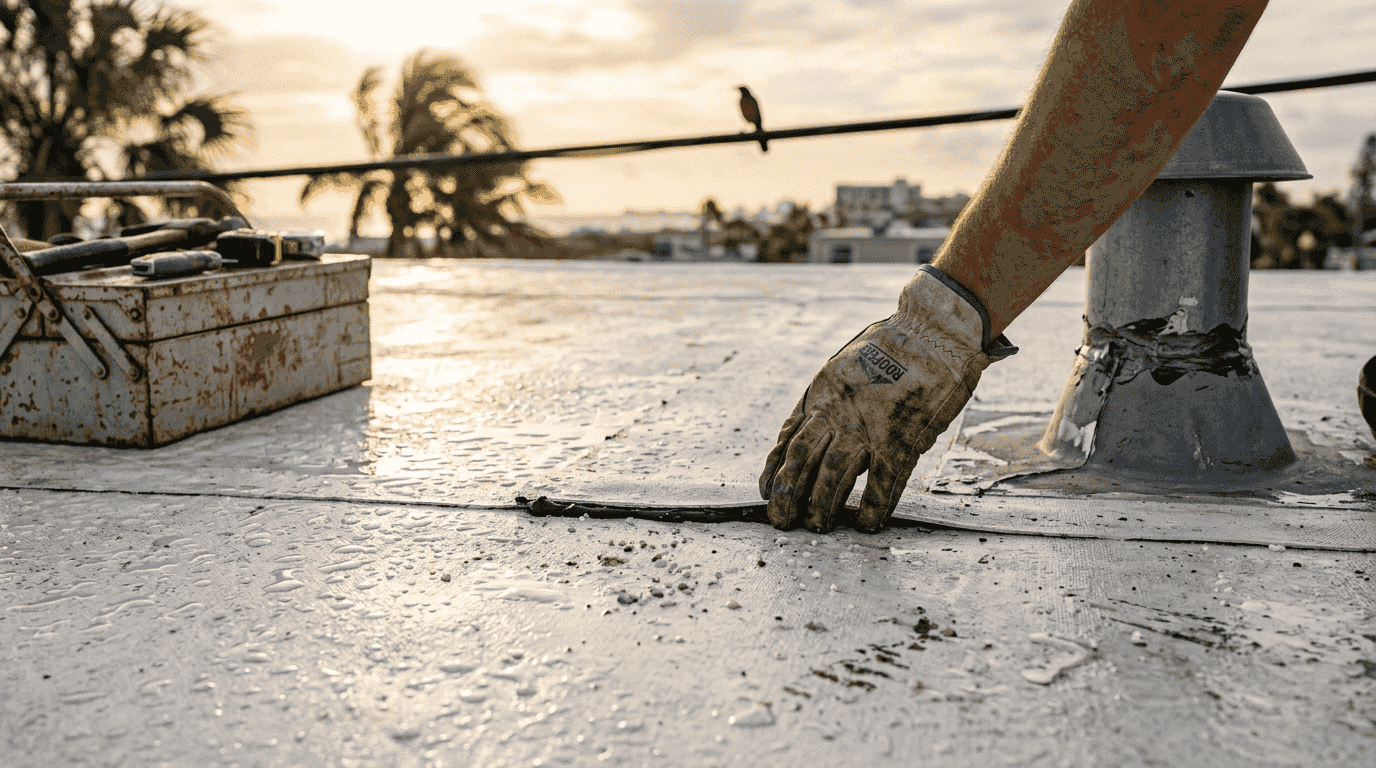
Installation involves laying TPO sheets over the roof deck and insulation, then heat-welding the seams on site to form a continuous waterproof barrier. This welding process uses hot air to melt the membrane edges together, creating bonds stronger than the material itself when done correctly. The result is a seamless roof surface with no adhesive gaps or tape failures.
TPO membranes are bright white and highly reflective, a key feature for energy efficiency. This color isn’t just aesthetic. It actively reflects solar radiation, keeping roof surfaces cooler and reducing heat transfer into your home. The system is designed mainly for flat or low-pitched roofs, making it popular in both commercial buildings and residential properties with modern architectural styles.
Key composition elements:
- Polypropylene and EP rubber blend for flexibility and weather resistance
- Polyester scrim reinforcement for tear and puncture strength
- UV stabilizers and antioxidants integrated during manufacturing
- Bright white surface for maximum solar reflectivity
- Available in widths up to 12 feet to minimize seams
For homeowners in Corpus Christi and surrounding coastal areas, understanding these basics helps you evaluate whether TPO roofing in Corpus Christi fits your home’s needs. With its composition clear, let’s explore why TPO roofing is so popular in North America and the benefits it offers.
Advantages of TPO roofing for coastal Texas homeowners
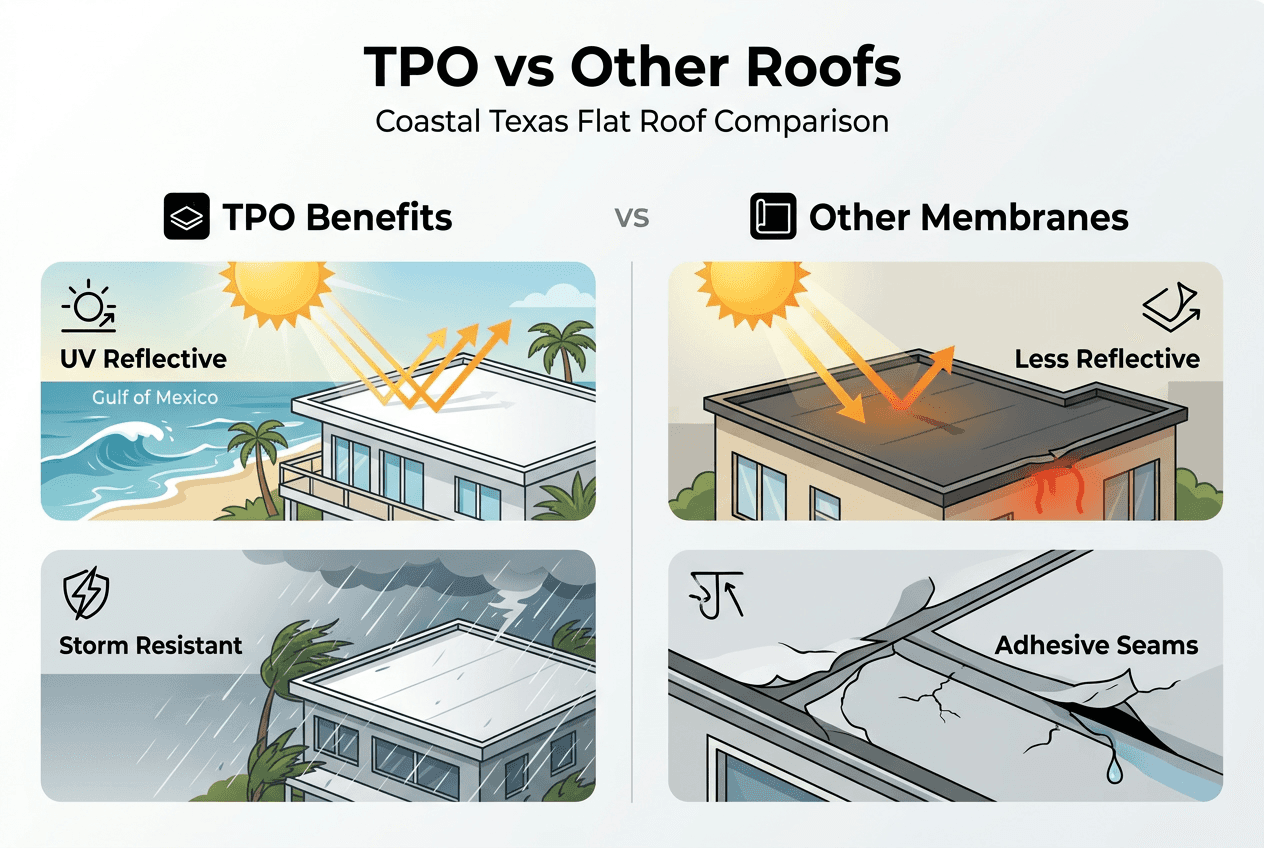
The bright white TPO surface reflects UV rays effectively, lowering indoor heat and reducing cooling costs by 20-30% compared to dark roofing materials. This energy efficiency translates directly into lower electricity bills during brutal Texas summers when air conditioning runs constantly. Over a 20-year roof lifespan, these savings add up substantially.
TPO membranes are engineered with UV stabilizers and antioxidants infused during manufacturing, enhancing durability under persistent sun exposure. These additives prevent the material from breaking down, cracking, or becoming brittle even after years of intense coastal sunlight. This built-in protection means your roof maintains its integrity and appearance longer than untreated alternatives.
They resist common coastal climate challenges such as heat aging, cracking, and ozone deterioration. Coastal environments combine salt air, high humidity, and temperature swings that accelerate roof degradation. TPO’s chemical composition specifically addresses these stressors, making it well-suited for homes near the Gulf of Mexico where conventional materials often fail prematurely.
TPO offers excellent resistance against wind, hail, and storm damage common to coastal Texas. The polyester reinforcement scrim helps withstand foot traffic and mechanical stresses during roof maintenance, preventing tears and punctures that compromise waterproofing. When hurricanes or severe thunderstorms strike, properly installed TPO roofing stays intact where weaker systems peel away or develop leaks.
It is cost-effective relative to alternatives like PVC and EPDM while maintaining high impact resistance. You get commercial-grade performance without the premium price tag, making TPO accessible for residential budgets. This value proposition explains why so many Texas homeowners choose TPO when replacing aging flat roofs or building new additions.
Pro Tip: Choosing a thicker membrane like 60 or 80 mil improves long-term durability in harsh coastal environments. The upfront cost difference is modest, but thicker membranes resist punctures better and extend replacement intervals, ultimately saving money over the roof’s lifetime.
“TPO roofs reduce cooling bills significantly, making them ideal for Texas homes facing intense summer heat.” — Industry research consistently shows these energy savings, particularly in regions with long cooling seasons and high electricity rates.
Additional TPO benefits:
- Resistant to algae and mold growth in humid climates
- Lightweight, reducing structural load on older homes
- Available in multiple widths to minimize seam count
- Compatible with various insulation types for custom R-values
- Environmentally friendly with recyclable components
For comprehensive protection, consider how weather-resistant roofing Texas homes need extends beyond just the membrane itself. Proper flashing, drainage, and substrate preparation all contribute to system performance. Understanding commercial roofing types for Texas also helps, since residential TPO installations often mirror commercial best practices.
Having seen its advantages, let’s clarify common installation considerations and potential problems to ensure a long-lasting TPO roof.
Installation essentials and common TPO roofing issues to avoid
Successful TPO roof installation begins with thorough substrate preparation: cleaning, repairing decking, and moisture scanning. Any existing moisture trapped in the roof assembly will cause problems later, so contractors must verify the deck is dry and structurally sound before laying new materials. Skipping this step leads to premature membrane failure and costly repairs.
Heat-welded seams create the watertight barrier, but improper temperature, speed, or surface conditions cause failures. Welding requires precise control. Too hot and the membrane burns or distorts. Too cool and the seam doesn’t bond fully. Contractors must adjust equipment based on ambient temperature, wind conditions, and membrane thickness to achieve consistent results.
Seam failure is the most common issue with TPO roofs, often due to improper welding techniques. When seams separate, water infiltrates the roof assembly, damaging insulation and decking. Other common problems include punctures and cuts, typically from dropped tools, HVAC equipment installation, or debris impacts during storms. Poor workmanship or jobsite shortcuts magnify these risks.
Regular inspection and maintenance help catch early signs of damage, especially after storms. Walking the roof twice yearly and after major weather events lets you spot small problems before they become expensive failures. Look for loose seams, surface cracks, ponding water, or damage around penetrations like vents and skylights.
Installation steps for proper TPO roofing:
- Prepare and inspect substrate for moisture, damage, and structural integrity
- Lay insulation boards and position TPO membrane sheets with proper overlap
- Conduct test welds on sample pieces and adjust welding equipment settings
- Execute consistent seam welding using hot air guns at correct temperature and speed
- Inspect weld integrity with peel tests, checking bond strength along seam length
- Complete final sealing around penetrations, edges, and terminations with proper flashing
Pro Tip: Hire experienced roofing contractors familiar with TPO specifics to avoid common pitfalls and maximize roof lifespan. Not all roofers have equal TPO expertise, and installation quality directly determines how long your roof performs. Ask about their welding certification and request references from similar coastal projects.
For existing TPO roofs showing signs of wear, professional TPO roof repair addresses issues before they escalate into full replacement scenarios. Small seam repairs or patch jobs cost a fraction of new installation and can extend your roof’s service life by years when done promptly.
Now that you understand installation needs, let’s compare TPO roofing to other popular roofing membranes to help you make an informed choice.
How TPO compares to other roofing options
TPO is generally less expensive than PVC but offers comparable energy savings and durability. Both materials provide excellent reflectivity and weather resistance, but PVC costs 15-25% more due to its chemical composition and manufacturing process. For budget-conscious homeowners seeking performance without premium pricing, TPO delivers exceptional value.
Compared to EPDM, TPO is more reflective and resistant to UV damage, leading to longer-lasting energy efficiency. EPDM rubber roofing comes in black, which absorbs heat rather than reflecting it. This fundamental difference means EPDM roofs contribute to higher cooling costs and faster material degradation in sunny climates. TPO’s white surface stays cooler and maintains its properties longer under intense sun exposure.
TPO membranes typically come in bright white, enhancing solar reflectivity versus the black EPDM. While EPDM now offers white versions, they cost more and represent a smaller market share. Standard EPDM remains black, making it less suitable for energy-conscious Texas homeowners dealing with scorching summers.
Installation of TPO requires heat welding seams, while EPDM uses adhesives or tapes, affecting repairability and leak potential. Welded seams create permanent bonds that won’t degrade over time like adhesives can. However, welding demands skilled labor and proper equipment. EPDM’s adhesive installation is simpler but creates potential failure points as adhesives age and lose bond strength.
Roofing membrane comparison:
| Feature | TPO | PVC | EPDM |
|---|---|---|---|
| Cost per square foot | $4-7 installed | $6-9 installed | $4-8 installed |
| Energy efficiency | Excellent reflectivity | Excellent reflectivity | Poor unless white |
| Lifespan | 20-30 years | 25-35 years | 20-25 years |
| Seam method | Heat welded | Heat welded | Adhesive/tape |
| Best for | Flat residential/commercial | Chemical exposure areas | Budget projects |
| UV resistance | Very good | Excellent | Fair to good |
Key comparison points:
- TPO offers the best cost-to-performance ratio for most residential applications
- PVC excels in environments with chemical exposure or grease, like restaurant roofs
- EPDM suits temporary structures or very tight budgets but sacrifices energy efficiency
- All three options outperform traditional built-up roofing in coastal environments
When evaluating roof materials for your home, consider your specific priorities. If energy savings top your list, TPO and PVC both deliver. If budget constraints dominate, EPDM might work short-term, but TPO’s energy savings often offset its slightly higher initial cost within a few years.
With these comparisons in mind, let’s explore how to apply this knowledge to your coastal Texas home roofing decisions.
Explore TPO roofing options with Buffalo Roofing & Exteriors
Now that you understand TPO roofing benefits and options, connecting with trusted local experts can help turn your roofing project into a success. Buffalo Roofing & Exteriors offers professional TPO roof installation and repair services across coastal Texas, bringing years of experience working with homes facing the region’s unique weather challenges. Their team understands how Gulf Coast conditions affect roofing performance and can recommend the right membrane thickness and installation approach for your specific situation.
Their expertise includes preparing roofs to resist harsh weather and reduce energy bills through proper insulation selection and ventilation design. They provide consultation on material choices tailored to your home’s architectural style, structural capacity, and budget constraints. Whether you’re replacing an aging flat roof or adding a new section to your home, their contractors ensure every detail meets industry standards.
Reach out for a free estimate or detailed roof inspection today. Their service areas include Corpus Christi, San Antonio, Victoria, and surrounding coastal communities where flat roof solutions make practical sense. Discover how weather-resistant roofing for Texas homes protects your investment while lowering operating costs. Explore comprehensive roof materials options to find the perfect fit for your project.
FAQ
Is TPO roofing suitable for residential homes in coastal Texas?
Yes, TPO roofing is well-suited for flat or low-slope residential roofs in coastal Texas due to its energy efficiency and storm resistance. It is commonly used on multifamily buildings and residential flat roof sections where its reflective properties and durability provide excellent value. The membrane’s ability to withstand salt air, humidity, and hurricane-force winds makes it ideal for Gulf Coast homes.
How long does a typical TPO roof last in coastal environments?
With proper installation and maintenance, TPO roofs typically last 20-30 years even in challenging coastal climates. Durability depends greatly on membrane thickness and quality of seam welding, with thicker membranes and expert installation extending lifespan toward the upper end of that range. Regular inspections and prompt repairs help maximize your roof’s service life.
What maintenance does a TPO roof require to stay durable?
Perform regular inspections for seam integrity and puncture damage, especially after storms. Keep the roof clean and free of debris that can trap moisture or cause abrasion. Address minor issues promptly to prevent leaks from spreading and damaging insulation or decking. Consult a commercial roof maintenance checklist designed for flat roofs in coastal areas to ensure you cover all critical inspection points.
Can TPO roofing reduce my energy bills?
Yes, the reflective white surface of TPO roofs can cut cooling costs by 20-30%, especially important in hot coastal Texas climates. This makes TPO roofing an energy-efficient choice for homeowners looking to lower electricity expenses while maintaining comfortable indoor temperatures. The savings accumulate year after year, often paying back the initial investment within the roof’s first decade of service.