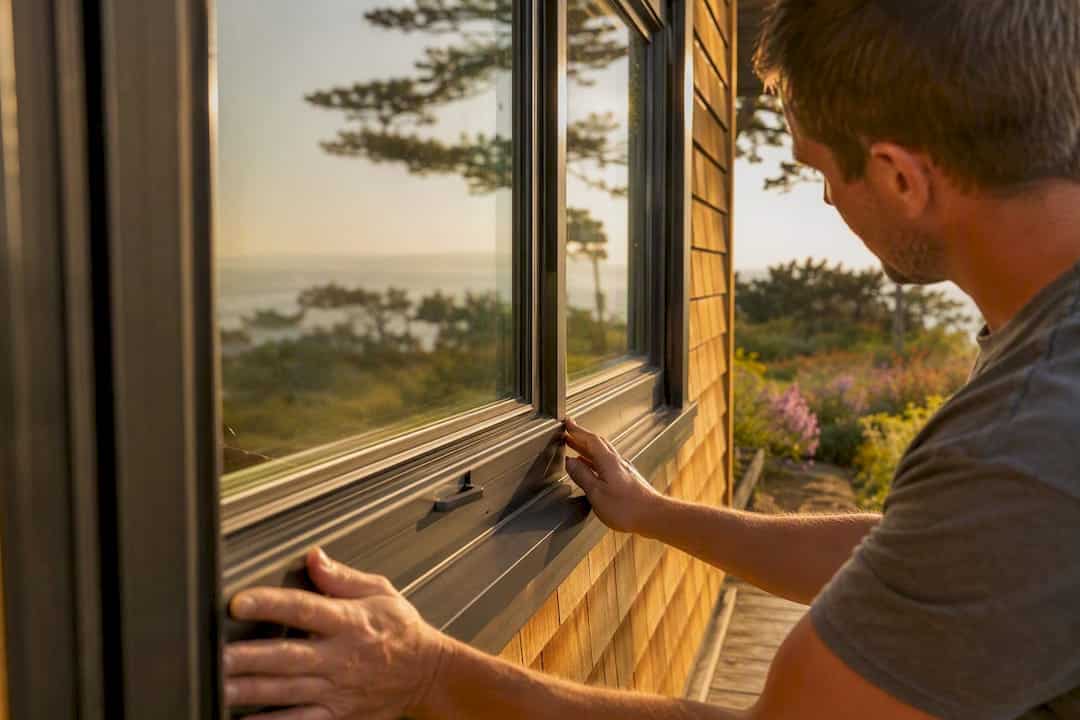
Replace windows now if they’re leaking, fogging, or failing. Hold off on purely cosmetic upgrades unless comparable homes in your market already have updated windows.
TL;DR:
- Replacing only failed or fogged windows provides the most reliable resale value and insurance incentives, especially if the units show visible problems.
- The typical energy savings from upgrading to ENERGY STAR certified double-pane windows can offset a significant portion of costs, particularly in colder climates.
- Costs vary widely based on installation type, materials, glass options, and regional factors; custom sizes and full-house projects usually yield better per-window prices.
- The highest ROI window options are double-pane, gas-filled, Low-E units, while triple-pane offers limited additional benefit in most southern climates like Texas.
- Proper installation, ongoing maintenance, and documentation are critical to maximizing long-term value and ensuring eligibility for tax credits and resale uplift.
Table of Contents
- Window Replacement ROI: The Resale and Energy Numbers
- What Do Windows Cost, and What Drives the Price?
- How Much Will New Windows Save on Energy Bills?
- Do New Windows Really Add Value at Resale?
- Building Your Own Window Replacement ROI Estimate
- Should You Replace Windows Before Selling or Wait?
- Why Professional Installation Protects Your Window ROI
- Does Regular Maintenance Change Your Long-Term ROI?
- How Windows Compare to Other Energy-Saving Home Upgrades
- Which Window Type Gives You the Best Return?
- Balancing the Numbers With How the House Actually Feels
- Get a Window Estimate Built Around Your Actual ROI
- Where to Verify These Numbers Yourself
- Sources
Window Replacement ROI: The Resale and Energy Numbers
Value data summarized by Zonda](https://ibuyer.com/blog/do-new-windows-increase-home-value/).
That resale number is only half the ROI picture. The other half is what you save on utility bills every month you own the home, which the resale percentage doesn’t capture at all.
- Resale recovery: 60% to 85% of project cost, typically returned at closing through a higher sale price.
- Energy savings: Ongoing, compounding over years you live in the house before any sale happens.
- Dollars vs. percent: A pricier fiberglass or wood project can add more total resale dollars even with a lower recovery percentage than a cheaper vinyl job.
That last point trips people up. Run the math on your own numbers before assuming the highest percentage wins.
What Do Windows Cost, and What Drives the Price?
Installed window costs run roughly from a few hundred to over a thousand dollars per window, with most standard vinyl double-pane units falling in the lower to mid price range before labor. Labor typically adds a moderate additional cost per window on top of the material cost.
A handful of variables move that number more than anything else:
- Installation type: Pocket replacement (new sash into the existing frame) costs less than new-construction installation, which involves removing the frame down to the studs, according to Consumer Reports’ buying guide.
- Material: Vinyl is the budget option, fiberglass and composite sit in the middle, and wood commands a premium.
- Glass package: Low-E coatings, double-pane versus triple-pane, and gas fills (argon or krypton) all add cost and change energy performance.
- Region and labor market: Coastal Texas installers factor in hurricane-rated glazing requirements that inland markets never see.
- Storm-rated glass: Impact-resistant windows for coastal wind zones cost more upfront but can reduce insurance premiums.
Custom sizes and odd openings push unit prices up fast, and a full-house job of 15 to 20 windows usually earns a better per-unit rate than a one-off replacement. Always ask contractors for a line-item quote broken out by window, glass package, and labor, not a single lump number. That’s the only way to see where your money is actually going.
How Much Will New Windows Save on Energy Bills?
One concrete example: a homeowner in the EPA’s northern climate zone replacing 10 inefficient single-pane windows with ENERGY STAR models can expect to save around $568 a year, roughly 12% of typical heating and cooling costs for that scenario, per ENERGY STAR’s residential window data. If you’re already running newer double-pane windows, expect a much smaller jump.
Here’s how to check what you might actually qualify for:
- Confirm ENERGY STAR Most Efficient status on the specific product you’re buying, not just “ENERGY STAR certified,” since credit eligibility depends on the higher tier.
- File IRS Form 5695 when you claim the energy efficient home improvement credit, which covers 30% of product cost up to $600 for windows as part of combined annual limits, according to ENERGY STAR’s federal tax credit page.
- Keep every receipt and NFRC or ENERGY STAR label from the job, since the IRS explicitly requires this documentation if your claim gets reviewed.
- Check DSIRE for state and utility rebates tied to your ZIP code, since these stack on top of the federal credit in many areas.
Pro Tip: Confirm a product’s ENERGY STAR Most Efficient eligibility with your contractor before signing the contract, not after installation. Credits and rebates are tied to specific model numbers, and you can’t retroactively upgrade a product that doesn’t qualify.
Do New Windows Really Add Value at Resale?
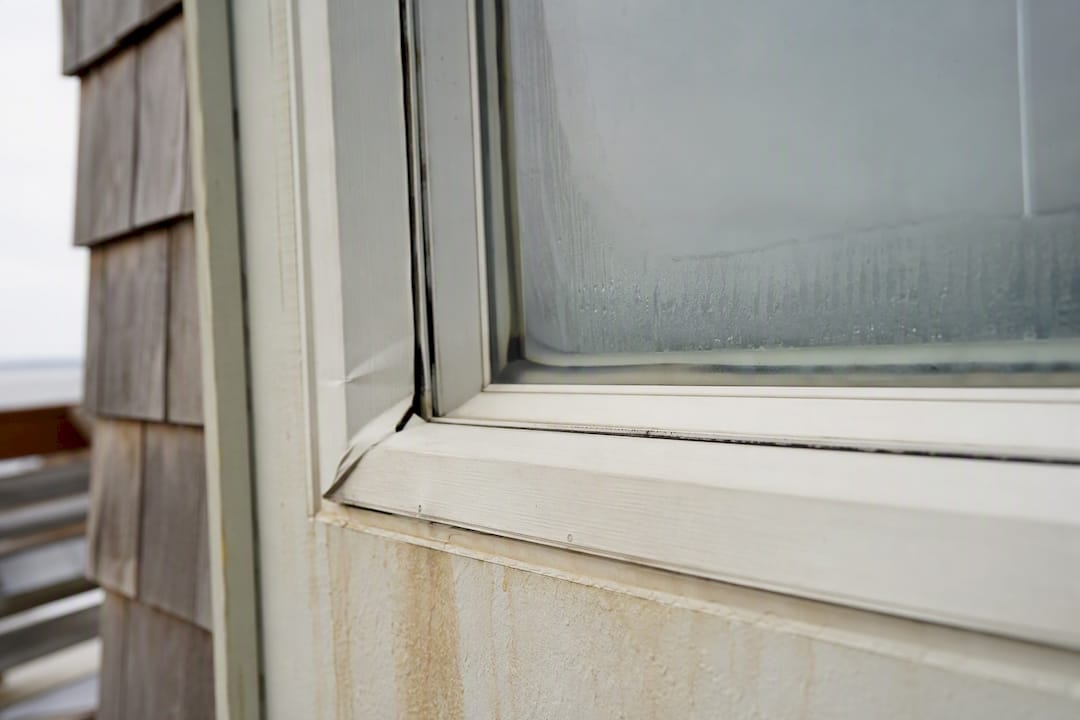
Appraisers and buyers respond most to windows that visibly failed, not windows that simply looked dated. A window with a broken seal, visible fog between panes, or a frame that won’t latch tells a buyer’s inspector there’s a problem, and that shows up as a negotiating point or a price cut long before it shows up as an upgrade credit.
Value data reports](https://ibuyer.com/blog/do-new-windows-increase-home-value/) for full-house vinyl jobs. That’s real money back, but it’s not the full project cost.
A few things determine whether you’ll actually see that uplift:
- Appraisers credit condition, not brand names. They note “updated windows” as a positive condition factor, not a line-item dollar add like a bathroom remodel.
- Buyers respond to functional problems more than cosmetic ones. Painted-shut sashes and single-pane glass in a cold climate raise more objections than slightly dated grille patterns.
- Soft markets change the math. In a buyer’s market, a seller-paid credit or straight price reduction sometimes nets you more than the cost of a full replacement, especially with a tight closing timeline.
If your windows work fine and just look old, a full replacement right before listing is often the weaker move financially.
Building Your Own Window Replacement ROI Estimate
The formula is straightforward: Total ROI = (Resale Uplift + Lifetime Energy Savings + Tax Credits and Rebates) ÷ Project Cost.
You need three real numbers to run it: your actual project cost from a written quote, a resale uplift estimate (use the Cost vs. Value percentage for your material, or better, recent comps from homes with updated windows in your neighborhood), and your expected energy savings plus any credits you’ll actually claim.
Here’s a worked version using sourced averages:
To stress-test your own numbers:
- Run a conservative scenario using the low end of resale recovery and no assumed tax credit, since credit eligibility isn’t guaranteed on every product.
- Run an optimistic scenario using the high end of recovery plus a confirmed credit and rebate stack.
- Weigh your timeline: if you’re selling within a year, the resale uplift dominates the math; if you’re staying five-plus years, energy savings and comfort matter more than the resale percentage.
Should You Replace Windows Before Selling or Wait?
Replace now if windows show seal failure, fogging between panes, wood rot, or sashes that won’t open and close, since a failed window is one of the more reliable resale-value triggers buyers and inspectors actually flag. Delay purely cosmetic replacements unless your local comps show every competing listing already has updated windows.
Watch for these red flags when you’re collecting quotes:
- No NFRC label or ENERGY STAR documentation offered for the proposed product.
- No written warranty covering both materials and labor.
- A vague or unscheduled installation timeline with no firm start date.
Pro Tip: Ask every contractor bidding your job the same three questions: What NFRC and ENERGY STAR documentation will I receive at completion? What’s covered under the written warranty, and for how long? What’s my firm installation start and finish date? Compare the answers side by side, not just the bottom-line price.
Why Professional Installation Protects Your Window ROI
Poor installation voids warranties and can disqualify tax credit claims even on a qualifying product. Buffalo Roofing & Exteriors installs ENERGY STAR-capable windows across South Texas and provides the NFRC labels, receipts, and written warranty documentation you need for both credit filings and appraisal purposes. Ask for a written warranty, full product spec sheets, and a documented project checklist before work begins.
Does Regular Maintenance Change Your Long-Term ROI?
A window’s ROI doesn’t stop compounding the day it’s installed. Vinyl frames need little beyond occasional cleaning, while wood frames require repainting or resealing every few years to avoid rot that erases the resale gains you just paid for. Skipped maintenance on any material eventually shows up as the same seal failures and fogging that trigger buyer objections in the first place.
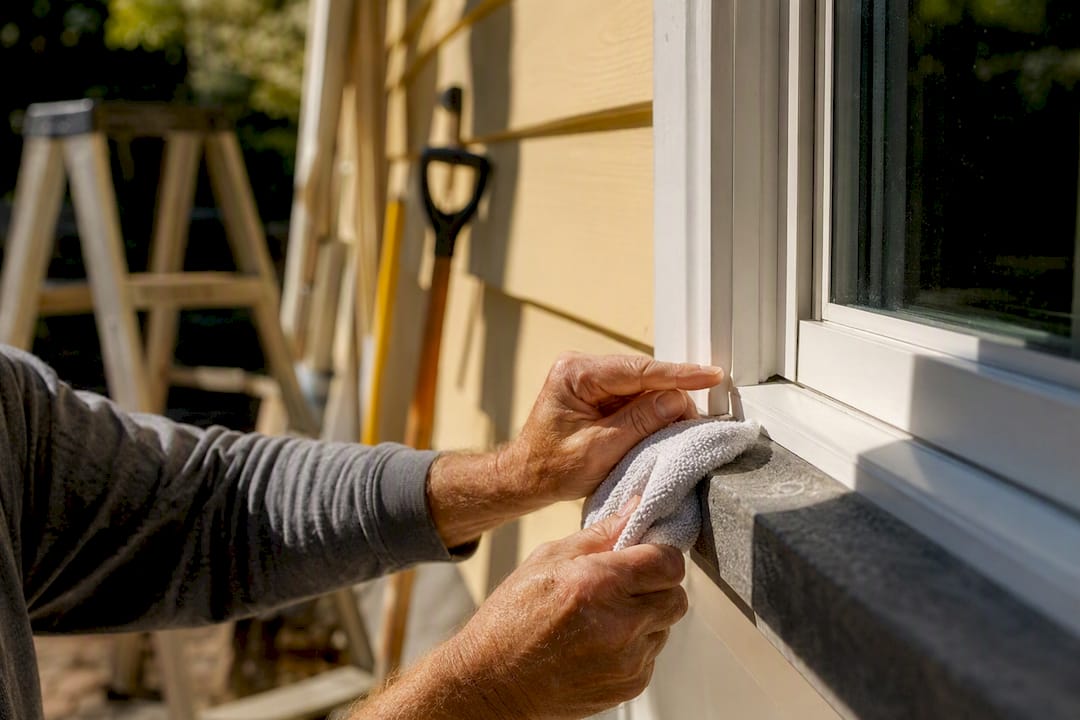
Gas-filled insulated units lose a small amount of their fill gas over decades, which gradually reduces their thermal performance. That’s a slow decline, not a sudden failure, but it means the energy savings you calculated in year one won’t hold at year twenty without occasional inspection. Hardware, weep holes, and weatherstripping matter more than most homeowners assume. A window with excellent glass but a warped frame or a clogged weep hole leaks air and water regardless of how good the glazing package is on paper.
The practical takeaway: budget for periodic caulk and weatherstripping refreshes, and treat a 15 to 20 year lifespan as typical for quality vinyl or fiberglass windows rather than a guarantee. Homeowners who skip basic upkeep often find their “20-year” windows performing like 10-year windows well before the warranty period ends, which quietly erodes both the energy savings and the resale case you built your ROI estimate around.
How Windows Compare to Other Energy-Saving Home Upgrades
Window replacement isn’t the only lever homeowners pull for energy savings, and it’s worth knowing where it ranks. Attic insulation upgrades and air sealing typically deliver a faster payback period than windows because the material cost is lower and the percentage improvement in a poorly insulated attic is often larger than what a window swap achieves on its own.
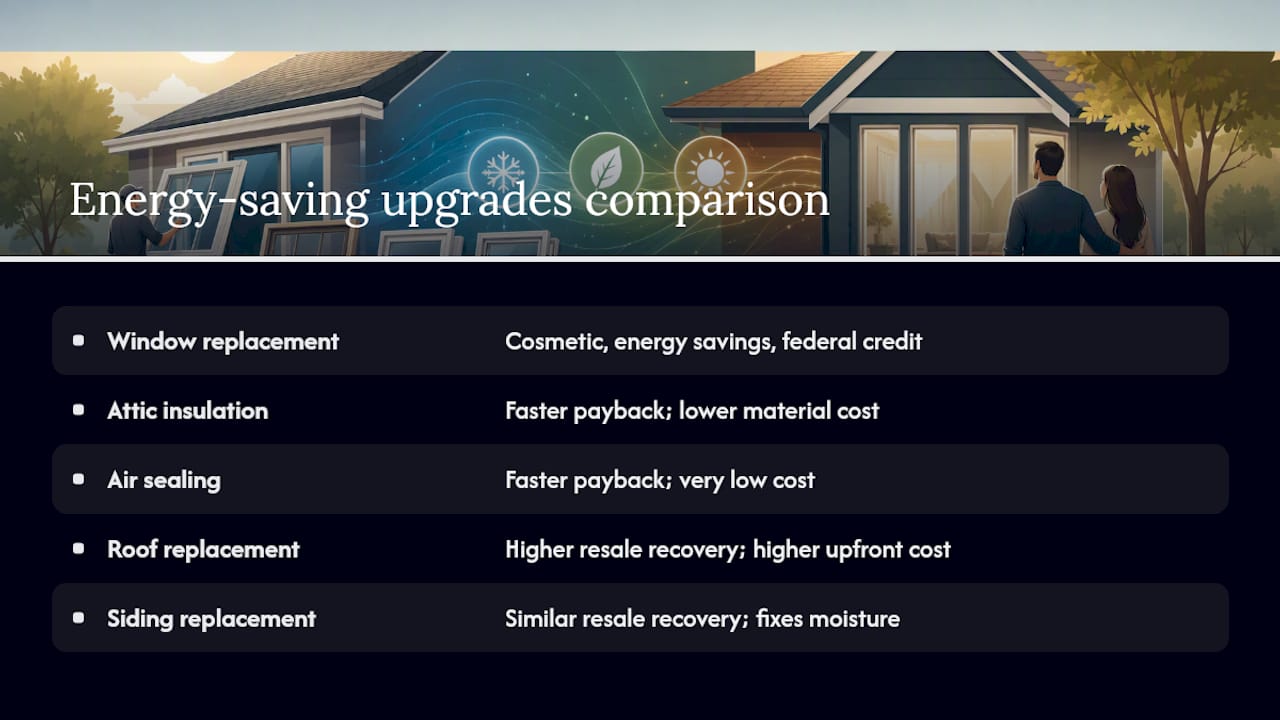
Roof replacement, particularly with reflective or impact-rated materials, tends to produce a stronger resale recovery percentage than windows in most Cost vs. Value reporting, though the upfront cost is usually higher too. Siding replacement lands in a similar range to windows on resale recovery, while also addressing moisture intrusion that windows alone can’t fix.
Where windows win is the combination: no other single upgrade delivers a visible cosmetic update, a documented energy-savings figure, and a federal credit opportunity in one project. HVAC upgrades save more energy per dollar in many climates but add nothing to a buyer’s first impression walking up to the house. If you’re choosing between competing projects with a fixed budget, prioritize whichever one fixes a visible defect first. A failed window or a roof near the end of its service life will cost you more in a home inspection negotiation than either one saves you in a full replacement quote.
Which Window Type Gives You the Best Return?
Double-pane, gas-filled, Low-E glass is the baseline that delivers the strongest jump in energy performance relative to cost, according to DOE guidance, especially when you’re replacing old single-pane units. That’s the sweet spot for most homeowners chasing ROI rather than chasing the highest-end spec sheet.
Triple-pane windows add real thermal performance and noise reduction, but the incremental cost rarely pays back through energy savings alone within a typical ownership window. They make more sense in very cold climates or on a busy road where noise reduction has its own value beyond the utility bill. For most of South Texas, triple-pane’s marginal benefit over double-pane Low-E is hard to justify financially.
Gas fills (argon is standard, krypton is pricier and used mainly in narrower triple-pane assemblies) boost insulation value modestly. Frame material affects ROI too: vinyl remains the resale sweet spot on cost recovery percentage, while fiberglass and wood cost more but can support a higher listing price in markets where buyers expect premium materials. Match the window spec to your actual climate and resale timeline, not to whatever the showroom sample happens to highlight.
Balancing the Numbers With How the House Actually Feels
Prioritize windows that are failing, letting in water, or driving visible energy waste. Those repairs protect the structure and your health, and the resale math backs them up. Beyond that, ROI is one input, not the whole decision. If you’re staying put for another decade, the comfort and quiet you gain every day can outweigh a modest resale percentage.
— Results
Get a Window Estimate Built Around Your Actual ROI
Most contractors quote a price and move on. Buffalo Roofing & Exteriors builds the estimate around what you actually need to substantiate resale value and tax credit eligibility, since that documentation gap is where homeowners lose money they were entitled to keep.

Every window job includes an on-site inspection, ENERGY STAR-capable product options, a written warranty, and financing if you need it. When you schedule your estimate, ask for the same three things covered earlier: NFRC and ENERGY STAR labels for the exact product, warranty terms in writing, and a firm installation timeline. Buffalo Roofing & Exteriors serves homeowners across Corpus Christi, San Antonio, and Victoria, and provides the full documentation packet you’ll need whether you’re filing for a federal credit or preparing a listing packet for an appraiser. Review the window replacement process or request a free estimate to see where your project lands on the numbers above.
Where to Verify These Numbers Yourself
Check ENERGY STAR’s tax credit page for current eligibility, IRS Form 5695 instructions for filing, DOE’s window guidance, and Cost vs. Value resale data before finalizing your own estimate. For a broader look at how upgrades affect resale value beyond windows, One Day Doors & Closets covers related home-value improvements worth reviewing.
Sources
- Windows & Skylights Tax Credit | ENERGY STAR
- How to claim an energy efficient home improvement tax credit – exterior doors, windows, skylights and insulation materials | Internal Revenue Service
- Replacement windows buying guide | Consumer Reports
- Do New Windows Increase Home Value in 2026? | iBuyer (Zonda summary)