
TL;DR:
- An exterior renovation workflow guide integrates site assessment, permitting, material selection, and phased construction to ensure storm resilience. It emphasizes coordinating inspections, selecting impact-rated materials, and maintaining the structure’s envelope throughout the project for long-term durability. Consistent post-renovation inspections and maintenance are essential to sustain storm-hardening efforts and protect the property from hurricane damage.
An exterior renovation workflow guide is a structured, phase-by-phase plan that sequences assessments, permitting, material selection, and construction to protect storm-prone homes from hurricane-force conditions. In coastal Texas and similar high-wind regions, skipping any phase of this process costs homeowners far more than the renovation itself. This guide covers the full exterior renovation process, from initial site evaluation through post-construction maintenance, with specific attention to regulatory compliance, storm-hardening materials, and phased inspection scheduling. Follow this workflow and you avoid the two most expensive mistakes in coastal renovation: failed inspections and envelope failures during a storm.
What are the key preparatory assessments for exterior renovations?
Every effective step-by-step exterior remodel begins with a thorough site assessment before a single permit is filed or material ordered. Skipping this phase is the single most common reason renovations stall mid-project.

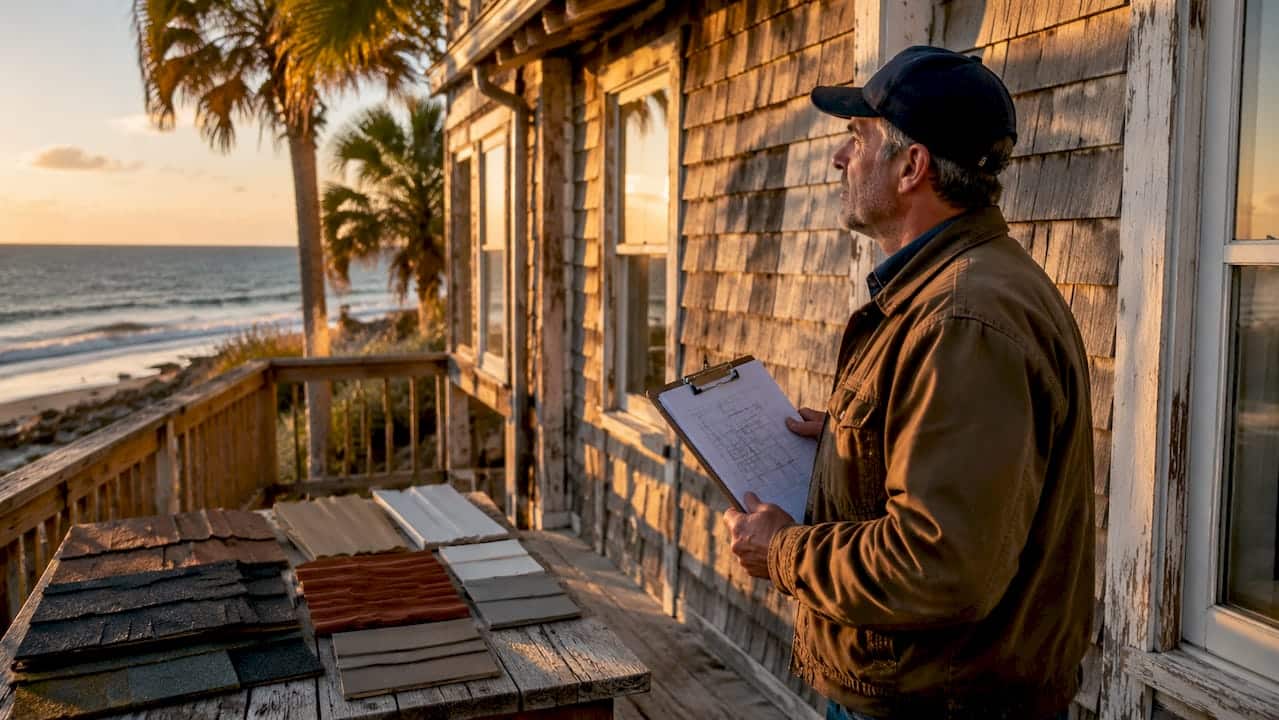
Wind and flood zone classification sets the scope for everything that follows. ASCE 7-22 defines wind design speeds by location, and coastal Texas properties frequently fall in zones requiring 130 mph or higher design loads. Your local floodplain map (available through FEMA) determines whether your foundation, sill plates, and drainage systems need upgrading alongside the visible exterior work.
Structural vulnerability documentation is the next priority. Focus on these specific areas:
- Roof-to-wall connections: check for existing hurricane straps or clips in the attic. Attic inspections are best done in early morning or cooler months using a flashlight and protective gear to safely assess hurricane tie coverage.
- Building envelope openings: windows, doors, and garage doors are the highest-risk failure points.
- Soffit and fascia condition: deteriorated soffits allow wind-driven rain into the attic before the roof itself fails.
- Foundation-to-wall connections: look for anchor bolts and sill plate integrity at the base of exterior walls.
Historic district status adds a regulatory layer that changes your material options entirely. If your property falls within a designated historic district, the Board of Architectural Review or an equivalent body must approve exterior alterations before permits are issued. Document existing window profiles, trim details, and siding patterns with high-resolution photos and measurements before any demolition planning begins.
Pro Tip: Create a single project folder with your wind zone classification, flood zone designation, survey photos, and existing material specs before your first contractor meeting. Contractors who receive complete documentation upfront submit more accurate bids and fewer change orders.
Which regulatory and permitting steps must be integrated into the workflow?
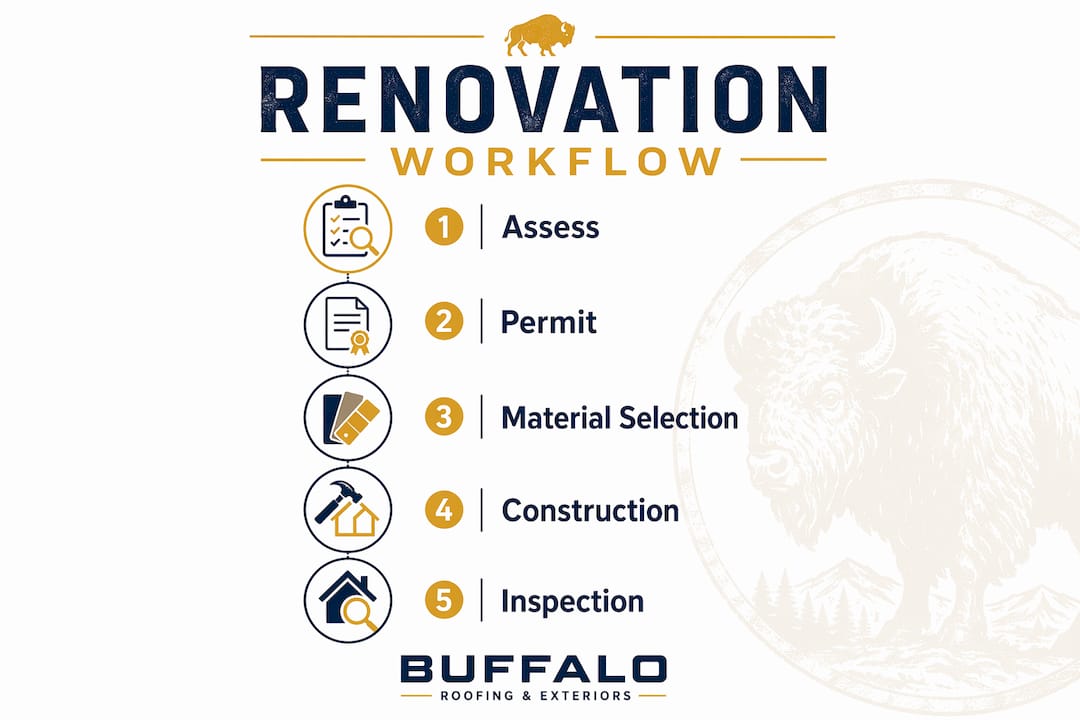
Permitting is not a box to check before construction starts. In hurricane-regulated zones, permits and inspections are woven into the construction schedule itself, and treating them as a separate administrative task causes costly work stoppages.
Here is the permitting sequence that applies to most coastal exterior renovation projects:
- Pre-application research: Confirm jurisdiction requirements. Miami-Dade County, for example, requires multi-discipline plan review with timelines ranging from 3 to 26 weeks depending on project scope. Texas coastal jurisdictions vary, but expect 4 to 12 weeks for complex exterior scopes.
- Permit application submission: Submit complete structural drawings, material specifications, and product approval documentation simultaneously. Incomplete submissions restart the review clock.
- Plan review approval: Structural, zoning, and sometimes historic preservation reviewers may work in sequence or parallel depending on your jurisdiction.
- Permit issuance and construction start: Post the permit on site before any demolition begins.
- Phase-based inspections: Phased inspections occur at substrate, intermediate, and final stages. Each milestone must be documented and approved before the next phase proceeds.
- Certificate of completion: Final inspection sign-off closes the permit and protects your insurance coverage.
For properties in historic districts, add a parallel track. Charleston’s Board of Architectural Review meets bi-weekly, meaning a missed submission window adds two weeks to your timeline. Historic district approvals typically require 30 to 60 days for exterior alterations, with DP certification required for replacement windows. Build that buffer into your Gantt chart from day one.
Experienced project managers embed permitting reviews and inspection scheduling directly into their construction timelines. This keeps crews working on compliant phases while reviews process, rather than shutting down the entire site.
How do you select materials that ensure storm resilience?
Material selection for a home exterior improvement project in a storm-prone area is not primarily an aesthetic decision. Wind resistance ratings, impact certification, and corrosion resistance determine whether your renovation survives the next major storm.
Roofing and sheathing
Class H architectural shingles carry a 150 mph wind rating and outperform standard 3-tab shingles significantly in uplift testing. Pair them with 8d ring-shank nails at 6-inch spacing and Simpson H2.5 hurricane ties, which improve uplift resistance from 170 lbs to over 500 lbs per connection. That single hardware upgrade costs a fraction of a roof replacement after a storm.
Windows and doors
The primary cause of hurricane damage is failure of building envelope openings. When a window fails, internal pressure rises rapidly and the roof lifts off from the inside. Impact-rated windows and doors carry a DP (Design Pressure) rating that specifies both wind load and impact resistance. Verify the DP label matches your wind zone before purchase, not after installation.
Siding comparison
| Material | Wind resistance | Coastal durability | Notes |
|---|---|---|---|
| Fiber cement (HardiePlank) | Up to 130 mph | Excellent, moisture-resistant | Requires painting; heavier installation |
| Vinyl siding (premium grade) | Up to 110 mph | Good with UV-resistant coating | Lower cost; check wind rating per product |
| Engineered wood (LP SmartSide) | Up to 200 mph (with proper fastening) | Good with sealed edges | Requires strict fastening schedule |
| Stucco over CMU | Excellent structural | Excellent | Requires proper weep screed detailing |
Pro Tip: Request the Florida Product Approval number or Texas Department of Insurance approval documentation from your supplier before ordering. A product that lacks third-party certification will fail inspection regardless of how well it is installed.
The building enclosure functions as a continuous moisture-managed system. Selecting individual high-performance products without coordinating their interfaces creates gaps at the roof-to-wall and wall-to-window junctions where water intrusion begins.
What is an effective phased construction and inspection workflow?
A phased construction sequence aligns your crews, your inspections, and your envelope protection into one continuous flow. Here is the standard sequence for a full exterior renovation in a storm-prone zone:
- Demolition and structural assessment: Remove existing cladding, document all framing conditions, and install temporary weather barriers immediately. Never leave sheathing exposed overnight without protection.
- Structural tie-down upgrades: Install hurricane straps, anchor bolts, and any required shear wall panels before covering framing. This is your first inspection milestone.
- Roofing and sheathing upgrade: Apply new sheathing with ring-shank nails, install synthetic underlayment, then complete the roofing system. Seal all penetrations before proceeding.
- Window and door installation: Set impact-rated units with proper flashing and sill pan drainage. This is typically your second inspection milestone.
- Siding and cladding application: Install weather-resistant barrier, then cladding per manufacturer fastening schedules. Intermediate inspection often occurs here.
- Trim, soffit, and finishing: Complete all penetration sealing, caulking, and paint or coating systems.
- Final inspection and documentation: Walk the inspector through each completed phase with your documentation package.
Managing weather interruptions and inspection delays
Weather stoppages are predictable in coastal Texas. Build a two-week weather buffer into your schedule between roofing and window installation phases. If an inspection fails, the most common causes are improper flashing at window heads, missing hurricane tie documentation, and fastener spacing violations. Address these with your contractor before scheduling the re-inspection to avoid a second delay.
| Phase | Inspection milestone | Common failure point |
|---|---|---|
| Structural tie-down | Framing inspection | Missing or incorrect hurricane strap model |
| Roofing and sheathing | Substrate inspection | Nail spacing and sheathing thickness |
| Window and door installation | Rough opening inspection | Flashing and sill pan drainage |
| Siding application | Intermediate inspection | Fastener schedule and WRB laps |
| Final completion | Final inspection | Sealant gaps and missing documentation |
For debris removal between demolition and new construction phases, coordinate a dedicated haul-away schedule so material staging areas stay clear for inspector access.
How can you verify quality and maintain storm resilience long-term?
Post-renovation inspection and maintenance are where most homeowners lose the value of their investment. A storm-hardened exterior degrades faster than a standard one if maintenance is deferred, because coastal environments accelerate corrosion, UV degradation, and sealant breakdown.
Run through this checklist within 30 days of project completion and again after every named storm:
- Continuous load path hardware: Inspect visible hurricane straps and anchor bolts for corrosion or movement.
- Window and door seals: Check perimeter caulking for cracking or separation, particularly at corners and sill pans.
- Roofing fasteners and flashing: Look for lifted shingles, exposed nail heads, and flashing gaps at chimneys and vents.
- Siding and trim: Check for fastener back-out, panel gaps, and paint or coating failure at cut edges.
- Soffit and fascia: Confirm no gaps that allow wind-driven rain or pest entry.
Schedule a professional exterior inspection every spring before hurricane season and document findings with photos and written notes. This documentation supports both insurance claims after a storm and warranty claims for materials that fail prematurely.
Pro Tip: Keep a maintenance log with dates, photos, and contractor names for every repair. Insurance adjusters and warranty administrators both respond faster to claims backed by documented maintenance history.
Expert phased renovation plans in historic flood zones strategically scope work across multiple years to avoid triggering costly code upgrades. The same logic applies to maintenance: address minor sealant and fastener issues annually rather than deferring until a full re-cladding is required.
Key takeaways
A storm-resilient exterior renovation requires integrating site assessment, permitting, storm-rated materials, and phased construction into one coordinated workflow from the first day of planning.
| Point | Details |
|---|---|
| Assess before you plan | Document wind zone, flood zone, and structural vulnerabilities before filing any permits or ordering materials. |
| Build permits into the schedule | Embed inspection milestones into your construction Gantt chart to prevent costly work stoppages. |
| Match materials to wind ratings | Verify DP ratings, product approvals, and fastener schedules before purchasing windows, roofing, or siding. |
| Sequence construction by envelope | Complete structural tie-downs before roofing, roofing before windows, and windows before cladding. |
| Maintain and document annually | Inspect hardware, seals, and cladding every spring and after storms to protect warranties and insurance coverage. |
What working on coastal renovations taught me about workflow discipline
Most homeowners treat the exterior renovation process as a linear checklist: assess, permit, build, done. After years of working on storm-prone properties across coastal Texas, I can tell you the real workflow is circular. Permitting findings change your material specs. Material lead times shift your inspection schedule. Weather interruptions reset your envelope protection priorities.
The single habit that separates successful projects from expensive disasters is what I call the “envelope closed” mindset. At every phase transition, ask whether the building is protected from water intrusion before the crew leaves for the day. Temporary barriers, sealed penetrations, and covered openings are not optional steps. They are the difference between a renovation that stays on budget and one that adds mold remediation to the scope.
I have also seen homeowners underestimate permit lead times by half. A 6-week estimate becomes 12 weeks when structural drawings are incomplete or a historic review board meeting is missed. The contractors who deliver on time are the ones who treat the permit office as a project partner, not an obstacle. Call your reviewer, ask what they need, and submit complete packages the first time.
Balancing aesthetics with structural priorities is the hardest conversation in coastal renovation. Impact-rated windows look different from original wood sash profiles. Fiber cement siding does not replicate the texture of original wood clapboard exactly. These are real trade-offs, and they deserve honest discussion early in the planning process, not after materials are ordered.
— Buffaloroofingandexteriors
How Buffaloroofingandexteriors supports your exterior renovation
Buffaloroofingandexteriors brings deep experience in storm-resistant roofing, siding, windows, and full exterior renovation projects across Corpus Christi, San Antonio, and Victoria. The team understands Texas coastal building codes, local permitting timelines, and the material standards that coastal homes require to perform through hurricane season.
Whether you are planning a full coastal exterior renovation or need guidance on storm-rated roof materials for your next project, Buffaloroofingandexteriors offers free estimates and financing options to make the process straightforward. Contact the team today for a personalized exterior renovation plan built around your home’s specific wind zone and code requirements.
FAQ
What does an exterior renovation workflow guide include?
An exterior renovation workflow guide covers site assessment, permitting, material selection, phased construction sequencing, and post-renovation maintenance. For storm-prone homes, it also integrates wind zone compliance, impact-rated product specifications, and inspection milestone scheduling.
How long does permitting take for a coastal exterior renovation?
Permitting timelines range from 3 to 26 weeks depending on project scope and jurisdiction. Miami-Dade and similar high-regime hurricane zones require multi-discipline plan reviews and phased inspections that must be built into the construction schedule from the start.
What materials are required for storm-hardened exterior renovations?
Storm-hardened exteriors require impact-rated windows and doors with verified DP ratings, ring-shank nails at code-specified spacing, hurricane ties such as the Simpson H2.5, and wind-rated cladding systems. Each product must carry third-party certification matching your local wind zone classification.
Why does construction sequencing matter in a storm-prone exterior remodel?
Correct sequencing keeps the building envelope protected at every phase transition. Structural tie-downs must be complete before roofing, roofing before windows, and windows before cladding. Out-of-sequence work exposes the structure to water intrusion and triggers failed inspections.
How often should a renovated exterior be inspected in a coastal area?
Inspect the full exterior every spring before hurricane season and within 30 days after any named storm. Focus on hurricane strap corrosion, sealant integrity at windows and doors, roofing fasteners, and siding fastener back-out to catch failures before they escalate.