TL;DR:
- Roofing upgrades that incorporate reflective materials, attic insulation, and proper ventilation significantly reduce energy costs and enhance storm resilience for coastal homeowners. High-performance materials like reflective metal and cool shingles, combined with air sealing and insulation, maximize savings and extend roof lifespan. Proper installation practices and choosing coastal-specific products are crucial for achieving these benefits and increasing property value.
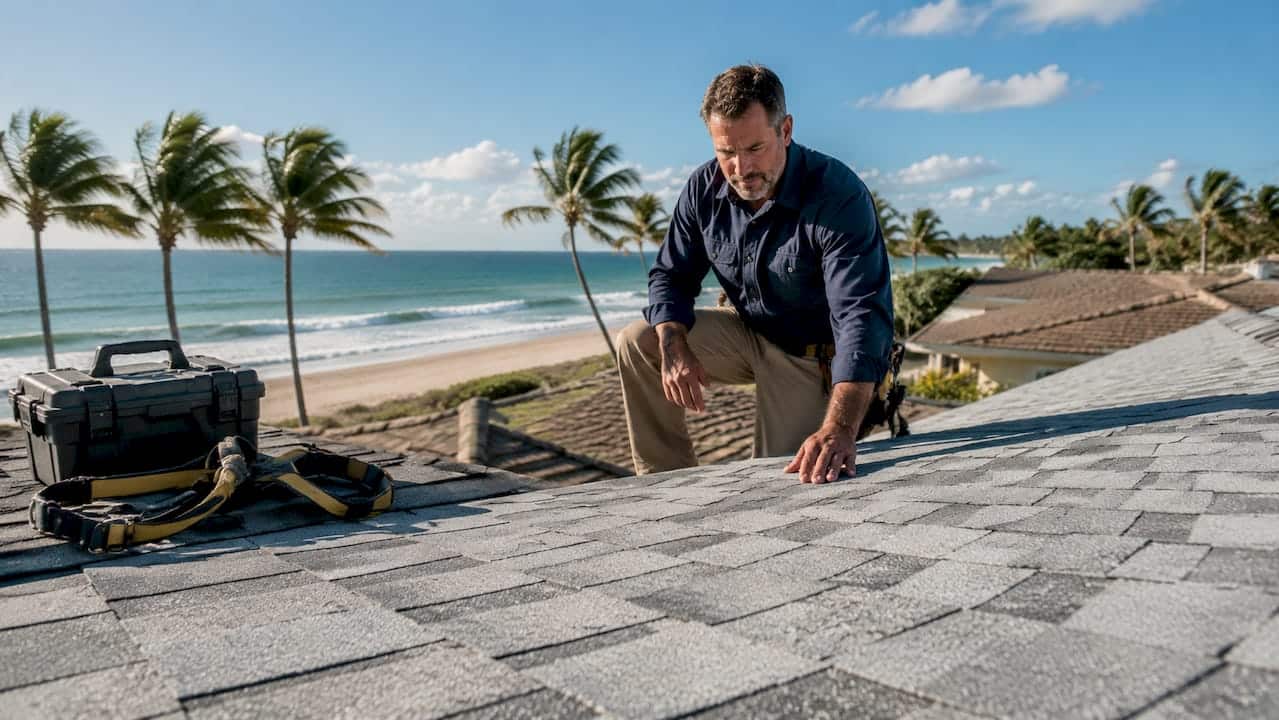
Roofing upgrades for energy savings are defined as material and system installations designed to reduce solar heat gain, improve insulation, and enhance ventilation, resulting in lower utility bills and greater home comfort. For coastal homeowners in Texas and similar Gulf Coast markets, this is not a luxury decision. It is a financial one. Reflective metal roofing cuts cooling-related energy costs by 25 to 35%, and combining cool roofs with R-49 attic insulation saves $500 to $1,300 annually. When you factor in storm resilience and insurance discounts, the case for upgrading your roof becomes one of the strongest investments you can make as a coastal homeowner.
1. Which roofing materials provide the best energy savings in coastal areas?
The best roofing materials for savings in coastal climates are those that reflect solar radiation, resist wind-driven rain, and hold up under salt air exposure. No single product wins on every front, so understanding the trade-offs is what separates a smart upgrade from an expensive mistake.
Reflective metal roofing is the top performer for energy efficiency. Metal roofs reduce cooling costs by 25 to 35%, saving coastal homeowners $500 to $840 per year, with a payback period of 7 to 12 years. That payback shortens considerably when you factor in reduced storm damage claims and a lifespan that often exceeds 50 years.
Cool asphalt shingles offer a more affordable entry point. Products like Atlas Roofing’s Pinnacle Sun shingles have improved Solar Reflectance Index by 15 to 25% in 2026, delivering higher reflectivity without sacrificing color variety. Cool shingles keep attics up to 20°F cooler in summer and reduce cooling costs by 7 to 15% in warm coastal climate zones.
Clay and concrete tiles are a strong third option. They provide natural air gaps beneath the tile surface that reduce heat transfer, and they carry excellent wind resistance ratings. They are heavier than metal or shingles, so your roof structure must be assessed before installation.
White TPO membranes are the go-to for flat or low-slope roofs common on coastal commercial and residential properties. Their high solar reflectance makes them one of the most effective flat roof options for reducing cooling loads in hot, humid climates.
| Material | Cooling savings | Lifespan | Best for |
|---|---|---|---|
| Reflective metal | 25–35% | 40–70 years | High-wind coastal zones |
| Cool asphalt shingles | 7–15% | 25–30 years | Budget-conscious upgrades |
| Clay or concrete tile | 10–20% | 50+ years | Aesthetic-focused homes |
| White TPO membrane | 20–30% | 20–30 years | Flat or low-slope roofs |
2. How attic insulation and ventilation multiply your energy savings
Replacing your roofing material without addressing what is underneath it is one of the most common and costly mistakes coastal homeowners make. The full energy-saving potential lies in the roof as an integrated assembly, not in any single product upgrade.
The Department of Energy recommends R-49 attic insulation for hot, humid climates like South Texas. Combining that insulation level with a cool roof delivers the $500 to $1,300 in annual savings cited earlier. Air sealing during a roof replacement costs $500 to $1,500 upfront and yields $100 to $300 in yearly savings on top of that, with a lifetime project value reaching $19,500 to $43,500.
Ventilation is equally critical. Ridge vents and soffit vents work together to pull hot air out of the attic and draw cooler air in from below. Wet or compressed insulation loses its thermal performance dramatically, and trapped attic heat drives up utility costs even when premium materials are installed above. Proper ventilation keeps insulation dry and effective year-round.
Here is what a complete attic upgrade during a roof replacement should include:
- Inspect and replace any wet, compressed, or damaged insulation before installing new roofing
- Add ridge and soffit vents sized to the attic square footage for balanced airflow
- Seal all penetrations including pipes, chimneys, and electrical conduits with foam or caulk
- Upgrade to R-49 blown-in or spray foam insulation if current levels fall below R-30
- Verify that bathroom and kitchen exhaust fans vent outside, not into the attic space
Pro Tip: Ask your contractor to perform a blower door test before and after your roofing project. This test measures air leakage in your home and gives you a measurable before-and-after comparison of how much your air sealing work actually improved efficiency.
For a broader look at how insulation and windows work together in coastal Texas homes, the interaction between your roof assembly and your wall system matters more than most homeowners realize.
3. Can cool roof coatings extend energy savings without full replacement?
Cool roof coatings are elastomeric or acrylic products applied directly over an existing roof surface to increase solar reflectance and reduce heat absorption. They are the most practical retrofit option for homeowners who need energy performance improvements but are not yet ready for a full replacement.
These coatings work best on flat and low-slope roofs where standing water and UV exposure are the primary degradation factors. On a flat roof in Corpus Christi, a white elastomeric coating can reflect 80 to 90% of incoming solar radiation, compared to 5 to 15% for an uncoated dark surface. That difference translates directly into reduced air conditioning runtime and lower monthly bills.
Pro Tip: Cool roof coatings typically need reapplication every 5 to 10 years depending on UV exposure and foot traffic. Budget for maintenance from the start rather than treating it as a one-time fix.
The limitations are real. Coatings do not fix structural problems, improve wind resistance, or replace deteriorated underlayment. If your roof has active leaks, soft decking, or is more than 20 years old, a coating is a short-term measure at best. The smarter play is to pair a coating with attic insulation upgrades so you get measurable savings while planning for a full replacement within the next few years.
Situations where coatings make strong financial sense:
- Flat or low-slope roofs in good structural condition
- Roofs with 5 to 10 years of remaining life where full replacement is not yet justified
- Rental properties or commercial buildings where minimizing capital expenditure is a priority
- Homes where attic insulation has already been upgraded and the roof surface is the remaining gap
4. Installation best practices that determine whether your upgrade actually performs
The quality of installation determines whether your energy-efficient roofing system delivers on its promise or underperforms from day one. Premium materials installed incorrectly produce mediocre results. A well-integrated roofing system that includes proper ventilation layout, underlayment, and air sealing is what actually produces the energy savings you are paying for.
Follow this sequence during any roofing renovation for better insulation and long-term performance:
- Inspect the roof decking. Soft spots, rot, or delamination in the plywood or OSB must be repaired before any new material goes on top. Damaged decking compromises the entire system.
- Select the right underlayment. Synthetic underlayments outperform traditional felt in coastal environments because they resist moisture absorption and hold up better under wind-driven rain during installation.
- Install flashing at every transition. Step flashing, drip edge, and valley flashing prevent water intrusion at the points where your roof meets walls, chimneys, and skylights. Flashing failures are the leading cause of post-installation leaks.
- Balance ventilation intake and exhaust. The ratio of soffit vent area to ridge vent area must be matched. An imbalanced system creates negative pressure zones that pull conditioned air out of your living space.
- Seal all penetrations before closing up. Pipes, conduits, and chimneys are the most common air leakage points. Closed-cell spray foam applied at these transitions creates a continuous thermal barrier that rigid board insulation cannot match.
- Verify product compatibility. Not all underlayments, coatings, and ventilation products are designed to work together. Your contractor should confirm that every component in the assembly is rated for coastal exposure and compatible with the primary roofing material.
Pro Tip: Request a written ventilation plan from your contractor before work begins. It should specify the number and placement of intake and exhaust vents, calculated against your attic’s square footage. Contractors who cannot produce this document are guessing.
5. How roofing upgrades improve home value and insurance costs in coastal markets
Energy-efficient roofing upgrades deliver financial returns beyond the utility bill. In coastal Texas markets, where wind events and hail are annual realities, the right roof directly affects your insurance premium and your home’s resale value.
Metal and tile roofs that qualify under Florida Building Code wind resistance standards show meaningful insurance savings alongside energy bill reductions. Texas insurers apply similar logic. A roof rated for 130 mph wind resistance is a lower-risk asset, and carriers price that accordingly. Some homeowners in Corpus Christi and the surrounding coast report premium reductions of 20 to 30% after upgrading to a qualifying metal or impact-resistant shingle system.
The home value argument is equally strong. Buyers in coastal markets pay a premium for homes with newer, storm-rated roofs because they know they are inheriting reduced insurance costs and lower maintenance risk. A roof that also carries energy efficiency credentials, such as ENERGY STAR certification or a high Solar Reflectance Index rating, adds a second layer of buyer appeal.
Key financial benefits of energy-efficient, storm-resistant roofing upgrades:
- Insurance premium reductions tied to wind resistance ratings and impact resistance classifications
- Increased resale value from buyers who factor in insurance costs and roof age
- Extended roof lifespan that reduces the frequency of full replacement cycles
- Reduced HVAC wear because a cooler attic means your air conditioner runs less, extending equipment life
- Financing options that spread the upfront cost while savings begin immediately. Roof replacement financing is worth exploring before assuming the project is out of reach.
Key takeaways
The most effective roofing upgrades for energy savings in coastal homes combine reflective materials, R-49 attic insulation, balanced ventilation, and professional air sealing into a single coordinated project.
| Point | Details |
|---|---|
| Material selection matters | Reflective metal roofing cuts cooling costs by 25 to 35%; cool shingles reduce them by 7 to 15%. |
| Insulation multiplies savings | Combining cool roofs with R-49 insulation saves $500 to $1,300 annually. |
| Ventilation is non-negotiable | Wet or unventilated insulation loses thermal performance and drives up utility costs. |
| Coatings are a viable retrofit | Cool roof coatings on flat roofs reflect up to 90% of solar radiation without full replacement. |
| Insurance and value gains are real | Wind-rated roofs in coastal Texas markets reduce premiums and increase resale appeal. |
What I have learned after years of coastal roofing projects
Most homeowners walk into a roofing project focused on the shingle color or the metal panel profile. That is understandable. What they do not see is that the material on top is only about 40% of the performance equation. The other 60% lives in the attic: the insulation depth, the ventilation balance, and the quality of air sealing at every penetration.
The trade-off on reflective roofs that rarely gets mentioned is the winter heating effect. Cool roofs can slightly increase winter heating costs by reflecting solar heat that would otherwise warm the home passively. In South Texas, where winters are mild and summers are brutal, this trade-off is almost always worth it. In a climate with genuine cold seasons, the math changes. Know your climate before committing.
My strongest advice for coastal homeowners is this: hire a contractor who understands the 2026 roofing trends specific to your region, not a generalist who applies inland installation practices to a coastal environment. Salt air, high humidity, and hurricane-force wind loads require specific product selections and installation techniques. The difference between a roof that lasts 15 years and one that lasts 40 years in Corpus Christi is almost always the contractor’s familiarity with coastal conditions, not the price of the materials.
— Buffaloroofingandexteriors
Ready to upgrade your roof for energy savings and storm protection?
Buffaloroofingandexteriors works with coastal homeowners across Corpus Christi, San Antonio, and Victoria to design roofing systems that cut utility bills and hold up through hurricane season. The team specializes in reflective metal roofing, cool shingle systems, and flat roof membranes, all installed with the ventilation and air sealing work that makes the energy savings real.
Browse the full range of energy-efficient roof materials available for coastal Texas homes, or explore completed roofing upgrade projects to see the results firsthand. Free estimates and financing options are available. Contact Buffaloroofingandexteriors to schedule your consultation and find out exactly how much you could save.
FAQ
What roofing material saves the most energy in coastal climates?
Reflective metal roofing delivers the highest energy savings, cutting cooling costs by 25 to 35% and saving coastal homeowners $500 to $840 annually. Its combination of solar reflectance, wind resistance, and 40 to 70-year lifespan makes it the strongest performer in Gulf Coast conditions.
Do I need to replace my whole roof to improve energy efficiency?
No. Cool roof coatings applied to existing flat or low-slope roofs can reflect up to 90% of solar radiation and reduce cooling loads significantly without full replacement. Upgrading attic insulation and air sealing during a partial repair also delivers measurable savings.
How does attic insulation affect my energy bills?
Attic insulation at R-49 combined with a cool roof saves $500 to $1,300 per year. Without adequate insulation, even premium reflective roofing materials cannot prevent heat from entering your living space through the attic floor.
Can a new roof lower my homeowner’s insurance premium?
Yes. Metal and impact-resistant roofs that meet wind resistance standards recognized by Texas insurers can reduce premiums by 20 to 30% in coastal markets. The savings depend on your carrier, your roof’s wind rating, and local building code compliance.
How long does it take for a roofing upgrade to pay for itself?
Reflective metal roofing has an estimated payback period of 7 to 12 years based on energy savings alone. When insurance premium reductions and increased home resale value are included, the effective payback period is typically shorter.