TL;DR:
- Attic ventilation is essential for regulating temperature, removing moisture, and preventing roof damage through natural airflow. Proper balance of intake and exhaust vents, with NFVA following IRC standards, optimizes efficiency and protects roof longevity. Neglecting ventilation causes moisture buildup, higher energy costs, and voids warranties, making professional assessment critical.
Attic ventilation is defined as the controlled exchange of air through your attic space, designed to regulate temperature, remove moisture, and protect your roof structure from the inside out. The role of attic ventilation goes far beyond a few vents in the eaves. Without it, your attic becomes a heat trap in summer and a moisture chamber in winter, silently damaging insulation, framing, and shingles while driving up your energy bills. IRC Section R806 sets the federal baseline for how much ventilation every home must have, and most homeowners have no idea whether their attic meets it.
How attic ventilation works to control moisture and temperature
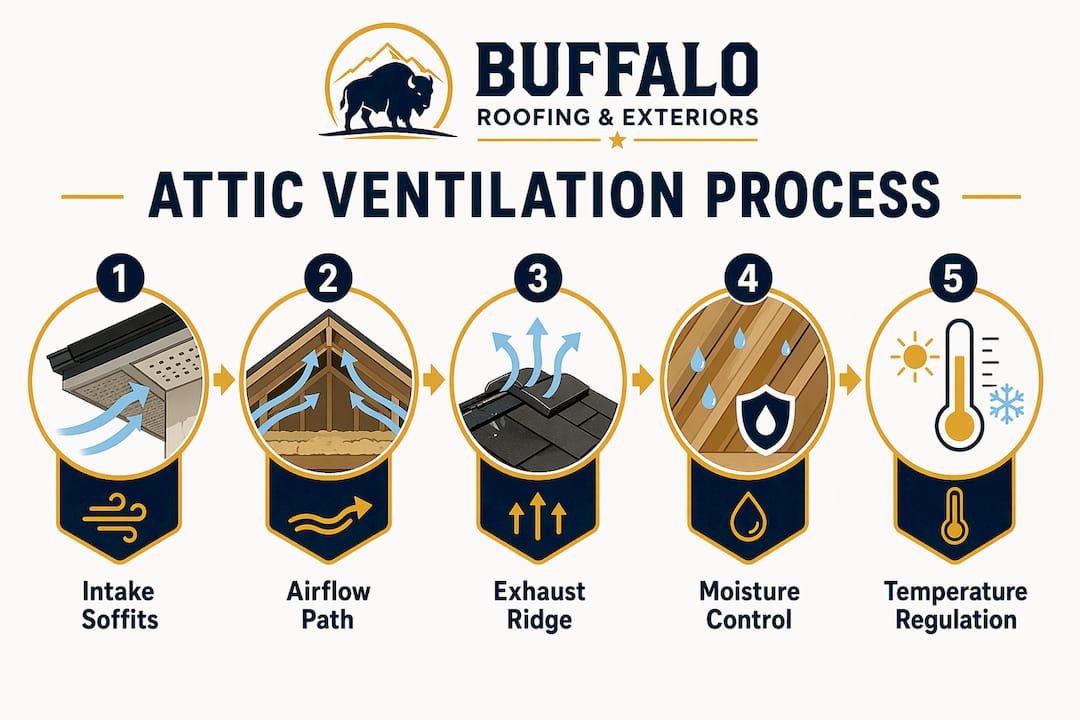
Attic ventilation operates on two natural physical forces: the stack effect and the Venturi effect. The stack effect occurs when warm air rises and escapes through exhaust vents near the roof ridge, drawing cooler replacement air in through intake vents at the soffits. The Venturi effect adds to this by using wind pressure over the roof ridge to pull air through the attic even on calm days. Together, these forces create continuous passive airflow that costs nothing to run and requires no moving parts.
The airflow path matters as much as the vent count. Cool air enters at the soffits, travels up along the underside of the roof deck, and exits at the ridge. This movement carries moisture out of the attic before it can condense on wood framing and insulation. Warm, moisture-laden air from your living space leaks upward through ceiling penetrations around light fixtures, plumbing, and attic hatches. Ventilation removes that moisture before mold and wood rot take hold.
The attic airflow benefits extend to your roof deck directly. When attic temperatures spike 30 to 40°F above outdoor levels, shingles bake from below as well as above. That double heat source accelerates adhesive breakdown and granule loss faster than any weather event. Keeping air moving through the attic keeps the deck cooler and the shingles intact longer.
Key components of a working attic ventilation system include:
- Soffit vents (intake): positioned at the lowest point of the roof overhang to admit cool outside air
- Ridge vents (exhaust): running along the peak of the roof to release hot, humid air
- Baffles: foam or cardboard channels installed between rafters to keep insulation from blocking soffit airflow
- Gable vents: supplemental exhaust points on the triangular end walls of the attic
Pro Tip: Install rafter baffles from the soffit to at least 12 inches past the top of the insulation. Without them, blown-in insulation migrates toward the eaves and blocks the intake path entirely, turning your ventilation system into a dead end.
What do building codes require for attic ventilation?
IRC R806 sets the national minimum: 1 square foot of Net Free Ventilation Area (NFVA) for every 150 square feet of attic floor area. That ratio drops to 1:300 if you install a Class II or better vapor retarder on the warm side of the ceiling and split the venting at least 40% intake low and 40% exhaust high. Most homes with properly balanced soffit and ridge vents qualify for the 1:300 ratio, which means less total vent area is required when the system is designed correctly.
NFVA is not the same as the nominal size printed on a vent package. Net Free Ventilation Area accounts for the actual open area after screens, louvers, and baffles reduce airflow. A 16×8-inch soffit vent might carry a nominal area of 128 square inches but deliver only 55 square inches of NFVA. Always check the manufacturer’s NFVA rating, not the product dimensions, when calculating compliance.
The table below shows how compliant and non-compliant setups compare in real terms:
| Feature | Compliant setup | Non-compliant setup |
|---|---|---|
| Ventilation ratio | 1:150 or 1:300 with vapor retarder | Exceeds ratio or no calculation done |
| Intake placement | At least 40% at soffits | Ridge vents only, no soffit intake |
| Exhaust placement | At least 40% at ridge or upper vents | Gable vents only, no ridge exhaust |
| NFVA measurement | Manufacturer-rated NFVA used | Nominal vent size used |
| Baffles installed | Yes, full rafter channel clear | No baffles, insulation blocks soffits |
| Warranty status | Manufacturer warranty intact | Warranty potentially voided |
The most common installation errors are ridge vents installed without adequate soffit intake, soffit vents blocked by insulation, and ventilation ratios calculated using nominal rather than NFVA measurements. Each error disrupts the pressure balance in the attic and reduces the system’s effectiveness to near zero.
How does attic ventilation affect energy efficiency?
Proper attic ventilation reduces cooling costs by 10 to 15% during summer months by keeping attic temperatures close to outdoor ambient rather than 30 to 40°F above it. That temperature gap is what forces your air conditioner to work harder. When the attic runs hot, heat radiates down through the ceiling into your living space, adding to the cooling load your HVAC system must overcome every hour of the day.
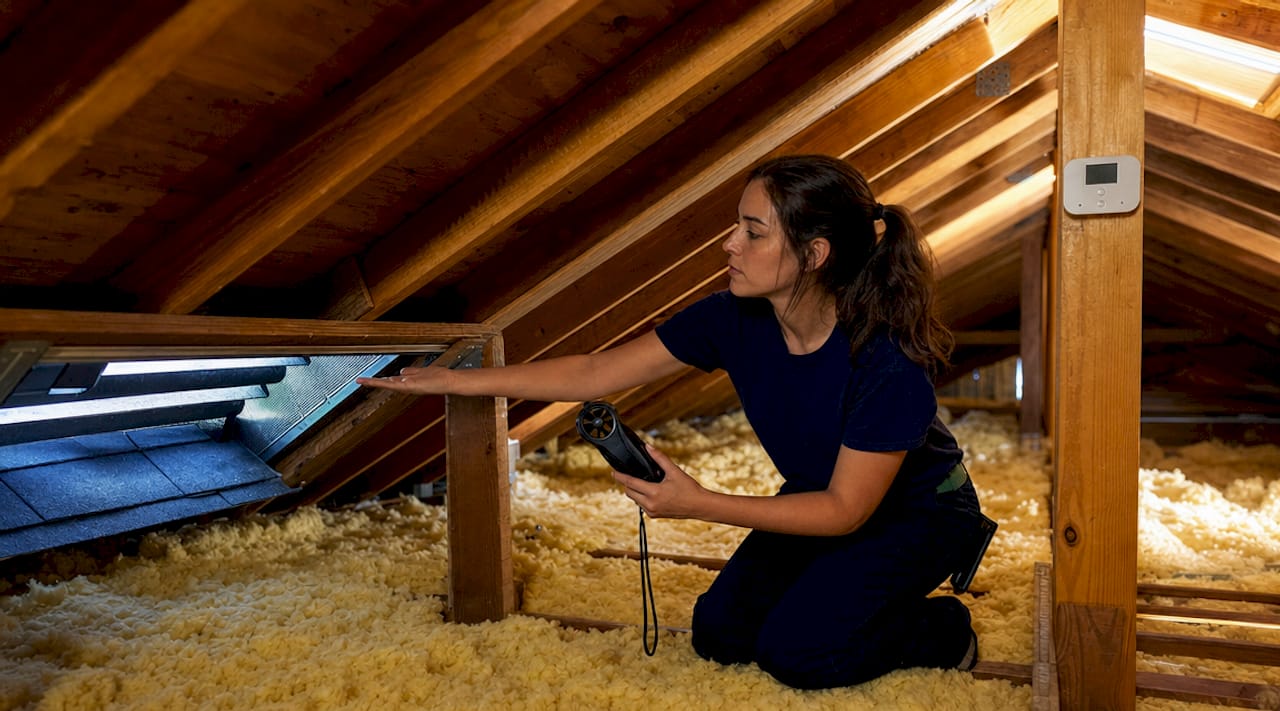
Balanced attic ventilation keeps attic temperatures within roughly 15 to 20°F of outdoor ambient. That range is the sweet spot where shingles age at their rated pace and HVAC runtimes stay manageable. For a Texas home running central air from April through October, even a 10% reduction in cooling costs adds up to real savings across the season.
The impact of attic ventilation on roofing materials is equally significant. Ventilation deficiencies accelerate shingle aging by 30 to 50%, cutting roof lifespan by 8 to 12 years. Manufacturers including Owens Corning, GAF, and CertainTeed require ventilation compliance as a condition of their shingle warranties. A roof installed without meeting ventilation standards can lose its warranty coverage before the first hailstorm hits.
Pro Tip: Ventilation and insulation work as a team, not substitutes. Add R-38 to R-60 insulation at the attic floor to slow heat transfer into living spaces, then let ventilation handle the attic air temperature. Doing one without the other leaves half the system unfinished.
What are the risks of poor attic ventilation?
Poor or unbalanced attic ventilation creates a chain of problems that compound over time. Adding exhaust vents without matching intake creates negative pressure that pulls conditioned air upward from your living space through ceiling gaps, raising your energy costs instead of lowering them. This is the opposite of what most homeowners expect when they add vents.
The moisture consequences are severe. When warm, humid air from your home reaches the cold attic deck in winter, it condenses. That condensation feeds mold colonies, softens OSB sheathing, and rots rafters from the inside. Ice dams form at the eaves when heat escaping through a poorly ventilated attic melts snow on the roof, which then refreezes at the cold overhang edge and backs water under shingles.
Signs of poor attic ventilation that you can check yourself include:
- Attic temperatures above 130°F on a hot summer day when outdoor temps are around 95°F
- Frost or condensation on the underside of the roof deck in winter
- Mold or dark staining on rafters or sheathing
- Ice dams forming along the eaves after snowfall
- Shingles curling, blistering, or losing granules faster than expected for their age
- Higher-than-normal cooling bills with no change in usage habits
Passive soffit-and-ridge vent combinations outperform powered attic fans in nearly every scenario. Powered fans can depressurize the attic and pull conditioned air up through ceiling leaks, creating the same negative pressure problem as unbalanced passive venting. They also add electrical costs and require maintenance that passive systems never need.
How to assess and improve your attic ventilation
Start with a simple calculation. Measure your attic floor area in square feet, then divide by 150 to get the minimum NFVA required under the standard IRC ratio. A 1,500-square-foot attic needs at least 10 square feet of NFVA total, split roughly half intake and half exhaust. Check each vent’s manufacturer spec sheet for its actual NFVA rating, then add them up to see where you stand.
Follow these steps to evaluate your current system:
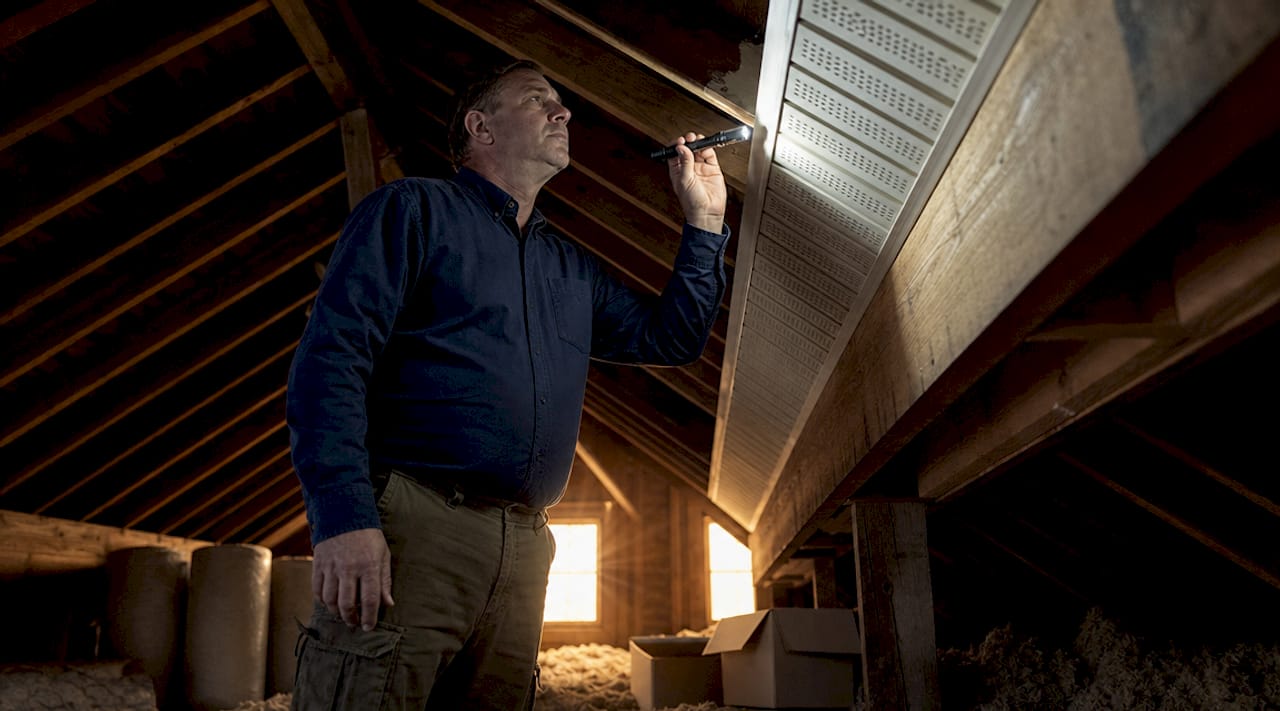
- Inspect soffit vents from inside the attic. Look for insulation pushed against the eaves. If you cannot see daylight through the soffit vents, airflow is blocked.
- Check for baffles in each rafter bay. Every bay that contains a soffit vent should have a baffle running from the vent up past the insulation line.
- Look at the ridge vent from outside. A continuous ridge vent running the full length of the peak provides the most uniform exhaust. Spot vents spaced along the ridge are less effective.
- Measure attic temperature on a hot afternoon. Use an inexpensive infrared thermometer. Readings above 130°F with outdoor temps around 95°F indicate inadequate ventilation or insulation.
- Seal air leaks before adding vents. Attic ventilation works as a second line of defense after air leaks from the living space are sealed. Caulk around ceiling penetrations, recessed lights, and attic hatches before upgrading the vent system.
For vent selection, continuous ridge vents paired with full-length soffit vents deliver the most consistent airflow. Avoid mixing ridge vents with high gable vents on the same attic. The two exhaust points compete for the same air, short-circuiting the soffit-to-ridge path and leaving most of the attic stagnant. You can learn more about how ventilation affects roof lifespan before making any changes to your system.
Key takeaways
Attic ventilation requires balanced intake at the soffits and exhaust at the ridge, sized to IRC R806 standards, to control moisture, reduce cooling costs, and protect shingles from premature failure.
| Point | Details |
|---|---|
| Balanced airflow is non-negotiable | At least 40% intake low and 40% exhaust high prevents negative pressure and moisture buildup. |
| NFVA beats nominal size | Always use manufacturer-rated NFVA, not product dimensions, to calculate code compliance. |
| Ventilation cuts cooling costs | Proper airflow reduces summer cooling costs by 10 to 15% by keeping attic temps near outdoor levels. |
| Poor venting voids warranties | Owens Corning, GAF, and CertainTeed require ventilation compliance to honor shingle warranties. |
| Seal leaks first | Air sealing at ceiling penetrations must come before any ventilation upgrade to get full benefit. |
What I’ve learned after years of watching attic ventilation get ignored
Most homeowners treat attic ventilation as an afterthought, something the builder handled and never needs revisiting. That assumption is wrong, and it costs real money. The attics I see most often in South Texas have one consistent problem: ridge vents installed without adequate soffit intake. The ridge vent looks correct from the street, but the soffits are packed solid with blown-in insulation and no baffles. The system is cosmetically complete and functionally useless.
The other mistake I see repeatedly is homeowners adding powered attic fans thinking more airflow is always better. Passive ventilation methods using soffit and ridge vents are preferred because they leverage natural airflow physics and avoid electrical costs and maintenance. A powered fan in an attic with poor air sealing pulls conditioned air straight up from the living space. Your air conditioner runs harder to replace that lost air, and your energy bill goes up while the attic temperature barely changes.
My honest recommendation: before you spend a dollar on new vents, spend an afternoon sealing every ceiling penetration you can find. Foam around recessed lights, caulk around plumbing stacks, and weatherstrip the attic hatch. Then assess your vent balance. A well-sealed attic with a properly balanced passive system will outperform an unsealed attic with a powered fan every time. The balance of intake and exhaust matters more than sheer ventilation volume, and that principle holds regardless of climate or roof style.
— Buffaloroofingandexteriors
Get your attic ventilation assessed by local roofing experts
If your attic runs hot, your energy bills keep climbing, or you have seen signs of moisture damage on your rafters, the ventilation system deserves a professional look before the problem compounds.
Buffaloroofingandexteriors serves homeowners across Corpus Christi, San Antonio, and Victoria with full roofing inspections that include attic ventilation assessment, soffit and ridge vent balancing, baffle installation, and IRC R806 compliance checks. The team handles everything from minor ventilation corrections to full roofing material upgrades designed for coastal Texas weather. Free estimates are available, and financing options make it easier to address ventilation and roofing issues before they become structural repairs. Contact Buffaloroofingandexteriors to schedule your assessment and get a clear picture of what your attic actually needs.
FAQ
What is the role of attic ventilation in a home?
Attic ventilation controls temperature and moisture in the attic space by allowing continuous air exchange between soffit intake vents and ridge exhaust vents. This protects roof materials, prevents mold, and reduces cooling costs by keeping attic temperatures near outdoor ambient levels.
How much attic ventilation does my home need?
IRC R806 requires 1 square foot of NFVA per 150 square feet of attic floor area, or 1 square foot per 300 square feet if a vapor retarder is installed and vents are balanced at least 40% intake and 40% exhaust. Always use manufacturer-rated NFVA, not nominal vent dimensions, for accurate calculations.
What are the signs of poor attic ventilation?
The clearest signs include attic temperatures above 130°F on hot days, frost or condensation on the roof deck in winter, mold on rafters, ice dams at the eaves, and shingles that blister or curl ahead of their rated lifespan.
Are powered attic fans better than passive vents?
Passive soffit-and-ridge vent systems outperform powered fans in most situations. Powered fans can depressurize the attic and pull conditioned air up from the living space, raising energy costs. Passive systems use natural airflow physics, require no electricity, and need far less maintenance.
Does attic ventilation affect my shingle warranty?
Yes. Manufacturers including Owens Corning, GAF, and CertainTeed require proper ventilation as a condition of their shingle warranties. Installing shingles on an attic that does not meet IRC ventilation standards can void warranty coverage entirely.