TL;DR:
- Impact windows are laminated-glass units that offer continuous storm protection, energy savings, and insurance discounts. They prevent roof failure during hurricanes by holding fractured glass in place and are effective year-round for reducing cooling costs and noise. Proper professional installation and timely wind mitigation inspection maximize their safety, financial benefits, and home value.
Impact windows are specially engineered, laminated-glass windows that provide continuous storm protection, reduce energy costs, and lower homeowners insurance premiums, making them one of the most financially sound upgrades available to homeowners in hurricane-prone regions. Unlike standard windows, which shatter under windborne debris and pressure, impact-resistant windows, the industry term for this product category, hold together on impact due to a polyvinyl butyral (PVB) interlayer bonded between two panes of glass. The result is a permanent defense system that works whether you are home or not, awake or asleep, and whether a storm gives you 48 hours of warning or none at all.
Why choose impact windows for hurricane protection
Standard windows are the weakest structural point in a home during a hurricane. When a window fails, wind pressure floods the interior, and that pressure buildup causes roof uplift and catastrophic structural failure. Impact windows prevent this entirely by holding their frame even when the glass cracks, keeping the building envelope sealed under sustained wind loads.
The construction behind this protection is straightforward but effective. Two layers of tempered or heat-strengthened glass sandwich a PVB interlayer. When debris strikes, the glass may crack but the interlayer holds the pieces in place. Reinforced aluminum or vinyl frames anchor the unit to the wall structure, distributing force rather than concentrating it at a single point.
One of the most underappreciated advantages of impact-resistant windows is 24/7 storm protection without any manual preparation. Hurricane shutters require someone to physically deploy them before a storm. If you are traveling, elderly, or simply caught off guard by a fast-moving system, shutters offer no protection at all. Impact windows are always active.
Most impact window products meet or exceed Florida Building Code and Texas Department of Insurance wind resistance standards, which is why insurers recognize them for premium discounts. Compliance with these codes is not a formality. It is the documented proof that your home can withstand the wind speeds your region is rated for.
Pro Tip: Ask your installer for the product’s Miami-Dade Notice of Acceptance (NOA) number before signing a contract. This document confirms the window has passed the most rigorous impact and pressure testing in the country, and your insurer will likely ask for it.
How impact windows cut your energy bills year-round
The energy savings from impact windows are real, measurable, and felt every month on your utility bill, not just during storm season. Low-emissivity (Low-E) coatings applied to the glass surface reflect solar infrared radiation before it enters your home. In South Texas and coastal Florida, where air conditioning runs eight or more months a year, this coating alone makes a significant difference in cooling load.
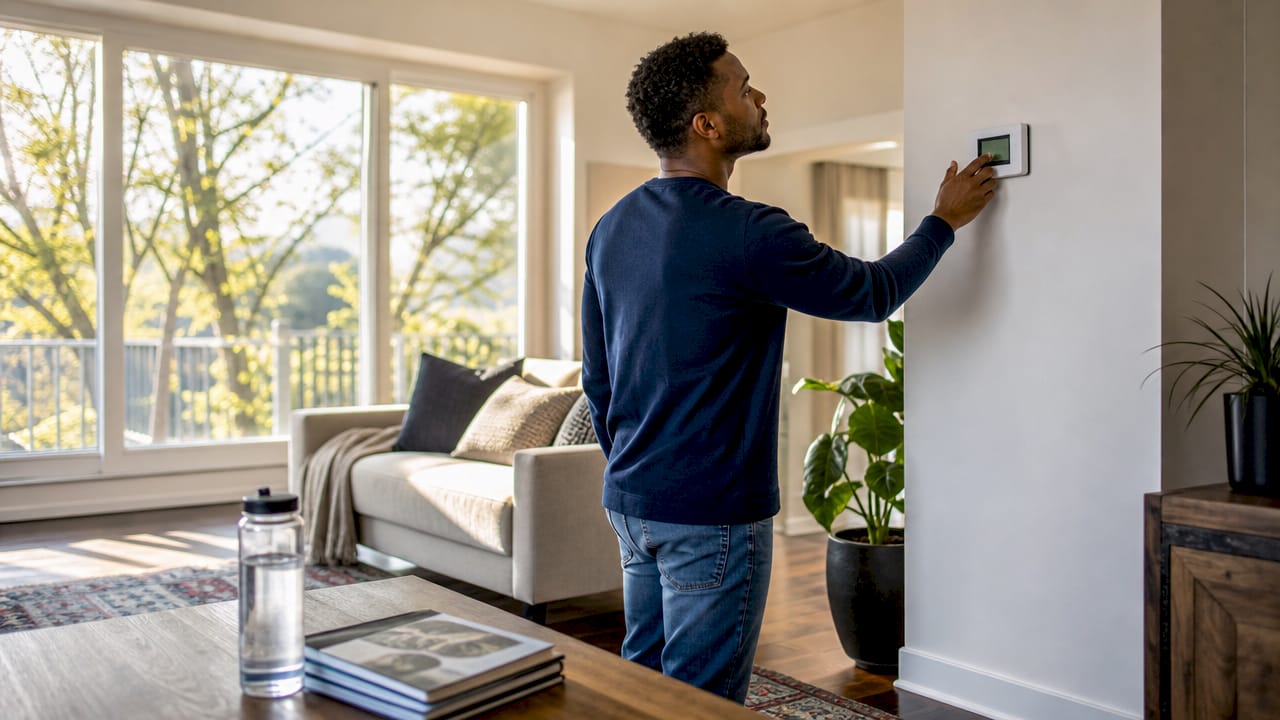
Insulated glass units (IGUs), which use two panes separated by an argon or krypton gas fill, reduce heat transfer through the glass itself. Combined with Low-E coatings and tight-fitting reinforced frames that minimize air infiltration, impact windows address every pathway through which heat enters your home.
The numbers back this up. Homeowners in high-cooling-load climates report 20 to 40% reductions in cooling costs after installation, translating to $500 to $800 in annual savings. Over a 15-year window lifespan, that compounds to $7,500 to $12,000 in energy savings alone, before accounting for any rate increases. For a deeper look at how window technology drives these savings, the Buffaloroofingandexteriors guide on energy-efficient window replacement breaks down the specific glazing options available.
The noise reduction benefit surprises most homeowners after installation. Impact laminated glass blocks 30 to 50% of outside noise, a direct result of the thick PVB interlayer dampening sound vibrations. Homeowners near busy roads, airports, or coastal areas with consistent wind report that quieter interiors are often the first benefit they notice, even before the first storm of the season.
Key energy and comfort benefits at a glance:
- Cooling cost reduction: 20 to 40% lower bills in hot climates
- Annual dollar savings: $500 to $800 per year in high-cooling-load regions
- Noise reduction: 30 to 50% less outside noise due to laminated glass construction
- Air infiltration control: Reinforced frames reduce humidity and drafts
- UV protection: Low-E coatings block UV rays that fade furniture and flooring
What financial advantages do impact windows offer beyond safety?
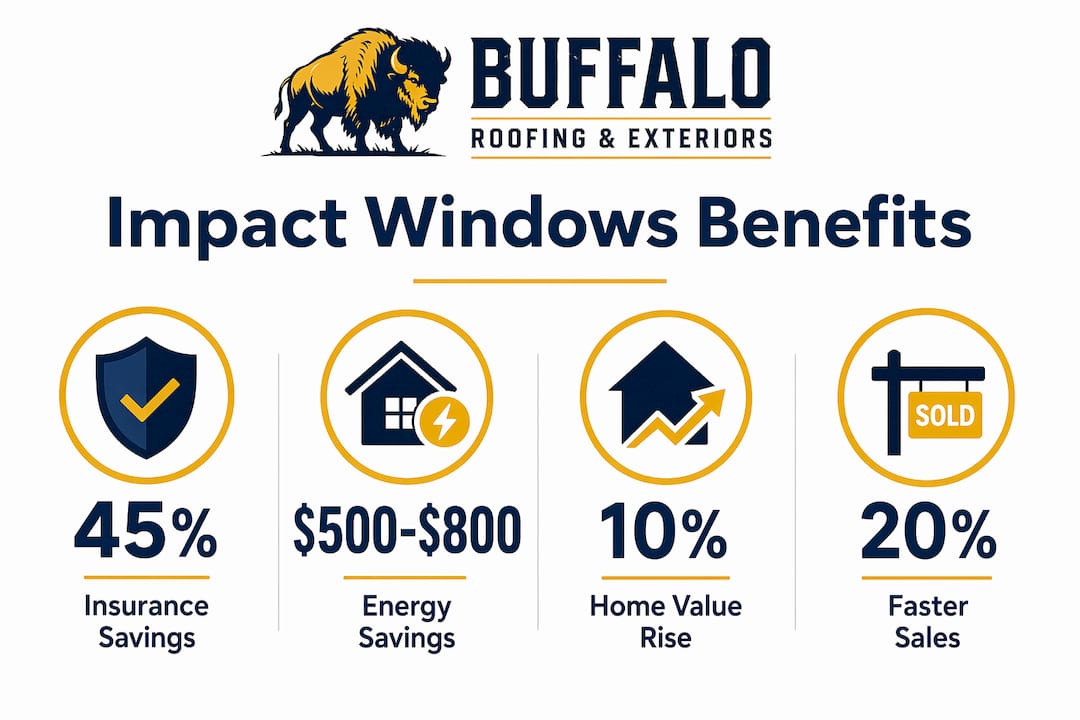
The financial case for impact-resistant windows extends well beyond storm protection. Insurance premium reductions are the most immediate financial return. After a licensed wind mitigation inspector documents your new windows, most insurers reduce premiums by 15 to 45%. In coastal Texas and Florida markets, where homeowners insurance premiums are already elevated, that percentage translates to hundreds or thousands of dollars off your annual bill.
| Financial benefit | What to expect |
|---|---|
| Insurance premium reduction | 15 to 45% after wind mitigation inspection |
| Home resale value increase | 7 to 10% higher sale price in coastal markets |
| Investment cost recovery | 70 to 85% of installation cost recovered at resale |
| Speed of sale | Homes sell up to 20% faster in coastal regions |
| Annual energy savings | $500 to $800 per year in cooling-dominant climates |
Homes with documented impact windows sell up to 20% faster in coastal markets, and buyers pay a premium for them. A 7 to 10% increase in resale value on a $400,000 home represents $28,000 to $40,000 in additional equity. When you factor in 70 to 85% cost recovery at resale, the net out-of-pocket cost of the upgrade shrinks considerably over time.
The compounding effect is what makes this investment particularly strong. Energy savings, insurance discounts, and appreciation all run simultaneously for the 10 to 20 year life of the product. No single home upgrade delivers returns across that many categories at once.
Pro Tip: Schedule your wind mitigation inspection within 30 days of installation completion. Many homeowners delay this step and lose months of insurance savings. The inspection report is what triggers the discount, not the installation itself.
Impact windows vs regular windows and hurricane shutters
The comparison between impact windows and hurricane shutters is not simply about cost. It is about the total value delivered across every day of the year, not just during named storms.
Hurricane shutters, whether accordion, roll-down, or panel style, require physical deployment before a storm and removal afterward. That means ladder work, physical effort, and someone present to do it. Eliminating storm prep labor is one of the most undervalued benefits of impact windows, particularly for older homeowners or those who travel frequently during hurricane season.
On upfront cost, shutters are less expensive per opening. A full set of accordion shutters for a mid-size home typically runs $8,000 to $15,000, while impact windows for the same home range from $15,000 to $30,000 or more depending on size and quantity. The gap narrows quickly when you account for energy savings, insurance discounts, and the resale premium that shutters do not generate.
Standard windows offer no meaningful comparison. They shatter under Category 1 wind speeds, provide no insulation benefit beyond basic glazing, and contribute nothing to insurance savings. The security advantages of laminated glass over standard glass are also significant. Forced entry through impact glass requires substantially more time and force, which deters most opportunistic break-ins.
Some homeowners in high-risk zones use both: impact windows as the permanent layer and roll-down shutters on large openings like sliding glass doors for added protection during major storms. This hybrid approach is worth considering if your home has several oversized openings.
What to know before selecting and installing impact windows
Choosing the right product and installer determines whether you get the full financial and safety benefit of this upgrade. Impact windows come in casement, single-hung, double-hung, sliding, and fixed configurations. Frame materials include aluminum, vinyl, and fiberglass, each with different maintenance requirements and thermal performance profiles. Aluminum frames are the most common in coastal Texas due to their corrosion resistance and structural strength.
Licensed, certified installation is not optional. Professional installation with permits is required to preserve manufacturer warranties and qualify for insurance discounts. A contractor who pulls permits and follows local building codes creates a documented record that your insurer and future buyers can verify. DIY installation voids both the warranty and the insurance benefit.
Here is a practical installation checklist to follow:
- Verify contractor credentials. Confirm the installer holds a valid Texas contractor license and carries liability insurance.
- Request product documentation. Ask for the Miami-Dade NOA or Texas Department of Insurance approval for every product being installed.
- Plan for lead times. Order-to-installation timelines run 5 to 16 weeks depending on manufacturer and permitting. Order before April to be protected before peak hurricane season.
- Schedule the wind mitigation inspection. Book this within 30 days of installation to start capturing insurance savings immediately.
- Notify your insurer. Submit the wind mitigation report and product documentation to your insurance company directly. Do not assume they will find it.
For homeowners planning this upgrade alongside other exterior improvements, sequencing matters. Windows installed before new siding or roofing work may require trim adjustments. Coordinate with your contractor to avoid rework costs.
Pro Tip: Get at least three quotes and ask each contractor to specify the exact product model and NOA number in writing. Vague quotes that list only “impact windows” without product specs are a red flag.
Key takeaways
Impact windows deliver compounding financial returns through insurance savings, energy efficiency, and resale value, making them the highest-value storm protection upgrade available to coastal homeowners.
| Point | Details |
|---|---|
| Storm protection mechanism | Laminated glass and reinforced frames prevent pressure buildup that causes roof failure. |
| Energy savings | Low-E coatings and insulated glass cut cooling costs by 20 to 40%, saving $500 to $800 annually. |
| Insurance premium reduction | Wind mitigation inspection after installation unlocks 15 to 45% premium discounts. |
| Resale value and speed | Homes with impact windows sell up to 20% faster and gain 7 to 10% in value. |
| Installation timing | Lead times run 5 to 16 weeks, so order before April to be covered for hurricane season. |
What years of storm-country installs have taught me
Most homeowners come to impact windows thinking about one thing: the next hurricane. What they discover after installation is that the storm protection is almost background noise compared to the daily quality-of-life improvements. The quieter home. The lower electric bill in August. The fact that they left for vacation in September without boarding up a single window.
The shift from reactive to proactive is real, and it changes how people relate to their homes. I have spoken with homeowners who spent years dreading hurricane season, scrambling to find help deploying shutters, and returning from trips to find storm prep undone. After impact windows, that anxiety largely disappears. That is not a small thing.
What I would push back on is the idea that impact windows are only worth it if you live in a direct-hit zone. The energy savings and insurance discounts apply regardless of whether a major storm ever makes landfall near your home. In South Texas, where cooling season runs most of the year, the energy math alone justifies serious consideration. The storm protection is the bonus.
The one mistake I see repeatedly is homeowners who complete the installation and never schedule the wind mitigation inspection. They have the windows. They have the protection. But they are leaving hundreds of dollars per year in insurance savings unclaimed because they skipped one phone call. Do not be that homeowner.
— Buffaloroofingandexteriors
Get professional impact window installation in South Texas
Buffaloroofingandexteriors works with homeowners across Corpus Christi, San Antonio, and Victoria to select, permit, and install impact-resistant windows that meet Texas wind load requirements and qualify for insurance discounts. Every project uses licensed installers, manufacturer-approved products with documented NOA certifications, and a permitting process that protects your warranty and insurance eligibility from day one.
If you are ready to stop reacting to storm seasons and start protecting your home year-round, the Buffaloroofingandexteriors window installation team offers free estimates and financing options to fit your timeline and budget. Contact us to schedule a personalized evaluation and find out exactly which products fit your home, your risk profile, and your financial goals.
FAQ
How do impact windows work during a hurricane?
Impact windows use a laminated glass construction with a PVB interlayer that holds the glass together on impact, preventing the window from shattering and keeping the building envelope sealed. This stops wind pressure from entering the home and causing roof uplift or structural failure.
Are impact windows worth the cost for homeowners?
Yes. Between insurance premium reductions of 15 to 45%, annual energy savings of $500 to $800, and a 7 to 10% increase in resale value, most homeowners recover 70 to 85% of their installation cost and continue saving for years after.
How much do impact windows reduce insurance premiums?
After a licensed wind mitigation inspection documents the installation, most insurers reduce homeowners insurance premiums by 15 to 45%. The inspection report, not the installation itself, triggers the discount, so scheduling it promptly is critical.
How long does impact window installation take?
Lead times from order to completed installation run 5 to 16 weeks depending on the manufacturer and local permitting timelines. Homeowners should order before April to have protection in place before the June 1 start of Atlantic hurricane season.
Do impact windows also improve home security?
Yes. The laminated glass used in impact-resistant windows significantly complicates forced entry, requiring more time and force than standard glass. This makes impact windows an effective deterrent against opportunistic break-ins, not just storm damage.