What is roof lifespan? A 2026 guide for coastal Texas
Many coastal Texas homeowners believe a roof should last 20 years no matter what, but that assumption often leads to surprise failures and emergency repairs. Your roof’s actual lifespan depends on material type, installation quality, maintenance habits, and especially the harsh coastal environment with salt air, high winds, and frequent hail. Understanding these factors helps you plan smarter, avoid costly surprises, and protect your investment. This guide breaks down how long different roof types really last in coastal Texas, what makes them fail early, and practical steps to maximize your roof’s service life.
Table of Contents
- What Is Roof Lifespan? A 2026 Guide For Coastal Texas
- Understanding Roof Lifespan: What It Means And Key Factors
- Comparing Roof Materials: Lifespans And Storm Resistance
- Common Roof Vulnerabilities And Maintenance Strategies For Coastal Texas Homes
- When To Repair Or Replace Your Roof: Practical Guidelines For Homeowners
- Protect Your Coastal Texas Home With Expert Roofing Services
Key takeaways
| Point | Details |
|---|---|
| Material matters most | Metal roofs outlast asphalt shingles by decades in coastal conditions |
| Age increases vulnerability | Roofs over 10 years old face significantly higher storm damage risk |
| Coastal weather accelerates aging | Salt air, humidity, and wind shorten expected lifespans for all materials |
| Maintenance extends life | Regular inspections and timely repairs can add years to your roof |
| Hail damage compounds wear | Texas leads the nation in hail claims, shortening roof longevity statewide |
Understanding roof lifespan: what it means and key factors
Roof lifespan refers to the expected number of functional years your roof will perform under normal use before requiring replacement. This isn’t a fixed number stamped on every roof. Instead, it varies dramatically based on material quality, installation standards, and environmental exposure.
In coastal Texas, your roof faces unique stresses that accelerate aging. High winds from Gulf storms tear at shingles and flashings. Salt air corrodes metal components and degrades protective coatings. Humidity promotes algae growth and wood rot in underlayment. Hail punctures surfaces and cracks sealants. These factors combine to reduce lifespans below manufacturer estimates.
Age emerges as a critical risk multiplier. Research shows roofs over 10 years old become especially vulnerable to damage during storms. An older roof has accumulated micro damage from years of sun exposure, thermal cycling, and minor weather events. When a major storm hits, these weakened areas fail first.
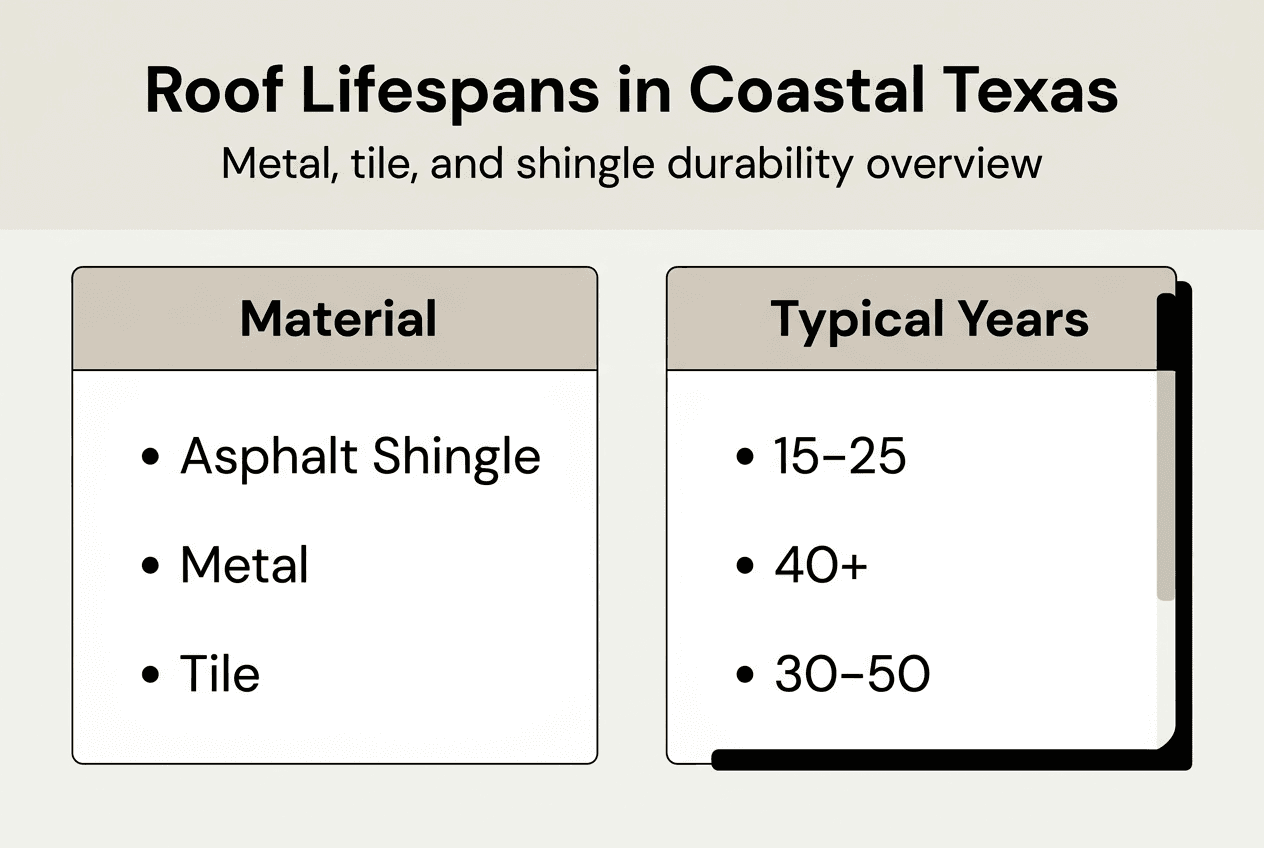
Material type strongly dictates baseline lifespan expectations. Asphalt shingles typically last 15 to 25 years, while metal roofs can exceed 40 years with proper maintenance. Tile roofs fall somewhere between at 30 to 50 years. However, coastal exposure can shave years off these estimates if you neglect maintenance.
Environmental stresses don’t just age your roof, they change how it fails. Coastal homes see more granule loss on shingles, faster corrosion on metal panels, and more frequent seal failures around penetrations. Understanding these specific vulnerabilities helps you monitor the right areas and catch problems before they escalate into expensive replacements. For more insights on protecting your investment, explore home roofing tips for homeowners in Texas.
Key factors affecting coastal Texas roof lifespan include:
- Material composition and quality grade at installation
- Exposure to salt air, which accelerates corrosion and material breakdown
- Frequency and severity of wind events that stress fasteners and edges
- Hail impact damage that compromises waterproofing layers
- Maintenance frequency and quality of repairs over time
Comparing roof materials: lifespans and storm resistance
Choosing the right roofing material for coastal Texas means balancing upfront cost against long term performance and storm resilience. Different materials show dramatically different damage rates and service lives, especially under hurricane force winds and hail.
Asphalt shingles remain the most common choice due to lower initial cost, typically lasting 15 to 25 years in coastal conditions. However, they show the highest vulnerability to storm damage. During Hurricane Ian, asphalt shingles experienced damage rates around 50%, with widespread shingle loss and seal failures. Coastal humidity also promotes algae growth that degrades the protective granule layer faster than in drier climates.
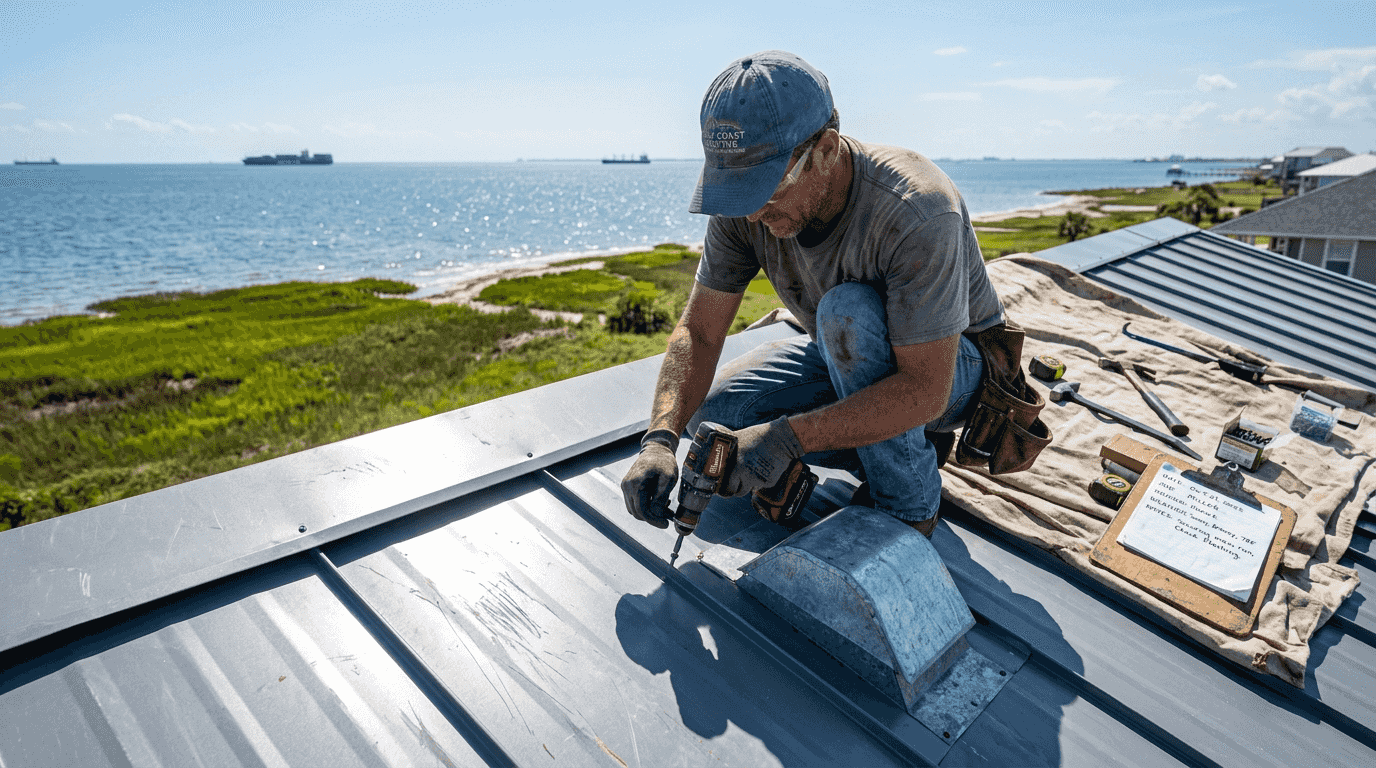
Metal roofs deliver superior performance and longevity, often exceeding 40 years even in harsh coastal environments. The same Hurricane Ian study found metal roofs performed best with approximately 12% damage rates. Metal resists wind uplift better due to interlocking panel designs and stands up to hail impact without the cracking seen in other materials. Salt air does cause some corrosion over decades, but quality coatings minimize this effect.
Tile roofs offer good longevity at 30 to 50 years with proper installation and maintenance. Hurricane Ian data showed tile damage rates around 40%, primarily from individual tile breakage rather than complete system failure. Tile performs well against salt air and UV exposure but remains vulnerable to impact damage from flying debris during storms. Weight also requires stronger roof framing, adding to installation costs.
Low slope and flat roofs on commercial buildings face unique challenges. These systems typically last 15 to 30 years depending on membrane type. Common failure points include flashing and coping details where water can penetrate. Low slope commercial roofs often fail at flashing or coping during high wind events, making regular inspection of these areas critical. For more guidance on flat roof systems, visit flat roof.
Hail damage represents a major threat to all roof types in Texas. Texas leads the nation in hail damage claims, with an average of $2,207.73 per 100 residents annually. This frequent impact accelerates wear on every material, shortening expected lifespans and requiring more frequent repairs. Coastal homeowners should factor this ongoing risk into material selection and budget planning. Learn more about protecting your investment at roof hail damage texas.
| Roof Material | Typical Lifespan | Hurricane Damage Rate | Best For |
|---|---|---|---|
| Asphalt Shingles | 15-25 years | ~50% | Budget conscious homeowners |
| Metal Panels | 40+ years | ~12% | Maximum storm resistance |
| Tile | 30-50 years | ~40% | Aesthetic appeal with durability |
| Low Slope Membrane | 15-30 years | Varies by system | Commercial buildings |
Pro Tip: If you live within 10 miles of the coast, consider metal roofing despite higher upfront costs. The superior wind and hail resistance typically pays for itself through fewer repairs and longer service life, especially if you plan to stay in your home long term.
Common roof vulnerabilities and maintenance strategies for coastal Texas homes
Even the best roofing materials develop weak points over time, especially under coastal Texas conditions. Knowing where roofs typically fail helps you focus inspection and maintenance efforts on the areas that matter most.
Flashing and coping represent the most common failure points on all roof types. These metal or membrane components seal transitions between roof planes, around chimneys, at walls, and along edges. Low slope commercial roofs often fail at flashing or coping during storms, but residential roofs face the same vulnerabilities. Sealants dry out and crack under UV exposure. Metal corrodes from salt air. Wind lifts poorly secured edges. Water intrusion through failed flashing causes interior damage that costs far more than the flashing repair itself.
Age compounds every vulnerability. Roofs over 10 years old have accumulated damage from countless thermal cycles, minor storms, and UV degradation. Fasteners work loose. Sealants lose flexibility. Protective coatings wear thin. When a major storm arrives, these weakened areas fail first while newer sections hold. This explains why two identical homes can experience vastly different damage levels based solely on roof age.
A systematic maintenance approach extends roof life significantly and prevents small problems from becoming expensive emergencies. Follow this maintenance checklist:
- Schedule professional inspections annually and after every major storm
- Clear debris from roof surface and gutters at least twice yearly
- Check flashing and sealants around penetrations for cracks or gaps
- Look for missing, cracked, or curling shingles that need replacement
- Inspect attic for water stains, mold, or daylight penetration
- Trim overhanging tree branches that could damage roof during storms
- Document all findings with photos and dates for insurance records
Timely repairs prevent minor issues from escalating. A single missing shingle allows water under adjacent shingles, rotting the underlayment and decking. That small repair costing $150 becomes a $3,000 section replacement if ignored for a season. Similarly, a cracked flashing seal lets water into walls, causing mold and structural damage that dwarfs the original repair cost.
For detailed maintenance guidance tailored to Texas conditions, review the roof maintenance checklist essential steps. You can also explore roof maintenance workflow prevent storm damage for seasonal planning. When you do discover leaks, act quickly using strategies from how to repair roof leaks protection.
Pro Tip: After any storm with winds over 50 mph or hail larger than one inch, schedule a professional inspection even if you see no obvious damage from the ground. Hidden damage to underlayment, fasteners, or flashing often doesn’t show symptoms until the next rain, by which time water has already damaged interior structures.
When to repair or replace your roof: practical guidelines for homeowners
Deciding between repair and replacement requires evaluating multiple factors beyond simple age. The right choice depends on your roof’s current condition, remaining expected lifespan, damage extent, and your financial situation.
Age benchmarks provide useful starting points for replacement planning. Asphalt shingle roofs approaching 20 years should be evaluated carefully for replacement, especially if showing multiple problem areas. Metal roofs rarely need replacement before 30 years unless severely damaged. Tile roofs can last 40 years or more with good maintenance, though individual tiles may need periodic replacement.
Research confirms that roofs over 10 years old face especially high vulnerability to damage. If your roof has reached this age threshold and sustained storm damage, replacement often makes more financial sense than extensive repairs. You avoid throwing money at a system nearing end of life.
Several signs indicate replacement rather than repair makes sense:
- Widespread shingle loss or damage across multiple roof sections
- Repeated leaks in different areas despite previous repairs
- Visible sagging or structural concerns in roof decking
- Granule loss exposing underlying asphalt on large shingle areas
- Daylight visible through roof boards from attic inspection
- Insurance adjuster recommends replacement after storm damage
Storm damage severity matters significantly. A few missing shingles after a windstorm warrant repair. Widespread damage across 30% or more of the roof area typically justifies replacement, especially on older roofs. Insurance coverage often influences this decision, as policies may cover full replacement after major events.
Cost benefit analysis helps clarify the repair versus replacement question. If repair costs exceed 30% of replacement cost and your roof has already lived 70% of its expected lifespan, replacement usually provides better value. You get a full warranty period and avoid repeated repair expenses over the next few years.
| Roof Type | Expected Lifespan | Repair Frequency | Replacement Trigger |
|---|---|---|---|
| Asphalt Shingles | 15-25 years | Every 3-5 years | Age 18+ with damage |
| Metal Panels | 40+ years | Every 8-10 years | Severe corrosion or impact |
| Tile | 30-50 years | Every 5-7 years | Structural issues or 40+ age |
| Low Slope Membrane | 15-30 years | Every 2-4 years | Multiple leak areas |
Texas hail adds complexity to replacement decisions. Frequent hail events mean even newer roofs accumulate damage over time. If your roof has sustained hail damage multiple times, the cumulative effect may warrant replacement even if individual events didn’t trigger it. For more context on protecting your Texas home, visit home roofing tips for homeowners in Texas.
Consider your long term plans. If you intend to sell within two years, a new roof adds significant value and appeal. If you plan to stay 10 years, investing in quality replacement now avoids dealing with an aging roof later. Match your roofing investment timeline to your homeownership timeline for best results.
Protect your coastal Texas home with expert roofing services
Your roof represents one of your home’s most critical protective systems, especially in coastal Texas where storms and hail constantly test its limits. Understanding roof lifespan helps you plan maintenance and replacement strategically, but executing that plan requires experienced professionals who know coastal conditions.
Buffalo Roofing & Exteriors specializes in helping coastal Texas homeowners select and maintain roofing systems that stand up to Gulf weather. Whether you need guidance on roof materials that maximize lifespan or want to explore weather resistant roofing texas homes options, their team brings decades of local experience.
From initial assessment through final installation, professional guidance ensures your roof investment delivers maximum protection and longevity. Explore the complete roof installation workflow step guide to understand what quality installation involves and why it matters for long term performance.
FAQ
How long does each common roof type last in coastal Texas?
Asphalt shingles typically last 15 to 25 years in coastal conditions, though salt air and frequent storms can reduce this range. Metal roofs often exceed 40 years due to superior wind and corrosion resistance. Tile roofs fall between at 30 to 50 years when properly maintained, though individual tiles may need periodic replacement. All these estimates assume regular maintenance and timely repairs of storm damage.
What maintenance helps extend my roof’s lifespan?
Regular professional inspections catch problems before they escalate, especially after storms with high winds or hail. Clear debris from your roof and gutters at least twice yearly to prevent water pooling and organic growth. Repair damaged flashing, sealants, and individual shingles promptly rather than waiting for leaks. For a complete maintenance approach, review the roof maintenance checklist essential steps to protect your investment year round.
When should I consider replacing my roof instead of repairing it?
Replacement makes sense when your roof has reached or exceeded its expected lifespan and shows extensive damage across multiple areas. If repair costs approach 30% of replacement cost and your roof has lived 70% of its expected life, replacement typically provides better value. Signs like widespread shingle loss, repeated leaks in different locations, visible sagging, or structural concerns all indicate replacement rather than continued repairs.
How does hail damage affect roof lifespan in Texas?
Hail accelerates roof aging by cracking sealants, puncturing membranes, and dislodging protective granules from shingles. Texas leads the nation in hail damage claims with an average of $2,207.73 per 100 residents annually, meaning most roofs sustain multiple impacts over their lifetime. This cumulative damage shortens expected lifespan and increases repair frequency. Learn how to identify and address hail damage at roof hail damage texas before small problems become major failures.