
Many coastal Texas homeowners believe sealing their attic completely will slash energy bills and protect their homes. The reality is different. Without proper roof ventilation, trapped moisture and heat cause serious problems including mold, structural damage, and skyrocketing cooling costs. Roof ventilation is essential for energy efficiency and storm protection in humid, hurricane-prone coastal climates. This guide explains how ventilation works, the benefits it delivers, and practical steps to optimize your system for coastal Texas conditions.
Table of Contents
- Understanding Roof Ventilation: Definition And Purpose
- How Roof Ventilation Works: Mechanisms Behind The Airflow
- Energy Efficiency Benefits Of Proper Roof Ventilation
- Protecting Coastal Homes Against Storm Damage With Roof Ventilation
- Types And Components Of Roof Ventilation Systems
- Common Misconceptions About Roof Ventilation
- Practical Guidance For Homeowners In Coastal Texas
- Enhance Your Home With Expert Roof Ventilation Solutions
- Frequently Asked Questions About Roof Ventilation
Key takeaways
| Point | Details |
|---|---|
| Roof ventilation regulates temperature and moisture | Balanced intake and exhaust vents control attic conditions to prevent damage and improve efficiency. |
| Energy savings reach 10-15% | Proper ventilation reduces attic temperatures by 50°F, cutting cooling costs significantly. |
| Storm protection requires proper ventilation | Moisture control prevents mold and structural weakening common in coastal environments. |
| System choice depends on your home | Passive systems work for most homes, while mechanical vents help complex attics with limited airflow. |
| Maintenance and code compliance matter | Routine inspections and local building standards ensure long-term performance and warranty protection. |
Understanding roof ventilation: definition and purpose
Roof ventilation is the system of vents installed in your attic that allows continuous airflow through the space beneath your roof deck. This system includes intake vents, typically located at soffits or eaves, and exhaust vents positioned near the roof peak or ridge. The combination creates a pathway for air to enter, move through, and exit your attic.
In coastal Texas, controlling moisture and heat is critical due to intense humidity and frequent storms. High humidity promotes mold growth and wood rot. Extreme summer heat builds up in poorly ventilated attics, forcing air conditioning systems to work harder. Proper ventilation addresses both problems by continuously replacing hot, moist air with fresh outdoor air.
The basic goals of roof ventilation include:
- Preventing moisture buildup that leads to mold, rot, and structural damage
- Regulating attic temperature to reduce cooling loads and extend roof lifespan
- Protecting insulation effectiveness by keeping it dry
- Improving overall energy efficiency and indoor comfort
Proper ventilation complements weather resistant roofing strategies for coastal areas. While quality roofing materials resist wind and rain, ventilation manages the invisible threats of heat and moisture. Studies show roof ventilation reduces attic temperatures by 50°F, creating measurable cooling cost savings in hot climates.
Understanding how intake and exhaust vents work together forms the foundation for effective ventilation system design. The next section explores the mechanisms that make this airflow possible.
How roof ventilation works: mechanisms behind the airflow
Roof ventilation relies on a balanced system where intake vents at the bottom and exhaust vents at the top work together to create natural airflow. Soffit vents, installed under roof eaves, serve as intake points where cooler outdoor air enters the attic. Ridge vents or other exhaust points at the roof peak allow hot air to escape.
The physics behind this process is natural convection. Warm air is lighter than cool air, so heated attic air naturally rises toward the roof peak. As this hot air exits through exhaust vents, it creates negative pressure that pulls fresh air in through the intake vents below. This continuous cycle removes both heat and moisture throughout the day.
Key mechanisms include:
- Temperature differential driving upward airflow
- Wind passing over the roof creating suction at exhaust vents
- Balanced intake and exhaust preventing pressure imbalances
- Continuous air exchange maintaining stable attic conditions
In humid, storm-prone coastal climates, this airflow removes moisture from rain, high humidity, and household activities like cooking and bathing. Without proper ventilation, this moisture condenses on cold surfaces during winter or accumulates year-round in coastal areas. The result is mold growth, insulation damage, and wood decay.
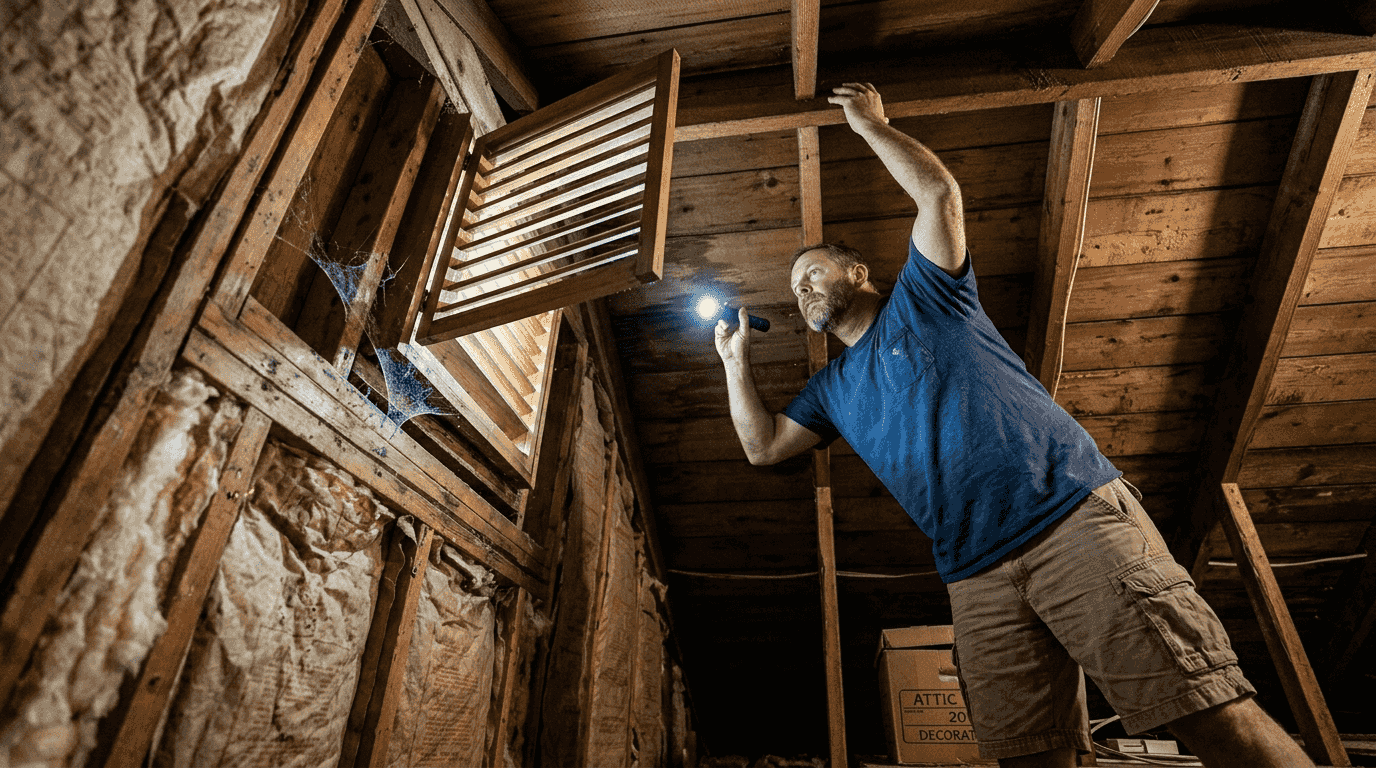
Passive ventilation systems work well in most conditions but have limitations. Passive systems contribute less in calm weather, which can be compensated by adding mechanical ventilation for consistent performance. On still days with no wind, natural convection alone may not move enough air through complex attic spaces.
Mechanical ventilation, using powered attic fans, supplements passive systems when needed. These fans actively pull hot air out, maintaining airflow even without natural wind. Understanding these mechanisms helps you choose the right ventilation approach for your home. Quality roofing warranties often require proper ventilation to remain valid, recognizing its role in roof longevity.
Energy efficiency benefits of proper roof ventilation
Proper roof ventilation delivers measurable energy savings that directly reduce your utility bills. In coastal Texas, where summer temperatures regularly exceed 95°F, attic temperatures in poorly ventilated spaces can reach 150°F or higher. Effective ventilation reduces these temperatures by up to 50°F, bringing attic heat down to manageable levels.
This temperature reduction translates to real cost savings. When your attic stays cooler, less heat radiates down through insulation into living spaces. Your air conditioning system runs less frequently and operates more efficiently. Typical coastal Texas homes see cooling energy savings of 10 to 15 percent with properly designed ventilation systems.
Beyond immediate energy savings, ventilation extends HVAC system lifespan. Air conditioners working against extreme attic heat experience greater wear and require more frequent repairs. Reducing thermal load means fewer compressor cycles and longer equipment life. This compounds savings over years of ownership.
Measurable impacts include:
- Lower monthly electric bills during peak summer months
- Reduced HVAC maintenance and replacement costs
- More stable indoor temperatures and improved comfort
- Better insulation performance when kept dry
- Extended roof material lifespan from reduced thermal stress
Homeowners also notice comfort improvements. Rooms directly below the attic, especially second floors, stay cooler and require less aggressive cooling. Temperature differences between floors decrease, creating more uniform comfort throughout the home.
Proper ventilation works year-round. During cooler months, it continues removing moisture that would otherwise damage insulation and reduce its effectiveness. Dry insulation maintains its R-value, providing better thermal protection in all seasons. This makes investing in roof maintenance that includes ventilation assessment particularly valuable for long-term energy efficiency.
Protecting coastal homes against storm damage with roof ventilation
Coastal Texas homes face unique challenges from tropical storms, hurricanes, and persistent high humidity. Roof ventilation plays a critical protective role by managing moisture that accelerates storm damage and structural deterioration.
Poor ventilation traps moisture in attic spaces, creating ideal conditions for mold and wood rot. After storms, this trapped moisture takes days or weeks to dry out naturally. During this time, mold spores multiply and wood framing begins to decay. Structural damage from moisture buildup can require costly repairs if left unaddressed.
Well-designed ventilation systems combined with storm-resistant vent designs reduce water intrusion risk during severe weather. Modern vent products include screening and baffles that prevent wind-driven rain from entering while maintaining airflow. These features are essential in hurricane-prone coastal regions.
Proper ventilation reduces attic humidity levels that exacerbate storm damage. High humidity weakens adhesives in roofing materials, promotes rust on metal fasteners, and degrades sheathing. Keeping attic air dry through continuous ventilation helps all roofing components maintain their integrity longer.
Pro Tip: Choose storm-resistant vent designs with built-in screening and hire experienced professionals for installation. Proper placement and sealing prevent water intrusion while maintaining necessary airflow during extreme weather events.
Storm-related risks prevented by proper ventilation:
- Mold growth following water intrusion events
- Structural weakening from prolonged moisture exposure
- Premature roof material failure from trapped humidity
- Insulation damage reducing thermal performance
- Increased repair costs from undetected moisture damage
Ventilation alone does not replace quality roofing or proper installation, but it significantly reduces moisture-related vulnerabilities that storms exploit. Combined with other protective measures, it forms part of a comprehensive storm-resilience strategy for coastal homes.
Types and components of roof ventilation systems
Choosing the right ventilation system requires understanding available options and how they perform in coastal Texas conditions. Systems fall into two main categories: passive and mechanical.
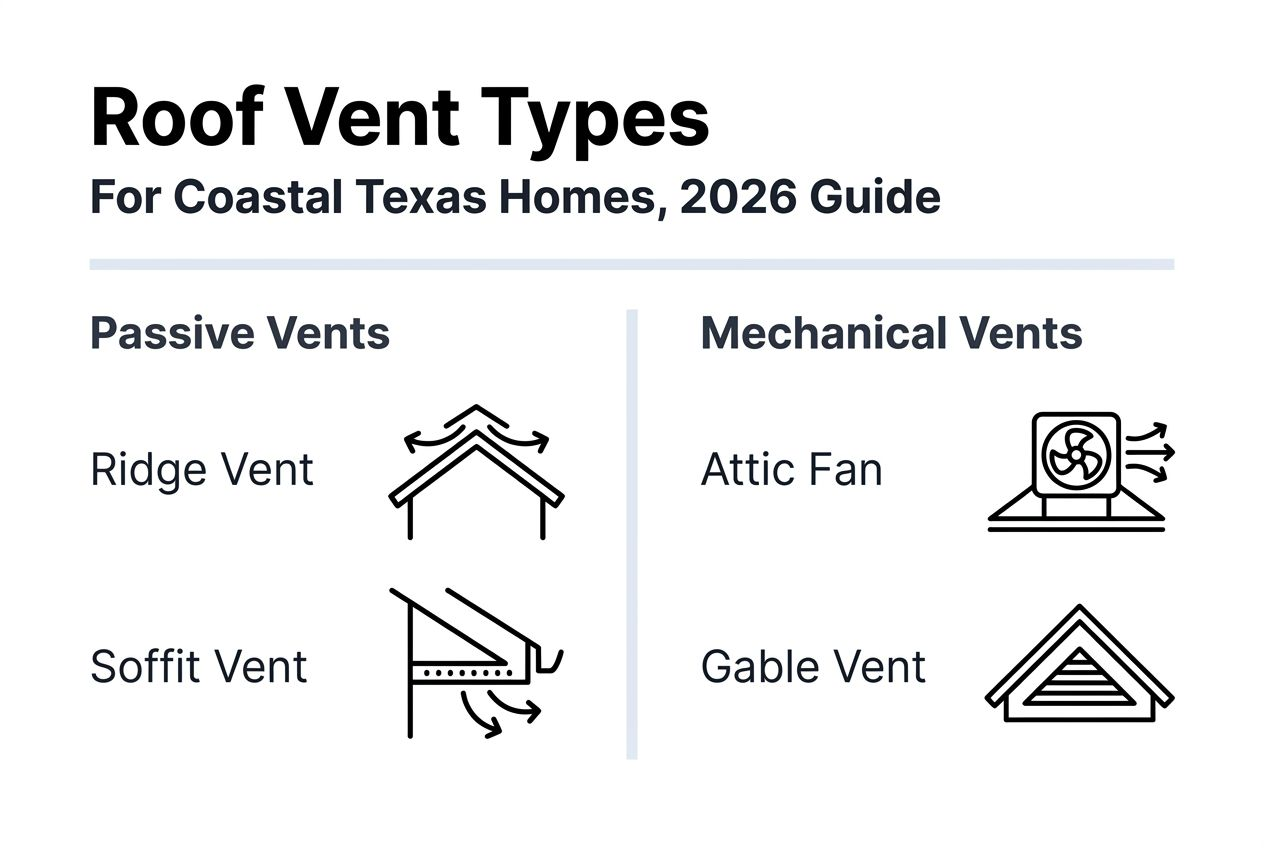
Ridge vents run along the roof peak, providing continuous exhaust along the entire ridge line. They blend with rooflines and require no power. Soffit vents, installed in eave overhangs, provide intake airflow and work with ridge vents to create balanced ventilation. These passive components rely entirely on natural airflow.
Mechanical ventilation uses powered attic fans to actively exhaust hot air. These fans mount on roofs or gable walls and run on electricity or solar power. Mechanical systems add cost and maintenance but benefit tightly sealed or complex attics where passive airflow is insufficient.
| Feature | Passive Ventilation | Mechanical Ventilation |
|---|---|---|
| Cost | Lower initial investment | Higher upfront and operating costs |
| Maintenance | Minimal, mainly cleaning | Regular inspection, motor replacement |
| Effectiveness | Excellent in most conditions | Consistent performance in all weather |
| Best Use | Standard attic configurations | Complex layouts, sealed attics |
| Energy Use | None | Electricity required |
Key factors influencing your choice:
- Attic complexity and layout affecting natural airflow paths
- Local wind patterns and typical weather conditions
- Tolerance for ongoing maintenance and operating costs
- Budget for initial installation and long-term operation
- Existing ventilation performance and problems
Pro Tip: Maintain a balanced intake to exhaust ratio for optimal performance. The general rule is equal square footage of intake and exhaust venting, though specific requirements depend on attic size and roof pitch.
Passive systems work well for typical coastal homes with standard attic designs. The combination of soffit intake and ridge exhaust provides reliable performance without ongoing costs. Mechanical systems become necessary when passive airflow cannot adequately ventilate the space, often in homes with cathedral ceilings, multiple roof levels, or sealed attic designs.
Consulting a professional roof maintenance specialist helps determine which system fits your specific home configuration and climate challenges. Proper system selection prevents common problems while optimizing energy efficiency and storm protection.
Common misconceptions about roof ventilation
Several myths about roof ventilation lead homeowners to make poor decisions that compromise home performance and durability. Understanding the facts helps you avoid costly mistakes.
Myth: Sealing the attic entirely prevents energy loss and improves efficiency. Reality: Complete sealing traps moisture and heat, creating severe problems. While air sealing around penetrations prevents conditioned air loss, attics still need ventilation to remove moisture and heat buildup. The goal is controlled ventilation, not complete sealing.
Myth: Ventilation alone prevents all roof leaks and water damage. Reality: Ventilation manages moisture but does not replace quality roofing materials or proper installation. Leaks result from damaged shingles, failed flashing, or installation errors. Ventilation helps dry out minor moisture intrusion but cannot stop active leaks.
Myth: More vents automatically mean better ventilation. Reality: Balance and proper placement matter more than quantity. Too many exhaust vents without adequate intake creates inefficient short-circuiting where air enters and exits nearby vents without moving through the attic. Balanced systems with correctly positioned vents outperform randomly added vents.
Myth: Mechanical ventilation always performs better than passive systems. Reality: System effectiveness depends on specific attic configuration and climate. Many homes achieve excellent results with passive ventilation at lower cost and no operating expense. Mechanical systems help when passive options cannot provide adequate airflow, but they are not universally superior.
Common misconceptions clarified:
- Ventilation complements insulation but does not replace it
- Both intake and exhaust vents are necessary for proper function
- Local building codes specify minimum ventilation requirements
- Professional assessment identifies your home’s specific needs
- Proper installation matters as much as system selection
Understanding these realities helps you make informed decisions about your ventilation system. Avoid solutions based on myths and focus on properly designed, balanced systems that address your home’s actual conditions.
Practical guidance for homeowners in coastal Texas
Implementing effective roof ventilation requires a systematic approach tailored to coastal conditions and local regulations. Follow these steps to optimize your system:
- Assess current ventilation by inspecting visible vents and checking for signs of problems like moisture stains, mold, or excessive attic heat.
- Review local building codes for minimum ventilation requirements, which vary by jurisdiction and roof type in coastal areas.
- Hire specialized roofing contractors experienced with coastal Texas storm-resistant installations and ventilation design.
- Select balanced vent types appropriate for your roof design, ensuring adequate intake and exhaust capacity.
- Schedule routine inspections at least annually to verify vents remain clear and functional.
- Clean vent screens and remove debris that blocks airflow, especially after storms.
- Monitor attic conditions periodically for temperature extremes or moisture signs indicating ventilation problems.
Pro Tip: Professional assessment is especially valuable for storm-resistant ventilation that complies with coastal Texas building codes. Experienced contractors understand local requirements and can recommend systems proven in hurricane conditions.
Maintaining vent screening prevents blockages from debris while keeping out pests and wind-driven rain. After major storms, inspect vents for damage and clear any accumulated debris promptly. This simple maintenance preserves system effectiveness and prevents water intrusion.
Be aware that roofing warranties often require proper ventilation practices. Inadequate ventilation can void manufacturer warranties by allowing conditions that damage roofing materials. Routine maintenance and code compliance ensure your ventilation system delivers its intended benefits while protecting warranty coverage.
Document your ventilation system specifications and maintenance history. This information helps future contractors understand your setup and proves proper maintenance if warranty claims become necessary. Regular professional inspections through a preventive maintenance workflow catch small problems before they become expensive repairs.
Enhance your home with expert roof ventilation solutions
Proper roof ventilation requires expertise in both design and installation, especially in coastal environments where storm resistance and humidity control are critical. Buffalo Roofing & Exteriors specializes in installing ventilation systems engineered for coastal Texas conditions.
Our team understands how weather-resistant roofing systems integrate with proper ventilation to protect your home. We provide comprehensive assessments that identify your specific ventilation needs based on attic configuration, existing conditions, and local climate challenges. Whether you need passive ventilation upgrades or specialized flat roof solutions, we deliver installations that meet coastal building codes and manufacturer requirements.
Pro Tip: Schedule professional ventilation assessments as part of your regular roof maintenance routine. Early detection of ventilation problems prevents costly damage and maintains energy efficiency year-round.
Contact Buffalo Roofing & Exteriors today for a personalized consultation. We will evaluate your current system, recommend improvements, and provide detailed estimates for upgrades that enhance both energy efficiency and storm protection. Our experienced installers ensure proper balance, code compliance, and long-term performance.
Frequently asked questions about roof ventilation
What exactly does roof ventilation do to protect my home?
Roof ventilation continuously removes hot, moist air from your attic, replacing it with fresh outdoor air. This process prevents mold growth, wood rot, and structural damage from trapped moisture. It also reduces attic temperatures that strain cooling systems and shorten roof lifespan. In coastal areas, ventilation is critical for managing high humidity and preventing storm-related moisture damage.
How often should I inspect and maintain my roof vents?
Inspect your roof vents at least once annually, preferably before summer when cooling demands peak. After major storms, check vents for damage and clear any debris blocking airflow. Clean vent screens as needed to prevent blockages. Professional inspections during routine roof maintenance catch problems early and verify your system maintains proper balance and function.
Can I improve ventilation myself, or should I hire a professional?
Simple maintenance like cleaning vent screens is suitable for homeowners. However, assessing ventilation adequacy, designing balanced systems, and installing new vents requires professional expertise. Improper vent placement or imbalanced intake and exhaust create problems worse than inadequate ventilation. In coastal areas, professionals ensure storm-resistant installations that meet local building codes and maintain warranty coverage.
Does roof ventilation affect my homeowner’s insurance or building code requirements?
Many coastal building codes specify minimum ventilation requirements to reduce storm damage risk and extend roof life. Proper ventilation can positively affect insurance premiums by demonstrating risk mitigation. Additionally, most roofing material warranties require adequate ventilation to remain valid. Failure to meet these requirements can result in denied warranty claims and potentially higher insurance costs after preventable damage occurs.