TL;DR:
- Choosing the right roofing alternative depends on your roof’s current condition, not just marketing appeal.
- Professional inspections, itemized quotes, and verifying licenses help prevent costly mistakes and scams.
If you need an alternative to Roof-X Home Services, your best practical options are professional roof restoration (including products like Roof Maxx), targeted leak and flashing repairs, sectional replacement for storm-damaged areas, metal overlay or recover systems, ventilation and maintenance upgrades, and a vetted local contractor such as Buffaloroofingandexteriors. The right choice depends almost entirely on your roof’s current condition, not on which service sounds most appealing.
Quick match by roof condition:
- Aged but structurally intact asphalt shingles with no deck rot: Roof restoration or coating
- Localized damage, good surrounding shingles: Targeted repair or sectional replacement
- Widespread granule loss, multiple layers already present: Tear-off and full replacement
- Sound substrate, want maximum lifespan: Metal overlay or recover
- Any roof with poor attic airflow: Ventilation upgrade before anything else
Pro Tip: Before committing to any option, get one free inspection from a licensed local contractor, request itemized quotes from at least three providers, and confirm license and insurance in writing. This single step eliminates most bad outcomes.
Table of Contents
- What are the best roof-xhomeservices.com alternatives at a glance?
- How does roof restoration actually work, and is it worth it?
- When do targeted repairs beat a full replacement?
- Is sectional (partial) roof replacement a smart middle ground?
- What is a metal roof overlay, and when does it make sense?
- How do solar panels affect your roofing alternative choices?
- What can DIY fixes actually accomplish, and when are they dangerous?
- How do you choose the right alternative and vet a contractor?
- What do these alternatives actually cost in the U.S.?
- Reputable roofing service providers to consider
- Why a condition-based approach matters more than provider loyalty
- Buffaloroofingandexteriors offers free inspections across South Texas
- Key Takeaways
- Useful sources and further reading
What are the best roof-xhomeservices.com alternatives at a glance?
| Alternative | Estimated U.S. Cost | Life Extension | Best When | Disruption | Warranty Shape | Who Installs |
|---|---|---|---|---|---|---|
| Roof restoration / coating | typical cost range | moderate life extension | Aged but intact shingles | 1–2 days | Product + labor warranty | Certified applicator |
| Targeted repair | typical cost range | varies with repair area | Localized damage with several years of remaining life | Hours to 1 day | Repair warranty | General roofer |
| Sectional replacement | typical cost range | moderate life extension (new section) | Storm-damaged zone, sound deck | 1–2 days | Manufacturer shingle warranty | General roofer |
| Metal overlay / recover | typical cost range | long life extension | Sound substrate, 1 existing layer | 2–5 days | Manufacturer metal warranty | Metal specialist |
| Ventilation / maintenance | typical cost range | moderate incremental life extension | Any roof with airflow issues | Hours | Contractor labor warranty | General roofer |
| Full tear-off and replace | typical cost range | long life extension | Compromised deck or multiple layers | 2–5 days | Full manufacturer warranty | General roofer |
Overlay vs. tear-off note: Many jurisdictions cap total roof layers at two, and some states (Florida, for example) prohibit overlays entirely. According to The Roofing Brief, an overlay saves roughly $1.50–$3.00 per square foot in labor and disposal costs versus a full tear-off, but it typically shortens service life by 5–30% and can void premium manufacturer warranties. Always check local building codes before choosing an overlay.
How does roof restoration actually work, and is it worth it?
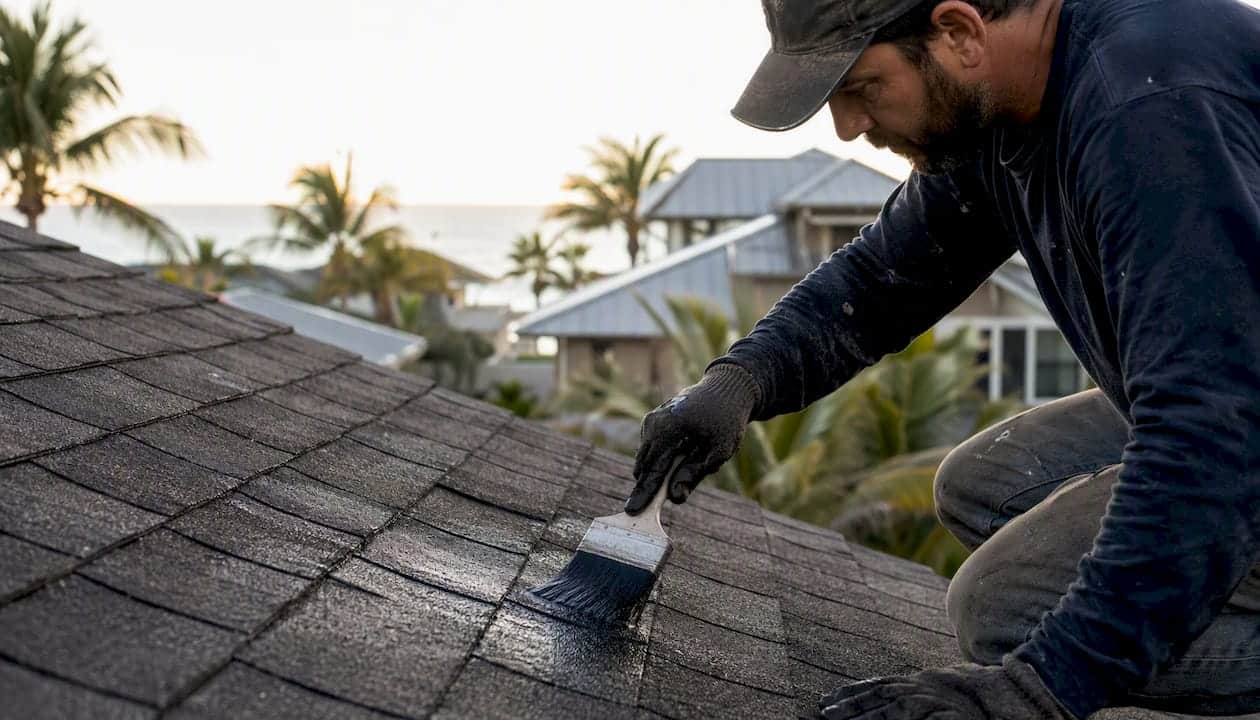
Roof restoration uses sealants, elastomeric coatings, or oil-based rejuvenators to extend the life of an aging but structurally sound roof. The most widely recognized product in this category is Roof Maxx, a bio-based oil treatment applied directly to asphalt shingles. The manufacturer claims it restores flexibility to dried-out shingles and can add up to five years of life per treatment, with up to three treatments possible over a roof’s remaining lifespan.
Elastomeric coatings work differently. They form a continuous membrane over low-slope or flat systems, sealing minor cracks and reflecting UV radiation. Both approaches share the same core logic: delay replacement by addressing the surface causes of early failure rather than the structural ones.
When restoration makes sense:
- Shingles are 15–20 years old but granule loss is moderate, not severe
- No active leaks or rotted decking
- The roof has only one existing layer (overlay code limits apply)
- Budget constraints make full replacement impractical right now
When it does not:
- Decking is soft, spongy, or visibly rotted
- Multiple layers already exist
- Leaks are widespread or recurring in multiple locations
- Shingles are curling, cracking, or missing in large sections
Restoration typically costs a few thousand dollars for an average single-family home, compared to significantly higher cost for a full replacement. That gap is real, but so is the ceiling: restoration buys time, not a new roof. For roofing manufacturers offering premium warranty lines, restoration treatments may affect warranty eligibility, so confirm compatibility before application.
When do targeted repairs beat a full replacement?
Targeted repairs, specifically flashing replacement, isolated shingle or underlayment repair, valley fixes, and penetration sealing, are the highest-value option when damage is genuinely localized. A single failed boot around a plumbing vent or a small section of lifted flashing at a chimney can cause a leak that looks catastrophic from inside but costs a few hundred dollars to fix correctly.
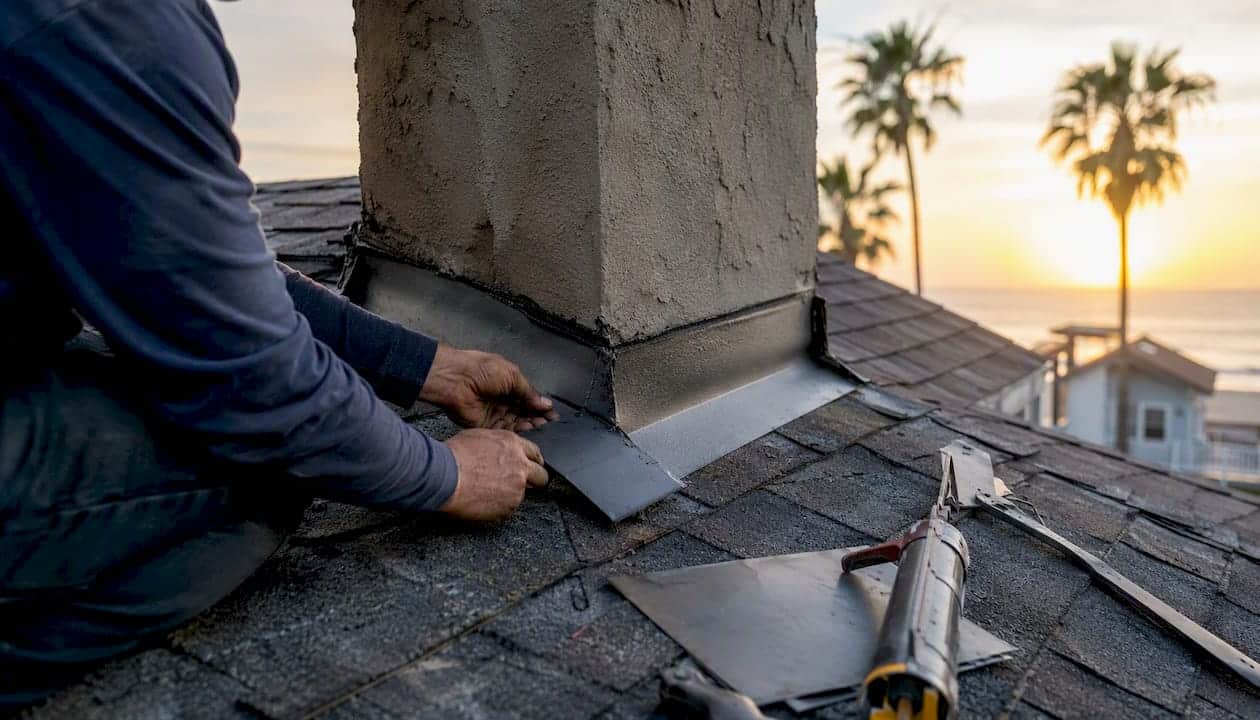
The decision rule is straightforward: repair when damage is confined to a small area and the surrounding roof has at least 8 years of remaining life expectancy. If the inspector finds soft decking, widespread granule loss, or multiple problem areas scattered across the surface, repairs become a recurring expense rather than a solution.
High-value repair types:
- Step and counter flashing at walls, chimneys, and skylights
- Valley metal replacement (open or closed valleys)
- Isolated shingle replacement with matching material
- Pipe boot and penetration resealing
- Ridge cap replacement on wind-damaged sections
Pro Tip: Always insist on an itemized repair scope with photos of the damaged decking before and after. Ask for an explicit written warranty on the repair itself, separate from any product warranty. A contractor who refuses to document the work in writing is a red flag.
For South Texas homeowners dealing with wind-driven rain damage, targeted flashing repairs combined with a storm damage restoration assessment often reveal whether a full replacement is actually necessary or whether a focused repair plan will hold for another decade.
Is sectional (partial) roof replacement a smart middle ground?
Sectional replacement replaces a defined portion of the roof, typically one slope, one addition, or a storm-damaged zone, while leaving intact sections in place. It makes the most sense after localized hail or wind events where damage is concentrated rather than spread across the whole surface.
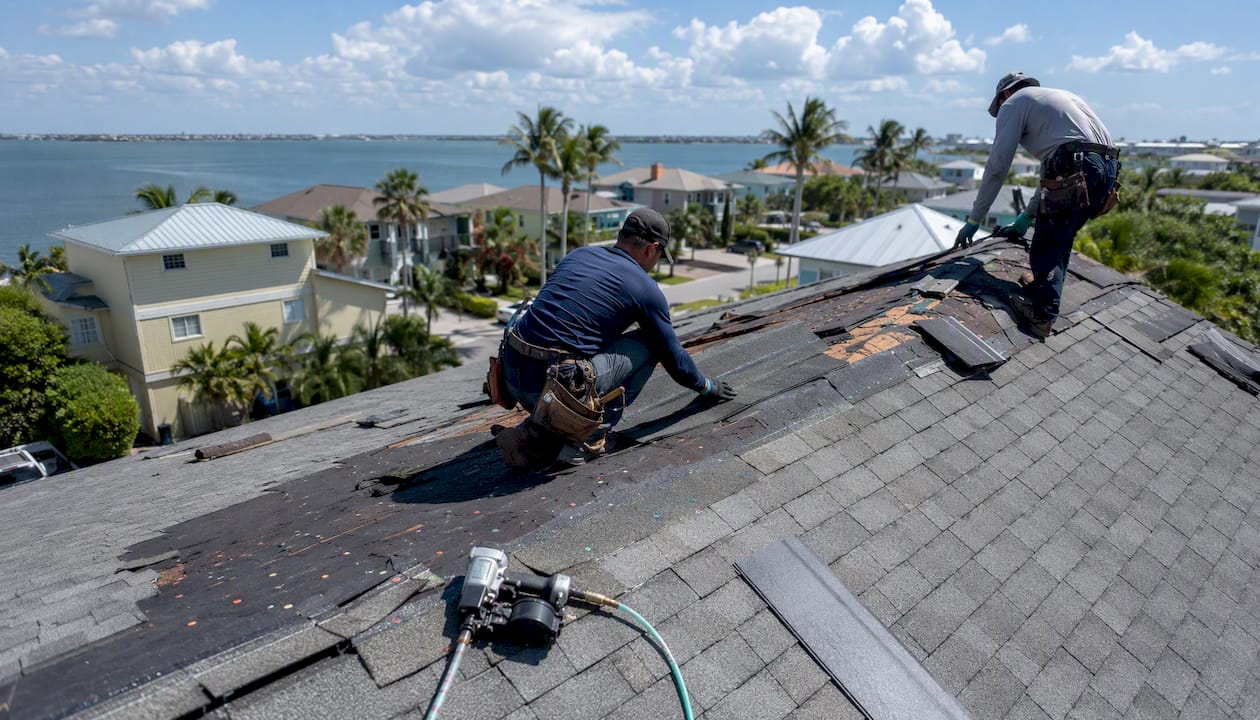
The cost advantage is obvious: replacing one slope instead of the whole roof cuts material and labor proportionally. But there are real risks to understand before choosing this route.
Risks to weigh:
- Color and texture mismatch: Shingles weather over time, and new shingles rarely match aged ones exactly, even from the same manufacturer
- Hidden decking damage: Removing shingles in one area sometimes reveals rot or damage that extends further than the visible surface suggested
- Code layering limits: If the existing roof already has two layers, a sectional replacement may require a full tear-off of that section first
- Warranty fragmentation: Some manufacturer warranties require whole-roof installation to be valid; a partial install may not qualify
Questions to ask any contractor before agreeing to sectional work:
- Can you source shingles that closely match the existing color and profile?
- Will you replace all flashings in the affected zone, not just the shingles?
- How will the new section integrate with the existing underlayment?
- Does this work qualify for the manufacturer’s warranty, and will you provide it in writing?
According to cost data from The Roofing Brief, the per-square-foot savings from a partial replacement versus a full tear-off can be significant upfront, but hidden decking issues discovered mid-project can close that gap quickly. Get a written scope that accounts for contingencies.
What is a metal roof overlay, and when does it make sense?
A metal overlay installs standing-seam or metal panel roofing directly over an existing substrate, typically one layer of asphalt shingles, without tearing off the old material. The appeal is obvious: no tear-off means lower labor and disposal costs, less disruption, and a finished product that can last 40–50 years.
Metal recover systems are purpose-built for this application, with profiles designed to span over existing shingles and attach to the decking through them. The result is a new weatherproof surface without the mess of a full removal.
When an overlay is appropriate:
- Only one existing layer is present (most codes prohibit adding a third layer)
- The existing decking is structurally sound and dry
- Local building codes permit the overlay (always verify with your municipality)
- The home’s structure can handle the added load
Safety and structural considerations:
- Metal adds weight, though less than a second layer of asphalt. An engineer or structural review is advisable for older homes or those with modified truss systems
- Permits are required in most jurisdictions; a contractor who skips the permit is creating a liability for you, not saving you money
- Some metal manufacturer warranties require a clean deck installation to be valid; confirm this before choosing overlay over tear-off
The GSA’s guidance on integrative rooftop strategies notes that non-traditional roof systems, including metal and green roof applications, require careful integration with the building envelope. The same principle applies to residential overlays: the system only performs as designed when the substrate and structure are properly evaluated first.
How do solar panels affect your roofing alternative choices?
Solar adds a layer of complexity to any reroofing decision, and the type of solar system matters enormously.
Retrofit solar panels (mounted on racking above the existing roof) can be removed and reinstalled, but that process adds $1,500–$4,000 or more to a reroofing project depending on system size. If your roof needs restoration or repair rather than replacement, panels can often stay in place, making lower-cost alternatives more attractive.
Integrated solar shingles (such as Tesla Solar Roof) are a different situation entirely. These systems are the roof, not an addition to it. Choosing an integrated system typically requires a full tear-off and a certified installer, which eliminates most lower-cost alternatives from consideration.
Decision framework:
- Confirm your roof has at least 10–15 years of remaining life before investing in a solar retrofit; removing panels for a reroof shortly after installation is expensive and avoidable
- If restoration or repair can extend your roof’s life to that threshold, it is usually worth doing before adding solar
- For integrated solar shingles, budget for a full replacement scope and verify the installer’s certification requirements
The added cost of panel removal and reinstallation means the per-year cost of a full replacement combined with solar is often lower than doing them separately. Run the numbers before assuming the cheaper roofing option is the cheaper overall option.
What can DIY fixes actually accomplish, and when are they dangerous?
Temporary DIY measures, a tarp over a blow-off section, a tube of roofing caulk on a flashing gap, a replacement shingle on an isolated missing spot, can stop water intrusion for days or weeks. That is their only legitimate purpose: buying time until a professional can assess and repair properly.
Common DIY fixes and their realistic limits:
- Patch tarps: Effective for 1–4 weeks in mild weather; wind and UV degrade them quickly
- Roofing caulk on flashings: Stops minor seepage temporarily but is not a permanent seal
- Spot shingle replacement: Feasible for one or two shingles if you can safely access the roof and match the material
Real risks of DIY roofing work:
- Most manufacturer warranties are voided by non-licensed installation or repair
- Walking on a damaged roof without proper equipment creates fall risk and can worsen deck damage
- Caulk and patch repairs often mask the visible symptom while water continues to travel laterally under the surface
When to call a professional immediately, without attempting a DIY fix:
- Active leak with water pooling inside
- Visible sagging or soft spots on the deck surface
- Large-area shingle blow-off (more than a few shingles)
- Any sign of structural movement or rafter damage
Scam activity spikes after major storms, so if you have urgent damage, watch for common roofing scams before hiring the first contractor who knocks on your door.
How do you choose the right alternative and vet a contractor?
The right alternative starts with an honest condition assessment, not a sales pitch. Work through these criteria before accepting any contractor’s recommendation.
Roof condition checklist:
- Age of the roof and number of existing layers
- Extent and location of visible damage (localized vs. widespread)
- Attic inspection results: moisture staining, soft decking, ventilation adequacy
- Leak history: one incident or recurring?
- Remaining life estimate from an independent inspector
Steps for vetting contractors:
- Get three itemized bids for the same defined scope; vague bids cannot be compared
- Verify the contractor’s license with your state licensing board
- Confirm active general liability and workers’ compensation insurance
- Request at least two local references from jobs completed in the past 12 months
- Ask who pulls the permit; the contractor should, not you
- Confirm the warranty in writing: both the product warranty and the labor warranty
For a detailed contractor-vetting checklist, the qualities of reliable roofing contractors guide covers the ten most important signals to look for before signing anything.
Red flags to walk away from:
- Demand for more than 10–15% upfront before work begins
- No physical local address or only an out-of-state phone number
- Out-of-state license plates on the crew vehicles after a storm
- Pressure to sign immediately or “lose the price”
- Refusal to provide a written contract or permit documentation
According to The Roofing Brief’s red-flag checklist, two of these flags together is a yellow light; three or more is a confirmed fraud profile. Trust signals that offset risk include a written warranty, GAF or Owens Corning manufacturer certification, a free inspection offer, and verifiable local references. Proven Pros also offers a permit-verified contractor search that cross-references actual permit pulls with contractor claims, which is a useful independent check.
What do these alternatives actually cost in the U.S.?
| Alternative | Typical U.S. Cost Range | Typical Install Time |
|---|---|---|
| Targeted repair | $300–$2,000 | 2–8 hours |
| Roof restoration / coating | $1,500–$4,000 | 1–2 days |
| Sectional replacement | $1,500–$4,000 | 1–2 days |
| Metal overlay / recover | — | 2–5 days |
| Full tear-off and replace | — | 2–5 days |
Material choice within each category also moves the needle. According to cost research, three-tab asphalt shingles are the cheapest per-square material, but architectural shingles typically represent better long-term value due to longer rated life and faster installation. The material cost differential on a typical roof often runs $300–$600, a gap that narrows further when you factor in the architectural shingle’s longer warranty.
Ways to reduce project cost:
- Schedule in late fall or winter; demand drops and contractors often discount
- Ask about manufacturer rebate programs tied to certified installer status
- Use mid-tier architectural shingles rather than premium lines unless the warranty difference justifies the cost
- Vetted local contractors can be meaningfully less expensive than national chains for identical scopes
Code and permit impacts on cost:
- Overlay projects in jurisdictions that require a permit add $100–$500 in permit fees but protect you legally
- Areas that prohibit overlays (check your local building department) eliminate that option entirely, which affects your budget planning
- Some coastal counties in Texas have wind-load requirements that affect both material selection and installation method
Reputable roofing service providers to consider
Finding a trustworthy contractor is often harder than choosing the right roofing method. This shortlist covers providers and resources worth evaluating as alternatives to Roof-X Home Services.
Buffaloroofingandexteriors serves homeowners across South Texas, including Corpus Christi, San Antonio, Victoria, and surrounding areas. The company handles the full range of alternatives covered in this article: targeted repairs, storm damage restoration, partial and full replacement, ventilation upgrades, and new installations. They offer free inspections, financing options, and manufacturer-certified installations. For homeowners in the Robstown and Corpus Christi corridor, their local roofing services page covers service area details and contact information.
Roof Maxx dealers are certified applicators of the Roof Maxx bio-based rejuvenator treatment. If restoration is the right call for your roof’s condition, a Roof Maxx dealer can assess eligibility and apply the treatment. The dealer network is searchable through the Roof Maxx website by zip code.
Local GAF and Owens Corning certified contractors carry manufacturer certification that requires training, insurance verification, and quality standards. The Consumer Reports roofing buying guide notes that premium manufacturer warranties, including lifetime lines from brands like GAF, CertainTeed, and Owens Corning, often require certified installer installation to be valid. Searching each manufacturer’s website for certified contractors in your zip code is a reliable starting point.
Proven Pros offers a permit-verified contractor search that cross-references actual permit activity with contractor listings, giving you an independent signal of a contractor’s real-world track record rather than just their marketing claims.
For homeowners comparing multiple local providers, the victoriaroofpros.com alternatives guide covers additional South Texas provider options and service scope comparisons.
Why a condition-based approach matters more than provider loyalty
The conventional wisdom in roofing sales is to lead with the product: “You need a new roof” or “Restoration is all you need.” Both framings serve the seller’s interest, not yours. The right starting point is always the roof’s actual condition.
South Texas roofs face a specific combination of stressors: intense UV exposure, high humidity, salt air in coastal zones, and periodic hurricane-force wind events. A roof that would last 25 years in a mild climate may show significant wear at 15 years in Corpus Christi. That reality changes the math on restoration versus replacement, and it means the condition assessment has to account for local climate, not just national averages.
Buffaloroofingandexteriors approaches every inspection with this framing: what does this specific roof need, given its age, condition, and the climate it lives in? Free inspections, financing options, and manufacturer certifications (GAF and Owens Corning) mean the conversation can cover every option on the table, from a $500 flashing repair to a full storm restoration, without steering toward the most expensive outcome. The goal is an honest evaluation that matches the solution to the condition, not the other way around.
One reassurance worth stating plainly: any contractor who quotes a full replacement without first showing you photos of the decking condition and explaining why repair or restoration won’t work is not giving you a complete picture. Ask for the evidence.
Buffaloroofingandexteriors offers free inspections across South Texas
Homeowners in Corpus Christi, San Antonio, Victoria, and surrounding coastal communities have a local, in-person option that covers every alternative discussed in this article. Buffalo Roofing and Exteriors provides free roof inspections with itemized quotes, so you see exactly what each option costs before committing to anything.
Services available through a single contractor relationship include targeted leak and flashing repairs, partial and full roof replacement, storm damage restoration for wind and hail events, ventilation upgrades, and new installations on residential and commercial properties. Financing options are available for larger projects, and manufacturer-certified installations qualify for premium warranty coverage from GAF and Owens Corning.
The practical advantage of working with a local contractor who handles all of these options: you get one inspection, one honest assessment, and a clear comparison of what repair, restoration, or replacement actually costs for your specific roof, not a national average. Schedule a free inspection at buffaloroofingandexteriors.com or call to get an itemized quote with no obligation.
Key Takeaways
The most cost-effective roofing alternative is the one matched to your roof’s actual condition: restoration for aged but intact shingles, targeted repair for localized damage, and full replacement only when the decking is compromised or multiple layers already exist.
| Point | Details |
|---|---|
| Match solution to condition | Restoration suits aged but intact roofs; repairs suit localized damage; replacement suits compromised decking. |
| Overlay has real limits | Overlays save $1.50–$3.00 per sq ft upfront but can shorten roof life by 5–30% and may void manufacturer warranties. |
| Vet every contractor | Verify license, insurance, and permit responsibility; three itemized bids reveal the real market price for your scope. |
| Red flags are disqualifying | Three or more red flags (out-of-state plates, large deposit demand, no permit, pressure tactics) indicate a fraud profile. |
| Buffaloroofingandexteriors | Serves South Texas homeowners with free inspections, financing, and manufacturer-certified installations across the full range of alternatives. |
Useful sources and further reading
- gsa.gov
- Consumer Reports: Roofing buying guide
- Watch out: These 5 roofing scams · Angi
- Cheapest Way to Replace a Roof in 2026: 7 Cost-Saving Strategies That Work
- Cost to Reshingle a Roof 2026 (Real Pricing) | TRB
- How to hire a roofer you can trust · Proven Pros
- 12 Red Flags a Roofing Contractor Will Burn You | TRB