TL;DR: Metal roofing lasts two to three times longer than asphalt shingles, withstands hurricane-force winds when properly installed, and reflects heat to cut cooling costs — all critical advantages in Corpus Christi’s coastal climate. Choosing the right metal and coating matters here because salt air accelerates corrosion. Any roof replacement in Nueces County also requires a WPI-8 windstorm certification to keep your TWIA insurance valid.
Corpus Christi homeowners face a uniquely demanding environment. Salt-laden Gulf breezes, Category 3+ hurricane threats, relentless UV exposure, and high year-round humidity put every roof through a punishing cycle. If you live anywhere from the Southside neighborhoods to Padre Island, Alice, Aransas Pass, or Beeville, your roofing material choice is a bigger deal than it would be almost anywhere else in Texas.
Metal roofing has become one of the most popular upgrades along the Texas Gulf Coast — and for good reason. This guide explains exactly why, how it works, what it costs in the long run, and what you need to know before signing a contract.
What Is Metal Roofing?
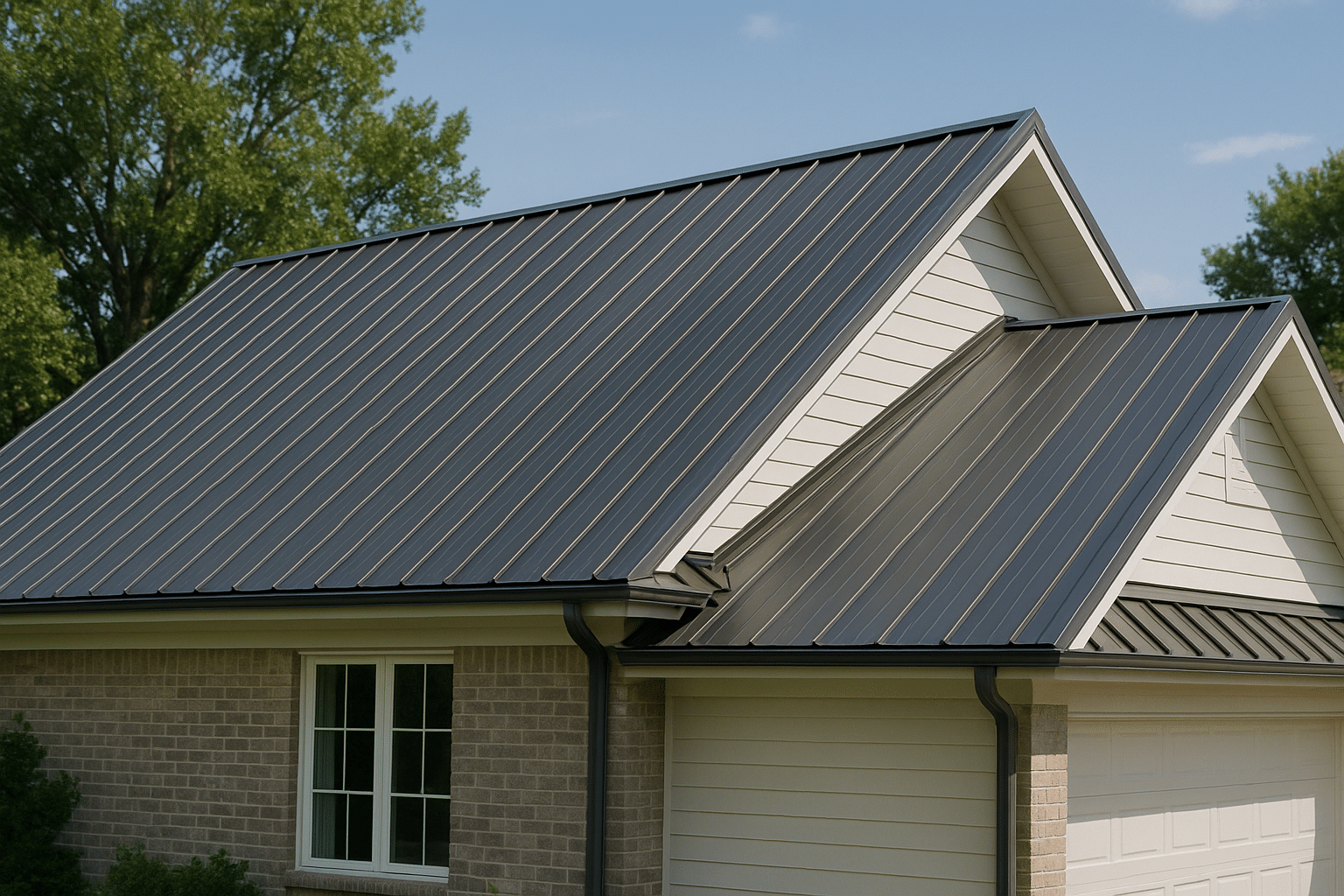
Metal roofing comes in panels or shingles made from steel, aluminum, copper, or zinc. In South Texas, the two most common residential options are standing seam metal (raised, interlocking panels with concealed fasteners) and exposed-fastener metal panels. Standing seam is generally the smarter choice for coastal areas because the hidden fastener system gives wind-driven rain far fewer entry points.
Common metal types you’ll encounter:
- Aluminum — Naturally rust-resistant; the top pick for homes close to the water.
- Galvalume steel — A carbon-steel substrate coated with an aluminum-zinc-silicon alloy; excellent performance for homes a few miles inland.
- Galvanized steel — More affordable but the least salt-resistant of the three; generally not recommended for oceanfront or near-bay properties.
How Metal Roofing Stands Up to Corpus Christi’s Climate
Hurricane and High-Wind Performance
Many quality metal roofing systems are engineered and tested to resist wind speeds in the 130–150+ mph range, exceeding the demands of a Category 3 hurricane. That matters in a region that sits squarely in the Gulf Coast’s most active hurricane corridor.
Most roof failures during hurricanes are tied to installation issues rather than material defects. In other words, a properly designed and installed metal roof performs very differently from a carelessly installed one. FEMA documented a metal-roofed building that survived 170 mph winds under Hurricane Andrew, losing just some hip flashing — proof that the material holds up when the installation is right.
Metal roofing systems are engineered to perform as complete assemblies, so following manufacturer-approved installation methods helps ensure the system performs as tested for wind uplift and weather resistance. Always ask your contractor which assembly was used and confirm it matches the tested specification.
Salt Air and Corrosion: The Corpus Christi Complication
Salt deposits land on the roof, then humidity and dew keep that salt wet. That thin film of salty moisture turns the roof surface into a weak electrolyte, which speeds up corrosion, especially at scratches, cut edges, laps, and fasteners.
Not all metals are equal here. Aluminum does not rust the way steel does. When aluminum is exposed to oxygen, it forms a thin aluminum oxide layer that helps protect the base metal. Aluminum is often specified within a few miles of the ocean because it won’t develop red rust the way steel-based products can, even with good coatings.
If you’re several miles inland — in Beeville, Alice, or Banquete, for example — Galvalume, a blend of zinc, aluminum, and silicon, provides superior protection against corrosion. This material combines the best qualities of zinc’s sacrificial properties and aluminum’s natural rust resistance, and is ideal for salty-air conditions because its hybrid coating resists deterioration even when exposed to harsh elements over extended periods.
One practical note: It is important to compare both the substrate and paint warranties and look specifically at proximity-to-the-ocean clauses, as various manufacturers will specify a distance from the ocean that may alter their warranty. A good contractor will pull those documents before quoting.
Energy Efficiency in a South Texas Summer
Corpus Christi summers are brutal. Daytime highs push well past 95°F for months, and air conditioning accounts for a huge share of most households’ energy bills.
Metal surfaces, especially those with light colors or specialized coatings, reflect solar radiation. Studies report up to 40% reduction in cooling costs compared to asphalt shingles. ENERGY STAR–rated metal roofing products meet strict criteria for solar reflectance and performance.
Metal panels often last 40 to 70 years and can retain up to 95% of their reflective capacity over time. That’s a meaningful advantage over asphalt, which absorbs heat and degrades faster under intense UV exposure.
Metal vs. Asphalt Shingles: A Straight Comparison
Asphalt shingles remain the most common roofing material in the U.S., and they’re a reasonable choice in many climates. But they face real challenges in South Texas. Here’s how the two materials compare on the factors that matter most to Coastal Bend homeowners:
- Lifespan: Metal roofs can last between 40 to 80 years, significantly longer than the 20-year lifespan of typical asphalt shingle roofs.
- Wind resistance: With the right installation, metal panels can withstand wind speeds up to 140–160 mph and are less likely to suffer from water damage, cracking, or warping over time.
- Mold and mildew: Both standing seam and stone-coated steel metal roofs resist mold and mildew, and their smoother surfaces give fungi and algae fewer nooks and crannies to start growing. In a high-humidity coastal environment, that’s a real advantage.
- Long-term cost: Metal roofs can last 40 to 70 years — often the lifetime of the home — meaning one metal roof can outlast two or even three asphalt shingle installations, saving tens of thousands in replacement and labor over time.
- Upfront cost: The biggest drawback of a metal roof is upfront price — they’re more expensive than traditional asphalt shingles by a long shot and often cost two to three times as much to install. For homeowners planning to stay in their home for the long term, the math usually works out in metal’s favor.
- Resale value: Homes with metal roofs can see up to a 6% increase in resale value compared to asphalt shingle roofs, and buyers recognize the long lifespan, energy efficiency, and low maintenance.
If you’re weighing an asphalt shingle repair or replacement instead, our team handles professional shingle roof repair in Corpus Christi and can walk you through both options honestly during your free estimate.
The WPI-8 Requirement: What Every Nueces County Homeowner Must Know
This is the part many contractors gloss over — and it can cost you dearly if ignored.
The TDI (Texas Department of Insurance) administers windstorm construction rules across 14 first-tier coastal counties, including Nueces County (Corpus Christi), San Patricio County (Aransas Pass), and Aransas County. The WPI-8 certification is a form issued by the Texas Department of Insurance that confirms a structure meets state-mandated windstorm building codes, and it applies to properties located in high-risk coastal areas.
Homeowners in these areas typically buy coverage through the Texas Windstorm Insurance Association (TWIA), and TWIA will not insure a structure that cannot show a Certificate of Compliance (Form WPI-8) for its roof and exterior envelope. In plain language: replace your roof without a WPI-8 and you may not be able to get or renew your windstorm insurance.
Most of Nueces County (Corpus Christi) and surrounding coastal areas qualify, and any new roof or re-roof in a TWIA-designated zone must pass a windstorm inspection and receive a WPI-8 certificate.
For metal roofing specifically, all roofing materials must be listed on the TDI-approved product list — including the roofing material itself (shingles, metal panels, tile), the underlayment, fasteners, flashing, and sealants. The installation method must follow the manufacturer’s high-wind installation instructions, which typically specify enhanced fastening patterns, additional adhesive, and reinforced edge and ridge treatments.
At Buffalo Roofing & Exteriors, we handle the WPI-8 process from start to finish on every eligible installation in Corpus Christi, Aransas Pass, and across Nueces, San Patricio, and Aransas counties. You won’t be left scrambling for an inspector or wondering if your paperwork is in order.
Pros and Cons at a Glance
Pros
- Lifespan of 40–80 years — potentially the last roof you ever buy
- Engineered for 130–150+ mph wind resistance when properly installed
- Reflects solar heat; can cut cooling costs significantly
- Resists mold, mildew, rot, and insects
- Aluminum and Galvalume options designed for coastal salt-air environments
- Compatible with WPI-8 windstorm certification (TWIA insurance requirement)
- Some insurers offer premium discounts for impact-resistant metal roofing
- Adds resale value
Cons
- Higher upfront cost than asphalt shingles — often 2–3× more
- Requires an experienced installer; improper installation is the leading cause of coastal metal roof failures
- Material selection matters — the wrong metal or coating in a salt-air environment will corrode faster
- Some manufacturers limit or void warranties for installations too close to salt water; verify before purchasing
When Metal Roofing Makes the Most Sense
Metal roofing is a strong fit if you:
- Plan to stay in your Corpus Christi home for 10 or more years
- Want to stop cycling through asphalt shingle replacements every 15–20 years
- Need a WPI-8-compliant roof to maintain or qualify for TWIA windstorm coverage
- Are building new construction in a TWIA-designated coastal county
- Own a commercial property and want a low-maintenance, long-lived roof — our team also handles commercial roofing and exterior services in Corpus Christi
- Are buying or selling a home and need a roof that satisfies an insurance or lender requirement
It may not be the right move if your timeline is short, your budget is tight upfront, or you’re dealing with a minor repair that a quality shingle patch can handle effectively.
What to Ask Before You Sign a Contract
Not all metal roofing installations are equal. Here are questions every Corpus Christi homeowner should ask:
- Is this metal panel on the TDI-approved product list for WPI-8 compliance?
- What’s the substrate — aluminum, Galvalume, or galvanized steel — and what does the manufacturer’s salt-air warranty say?
- Is this a standing seam system with concealed fasteners?
- Will you handle the WPI-8 windstorm inspection and certification?
- What wind uplift rating has this assembly been tested to?
- Is financing available if I need it?
Buffalo Roofing & Exteriors: Corpus Christi’s Local Metal Roof Specialists
Buffalo Roofing & Exteriors is a locally owned, BBB-accredited roofing contractor with deep roots in South and Central Texas. We install aluminum and Galvalume metal roofing systems in Corpus Christi, Alice, Aransas Pass, Banquete, Beeville, and the surrounding Coastal Bend area.
Every metal roof we install in a TWIA-designated zone is done to TDI windstorm code, and we manage the WPI-8 certification process so you don’t have to. We’re licensed, insured, and carry 200+ five-star Google reviews from homeowners who’ve trusted us with exactly this kind of long-term investment.
Financing is available through Improvifi from $1,000 to $50,000 — with $0 down and no credit score impact to apply — so a higher upfront cost doesn’t have to be a barrier.
Ready to find out if metal roofing is right for your home? Contact us today for a free estimate. We’ll assess your roof, walk you through your material options for your specific location and proximity to the water, and give you a straight answer — no pressure, no fluff.
Recommended Reads
- TPO Roof Repair in Corpus Christi, TX
- Flat Roof Repair in Corpus Christi, TX
- Professional Shingle Roof Repair in Corpus Christi, TX