TL;DR: Clay and concrete tile roofs both handle Gulf Coast heat, wind, and humidity well, but they differ in weight, cost, and longevity. This guide breaks down the real tradeoffs for Corpus Christi, Alice, Aransas Pass, Banquete, and Beeville homeowners, including how tile roofing interacts with Texas windstorm (WPI-8) requirements.
Tile roofing shows up on a lot of South Texas homes for good reason — it handles heat, salt air, and wind better than most materials on the market. But when you’re comparing clay tile vs. concrete tile roofing, the differences matter for your budget, your home’s structure, and your insurance paperwork.
Here’s a plain-spoken breakdown of how each material performs in the Coastal Bend climate, from Corpus Christi out to Alice, Aransas Pass, Banquete, and Beeville.
Clay Tile vs. Concrete Tile: The Basics
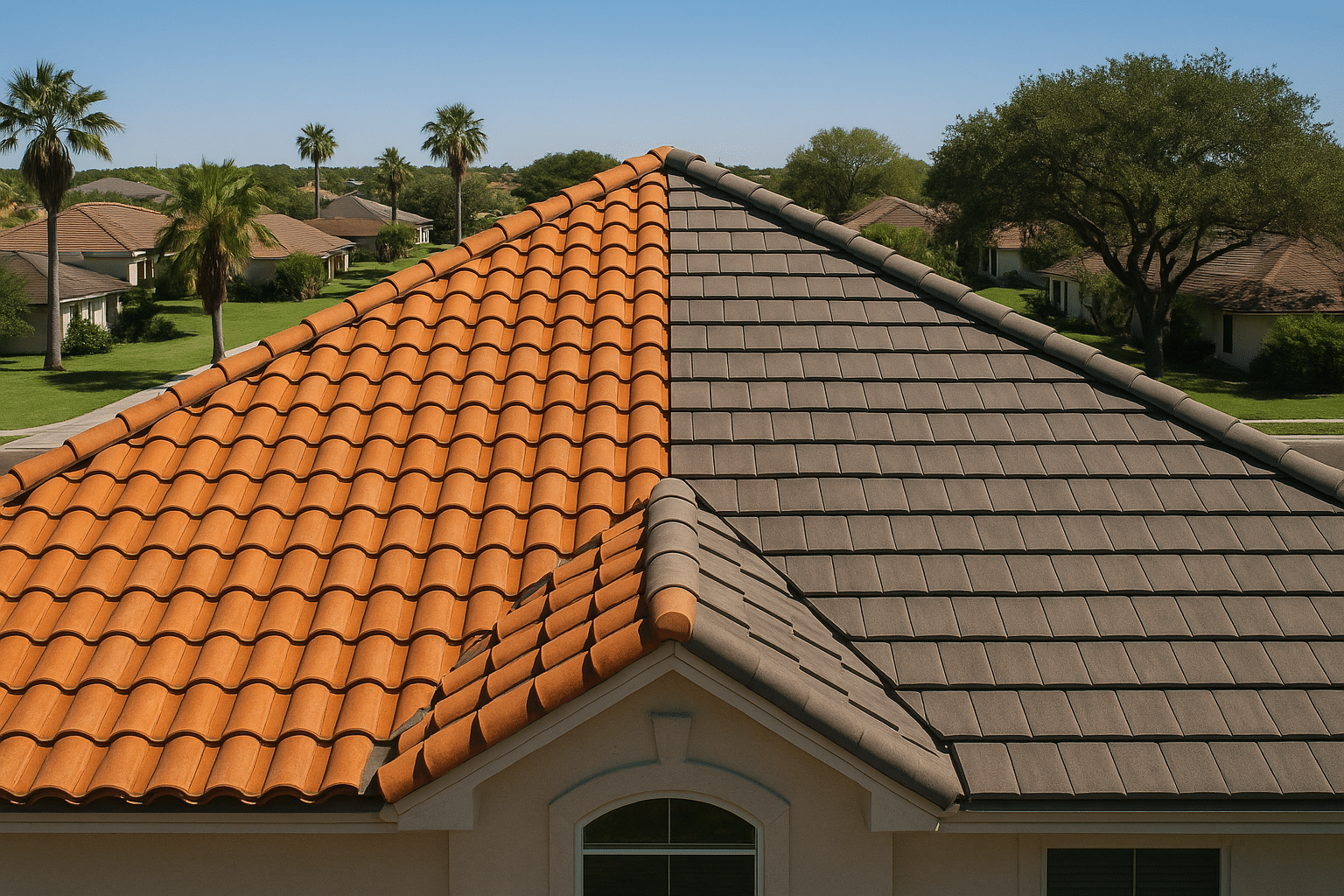
Both are durable, long-lasting roofing materials, but they’re made differently and behave differently once they’re on your roof.
Clay Tile
Clay roof tiles are made from natural clay that’s kiln-fired.
That firing process is what gives clay its reputation for lasting a long time without fading.
Clay tiles are kiln-fired at approximately 2,000 degrees Fahrenheit, creating a dense, nearly waterproof material that resists algae growth better than concrete, with color baked into the tile itself so fading isn’t an issue even after decades of direct sun.
Concrete Tile
Concrete roof tiles are made from a mixture of Portland cement, sand, water, and iron oxide pigments, extruded into molds under high pressure and then cured to create dense, durable tiles.
Concrete is often selected for its lower upfront material cost compared to clay, though long-term maintenance can vary.
Weight: Why It Matters More Than You’d Think
This is the single biggest practical difference between the two materials, and it affects whether your existing roof structure can even support tile without modification.
- Clay tile typically weighs 6–6.5 lbs per square foot (600–650 lbs per roofing square).
- Concrete tile typically weighs 8.2–11 lbs per square foot (820–1,100 lbs per roofing square).
- Concrete tiles can weigh nearly 40% more than clay.
Both are far heavier than asphalt shingles.
Clay tiles weigh less than concrete tiles, making them easier to install on structures with standard load-bearing capacity, while concrete tiles often require structural engineering approval because they can exceed allowable dead loads for older homes or lighter truss systems.
If you’re considering a tile re-roof on an older home in Beeville or Banquete that wasn’t originally framed for tile, a structural assessment should come before any material decision — this isn’t a corner to cut.
Wind and Storm Performance
For homeowners along the Coastal Bend, wind resistance is non-negotiable. Hurricane season brings real risk, and both tile types hold up well when properly installed.
Tile roofs withstand rain very well and are rated for winds up to about 150mph, meeting Miami-Dade and other hurricane zone requirements.
When installed with mechanical fasteners and hurricane clips, concrete tile roofs are rated for sustained winds of 150 mph or higher, and the weight of the tiles actually helps resist uplift in high winds.
Hail and flying debris are the bigger concern for tile in a storm.
While both clay and concrete tiles are robust, they may be susceptible to cracking or breakage over time, with the risk heightened by severe weather events or falling tree limbs, so it’s advisable to inspect a tile roof after significant weather events.
Individual cracked tiles are usually a straightforward repair rather than a full roof replacement, which is one of tile’s practical advantages over continuous roofing systems.
Lifespan and Maintenance
This is where clay pulls ahead, though concrete isn’t far behind.
| Factor | Clay Tile | Concrete Tile |
|---|---|---|
| Typical lifespan | 75–100+ years | 50–75 years |
| Water absorption | ~6% | Higher than clay |
| Fire rating | Class A | Class A |
Both materials are genuinely low-maintenance compared to asphalt shingles —
concrete tile is low-to-medium maintenance and slightly more prone to surface cracks than clay, while asphalt shingles require high maintenance as they lose granules and wear over time.
Neither clay nor concrete rots, warps, or attracts insects, which matters in Beeville and Banquete’s humid summers.
Cost: Where Concrete Has the Edge
Concrete tile generally costs less upfront.
Concrete tile is generally 20–40% less expensive than comparable clay tile.
Over a multi-decade lifespan, clay’s higher ceiling on longevity can offset some of that gap, but if budget is the deciding factor, concrete tile delivers a lot of the same performance for less money.
Clay vs. Concrete Tile: Quick Comparison
- Choose clay if: you want the longest possible lifespan, permanent color that won’t fade in intense South Texas sun, and your roof structure can support the lighter — but still substantial — weight.
- Choose concrete if: budget matters, you want more style and profile options, and you’re comfortable with a roof that still lasts 50+ years with low upkeep.
What This Means for Coastal Bend and South Texas Homes
Unlike our coastal markets, San Antonio and the Hill Country don’t deal with salt air — but Corpus Christi, Aransas Pass, and surrounding Coastal Bend communities do. Both clay and concrete tile resist salt-air corrosion far better than untreated metal fasteners or lower-grade shingle products, which is part of why tile remains popular here despite the higher material cost.
For homes in the Texas Windstorm Insurance Association’s designated catastrophe area — which includes Nueces, San Patricio, Aransas, and other first-tier coastal counties — any new roof or full re-roof needs to pass windstorm inspection.
That certification document is called the WPI-8 (Windstorm/Hail Insurance Certificate of Compliance), issued by a TDI-licensed engineer or TDI-appointed inspector after verifying the roofing installation meets TWIA building code standards.
All roofing materials used must be listed on the TDI-approved product list
— so if you’re installing clay or concrete tile anywhere in the Coastal Bend windstorm zone, confirm your specific tile product and fastening method are approved before work begins.
If you’re not in the designated windstorm zone — Alice and Beeville homeowners, for example — you won’t need WPI-8 certification, but the same wind-rating and fastening principles still apply for storm durability.
Weighing Your Roof Structure Before You Decide
Before committing to either material, have your roof deck and trusses evaluated.
A thorough structural inspection is crucial to ensure the home’s framework can adequately support the added weight, and it’s recommended to entrust tile installation to a qualified roofing engineer.
This step matters just as much for a 1960s home in Alice as it does for newer construction in Corpus Christi — tile is not a swap you make without confirming the structure underneath can carry it.
If tile turns out to be too heavy for your existing framing, or if you’re repairing storm damage on a different roof type in the meantime, Buffalo Roofing & Exteriors also handles shingle roof repair and flat roof repair across the Coastal Bend, so you’re not stuck choosing a material that doesn’t fit your home.
The Bottom Line
Both clay and concrete tile are strong, long-lasting choices for South Texas homes — the right pick comes down to your roof’s structural capacity, your budget, and how long you plan to stay in the home. A licensed local contractor can evaluate your framing, walk you through TDI windstorm requirements if you’re in the coastal zone, and give you a free estimate for either material so you can compare real numbers before deciding.
Buffalo Roofing & Exteriors is locally owned and BBB-accredited, serving Corpus Christi, Alice, Aransas Pass, Banquete, Beeville, and the surrounding Coastal Bend from our Corpus Christi headquarters. We handle tile, shingle, metal, and flat roofing installation and repair, plus WPI-8 windstorm certification, storm damage restoration, and insurance claim assistance — all single-source, so you’re not juggling separate contractors for your roof and the rest of your exterior.
Recommended Reads
- Flat Roof Repair in Corpus Christi, TX
- Professional Shingle Roof Repair in Corpus Christi, TX
- Professional Deck Sealing Services in Corpus Christi, TX