Fiber cement is the best baseline siding for most coastal homes. It resists moisture, holds paint longer than wood, and survives salt exposure better than vinyl. Three alternatives deserve a look depending on your budget and tolerance for upkeep:
- Marine-grade coated metal (like Galvalume with a PVF finish): near-zero maintenance and finish warranties that can run up to 50 years.
- Cellular PVC or composite: very low maintenance, premium price, strong trim compatibility.
- Vinyl: the budget pick, but it struggles on first-row oceanfront exposures.
- Cedar or thermally modified wood: unmatched curb appeal, but it demands the most upkeep of any option here.
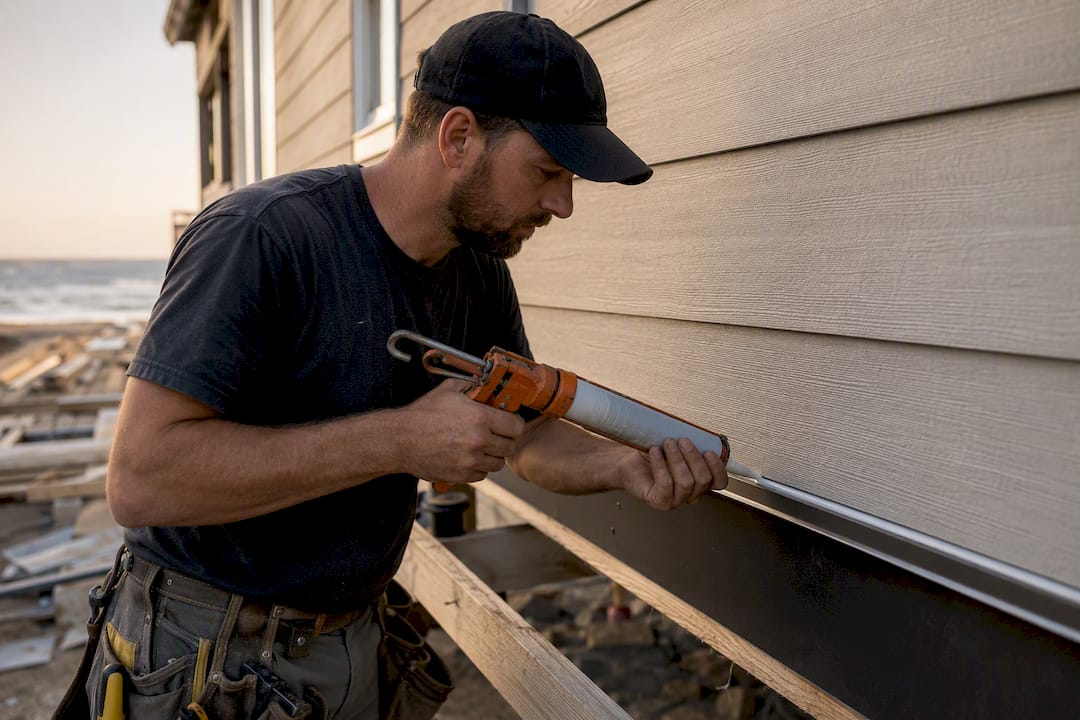
No material survives bad installation. Whatever you choose, insist on a drained and vented rainscreen, corrosion-resistant fasteners, sealed field cuts, and correctly lapped flashing. Skip any of those four and even the best siding fails early.
Key Takeaways
Fiber cement remains the most reliable baseline for coastal siding, but the installation system, not the material label, ultimately determines how long any siding lasts.
| Point | Details |
|---|---|
| Fiber cement leads for most homes | Coastal-grade fiber cement, properly sealed and fastened, commonly exceeds 10 to 15 years of service. |
| Metal offers the lowest maintenance | Coated steel systems can carry finish warranties up to 50 years with minimal rinsing required. |
| The system matters as much as the material | A rainscreen gap, correct WRB integration, and stainless fasteners prevent most coastal siding failures. |
| Maintenance protects your investment | Rinse oceanfront siding monthly to quarterly and inspect flashings twice a year to avoid early failure. |
| Buffalo Roofing & Exteriors builds system-first | The company specs rainscreens, stainless or approved galvanized fasteners, and sealed cuts on every coastal siding project. |
Table of Contents
- Coastal Siding Options: What Salt, Sun, and Wind Actually Do to Your Walls
- Comparing Fiber Cement, Metal, Composite, Vinyl, and Wood
- Rainscreens, Flashings, and Fasteners: The System Behind the Siding
- What Maintenance and Lifecycle Costs Look Like Over Time
- How to Match Your Home’s Exposure to the Right Siding
- How Buffalo Roofing & Exteriors Approaches a Coastal Siding Project
- Get a Coastal-Ready Siding Estimate From a Local Contractor
- Sources
Coastal Siding Options: What Salt, Sun, and Wind Actually Do to Your Walls
Coastal exposure attacks siding differently than inland weather does, and understanding the failure mechanism matters more than picking a brand name.
- Salt spray corrosion: Airborne salt settles into fastener heads, seams, and cut edges. Once it’s there, it draws moisture and accelerates rust and material breakdown, even on materials rated for exterior use.
- UV and thermal cycling: Constant sun exposure combined with temperature swings causes chalking on painted surfaces, embrittlement in plastics, and fading that shows up faster on south and west elevations.
- Wind-driven rain and debris: Storms push water sideways and upward, past laps and seams that would keep out a normal rain. That’s why drained assemblies and secure fastening schedules matter more here than almost anywhere else.
These three forces change what a competent contractor specifies. Fastener metallurgy, the weather-resistant barrier, and the drainage plane behind the cladding all need upgrading from a standard inland build, not just the visible siding panel itself.
Comparing Fiber Cement, Metal, Composite, Vinyl, and Wood
Each material category behaves differently once salt and UV get involved, and the differences show up in maintenance schedules more than in the showroom.
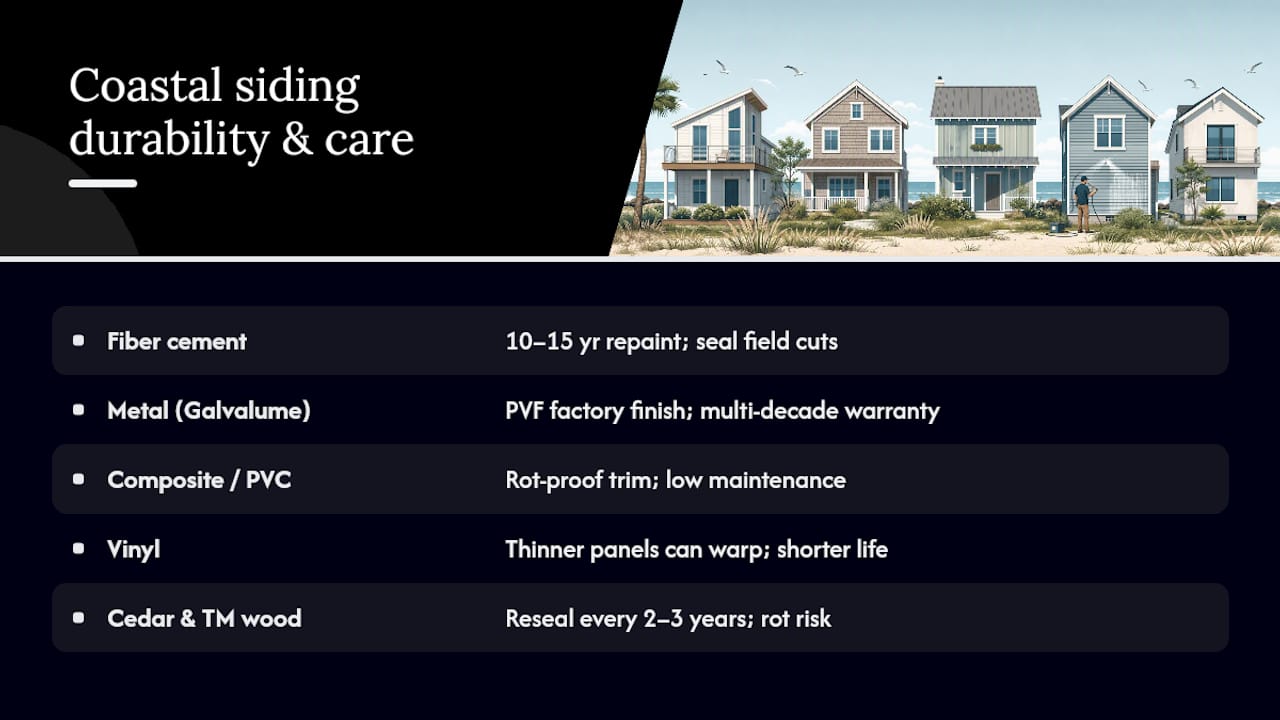
Fiber cement holds up well against coastal exposure when installed correctly, and field experience shows factory-finished, coastal-grade products routinely exceeding 10 to 15 years without major aesthetic loss. It’s heavier than vinyl, so it needs a proper fastening schedule, and every field cut needs sealing before it goes up. Expect a repaint cycle every 10 to 15 years depending on exposure and color choice. This combination of weight, stability, and paint retention is why it’s the default recommendation for most oceanfront and near-coast projects.
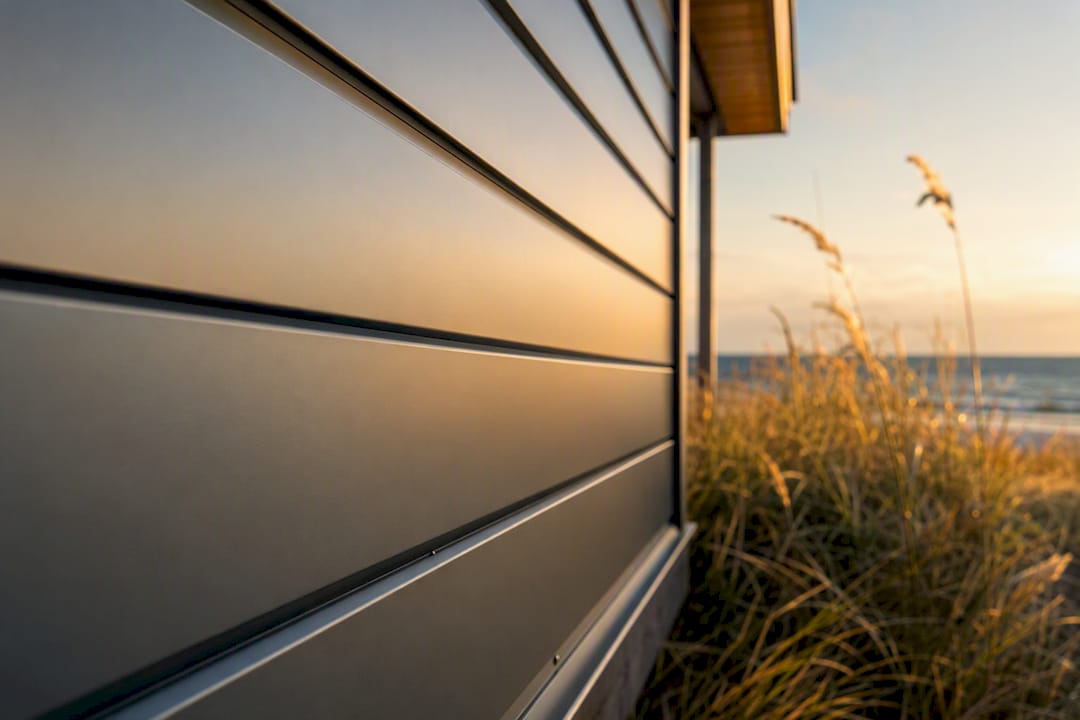
Coated metal, particularly Galvalume substrates finished with PVF film, brings a different value proposition: a factory finish designed to resist chalking and fading with minimal rinsing, backed by warranties that can run decades. That long-warranty structure exists specifically because manufacturers engineered it for salt exposure, not because it’s overbuilt for typical suburban use. It fits contemporary and industrial-style coastal homes particularly well.
Composite and cellular PVC trim products excel where wood used to dominate: window casings, fascia, and rake boards. Low maintenance and rot immunity make them worth the premium in trim applications, though detailing (proper fastening, expansion gaps) still needs a contractor who’s done coastal work before.
Vinyl remains the most affordable option, and it can work on protected or inland-facing elevations. On first-row oceanfront walls it often falls short. Thinner panels can warp under heat and impact, so if you go this route near the water, spec thicker, impact-rated panels and understand you’re accepting shorter service life for lower upfront cost.
Cedar and thermally modified wood deliver the warmest, most traditional beach house look, but they demand real commitment: resealing every 2 to 3 years, careful edge treatment, and vigilant moisture monitoring at every joint.
Pro Tip: Ask any contractor bidding your siding job whether they seal field-cut edges before installation, not after. That single detail separates a 15-year fiber cement job from one that fails at year six.
Rainscreens, Flashings, and Fasteners: The System Behind the Siding
Material choice only accounts for part of long-term performance. The wall assembly behind the siding decides whether that material gets a fair chance.
- Build a rainscreen cavity. A gap of 3/8 inch to 3/4 inch behind the cladding, created with furring strips or a drainage mat, gives water somewhere to go and lets the wall dry out between storms. Skip this step and moisture gets trapped against the sheathing.
- Treat the WRB as your real water barrier. Building science guidance from FEMA is clear that cladding sheds bulk water, but the weather-resistant barrier underneath is what actually stops it. Flashings, kick-outs at roof-wall intersections, Z-flashing over horizontal trim, and sloped sill pans all need to integrate with that barrier in the correct shingle-fashion sequence.
- Specify the right fasteners. Stainless steel, either 304 or 316 grade depending on exposure severity, resists corrosion far better than standard galvanized hardware. Never mix metals in fasteners and flashing. Dissimilar metals in contact with moisture create galvanic corrosion that stains siding and eats fasteners from the inside.
- Confirm wind and impact ratings. Check that the products you’re buying carry documented wind-load testing and, where your jurisdiction requires it, local product approval.
What Maintenance and Lifecycle Costs Look Like Over Time
Ownership costs depend on how much rinsing, inspection, and repainting a material demands, and skipping that upkeep shortens service life faster than most homeowners expect.
- Rinse oceanfront-facing siding monthly to quarterly to clear salt buildup before it crystallizes; near-coast homes generally need this only twice a year.
- Walk the exterior twice a year looking for rust streaks below fasteners, cracked or missing sealant at trim joints, absent kick-out flashing at roof intersections, and fasteners that have started to back out.
- Power wash carefully, using low pressure and wide-fan tips. High-pressure jets can force water behind laps and undo the drainage plane you paid for.
| Material | Typical Maintenance Cycle |
|---|---|
| Fiber cement | Repaint every 10 to 15 years; rinse and inspect seasonally |
| Coated metal | Occasional rinse only; minimal touch-up over the warranty term |
| Composite/cellular PVC | Rinse and inspect; no repainting required in most cases |
| Vinyl | Rinse regularly; replace panels as they crack or fade |
| Cedar/thermally modified wood | Reseal every 2 to 3 years; inspect joints frequently |
Ignoring these cycles doesn’t just cost you appearance. It voids warranties and accelerates the underlying failures that a rainscreen and stainless fasteners were supposed to prevent.
How to Match Your Home’s Exposure to the Right Siding
Narrow your options with three questions before you request a single quote.
- How exposed is your site? Oceanfront and first-row homes need the toughest materials and the strictest installation detail. Homes a mile or more inland, or shielded by dunes and structures, have more flexibility, including vinyl on some elevations.
- Are you optimizing for upfront cost or lifecycle cost? A cheaper material that needs replacement in 10 years often costs more over 30 years than a pricier one that lasts twice as long. There’s no single best material for every project; exposure and budget priorities push different homeowners toward different answers.
- How much maintenance are you willing to do? If rinsing and resealing on a schedule isn’t realistic for your household, that alone should steer you toward coated metal or composite over wood.
Pro Tip: Before you sign anything, get the rainscreen detail, fastener grade, and documented wind rating in writing. Verbal assurances disappear the moment a storm tests the wall.
How Buffalo Roofing & Exteriors Approaches a Coastal Siding Project
Buffalo Roofing & Exteriors has installed siding across South Texas coastal properties long enough to know that most siding failures trace back to installation errors, not bad material choices. Missing kick-out flashing and off-spec fasteners cause more callbacks than any product defect.
A typical project moves through a straightforward sequence:
- Site assessment for exposure level and existing wall condition
- Material selection matched to budget and maintenance tolerance
- Rainscreen and stainless fastener spec written into the contract
- Installation quality checks at flashing points and field cuts
- A maintenance handoff so homeowners know exactly what to inspect and when
Before signing any siding contract, confirm the fastener grade, get the finish warranty in writing, and lock in an inspection schedule. Those three items predict how the job performs in year ten far better than the brand name on the panel.
Why we push system-first specs over material-only decisions
Most siding disappointments trace back to skipped installation details, not a bad material pick. Paying a little more upfront for a correct rainscreen and stainless fasteners almost always costs less than a premature tear-off. If you’re unsure what your home needs, a professional inspection beats guessing every time.
— Results
Get a Coastal-Ready Siding Estimate From a Local Contractor
Buffalo Roofing & Exteriors builds every siding job around the same system-first approach covered in this guide: correct rainscreen depth, stainless or approved hot-dip galvanized fasteners, and sealed field cuts, not just a material swap. That’s the real advantage over shopping siding by brand name alone. Homeowners across Corpus Christi, San Antonio, and Victoria get a crew that treats the wall assembly as one system, backed by manufacturer warranties and flexible financing options.

The company’s siding installation and replacement services cover everything from material selection through final inspection, and the step-by-step siding replacement guide walks through exactly what to expect before work begins. Homeowners weighing trim and design details alongside material choice can also check this coastal exterior design resource for style inspiration that pairs well with durable materials.
Request a free estimate today and get a written spec that names the fastener grade, rainscreen detail, and warranty terms before any crew touches your walls.
Sources
- COASTALUME™ Warranty and product information — U.S. Steel
- August 2026 Technical Bulletin: Exterior cladding and rainscreen systems — Armstrong Lumber Co.
- Building science considerations — FEMA
- Selecting the right hardware for coastal decking projects — Solumber