


TL;DR:
- Coastal properties require a comprehensive maintenance management program that documents assets, schedules, and responsibilities to prevent costly failures. Implementing preventive maintenance strategies and integrating storm preparedness into routine schedules can significantly reduce long-term costs and insurance claim issues. Proper planning, documentation, and routine inspections help homeowners mitigate storm damage risks and protect their investments effectively.
Coastal properties face a maintenance challenge that inland homes simply don’t. Salt air corrodes metal fasteners, hurricane-force winds test every flashing and seal, and flood risk makes deferred repairs genuinely dangerous. Defining property maintenance plans, or what the industry calls a structured maintenance management program, goes far beyond a seasonal checklist. It’s a documented framework covering what you own, what condition it’s in, and exactly how and when every system gets serviced. This guide breaks down what that framework looks like, how to build one, and why the right structure can mean the difference between a quick repair and a total replacement.
Key takeaways
| Point | Details |
|---|---|
| Plans beat checklists | A true maintenance management program documents assets, schedules, resources, and responsibilities in one place. |
| Preventive work saves money | Targeting 70 to 80% preventive tasks over reactive fixes reduces total costs by 25 to 40%. |
| Storm prep is year-round | Effective coastal maintenance integrates hurricane hardening into routine schedules, not just pre-season scrambles. |
| Documentation wins claims | Pre-storm and post-storm photo records speed up insurance claims and prevent costly disputes. |
| Technology closes the gap | A CMMS automates scheduling, tracks work orders, and keeps your compliance records audit-ready. |
Defining property maintenance plans: what actually goes inside one
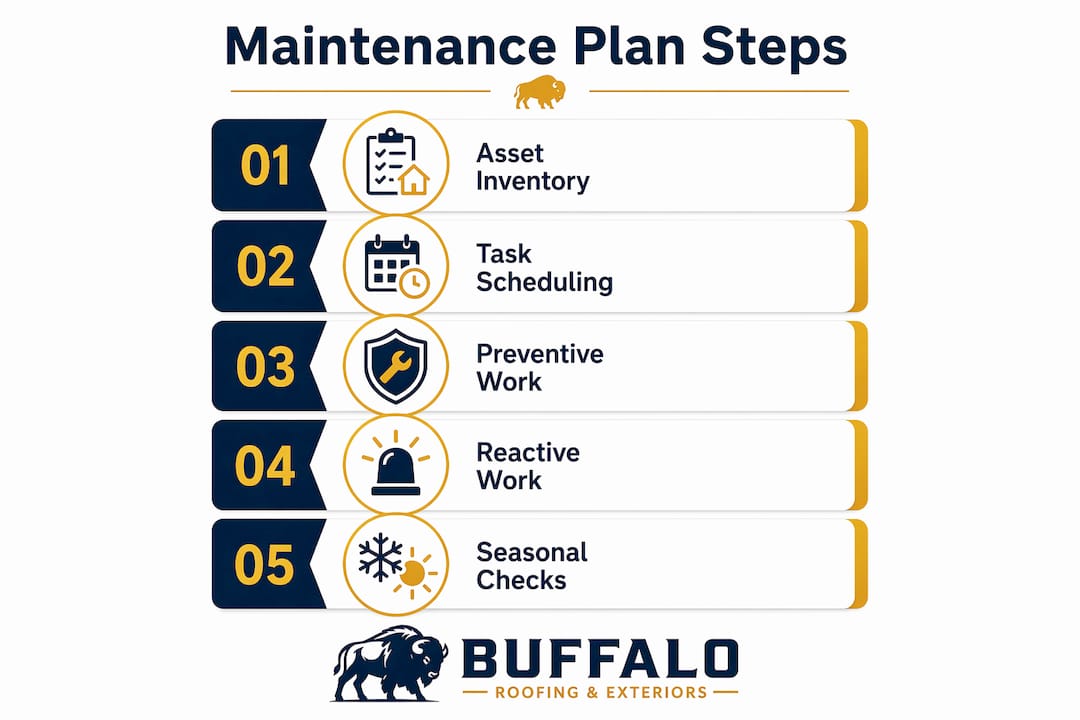
Most people picture a to-do list. A real maintenance management program is a living document that captures every asset on the property, the condition of each one, and a prioritized schedule for keeping them functional. Maintenance plans include schedules with task intervals, required tools, and assigned technicians for each job, creating clear accountability from roof deck to foundation.
Here are the core components every plan needs:
- Asset inventory. Log every system and structure: roof type, HVAC units, windows, siding, gutters, electrical panels, and backup generators. Include make, model, install date, and current condition. Assets are logged with manufacturer details and failure risk ratings so maintenance can be targeted where it matters most.
- Criticality and risk ratings. Not every asset carries the same consequence if it fails. Your roof and storm shutters get a high criticality rating in a coastal environment. Interior paint does not. Prioritize accordingly.
- Scheduled tasks with defined intervals. Specify what gets done monthly, quarterly, semi-annually, and annually. Vague reminders don’t prevent failures. Precise task schedules do.
- Resource allocation. List the tools, materials, and contractors needed for each task category. Knowing who handles roof inspections versus generator testing prevents last-minute scrambles when storm season arrives.
- Documentation and compliance records. Every completed task needs a date stamp and signature. This protects you legally, supports insurance claims, and proves due diligence.
One distinction worth knowing: a maintenance plan defines what work exists and why. A maintenance schedule assigns dates and sequences to that work. Both are necessary, but the plan comes first.
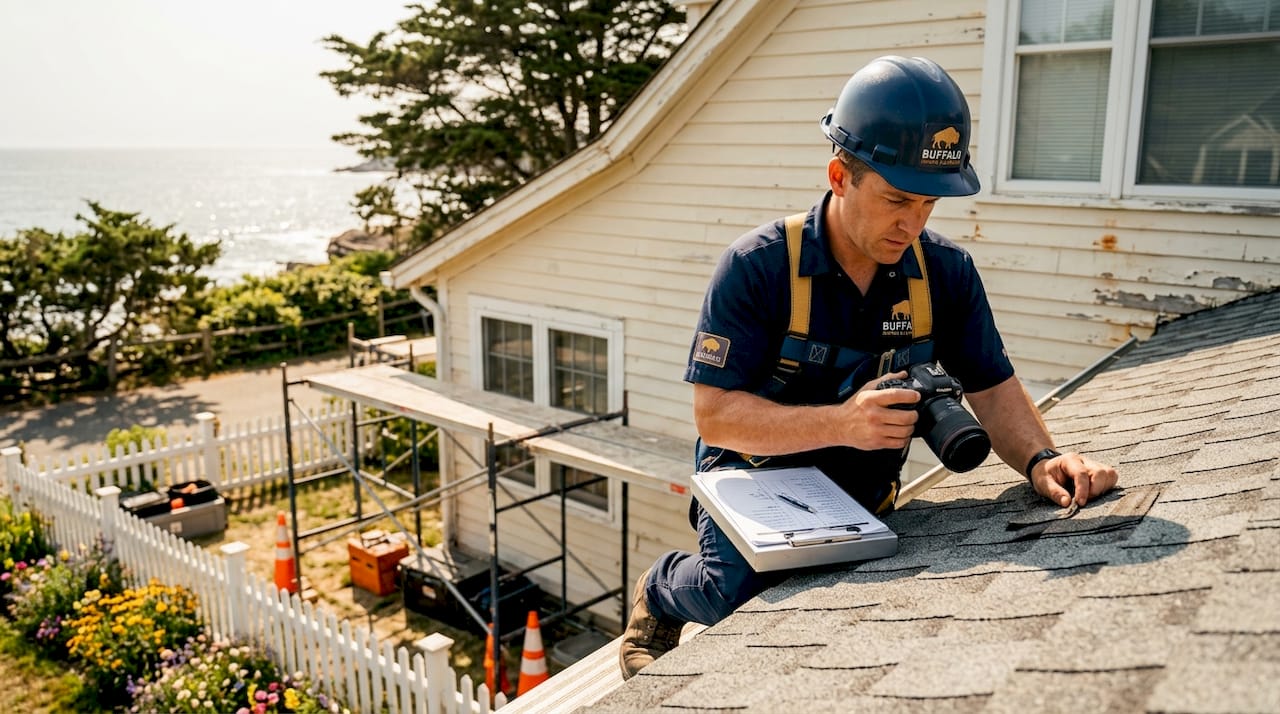
Pro Tip: Start your asset inventory with the exterior envelope, which includes the roof, siding, windows, and doors. These components face the most coastal stress and represent the highest repair costs when neglected.
Maintenance strategy: preventive vs. reactive work
The single biggest driver of long-term maintenance cost is not material prices or contractor rates. It’s the ratio of planned work to emergency fixes. Targeting 70 to 80% preventive maintenance and keeping reactive work below 20% reduces total maintenance spending by 25 to 40%. That’s not a marginal improvement. It’s the difference between controlling your budget and being controlled by it.
Understanding the four maintenance types helps you design the right mix:
- Preventive maintenance. Scheduled, time-based tasks performed before failure occurs. Cleaning gutters before hurricane season, re-caulking window frames annually, and inspecting roof flashings quarterly are all preventive work.
- Predictive maintenance. Condition-based work triggered by inspection data, not a calendar. If a thermal scan shows moisture intrusion in a wall cavity, you act before the damage spreads.
- Corrective maintenance. Planned repairs on known issues that aren’t yet critical. A hairline crack in stucco gets scheduled before it becomes a water infiltration point.
- Reactive maintenance. Unplanned emergency repairs after failure. A roof blown off in a storm is reactive work. The goal is to shrink this category as close to zero as possible.
The optimal mix of maintenance activities is the single biggest lever for reducing total maintenance cost and improving asset reliability. For coastal properties, this means front-loading inspections in late winter and early spring, before the Atlantic hurricane season opens June 1.
Measuring your strategy’s effectiveness requires tracking key performance indicators. Watch your ratio of planned to reactive work orders, average repair cost per task, and the number of emergency calls per quarter. If reactive work creeps above 20%, your preventive schedule has gaps.
Seasonal and storm-focused planning for coastal properties
Structured maintenance programs use a layered cadence: monthly walkthroughs, quarterly system checks, semi-annual exterior inspections, and annual comprehensive assessments. For coastal Texas homeowners, that cadence needs one more layer built in: storm preparedness integrated at every level.
Here’s how a coastal maintenance calendar looks in practice:
| Frequency | Task examples |
|---|---|
| Monthly | Exterior visual check, gutter clearing, sump pump test |
| Quarterly | Roof flashing inspection, HVAC filter change, window and door seal check |
| Semi-annual | Full exterior inspection, generator test run, siding inspection |
| Annual | Comprehensive roof assessment, attic ventilation check, insurance policy review |
| Pre-storm | Impact protection install, documentation photos, fuel supply for generator |
| Post-storm | Damage documentation, mitigation steps, adjuster coordination |
Storm preparation specifically requires timing discipline. Flood coverage must be secured well before hurricane season opens, since most flood policies carry a 30-day waiting period. Impact-resistant shutters and hurricane straps must be installed before a named storm forms, not after a watch is issued.
Emergency power systems carry their own compliance requirements. NFPA 110 requires backup generators to be inspected at least every six months, including fuel quality checks, load testing, and transfer switch verification. If your property relies on backup power during extended outages, this task belongs on your semi-annual schedule without exception.
Post-storm, the workflow is: photograph everything before any debris removal, document pre-mitigation and post-mitigation conditions, save every receipt for emergency repairs, and coordinate with your adjuster before permanent repairs begin. Skipping any of those steps creates disputes that delay payouts by months.
Pro Tip: Schedule your roof and flashing inspection for February or March, before contractors get booked solid with pre-hurricane season work. Early access means better pricing and your choice of qualified crews.
How to create a maintenance plan that actually works
Knowing the components is different from building the system. Here’s how to move from concept to working plan:
- Conduct your asset inventory first. Walk every square foot of the property with a notebook or inspection app. Log every system, note condition, and flag anything showing age-related wear. A comprehensive asset register prevents missed maintenance and keeps reactive work spikes from catching you off guard.
- Assign criticality ratings. Use a simple three-tier system: high (failure causes safety risk or major property damage), medium (failure causes disruption or accelerated wear), and low (cosmetic or minor). This tells you where to concentrate resources.
- Set task intervals and delegate. Decide which tasks you handle personally and which require licensed contractors. Roof flashings require a roofer. Generator load tests may require a certified electrician. Write that into the plan.
- Develop standard operating procedures for repeat tasks. A one-page SOP for gutter cleaning or generator testing removes ambiguity and makes it easy to hand off to a property manager or service crew.
- Use a CMMS to manage execution. A CMMS automates scheduling, generates work orders, logs completed tasks, and stores your asset register in one accessible platform. Mobile field access means your contractor can update records on-site rather than losing paperwork.
Aligning your plan with your insurance policy is a step most homeowners skip. Review your policy annually to confirm what maintenance documentation your carrier requires for claims. Some carriers discount premiums for documented preventive maintenance programs. That benefit alone can offset the cost of a basic CMMS subscription.
| Plan element | Tool or resource |
|---|---|
| Asset inventory | Spreadsheet or CMMS asset module |
| Task scheduling | CMMS calendar with automated reminders |
| Contractor management | Pre-approved vendor list with license records |
| Insurance documentation | Timestamped photos, receipts, signed work orders |
| Compliance records | NFPA 110 logs, permit copies, inspection reports |
For exterior renovation scheduling, align major work with your annual assessment results so you’re not reacting to failures but planning upgrades during optimal weather windows.
My perspective on coastal maintenance planning
I’ve seen homeowners in Corpus Christi spend tens of thousands on post-hurricane repairs that a few hundred dollars in annual maintenance would have prevented. The pattern is always the same: storm prep happens in a panic the week before a named storm, nothing gets documented, and when the adjuster arrives, there’s no baseline to compare against.
The counterintuitive truth is that storm preparation isn’t a separate project. It’s just good maintenance that happens to also protect you from hurricanes. Integrating storm envelope fixes like roof flashings, gutter alignments, and attic ventilation into your routine schedule means the work gets done months before it’s urgent. That means better contractor availability, better pricing, and no last-minute scrambles.
What I’ve found is that most property owners vastly underestimate how much timing and documentation matter for insurance claims after storms. They assume the damage is obvious and the claim will follow. It often doesn’t. Carriers look for evidence of prior maintenance and pre-storm condition. Without that record, every claim becomes a negotiation.
The mindset shift that makes the biggest difference: stop thinking of your home as something you fix when it breaks, and start thinking of it as a system you manage proactively. A disciplined preventive maintenance culture doesn’t just save money. It saves the stress of watching your home deteriorate faster than your budget can keep up.
— Buffaloroofingandexteriors
How Buffaloroofingandexteriors helps coastal homeowners protect their investment
Buffaloroofingandexteriors works with homeowners and property managers across Corpus Christi, San Antonio, and Victoria who need more than a quick patch job. The team brings deep experience with coastal Texas properties where salt air, tropical storms, and high humidity put every exterior system under constant stress.

Whether you’re building your first maintenance plan, recovering from storm damage, or upgrading your exterior for better storm resilience, Buffaloroofingandexteriors offers free estimates and financing options to make the work manageable. From roofing assessments and storm damage recovery to siding, windows, and decks, the team covers every component your maintenance plan depends on. Reach out for a consultation and get the professional guidance your coastal property deserves.
FAQ
What does a property maintenance plan include?
A property maintenance plan is a detailed document outlining tasks, schedules, assigned technicians, required tools, and resources for consistent upkeep. It covers everything from routine inspections to emergency response procedures.
How often should coastal homes be inspected?
Maintenance programs use a cadence of monthly walkthroughs, quarterly system checks, semi-annual exterior inspections, and annual comprehensive assessments, with additional pre-storm and post-storm checkpoints for coastal properties.
What’s the right ratio of preventive to reactive maintenance?
Industry best practice targets 70 to 80% preventive work with reactive and emergency spending kept below 20%, which delivers 25 to 40% lower total maintenance costs over time.
When should I review my hurricane insurance coverage?
Flood policies carry a 30-day waiting period, so coverage must be secured well before hurricane season opens on June 1. Build an annual insurance review into your first-quarter maintenance calendar.
What should I document after a storm?
Photograph all damage before removing any debris, document conditions before and after any mitigation work, save all repair receipts, and coordinate with your insurance adjuster before starting permanent repairs to protect your claim.