


If water is still sitting on your flat roof 48 hours after the rain stops, treat it as ponding and start diagnosing it, not just watching it. Check every drain and scupper for blockages, photograph the puddle’s edges, and note how large and deep it is. A small puddle that drains by day two is normal. Water that keeps coming back in the same spot means something under the membrane needs attention, and the clock is already running.
TL;DR:
- Water ponding beyond 48 hours can soften membrane seams, promote algae growth, and void warranties, requiring prompt evaluation and repair.
- Blocked drains, improper drain placement, insulation buildup, and deck sagging are the main causes of ponding, with structural issues often needing professional fixes.
- Shallow, short-lived puddles are normal, but recurring and deep ponding over large areas or with a soft feel must be addressed to prevent damage.
- DIY fixes like debris removal and applying leveling compound suit shallow low spots, while larger issues require professional tapered insulation or drain relocation.
- Persistent ponding can reduce energy efficiency, promote mold growth, and threaten roof safety, making professional inspection and documented repairs essential.
Table of Contents
- What Counts as Flat Roof Ponding, and When Should You Worry?
- What Causes Ponding Water on a Flat Roof?
- How Ponding Damages Roofing Systems and Voids Warranties
- How to Inspect and Document Ponding Before Calling Anyone
- Fixing Flat Roof Ponding: DIY Triage vs. Professional Repair
- When to Call a Roofer, and What It Will Cost
- Effects of Ponding on Energy Efficiency and Indoor Comfort
- Health and Safety Risks of Long-Term Roof Ponding
- The Ponding Mistake Most Owners Make
- Get a Documented Flat Roof Inspection From Buffalo Roofing & Exteriors
- Sources
- FAQ
What Counts as Flat Roof Ponding, and When Should You Worry?
Roofing manufacturers and trade groups draw the line at 48 hours. Water that stands on a low-slope roof for two days or longer after the last rainfall qualifies as ponding water, according to guidance from the Asphalt Roofing Manufacturers Association. That window isn’t arbitrary. It’s roughly how long it takes standing water to start softening membrane seams, feeding algae growth, and triggering the ponding exclusions written into most manufacturer warranties.
Not every puddle is an emergency. A shallow film of water an inch deep that disappears within a day after a storm is normal drainage lag, especially on a roof with slight low spots. What separates a nuisance from a real flat roof water accumulation problem is repetition and size.
- Monitor: Puddles under half an inch deep that clear within 24 to 36 hours.
- Evaluate: Standing water past the 48-hour mark, or ponding that returns after every rain in the same location.
- Act now: Ponding that is deep, covers a large area, or any soft, spongy feel underfoot near the wet area.
That third category is where flat roof drainage issues stop being a maintenance note and start being a structural question.
What Causes Ponding Water on a Flat Roof?
Most ponding traces back to one of four culprits, and figuring out which one you’re dealing with changes the entire repair plan.
- Blocked drains and scuppers. Leaves, granules, and roofing debris clog the drain bowl or down spout, so water has nowhere to go even on a roof with proper slope.
- Drains installed in the wrong spot. It sounds basic, but drains placed upslope from the actual low point are a documented and common installation mistake. Water pools below the drain instead of flowing to it.
- Insulation buildup or compression. Excessive layering or compressed insulation reduces the designed slope, causing water to dam at seams and accumulate.
- Structural deck deflection. A roof built to the minimum design slope can sag over time due to its own weight or rooftop equipment, creating a low spot that collects water.
The first two causes are usually fixable without touching the roof’s structure. The last two often aren’t, which is why identifying the actual cause matters more than just mopping up the symptom.
How Ponding Damages Roofing Systems and Voids Warranties
Standing water doesn’t just sit there looking harmless. It accelerates UV breakdown of exposed membrane, works into seams and flashing details, and creates a steady freeze-thaw cycle in colder months that widens tiny cracks into leak paths. Most single-ply and modified bitumen warranties carry explicit ponding exclusions, meaning a manufacturer can deny a claim for membrane failure if it happened under water that sat longer than the specified limit.
There’s a structural angle too, and it’s the one most owners never hear about until it’s expensive. Ponding instability is a real engineering concern: standing water adds weight, that weight causes more deck deflection, and the added deflection lets more water pool in the same spot. It’s a feedback loop. ASCE and IIBEC guidance on low-slope roof drainage uses hydraulic head and deflection ratio calculations specifically because this cycle can, in extreme and rare cases, load a deck beyond what it was designed to carry.
How to Inspect and Document Ponding Before Calling Anyone
You don’t need special equipment to build a solid case for what’s happening on your roof, just a dry day, a phone camera, and a little patience.
- Run the chalk-line test. During or right after a rain, mark the exact outline of the puddle with chalk or spray paint. Check it again 48 hours later. If the water hasn’t retreated inside that line, you’ve confirmed genuine ponding.
- Measure depth and footprint. Use a tape measure or ruler at the deepest point and estimate the square footage of the wet area. Depth and area are the two numbers that determine urgency.
- Run the drain-flow test. Pour water from a hose directly into the nearest drain and watch how fast it clears. Slow or backed-up flow points to a blockage; no flow at all suggests a disconnected or crushed drain line.
- Photograph everything with a timestamp. Wide shots, close-ups of the drain, and a shot with your tape measure in frame.
- Press-test the membrane. Walk the ponded area gently and feel for soft, mushy spots. That usually means wet insulation underneath, and it’s your signal to stop DIY work and call a professional before you make things worse.
Pro Tip: Keep a simple log with the date of each rain event and how long the water took to clear. Three or four data points turn “it seems to pond sometimes” into hard evidence a contractor or warranty adjuster can actually use.
Fixing Flat Roof Ponding: DIY Triage vs. Professional Repair
What you can safely do yourself depends almost entirely on depth and cause. Anything involving working at height, near an unstable membrane, or around electrical rooftop equipment isn’t a DIY job, full stop.
Immediate, low-risk steps you can take right away:
- Clear visible debris from drain bowls and scupper openings by hand or with a shop VAC.
- If water is standing more than an inch deep and drains are already clear, a wet/dry vacuum or a sump pump can remove it safely from ground-accessible areas.
- Skip climbing onto a wet, ponded roof alone. Slippery membrane plus standing water is a fall hazard, not a weekend project.
For shallow, cosmetic low spots under about an inch deep, a manufacturer-approved leveling compound applied directly to the low point can restore enough slope to keep water moving. It typically runs in the range of a low-cost DIY product on the shelf, and it’s a reasonable fix when the deck underneath is sound and dry.
Anything deeper, larger, or tied to structural sag needs a system-level fix. Contractors typically address it with tapered insulation systems built with increased slope around a new or relocated drain, sometimes called a sump, which physically moves the low point to where the water can drain effectively. Other jobs call for adding a second drain, installing overflow scuppers, or in structural cases, stiffening the deck itself. After any repair, a follow-up hose test and dated photos confirm the fix worked, and that documentation is exactly what you’ll want on file if a warranty question ever comes up. Buffalo Roofing & Exteriors handles flat roof repair scopes at both ends of that spectrum.
When to Call a Roofer, and What It Will Cost
Certain signs mean it’s time to stop testing things yourself and get a professional assessment on the schedule.
- Ponding deeper than one inch or covering more than roughly 25 square feet.
- Any soft, springy, or bouncy membrane underfoot.
- Ponding that returns in the exact same spot after every rain, even after you’ve cleared the drains.
- Visible interior staining, a musty smell inside, or a ceiling that’s starting to sag below the ponded area.
A qualified inspector will typically pull core samples to check insulation moisture, measure the roof’s actual slope against its designed slope, run a hydraulic head calculation on the drains, and hand you a written report with photos.
Cost ranges vary by scope and region, but rough ballparks for common flat roof water accumulation fixes run from drain clearing and minor leveling work on the low end, up through tapered insulation and drain relocation in the low thousands, to a full re-roof if the membrane and insulation are both compromised. Before signing anything, ask about the scope in writing, whether the work preserves or restores your manufacturer’s warranty, proof of insurance, and whether they’ll document before and after conditions. Buffalo Roofing & Exteriors’ roof repair process walks through what that estimate and inspection visit typically covers.
Effects of Ponding on Energy Efficiency and Indoor Comfort
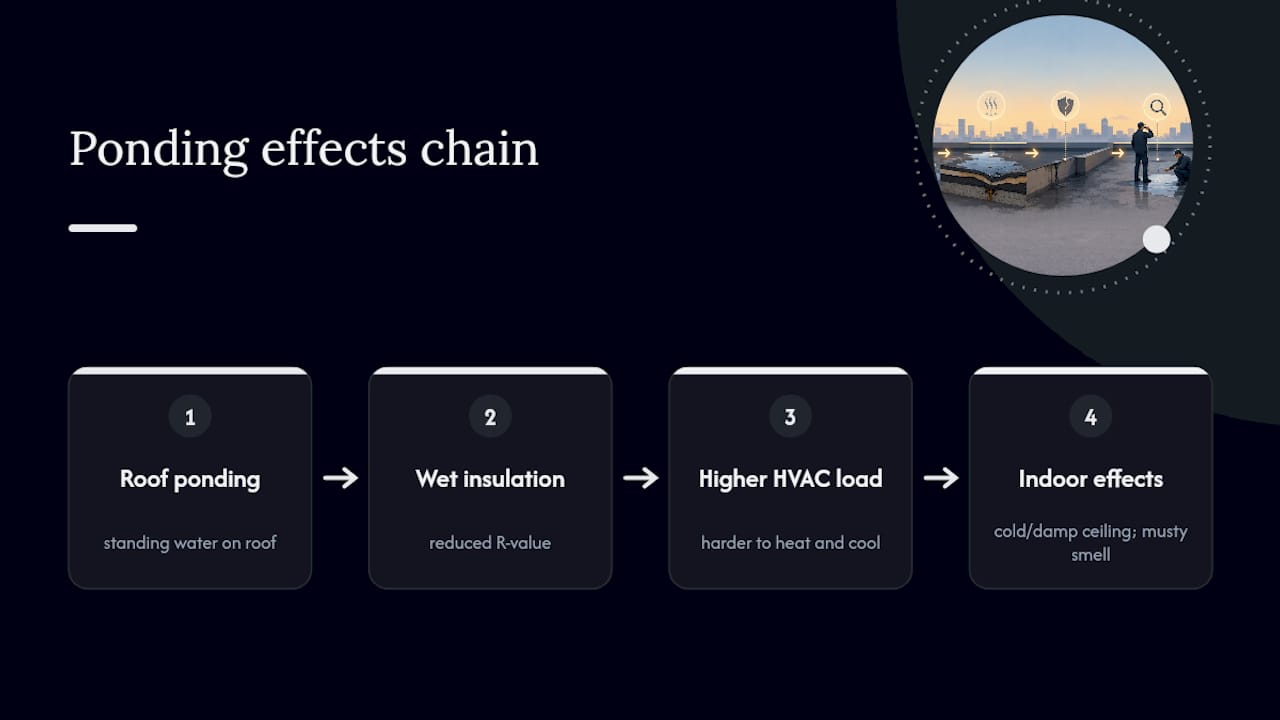
Standing water changes how a roof behaves thermally, and not in a good way. Wet insulation loses much of its R-value, because trapped moisture conducts heat far more efficiently than dry insulation fibers do. That means the space below a chronically ponded section of roof runs harder to heat in winter and harder to cool in summer, even if the rest of the building’s insulation is fine.
There’s a secondary effect that’s easy to miss: standing water sitting directly above living or working space keeps that section of ceiling colder and damper than the rest of the building. Over months, that temperature differential can show up as condensation on interior ceiling tiles or drywall, especially in humid coastal climates where indoor and outdoor moisture levels are already high. Tenants and employees in the room below often notice a musty smell or a cold spot on the ceiling long before the building owner spots the ponding on the roof itself.
For commercial buildings running HVAC systems sized to the building’s original insulation performance, a large or persistent ponded area can quietly push utility costs up over an entire season. It’s rarely dramatic enough to trigger an obvious spike, which is part of why it goes unaddressed. The fix is the same one that resolves the moisture and warranty risk: get the water off the roof and keep it from coming back, rather than treating the energy loss as a separate problem.
Health and Safety Risks of Long-Term Roof Ponding
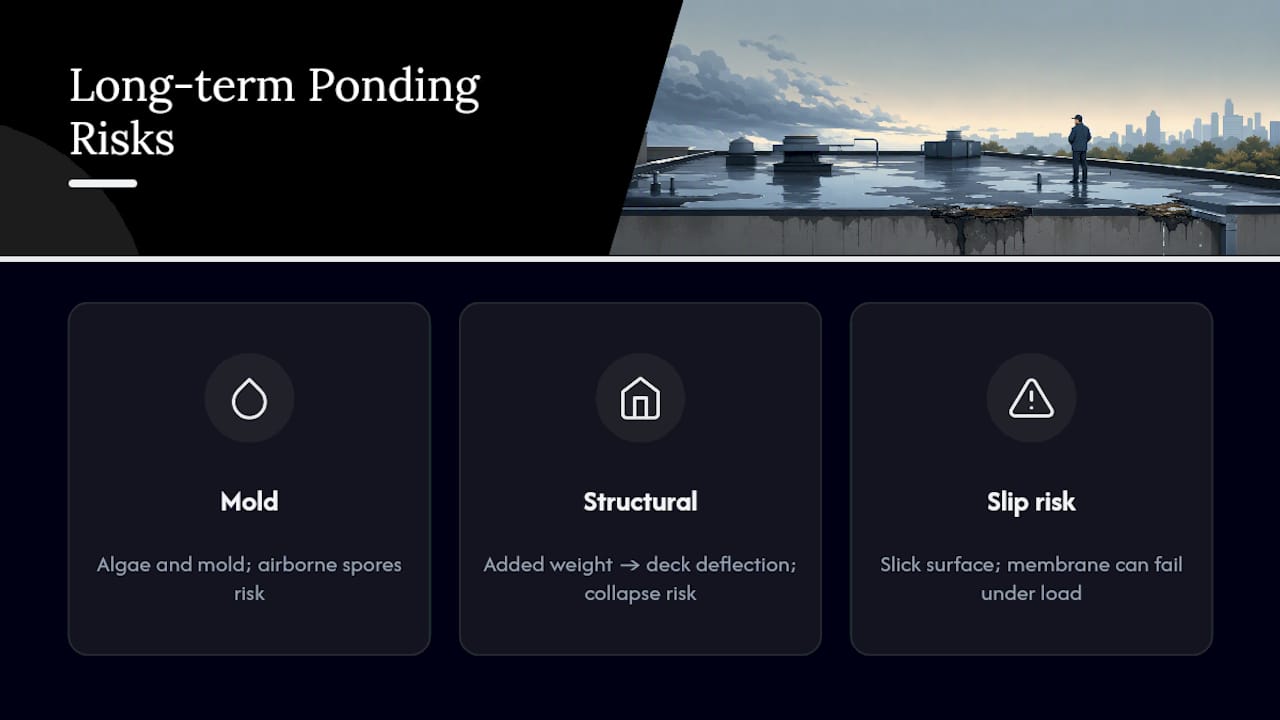
Ponding that sits for weeks or months, rather than days, opens the door to a different category of problem. Standing water is a breeding ground for algae and, once it works its way into wet insulation or a compromised deck, mold. If that moisture reaches the interior ceiling assembly, occupants can end up dealing with airborne mold spores, which is a genuine indoor air quality concern for anyone with asthma, allergies, or a compromised immune system.
The structural side carries its own risk. Ponding instability, the feedback loop between added water weight and increased deck deflection, is a legitimate engineering hazard on roofs with marginal slope or aging framing. In the rare worst case, a deck that keeps sagging under repeated water loads can approach its structural limits, which is exactly why ASCE and IIBEC guidance treats persistent ponding as a slope and structural question, not just a cosmetic one.
There’s also a simple, immediate hazard that gets overlooked: a ponded roof surface is slick, and a membrane hiding a soft or rotted deck underneath can fail unexpectedly under a person’s weight. Anyone accessing a roof with known standing water, particularly one that’s felt soft or spongy on a previous inspection, should treat it the same way they’d treat a compromised floor. If you notice any interior signs of moisture intrusion alongside a roof that’s been holding water, warning signs your roof needs repair are worth reviewing before anyone goes up there again.
The Ponding Mistake Most Owners Make
The most common mistake isn’t ignoring ponding. It’s treating a quick fix as a permanent one. A bag of leveling compound feels like progress, and sometimes it is, but on a roof with real slope loss or deck deflection, it’s a patch over a symptom that will resurface within a season or two. Owners who skip documentation pay for that shortcut twice: once in the repair, and again when a warranty claim gets denied for lack of proof the ponding was addressed properly.
The right instinct is to treat every ponding event as evidence first, repair second. Photograph it, measure it, log the drain test results, then bring that file to whoever inspects the roof. A licensed inspection costs far less than discovering deck rot two years from now, and Professional roofers have spent years diagnosing this kind of flat roof drainage design failure across coastal Texas properties, where storms make the stakes higher than most inland markets.
— Results
Get a Documented Flat Roof Inspection From Buffalo Roofing & Exteriors
This service is an option for South Texas property owners who want the ponding on their roof actually diagnosed and fixed, not just patched and left to come back next storm season.

Our crews handle the full range of what ponding repair actually requires: clearing and repositioning drains, installing tapered insulation systems that restore real slope, adding sump pans where the low point needs to move, and full flat roof replacement when the membrane and deck are past the point of patching. Every visit includes a documented inspection with photos and measurements, a written estimate before any work starts, and financing options for larger repairs. Before your inspection, have your own chalk-line test results, drain-flow notes, and dated photos ready. That documentation speeds up the diagnosis and gives you a paper trail if a warranty question comes up later. Request an inspection through our flat roof services page and get a written assessment before the next storm rolls through.
Sources
- Effects of Ponding Water on Low-Slope Roof Systems (ARMA)
- 4 common causes of inadequate drainage on low-slope roofs – Roofing
FAQ
What is the best ponding filler for flat roofs?
For shallow low spots under an inch deep, a manufacturer-approved leveling or fill compound designed for your specific membrane type works best. Deeper or recurring ponding needs tapered insulation rather than a filler, since a filler can’t correct an underlying slope or drainage problem.
How do I stop ponding on a roof?
Start by clearing every drain and scupper of debris, then confirm water actually flows through with a hose test. If ponding continues after drains are clear, the fix usually means adding slope through tapered insulation or relocating a drain to the roof’s actual low point.
How do I fix a low spot in a flat roof?
Small low spots under an inch can often be corrected with a leveling compound applied directly to the depression. Larger or recurring low spots typically need a tapered insulation sump built around the drain to physically move the low point.
How long can water sit on a flat roof?
Roofing manufacturers and industry groups use a 48-hour benchmark: water sitting longer than two days after rain qualifies as ponding and should be evaluated rather than left alone.