TL;DR: Corpus Christi and the Coastal Bend sit in one of the most hurricane-exposed corridors in the U.S., and your roof is the first thing to fail when a storm arrives. This guide walks you through what to do before the season starts, what to avoid during a storm, and the exact steps — documentation, tarping, insurance claims, and WPI-8 certification — to take after the wind stops.
If you own a home in Corpus Christi, Aransas Pass, Alice, Beeville, or Banquete, hurricane season is not a distant threat — it is a recurring fact of life on the Coastal Bend. When Hurricane Harvey made landfall in 2017, wind damage stripped thousands of roofs in Corpus Christi and the Coastal Bend to the bare decking. The good news: most of what determines whether your roof survives a storm is decided long before the storm arrives.
This guide gives you a plain-spoken, step-by-step plan for every phase of a hurricane — before, during, and after — so you can protect your home, protect your insurance claim, and know exactly who to call when the wind stops.
Why Corpus Christi Roofs Face a Unique Risk
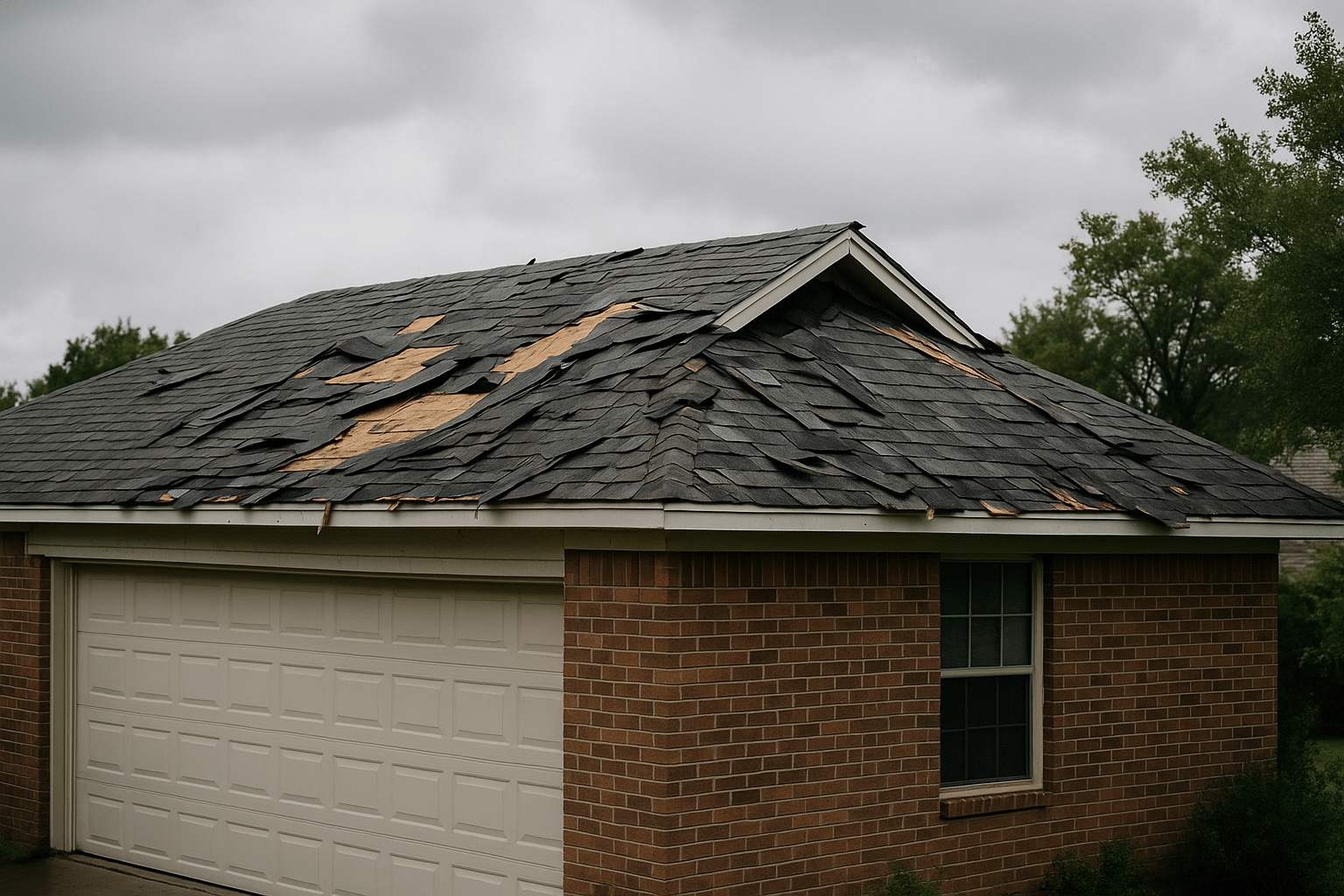
Hurricanes damage roofs through a combination of high winds, flying debris, and intense rainfall. On the Gulf Coast, those forces are amplified by salt air corrosion, high humidity that degrades roofing materials faster, and storm surge that can compound wind damage in low-lying neighborhoods near the bay and Ship Channel.
The Texas Windstorm Insurance Association (TWIA) requires construction to the 2006 IRC for buildings within the first tier of coastal counties, which includes Nueces, San Patricio, Aransas, Refugio, Kleberg, and Calhoun counties. That means every re-roof or major repair in these areas must meet specific windstorm code standards — a requirement that catches many homeowners off guard when they file a claim.
Statistical analysis of Harvey damage found that roof coverings were the most important contributors to overall wind damage. On average, homes built before 2003 suffered minor to moderate damage to roof coverings, while homes built after 2003 typically had no damage or only minor roof damage. In other words: the age and code compliance of your roof matters enormously.
Before the Storm: 7 Steps Every Coastal Homeowner Should Take
The most effective hurricane roof preparation happens during calm weather, not the 48 hours before landfall. Work through these steps at the start of each hurricane season (June 1).
-
Schedule a professional roof assessment early in the season.
Have a licensed roofer walk your roof before June. They will look for loose or missing shingles, cracked flashing, deteriorating sealant around vents and pipe boots, and soft spots in the decking. The safest plan begins during ordinary weather, not on a ladder after a hurricane watch has been issued. If you see an active leak, displaced material, or damaged flashing, arrange a professional roof assessment before a named storm is close enough to matter. Catching a failing drip edge or popped nail now costs a fraction of what water intrusion costs after the storm.
On the Coastal Bend, pay special attention to salt air corrosion on metal flashing, ridge vents, and any exposed fasteners. For roofs within 3,000 feet of the ocean, FEMA recommends that straps, fasteners, and clips be fabricated from stainless steel to ensure durability from the corrosive effects of salt spray.
-
Confirm your WPI-8 certificate is on file.
A WPI-8 is the Certificate of Compliance issued by the Texas Department of Insurance (TDI). It confirms that a home meets the windstorm building code standards required for coverage through the Texas Windstorm Insurance Association (TWIA). Without a valid WPI-8, TWIA will not cover your roof.
TWIA requires a Certificate of Compliance on all structures constructed, altered, remodeled, enlarged, repaired, or to which additions have been made on or after January 1, 1988. If you replaced your roof without a TDI-compliant contractor, you may not have one — and that gap can invalidate a windstorm claim. Keep the certificate on file with your deed and other important papers so it can be transferred to subsequent owners if you sell your property. Buffalo Roofing & Exteriors handles WPI-8 windstorm certification as part of every qualifying roof project in Corpus Christi and surrounding Coastal Bend counties.
-
Review your insurance policies — both of them.
Your base Texas homeowners policy covers wind damage in most inland counties, but the exception is coastal Texas, where wind damage is often excluded and must be covered separately through TWIA. That means many Corpus Christi homeowners need two separate policies: a standard homeowners policy for fire, liability, and non-wind losses, and a TWIA policy for wind and hail.
Texas homeowners policies typically have two deductibles: a regular flat-dollar deductible for most claims, and a separate hurricane or named-storm deductible that is a percentage of dwelling coverage. Know your percentage before a storm is named — on a $300,000 home, a 2% hurricane deductible means $6,000 comes out of your pocket first.
Most homeowners and renters insurance does not cover floods, which is a particular problem during hurricanes. Just one inch of floodwater can cause thousands of dollars in damage. If you are in a flood zone near the bay or low-lying areas of Flour Bluff or Padre Island, consider a separate National Flood Insurance Program (NFIP) policy. Most flood policies take 30 days to go into effect, so do not wait until a storm is forecast.
-
Document your roof’s current condition with photos and video.
Walk around your home and photograph every roof surface, every vent, every piece of flashing, and every section of gutters. Do this from the ground and safely from an upstairs window if possible. Store everything in cloud backup (Google Photos, iCloud) with a timestamp. This pre-storm documentation is critical evidence that damage was caused by the hurricane, not pre-existing wear — a distinction insurers scrutinize closely.
Also photograph your attic ceiling, any existing water stains, and all exterior siding. Maintain digital copies of your roofing contract, manufacturer warranty documentation, your WPI-8 windstorm certificate, your homeowners insurance declarations page, and your TWIA policy.
-
Clear your yard and trim trees.
Hurricane-force winds can turn anything unsecured into a projectile. Prepare your yard by picking up yard waste or natural debris, and trim or remove trees that could fall onto your house. In Corpus Christi neighborhoods like Del Mar, South Side, and areas near Oso Creek with mature live oaks, overhanging limbs are a major source of post-storm roof punctures.
-
Clean gutters and check drainage.
Clean out your gutters to allow water to drain properly. Clogged gutters back up during heavy rain, forcing water under shingles and into the fascia. This is one of the most preventable sources of interior water damage after a hurricane.
-
Know your material — and its limits.
Asphalt shingles are the most common roofing material in Corpus Christi neighborhoods, but they vary widely in wind resistance. Class 4 impact-resistant shingles and metal roofing systems generally hold up better in high-wind events and may also earn you a discount on your TWIA premium. Newer roofs with higher wind ratings get lower TWIA premiums, and metal roofs and impact-resistant shingles qualify for the biggest discounts. If your asphalt shingle roof is more than 15 years old, a pre-season assessment will tell you whether a targeted repair or full replacement makes more sense before the next named storm.
Commercial property owners and landlords with flat or low-slope roofs should also verify that TPO (Thermoplastic Polyolefin — a single-ply membrane system common on commercial buildings) and other flat systems are properly seamed and that drains are clear. Even minor seam failures under hurricane rain loads can result in catastrophic interior flooding. Learn more about TPO roof repair in Corpus Christi if your commercial or flat-roof property needs attention before season.
During the Storm: What to Do (and Not Do)
Once a hurricane watch or warning is issued for Corpus Christi or the Coastal Bend, your preparation window has closed. Do not attempt roof work during a watch or warning.
- Stay inside and away from windows. If you shelter in place, move to an interior room on the lowest floor. Never go onto the roof during any phase of the storm, including the deceptive calm of the eye.
- If you evacuate, lock up and go. Nueces County and the City of Corpus Christi issue evacuation orders by zone. Follow official orders from the City of Corpus Christi Office of Emergency Management. Do not wait until the last minute — if you wait until a hurricane warning is in effect, evacuation routes may already be crowded, fuel may be limited, and shelters may be filling quickly.
- If water enters your home during the storm, move valuables to higher ground inside the house and place buckets or towels to capture drips. Do not enter an attic if rising water is present — attics can trap water faster than they drain.
- Do not tape windows. Tape will not protect glass from shattering — it will just make the shards larger and more dangerous.
After the Storm: 6 Steps to Protect Your Home and Your Claim
This is where most homeowners lose money — either by moving too slowly on documentation or too quickly on repairs. Follow these steps in order.
-
Stay safe before you assess anything.
Wait until local authorities declare the area safe to return. After the storm passes, watch for downed power lines, flooded streets, and structurally compromised buildings. The National Roofing Contractors Association (NRCA) strongly encourages homeowners and business owners to assess roof damage from ground level and not attempt repairs on their own. A wet, debris-covered roof after a hurricane is one of the most dangerous surfaces imaginable.
-
Document all damage immediately — before any cleanup.
Before you move a single shingle or drag a branch off the roof, photograph and video-record everything. Shoot the exterior from all four sides, the interior of every room, the attic, and any pooled water. Compare against your pre-storm photos. What separates homeowners who get fair settlements from those who don’t is documentation speed, claim knowledge, and not signing the wrong contract in the chaotic hours after a storm.
Note the date and time on every photo. Email them to yourself or your insurance agent so there is a timestamped digital record outside your phone.
-
Apply emergency tarping to prevent further damage.
If your roof has open holes, missing shingles over a large area, or exposed decking, temporary tarping is not optional — it is a policy requirement. Most insurance policies require homeowners to take reasonable steps to prevent further damage, or risk having claims partially or fully denied.
Emergency roof tarping is a temporary protective measure that involves securing heavy-duty tarps over damaged sections of your roof to prevent water intrusion and further structural damage. This interim solution buys time until permanent repairs can be completed, which may take days or weeks depending on the extent of damage and contractor availability after widespread storm events.
Past roughly 90 days, a tarp cover can degrade, cause further damage, and complicate insurance claims. Treat tarping as a bridge, not a fix. Keep every receipt — most homeowner policies cover emergency mitigation like tarping, provided documentation and receipts are submitted promptly.
-
File your insurance claim promptly — and know which policy to call.
In Nueces County and the Coastal Bend, you will likely need to file with TWIA for wind and hail damage separately from your standard homeowners policy for any non-wind losses like interior water damage. Call both insurers as soon as possible. Claim backlogs after major storms — as any Corpus Christi homeowner who experienced Harvey can tell you — can be months long, and earlier filings generally get earlier adjuster visits.
When the adjuster arrives, walk the roof with them if it is safe to do so. Point out every area you documented. Do not accept a scope of loss that excludes visible damage you photographed.
-
Get a free estimate from a licensed local contractor before signing anything.
After a major storm, out-of-state storm chasers arrive in Corpus Christi within days. Many use high-pressure tactics, demand large upfront deposits, and disappear before the work is finished or the permit is pulled. Verify that any contractor you hire is licensed in Texas, carries liability and workers’ compensation insurance, and is familiar with TDI windstorm code requirements.
Buffalo Roofing & Exteriors is a locally owned, BBB-accredited contractor with four locations serving South and Central Texas — including Corpus Christi, Alice, Aransas Pass, Beeville, and Banquete. We offer free estimates, handle insurance claim documentation, and manage WPI-8 certification on qualifying projects so you do not have to navigate that process alone.
-
Confirm your WPI-8 certificate is updated after any qualifying repair.
A complete re-roof in a designated catastrophe area requires a windstorm inspection and WPI-8 certification, since the roof deck and covering are structural components. Most new construction, full re-roofs, additions, and any repair touching the roof deck or structural envelope in a designated coastal county require a WPI-8 before TWIA will insure the property.
This step is non-negotiable if you want to maintain TWIA eligibility after repairs. A home that does not have a required certificate may become difficult or impossible to insure through TWIA, which can also complicate financing or resale. Buffalo Roofing & Exteriors coordinates TDI-compliant windstorm inspections as part of our roofing process — so your WPI-8 is filed correctly the first time.
Common Mistakes Corpus Christi Homeowners Make After a Hurricane
- Waiting too long to document. Rain, additional weather, and cleanup crews can alter damage before an adjuster sees it. Document the moment it is safe.
- Climbing the roof themselves. Climbing onto a roof after a storm can be extremely dangerous — wet surfaces, loose debris, and structural instability increase the risk of accidents. It is always safer to contact an experienced roofing contractor with the equipment and training to handle emergencies.
- Signing assignment-of-benefits contracts with storm chasers. These agreements sign over your insurance rights to the contractor. You lose control of your own claim.
- Skipping the WPI-8 after a re-roof. If your post-hurricane roof replacement is done without TDI compliance and a windstorm inspection, you lose TWIA coverage — often without realizing it until the next storm.
- Assuming their standard policy covers wind. Standard homeowners policies typically exclude wind damage in TWIA coastal areas. If you have not confirmed your TWIA coverage is active, do it today.
- Letting a tarp sit for months. Tarps are not roofs. Waiting longer than 90 days without professional repair can result in mold growth, rotting decking, and denied insurance claims.
A Note for Commercial Property Owners and Landlords
If you own commercial property, multi-family rentals, or HOA common buildings in the Corpus Christi area, your exposure is amplified. Flat and low-slope roofing systems — including TPO and modified bitumen — face different failure modes than sloped residential roofs. Seam separation, drain blockages, and membrane punctures from wind-driven debris are the most common post-hurricane issues on commercial buildings.
Buffalo Roofing & Exteriors provides full-service commercial roofing and exterior services in Corpus Christi, including post-storm assessments, emergency tarping, insurance documentation support, and code-compliant repairs on TPO, flat, metal, and tile systems. Property managers and HOA boards can contact us for a free estimate and a scope-of-work that satisfies both your insurance adjuster and TDI requirements.
Ready to Get Ahead of Hurricane Season?
The single best thing you can do for your Corpus Christi home is address roof vulnerabilities before a storm is named. Buffalo Roofing & Exteriors offers free estimates with no obligation, and we offer Improvifi financing from $1,000 to $50,000 with $0 down and no credit score impact — so a pre-season repair or full replacement does not have to wait on budget timing.
Call us or request your free quote online. We serve Corpus Christi, Alice, Aransas Pass, Beeville, Banquete, and communities across the Coastal Bend from our local Corpus Christi office.
Recommended Reads
- TPO Roof Repair in Corpus Christi, TX
- Flat Roof Repair in Corpus Christi, TX
- Professional Shingle Roof Repair in Corpus Christi, TX
Sources