

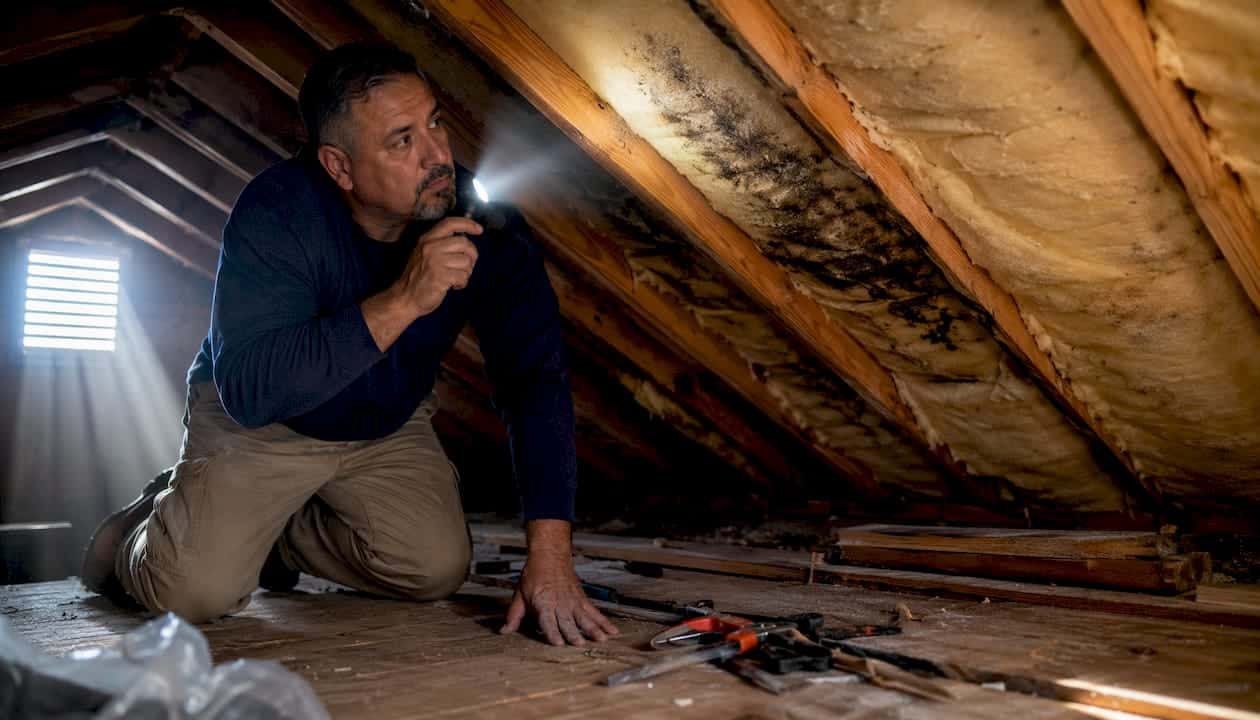
The fastest way to spot a roof leak is to check your ceilings, attic, and gutters together. A single brown stain on the ceiling might be old. But combine that stain with a musty smell upstairs and granules collecting in your gutters, and you almost certainly have an active leak. Catching that combination early is what separates a $400 repair from a $4,000 structural fix.
Most homeowners wait too long because the signs are subtle at first. Water stains, soft insulation, a faint mildew odor in the attic — none of these scream emergency on their own. But roof leaks rarely announce themselves loudly. They creep in for weeks or months before the damage becomes obvious.
Here is what to look for, where to look, and how to do it without putting yourself at risk.
Quick signs to check right now:
- Brown or yellow ceiling stains, especially after recent rain
- Musty odor in the attic or upper rooms
- Granules collecting in gutters or at downspout bases
- Missing, curled, or cracked shingles visible from the ground
- Daylight visible through attic roof boards
- Wet or compressed insulation in the attic
- Rust streaks or gaps around chimney flashing or vent boots
Pro Tip: Grab a bright LED flashlight and binoculars before you do anything else. You can identify most early leak signs from inside the attic and from the ground, without ever stepping onto the roof.
Document every sign you find with your phone camera. Those photos give a roofing contractor a head start and support any insurance claim you file.
Table of Contents
- How to spot roof leaks from inside your home and attic
- What exterior signs tell you about a roof leak
- How to pinpoint hidden or hard-to-find leaks safely
- When to call a professional instead of continuing DIY
- Key Takeaways
How to spot roof leaks from inside your home and attic
The attic is your best starting point. It gives you direct access to the underside of the roof deck, where water stains, mold, and wet insulation appear before any damage reaches your living space. Go up during daylight hours or right after a rain event, when evidence is freshest.
Walk only on ceiling joists or attic floorboards. Stepping between joists onto the drywall below is a real fall risk. Wear old clothes, a dust mask, and gloves before you start moving insulation around.
Once you’re positioned safely, scan the underside of the roof sheathing with your flashlight. Look for dark streaks running along rafters, shiny wet spots, compressed or stained insulation, and any fuzzy black or white patches that signal mold. Mold can develop within days in humid climates, so its presence tells you the moisture has been there a while.
Key interior and attic signs:
- Water stains or dark streaks on rafters and sheathing
- Wet, matted, or discolored insulation
- Mold or mildew on wood surfaces
- Daylight visible through gaps in the roof deck
- Musty odor even when no stain is visible
- Rust on nail heads or metal hardware
- Active dripping during or after rain
One thing that trips up a lot of homeowners: the ceiling stain below is rarely directly under the leak. Water enters at one point, then travels along rafters and sheathing before dripping down. That travel distance can be 10–20 feet before it finally hits your ceiling. So the stain is a downstream symptom. The attic is where you find the actual source.
Also watch for widespread dampness rather than a localized trail. Condensation from poor attic ventilation mimics a roof leak closely, but the fix is completely different. Ventilation problems produce diffuse moisture across a large area; a real leak leaves a trail that traces back to a specific entry point.
What exterior signs tell you about a roof leak
Outside, start from the ground. Binoculars let you spot damaged shingles, lifted flashing, and debris buildup without climbing a ladder. That ground-level pass catches more than most homeowners expect.

Exterior warning signs include missing or curled shingles, granule buildup in gutters, rust streaks on flashing, and damaged vent boots or skylights. These are often the first visible clues that the roof system is failing somewhere.
Common exterior indicators:
- Missing, cracked, curled, or buckling shingles
- Granule accumulation in gutters or at downspout bases
- Rust streaks or visible gaps in chimney or valley flashing
- Cracked or shrunken rubber around vent pipe boots
- Moss or algae growth holding moisture against the surface
- Gutters pulling away from the roofline or overflowing
- Dark wet patches on the roof surface after rain has stopped
Pay close attention to your gutters specifically. Clogged gutters force water to back up under the roof edge, which creates a whole separate leak pathway that has nothing to do with shingle damage. If you find water damage on your interior floors near exterior walls, that backup can travel surprisingly far. A wood floor restoration professional will tell you that water intrusion from backed-up gutters is one of the most common causes of interior floor damage they see.
Timing your exterior inspection matters. Check after any significant storm, and schedule a deliberate look in both spring and fall. Spring catches anything that developed over winter; fall catches summer heat damage before the wet season hits. For Texas homeowners along the Gulf Coast, post-storm checks are especially critical given the frequency of high-wind events.
Pro Tip: After a storm, check your gutters for a sudden surge of granules. Asphalt shingles shed granules naturally over time, but a large deposit after one storm usually means hail impact or accelerated wear. That’s your cue to call for a professional inspection before the next rain.
How to pinpoint hidden or hard-to-find leaks safely
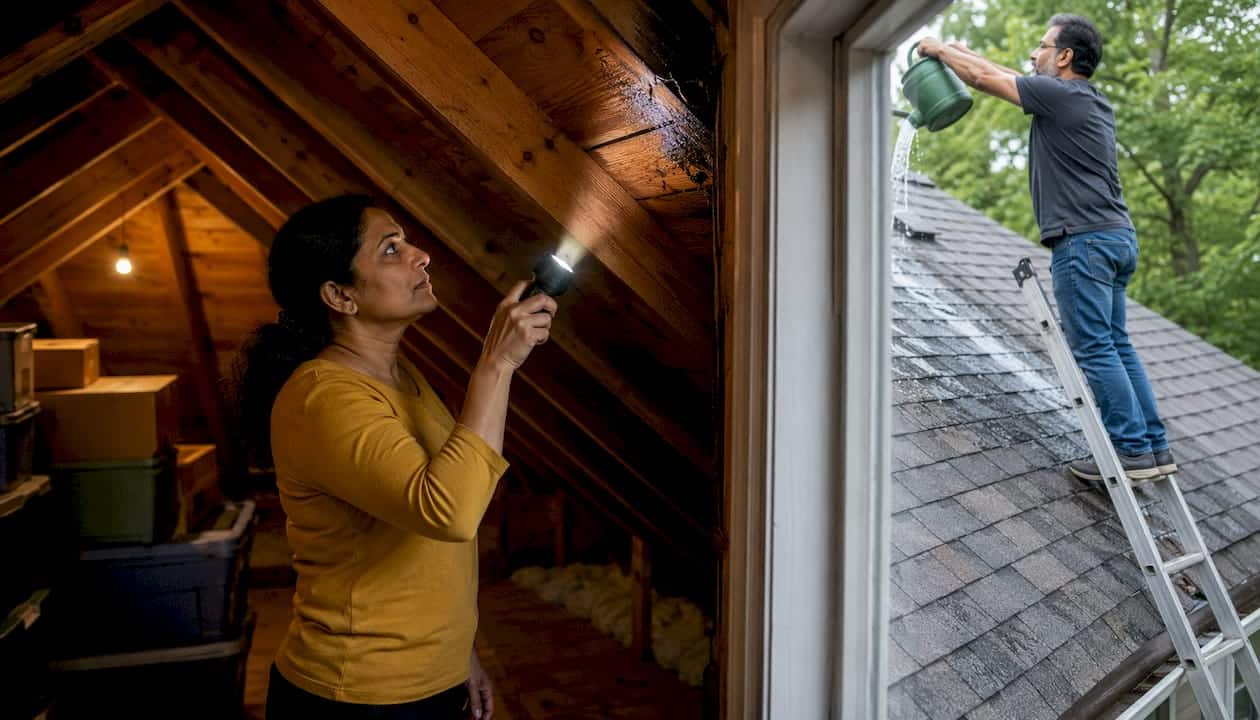
Some leaks only show up during a long, driving rain and stay invisible when things are dry. If your attic inspection didn’t reveal an obvious source, a controlled garden hose test can isolate the entry point.
The process requires two people. One person stays in the attic with a flashlight and a phone. The other works outside with a garden hose set to a gentle flow, no high-pressure nozzle. Start soaking the lowest section of the roof in the suspected zone, then work upward slowly. Spend 5–10 minutes on each section before moving higher. When the person inside spots water entering, they call out immediately. That zone becomes your target.
Before you run the test, rule out non-roof sources. HVAC condensate lines, bathroom exhaust fans venting into the attic instead of outside, and sweating plumbing pipes all produce moisture that looks identical to a roof leak from the inside. Widespread dampness with no clear trail almost always points to ventilation, not roofing.
When you do find the entry point in the attic, mark it precisely. Push a long nail up through the gap so it protrudes through the shingle surface. Then measure the distance from the leak to two fixed reference points, like the ridge and a gable wall. Write those measurements down. That “treasure map” lets a roofer locate the spot from outside without re-entering the attic.
Pro Tip: Moisture meters and infrared cameras are effective tools for detecting hidden wet areas, but only when materials are actively wet. Using them on dry materials produces false positives. If you rent either tool, time the inspection for during or immediately after rainfall.
One hidden source worth knowing about: “shiners,” which are nails that missed the roof framing and now protrude through the decking. In cold weather, moisture from the living space condenses on these cold nails, freezes overnight, then melts and drips during the day. It looks exactly like a roof leak, but clipping those exposed nails resolves it entirely.
Climbing onto the roof is genuinely dangerous and often unnecessary. Falls from residential roofs send thousands of people to emergency rooms every year. Limit your investigation to attic inspections and ground-level checks. If you need a closer exterior look, follow roof safety guidelines carefully, and consider whether a professional inspection is the smarter call.
About 90% of roof leaks start at flashings and penetrations, such as vent pipe boots, chimney flashing, skylight seals, and roof valleys, rather than through the open field of shingles. Vent pipe boots, chimney flashing, skylight seals, and roof valleys are where water finds its way in. Shingles are designed to shed water across a continuous surface; it’s the interruptions in that surface that create vulnerability. Check those points first, every time.
For Texas homeowners dealing with storm damage, Buffaloroofingandexteriors offers professional roof inspections that trace leaks from the interior stain back to the true entry point, covering all the penetration points and flashing systems that DIY checks can miss.
When to call a professional instead of continuing DIY
Some situations call for a professional from the start. If you see sagging or soft spots in the roof decking, multiple stains in different rooms, active dripping during rain, or mold spreading across attic framing, the damage has already progressed past what a homeowner inspection can address.
Roofs older than 20 years deserve extra scrutiny. A repair on an aging roof often reveals that a broader replacement conversation is warranted, and a professional assessment gives you that honest picture before you spend money on a patch.

Buffalo Roofing and Exteriors serves homeowners across Corpus Christi, San Antonio, and the surrounding Texas Gulf Coast. If your inspection turns up anything concerning, or if you simply want a professional set of eyes before storm season, the team at Buffaloroofingandexteriors provides free estimates and storm damage restoration services built for coastal conditions. Reach out before the next rain event, not after.
Key Takeaways
Catching a roof leak early almost always comes down to checking three places together: your ceilings, your attic, and your gutters, because no single sign confirms a leak on its own.
| Point | Details |
|---|---|
| Check multiple signs together | A ceiling stain alone may be old; stain plus musty odor plus granules in gutters confirms an active leak. |
| Start in the attic | Water trails on rafters and wet insulation put you closer to the true entry point than any ceiling stain. |
| Water travels far | Leaking water can travel 10–20 feet along rafters before dripping, so the stain is rarely below the source. |
| Focus on penetrations first | About 90% of roof leaks start at flashings and penetrations, such as vent pipe boots, chimney flashing, skylight seals, and roof valleys, rather than through the open field of shingles. |
| Stay off the roof | Binoculars, a flashlight, and a garden hose test locate most leaks safely without climbing onto the surface. |
Recommended
- How to Spot and Fix Roof Leaks Before They Lead to Major Damage | Buffalo Roofing & Exteriors | San Antonio to Corpus Christi, TX
- How to Repair Roof Leaks for Long-Lasting Protection
- Top Signs Your Roof Needs Repairs Before It’s Too Late | Buffalo Roofing & Exteriors | San Antonio to Corpus Christi, TX
- How to Identify Storm Damage on Your Roof Easily