TL;DR:
- Buffalo Roofing & Exteriors offers local storm-restoration roofing services from San Antonio to Corpus Christi with documented warranties.
- Homeowners should verify credentials such as RCAT licensing, insurance, and a physical business address before choosing a contractor.
If you’re searching for phillipsroof.com alternatives, the clearest path forward is Buffalo Roofing & Exteriors, a South Texas contractor with free estimates, workmanship warranties, and documented storm-restoration experience from San Antonio to Corpus Christi. If you want to compare multiple bids, pair that with a search for RCAT-licensed contractors, the closest thing Texas has to a verified credential.
Two actions to take right now:
- Request a written estimate that includes workmanship warranty terms — not just a price, but the warranty length, what it covers, and whether it transfers to a new owner.
- Verify RCAT status and insurance — ask for a Certificate of Insurance (COI) from a Texas-admitted carrier and confirm the contractor will pull municipal permits in their own name.
Table of Contents
- What are the best phillipsroof.com alternatives in Texas?
- How do you choose and vet a roofing contractor?
- What should you expect for storm repairs and material choices?
- Key Takeaways
- Why this vetting approach reflects how we work
- Get a free estimate from Buffalo Roofing & Exteriors
- Useful sources for verification
What are the best phillipsroof.com alternatives in Texas?
Texas has no statewide roofing license requirement, which means anyone can call themselves a roofer. That shifts the burden of vetting entirely onto you. Three practical alternative paths exist, and they are not equally convenient.
| Dimension | Buffalo Roofing & Exteriors | RCAT-licensed local contractor | Pre-vetted contractor marketplace |
|---|---|---|---|
| Service area | San Antonio to Corpus Christi, South Texas | Varies by contractor | Varies by platform coverage |
| Licenses & certifications | Workmanship warranty, storm-restoration experience | RCAT voluntary license (testing + financial checks) | Varies; some verify COI |
| Workmanship warranty | Yes, documented | Depends on contractor | Depends on contractor |
| Storm response availability | Local, direct contact | Varies | Often slower; third-party scheduling |
| Typical cost drivers | Materials, slope, storm demand | Same | Same, plus platform fees |
| Financing / free estimates | Free estimates, financing options | Varies | Varies |
When to pick each path:
- Buffalo Roofing & Exteriors — best when you want a single local point of contact, storm-restoration expertise, and a documented workmanship warranty without shopping multiple platforms.
- RCAT-licensed local contractor — best when you want to compare two or three vetted bids from contractors who have passed business, safety, and technical exams.
- Pre-vetted marketplace — useful for getting apples-to-apples quotes quickly, but verify COI and workmanship warranty terms independently before signing anything.
How do you choose and vet a roofing contractor?
Prioritize contractors with verifiable workmanship warranties, RCAT or manufacturer certifications, and a confirmed local business address. Those three filters eliminate most of the bad actors before you ever get on a call.
Verification checklist
- Confirm COI names a Texas-admitted carrier (look up the carrier at the Texas Department of Insurance).
- Verify a physical business address — not a P.O. box.
- Ask whether the contractor will pull permits in their own name and provide permit paperwork before work starts. Municipal permit requirements vary across Texas cities, but San Antonio and Corpus Christi both commonly require permits for full replacements.
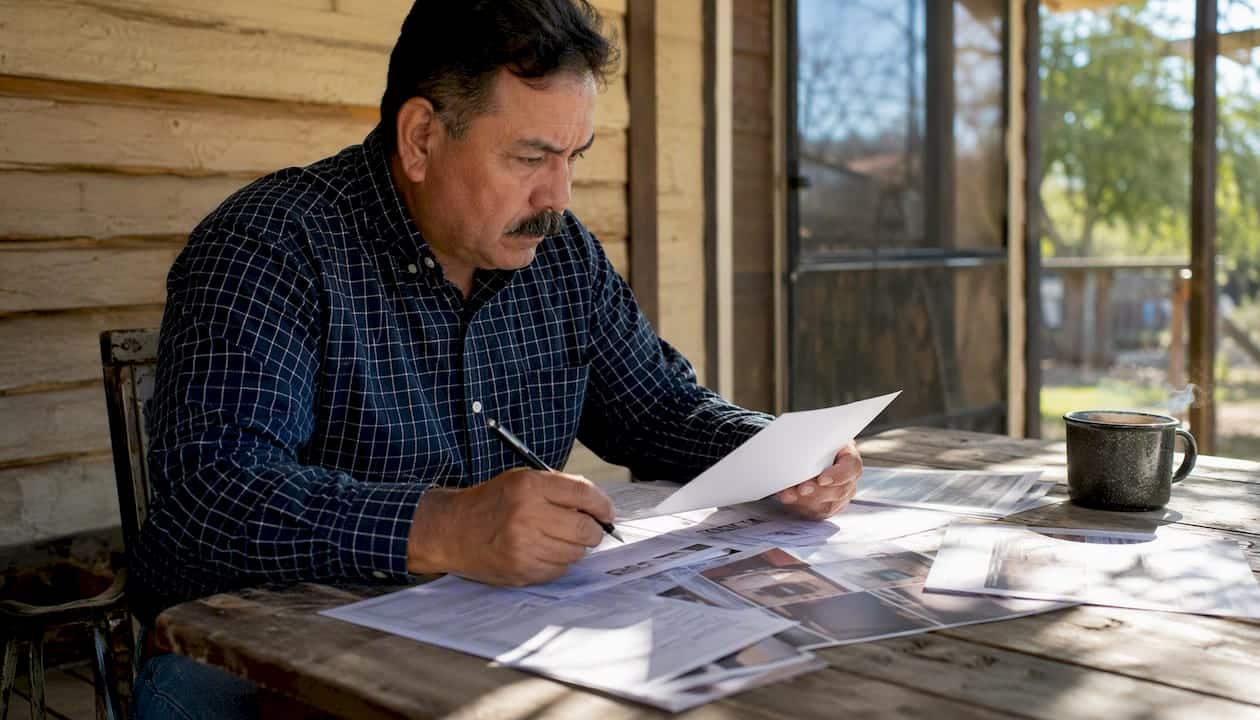
- Request at least two references from jobs completed in the past 12 months.
Questions to ask on the first call
- What is the workmanship warranty length, and does it transfer to a new owner?
- Are your crews employees or subcontractors, and how long have you worked with them?
- Who handles the permit application, and will you provide the permit number before work starts?
- What does your payment schedule look like — and do you require full payment upfront?
- Can you assist with the insurance claim process, and have you worked with my carrier before?
- What is your realistic start date and project timeline given current demand?
Red flags to walk away from
- Any offer to waive or “absorb” your deductible. That is insurance fraud in Texas, and it puts you at legal risk.
- A request for full payment before work begins.
- Refusal to pull permits or provide a written contract.
- A business address that is only a P.O. box.
- High-pressure tactics: “this price is only good for the next hour” or “we have one slot left.”
Pricing and timing
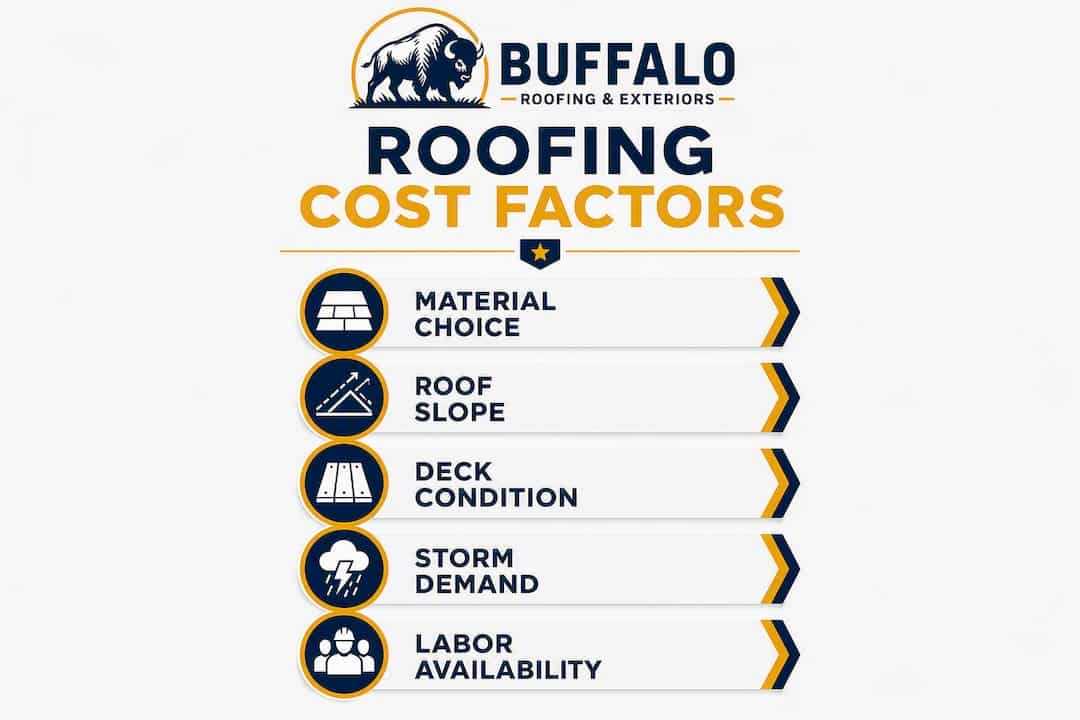
Cost drivers include material choice, roof slope, decking condition, and whether storm demand has spiked in your area. Off-season scheduling — roughly December through March — can reduce labor and material costs by 10–20%. After a major storm, expect both prices and wait times to climb. RoofVista recommends starting the quote process 6–8 weeks before your target date under normal conditions, and 12–16 weeks during peak demand.
Contract requirements
Your written contract should include: a detailed scope of work, the specific material brands and product lines, a workmanship warranty statement with duration, staged payment milestones, and lien waiver terms. Never sign a contract that leaves any of those blank.
Pro Tip: Ask for lien waivers from subcontractors at each payment milestone, not just at project completion. A subcontractor lien on your property is your problem, not the general contractor’s.
What should you expect for storm repairs and material choices?
Underlayment: synthetic vs. felt
Synthetic underlayment is the better choice for Texas conditions. It repels water, resists tearing in high winds, and holds nails more securely than felt. Felt underlayment absorbs moisture and wrinkles when wet, which can cause problems if shingles are not installed immediately after. Synthetic costs slightly more, but the durability difference is meaningful in a coastal or storm-prone climate. The workmanship warranty matters here too: improper installation of either material can void manufacturer coverage, which is why the contractor’s own warranty on labor is often the more important document to scrutinize.
The 25% rule
If a significant portion of your roof surface needs repair, most Texas municipalities and insurance adjusters treat the project as a full replacement rather than a repair. That threshold affects permitting, code compliance, and what your insurer will cover. Ask your contractor and your adjuster to confirm which category your damage falls into before any work begins.
Emergency storm response checklist
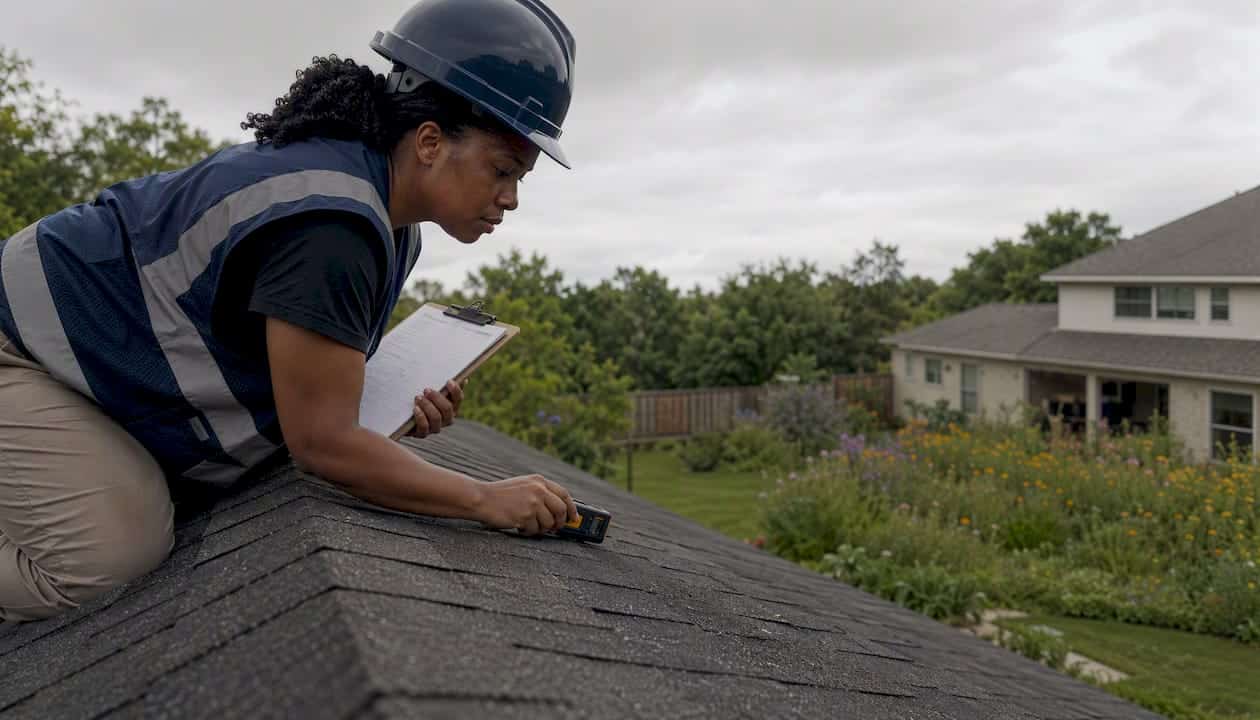
- Document everything first. Photograph all visible damage before anyone touches the roof. A guide on how to document storm damage can help you capture what adjusters actually need.
- Install a temporary tarp if needed to prevent interior water damage, but treat it as a bridge, not a fix.
- Avoid any contractor who shows up unsolicited after a storm and asks you to sign anything on the spot.
- Contact your insurer before authorizing repairs beyond emergency tarping.
Pro Tip: Shingle adhesive needs temperatures above roughly 40°F to activate properly. If your area just had a cold snap, ask your contractor about installation timing — rushing a winter install in marginal temperatures can affect how well shingles seal.
Key Takeaways
Choosing a vetted local contractor with a documented workmanship warranty and RCAT credentials is the most reliable path when evaluating roofing company alternatives to phillipsroof.com.
| Point | Details |
|---|---|
| Verify credentials first | Confirm RCAT status, COI from a TX-admitted carrier, and a physical business address before any estimate. |
| Workmanship warranty is non-negotiable | Manufacturer warranties of 20 years mean little if installation is poor; the contractor’s labor warranty is what protects you. |
| Avoid deductible waivers | Any offer to waive your deductible is insurance fraud in Texas — walk away immediately. |
| Time your project off-peak | Scheduling December–March can save 10–20% on labor and materials; start the quote process 6–8 weeks out. |
| Buffalo Roofing & Exteriors | Offers free estimates, workmanship warranties, and storm-restoration services across South Texas from San Antonio to Corpus Christi. |
Why this vetting approach reflects how we work
The checklist above is not abstract advice. It describes exactly what Buffaloroofingandexteriors applies on every job in South Texas. When a homeowner contacts us after storm damage, the workflow is straightforward: a documented inspection, a written estimate with material specs and workmanship warranty terms, permit application in our name before work starts, and a staged payment schedule tied to verifiable milestones. We handle insurance-claim assistance directly, so you are not navigating that process alone.
South Texas weather — coastal humidity, hurricane-season wind loads, hail — demands contractors who understand local building codes and material performance in those conditions. Buffaloroofingandexteriors operates out of Corpus Christi with offices in San Antonio and Victoria, which means a local point of contact, not a national call center, when something needs attention mid-project.
Get a free estimate from Buffalo Roofing & Exteriors
South Texas homeowners looking for a direct alternative to phillipsroof.com get a concrete advantage with Buffalo Roofing and Exteriors: a local team that covers the full corridor from San Antonio to Corpus Christi, handles storm damage restoration from first inspection to final walkthrough, and backs every project with a written workmanship warranty.

Services include roof repair, full replacement, storm damage restoration, siding, windows, and exterior weatherproofing for residential and commercial properties. Financing options are available for qualifying projects.
Before the estimator arrives, have these ready: photos of visible damage, your homeowner’s insurance policy and claim number if applicable, any previous roof paperwork (age, prior repairs, existing warranty), and your preferred scheduling window. That prep cuts the estimate appointment in half and gets you a written scope faster.
To request a free estimate or emergency roofing service across South Texas, contact Buffaloroofingandexteriors directly through the website.
Useful sources for verification
The claims in this article draw from the following authoritative sources. Use them to verify credentials, check red flags, and confirm local requirements independently.
| Source | What it verifies |
|---|---|
| RCAT — Selecting a Roofing Contractor | RCAT voluntary licensing program details and how to search for licensed contractors in Texas |
| RoofVista — How to Choose a Roofer in Texas | Texas licensing gap, municipal permit requirements, and homeowner due-diligence steps |
| Texas Roof Authority — Red Flags | Deductible-waiver fraud, permit avoidance, and storm-chaser warning signs |
| Tekton Exteriors — How to Vet a Roofing Contractor | COI verification steps, workmanship warranty questions, and subcontractor crew checks |
| RoofVista — Best Time to Replace a Roof in Texas | Scheduling lead times and quote-process timing guidance |
| The Roofing Brief — Underlayment and Warranties | Synthetic vs. felt underlayment comparison and warranty interaction with installation quality |
| JRH Construction — Best Time to Replace a Roof in Texas | Temperature thresholds for shingle adhesion and seasonal installation guidance |
| Buffalo Roofing & Exteriors | Company proof points: free estimates, workmanship warranties, storm restoration, service area |