TL;DR:
- Residential roofing in coastal and storm-prone areas must withstand high wind, salt, and rain; proper material choice, installation, and maintenance are critical. Aluminum standing seam metal offers the highest durability near saltwater, while impact-resistant shingles and tile are more affordable options further inland. Consistent inspections and code-compliant installation practices are essential to ensure roof survival during hurricanes.
Residential roofing in coastal and storm-prone areas is defined by one requirement: the system must hold when the storm hits. Salt air corrodes fasteners, wind uplift peels panels, and driving rain finds every gap a standard installation leaves behind. Homeowners and property managers in places like Corpus Christi, Texas, face conditions that expose every weakness in a roof system. Industry standards such as the Florida Building Code 2026 and Miami-Dade Notice of Acceptance set the benchmark for wind ratings and product approvals in coastal zones. Getting the material, the installation method, and the maintenance schedule right is not optional. It is the difference between a roof that survives a Category 3 storm and one that does not.
What are the best roofing materials for coastal and storm-prone homes?
Material selection is the first decision that shapes every other outcome for a coastal roof. Not every product rated for residential use performs equally when salt air, UV exposure, and 130+ mph winds combine.
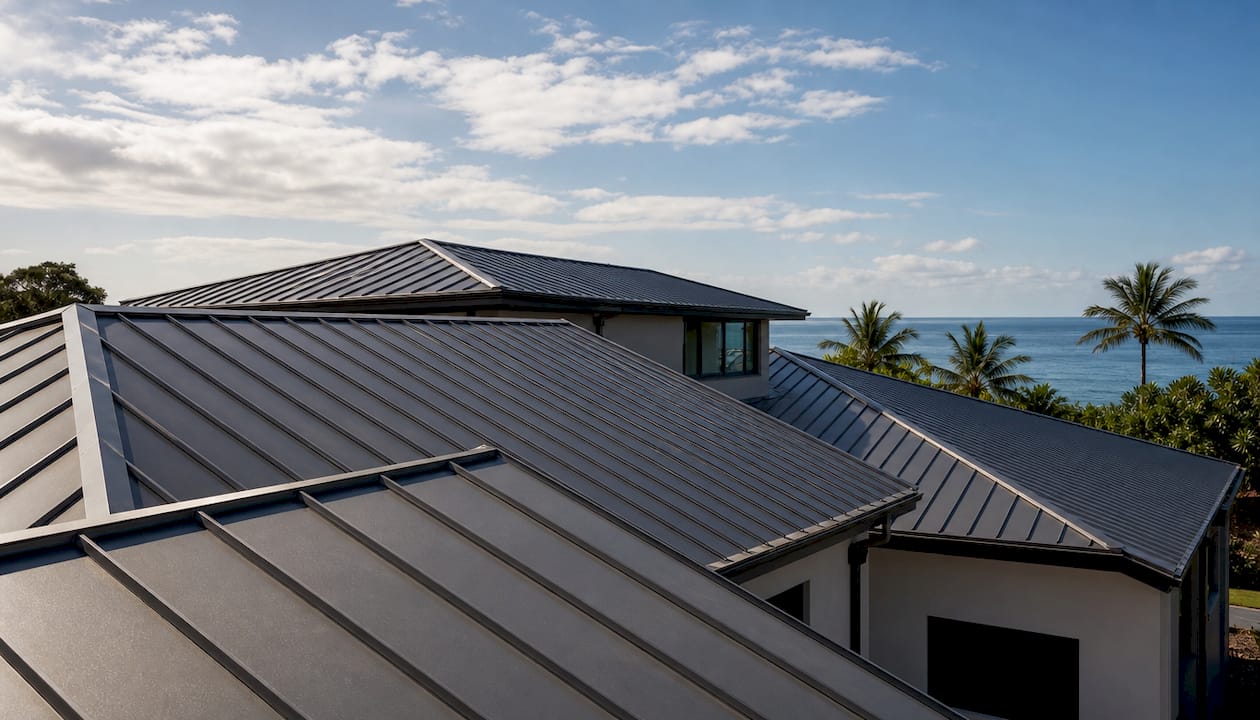
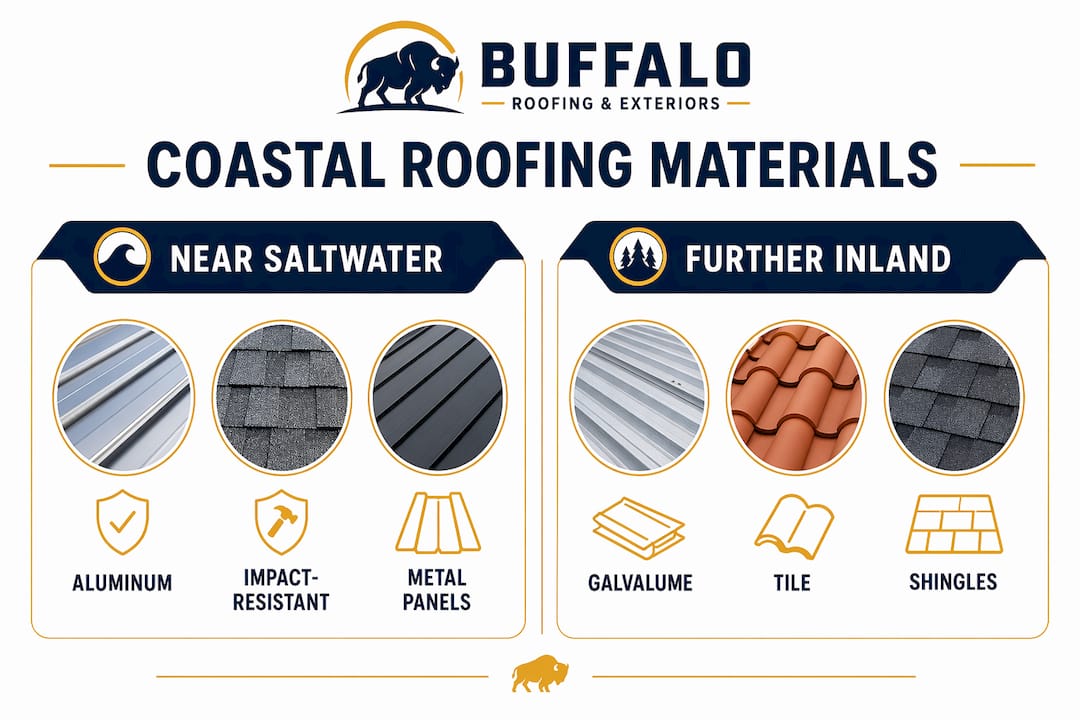
Aluminum standing seam metal
Aluminum standing seam is the top choice for homes within 1,500 feet of saltwater. Steel-based metals require specialized coatings to resist salt-air corrosion, while aluminum resists it without any coating at all. The tradeoff is cost: aluminum costs 15–25% more than Galvalume, but its lifespan in coastal zones runs 40–70+ years. Post-hurricane data from Ian and Irma confirmed that standing seam systems rated for 180 mph winds showed the lowest failure rates among all residential roof types.
Galvalume metal panels
Galvalume with PVDF paint coating works well for coastal properties located further inland, beyond the 1,500-foot saltwater threshold. It costs less than aluminum and still delivers strong wind resistance when installed with concealed clip systems. The clip design matters: mechanical-lock standing seam systems outperform exposed-fastener metal roofs by 30–50% in wind uplift tests.
Tile and impact-resistant shingles
Clay and concrete tile carry strong aesthetic appeal and meet hurricane ratings when installed with the correct mortar and fastening methods. They are heavier than metal, which means the roof deck and framing must be structurally adequate to carry the load. Impact-resistant architectural shingles are the most affordable entry point. They must be rated for at least 130 mph wind resistance to meet coastal code requirements. Standard three-tab shingles are rated for only 60–70 mph, making them unsuitable for hurricane-prone regions.
Pro Tip: Ask your supplier for the Miami-Dade NOA number on any roofing product before purchase. If the product does not have one, it has not been tested to the standards coastal homes require.
| Material | Lifespan | Wind rating | Corrosion resistance | Relative cost |
|---|---|---|---|---|
| Aluminum standing seam | 40–70+ years | Up to 180 mph | Excellent | High |
| Galvalume standing seam | 30–50 years | Up to 160 mph | Good | Moderate |
| Clay or concrete tile | 40–50 years | Up to 150 mph | Very good | High |
| Impact-resistant shingles | 20–30 years | 130 mph rated | Fair | Low to moderate |
How do installation standards improve coastal roof performance?
The right material installed the wrong way fails. Coastal installation is a discipline of its own, governed by code requirements that go well beyond standard residential practice.
The Florida Building Code 2026 and Miami-Dade NOA define minimum wind ratings, fastener schedules, and product approvals for High-Velocity Hurricane Zone installations. These codes exist because post-storm forensic analysis consistently shows that most roof failures begin at the edges, not the field of the roof. Edge fastening spacing requires 4–6 inches in coastal zones instead of the standard 12 inches. Tighter spacing prevents the progressive “unzipping” failure that starts at the perimeter and works inward.
Here are the installation practices that separate a code-minimum roof from one built to survive:
- Six-nail fastening for shingles. Standard shingle installation uses four nails per shingle. In High-Velocity Hurricane Zone applications, six nails per shingle is required. Each additional nail point reduces the chance of wind lifting the shingle tab.
- Peel-and-stick underlayment over the full deck. Self-adhering membranes over the entire deck form a secondary water barrier. If surface materials are damaged or blown off, the underlayment keeps water out of the structure. Mechanically fastened felt fails in extreme wind conditions and is not adequate for coastal zones.
- Hurricane straps and ring-shank nails. Hurricane straps connect the roof framing directly to the wall framing, preventing the roof structure from lifting off the walls. Ring-shank nails hold the deck sheathing to the framing with far greater withdrawal resistance than smooth-shank nails.
- Concealed clip systems for metal roofing. Clip systems distribute wind forces across the panel and allow thermal expansion without breaking the seal. Exposed fasteners create puncture points that corrode and loosen over time, especially in salt air.
- Tighter clip spacing at panel edges. The edges of a standing seam roof experience the highest uplift forces. Reducing clip spacing at the perimeter, as specified by the manufacturer’s engineering data, prevents panel separation from starting at the most vulnerable point.
Pro Tip: Request the manufacturer’s installation manual and the specific engineering approval for your wind zone before work begins. A contractor who cannot produce both documents is not qualified for coastal installation.
What maintenance practices protect a coastal residential roof?
A coastal roof ages faster than an inland one. Salt deposits accelerate corrosion, UV intensity degrades sealants, and storm debris creates impact damage that goes unnoticed until water appears inside the home.
The recommended schedule for coastal properties is two professional inspections per year plus an additional check after any significant storm event. Homes within 1,500 feet of the waterline benefit from three professional inspections annually. Between inspections, quarterly rinsing of metal roof components removes salt deposits before they begin attacking fasteners and panel edges.
The components that fail first are rarely the panels themselves. Neoprene washers and rubber pipe boots degrade faster in coastal UV and salt environments than the metal panels around them. These small components require proactive replacement every 5–7 years. Waiting until they visibly fail means water has already been entering the system.
A practical maintenance checklist for homeowners and property managers:
- Rinse metal components quarterly to remove salt and debris buildup, especially after onshore wind events.
- Inspect flashings and sealants at every penetration point, including vents, pipes, and skylights, after each storm.
- Check neoprene washers and rubber boots on exposed fasteners annually and replace any that show cracking or compression.
- Clear gutters and downspouts before and after hurricane season to prevent water backup under the roof edge.
- Document the roof condition with photos after each inspection to track changes over time and support insurance claims if needed.
Think of coastal roof maintenance the same way you would think about maintaining a boat. The ocean environment is relentless, and small neglected issues compound quickly. Property managers overseeing multiple coastal units should coordinate rooftop inspections with other scheduled services. Combining roof checks with rooftop HVAC servicing reduces access costs and catches problems across the entire roof surface.
Pro Tip: Take timestamped photos of your roof before and after every storm season. Insurers require documentation of pre-existing conditions versus new storm damage, and photos taken after the fact carry far less weight.
How to choose the right residential roofing solution for your coastal property
Choosing a roof system for a coastal property requires balancing five factors: budget, longevity, storm protection, aesthetics, and local compliance.
Long-term cost versus upfront expense. Metal roofing costs more at installation but lasts two to three times longer than shingles. Insurance savings from properly installed metal roofs with wind mitigation credits can total $800 to $2,500 annually in coastal regions, often offsetting the higher initial cost within 10–15 years. Shingles are the most affordable roofing option upfront, but replacement cycles and storm repair costs add up over time.
Certified products and local wind ratings. Every product on a coastal roof must carry certification for the wind zone it will serve. Miami-Dade NOA approval is the gold standard for High-Velocity Hurricane Zones. For Texas coastal properties, the Texas Department of Insurance wind storm inspection program sets similar requirements. Selecting uncertified products voids insurance coverage and creates code violations.
HOA regulations and architectural compatibility. Many coastal communities have HOA rules that restrict roofing colors, materials, or profiles. Tile and metal standing seam both offer profiles that satisfy most HOA requirements. Confirm approval before ordering materials.
Choosing an installer with coastal expertise. A contractor who installs roofs in inland areas operates under different code requirements and may not know the fastening schedules, underlayment specifications, or edge detail requirements for coastal zones. Ask specifically about experience with storm damage prevention and wind mitigation installations. Request references from coastal projects and verify that the contractor holds the appropriate state license for your area.
The decision framework is straightforward: if you are within 1,500 feet of saltwater and plan to stay in the property long-term, aluminum standing seam delivers the best return. If budget is the primary constraint, impact-resistant architectural shingles with full-deck peel-and-stick underlayment and six-nail installation meet code and provide meaningful storm protection. Tile sits between the two in cost and performance, with the added benefit of strong curb appeal in coastal communities.
Key Takeaways
The most effective residential roofing system for a coastal home combines a certified wind-rated material, code-compliant installation with full-deck underlayment, and a consistent seasonal maintenance schedule.
| Point | Details |
|---|---|
| Material determines baseline performance | Aluminum standing seam leads for saltwater proximity; impact-resistant shingles serve budget-conscious homeowners further inland. |
| Installation quality is as critical as material | Six-nail fastening, peel-and-stick underlayment, and concealed clip systems define whether a roof survives hurricane-force winds. |
| Small components fail first | Neoprene washers and rubber boots degrade in 5–7 years and must be replaced proactively to prevent water intrusion. |
| Inspections must follow a coastal schedule | Two professional inspections per year plus a post-storm check is the minimum; homes near the waterline need three annually. |
| Insurance savings offset higher material costs | Properly installed wind-rated metal roofs can reduce annual insurance premiums by $800 to $2,500 in coastal regions. |
What I’ve learned about coastal roofing that most articles get wrong
Most roofing articles treat material selection as the whole answer. Pick the right shingle or the right metal panel, and you are protected. That framing misses the point entirely.
After working with homeowners across Corpus Christi and the Texas Gulf Coast, the pattern is clear: roofs fail at the system level, not the material level. A premium aluminum panel installed with the wrong clip spacing or without full-deck underlayment will fail before a properly installed shingle roof. The material is the starting point, not the finish line.
The second mistake I see constantly is treating roof maintenance as a one-time annual event. Coastal environments are relentless. Salt deposits build between inspections. A small crack in a rubber boot that looks minor in october becomes a water intrusion problem by the time the next inspector arrives in spring. Seasonal maintenance is not a luxury. It is the operating cost of owning a coastal property.
The third issue is contractor selection. Homeowners often choose based on price alone, without asking whether the contractor has experience with coastal code requirements. A contractor who does not know the difference between a standard underlayment and a fully adhered peel-and-stick membrane is not qualified to install a coastal roof, regardless of how low their bid is. The cheapest installation frequently becomes the most expensive roof over a ten-year horizon.
The code landscape is also shifting. The Florida Building Code 2026 updates and ongoing revisions to Texas windstorm requirements are tightening fastener schedules and product approval requirements. Homeowners who installed roofs five years ago may find their systems no longer meet current standards, which affects both insurance eligibility and resale value. Staying current with code changes is part of responsible property ownership on the coast.
— Results
Buffaloroofingandexteriors: coastal roofing built for Texas storms
Buffaloroofingandexteriors serves homeowners and property managers across Corpus Christi, San Antonio, and Victoria with roofing systems built specifically for coastal conditions. Every installation meets 2026 coastal building code requirements, from full-deck peel-and-stick underlayment to certified wind-rated materials.
The team at Buffalo Roofing and Exteriors works with aluminum standing seam, impact-resistant shingles, and tile systems, all backed by manufacturer certifications and wind mitigation documentation. Whether you need a new installation, a post-storm assessment, or a coastal roofing contractor you can trust for long-term maintenance, Buffaloroofingandexteriors brings the coastal expertise your property requires. Free estimates and financing options are available. Contact the team to schedule your inspection before the next storm season begins.
FAQ
What is the best roofing material for a coastal home?
Aluminum standing seam metal is the best choice for homes within 1,500 feet of saltwater, offering a 40–70+ year lifespan and natural corrosion resistance without specialized coatings. Impact-resistant architectural shingles rated for 130 mph winds are the most affordable option for properties further from the waterline.
How often should a coastal roof be inspected?
Two professional inspections per year plus a post-storm check is the standard recommendation for coastal roofs. Homes within 1,500 feet of the waterline benefit from three professional inspections annually.
What wind speed rating does a coastal roof need?
Architectural shingles must be rated for at least 130 mph to meet coastal code requirements. Standing seam metal systems rated for up to 180 mph provide the highest level of hurricane protection available for residential roofing.
Can a new roof lower my homeowner’s insurance premium?
A properly installed wind-rated metal roof with verified deck attachment can reduce annual insurance premiums by $800 to $2,500 in coastal regions through wind mitigation and impact resistance credits.
How do I verify a roofing contractor is qualified for coastal work?
Ask for the contractor’s state license number, proof of experience with Miami-Dade NOA or Texas windstorm-approved installations, and references from completed coastal projects. A qualified contractor will provide the manufacturer’s installation manual and engineering approval for your specific wind zone before work begins.