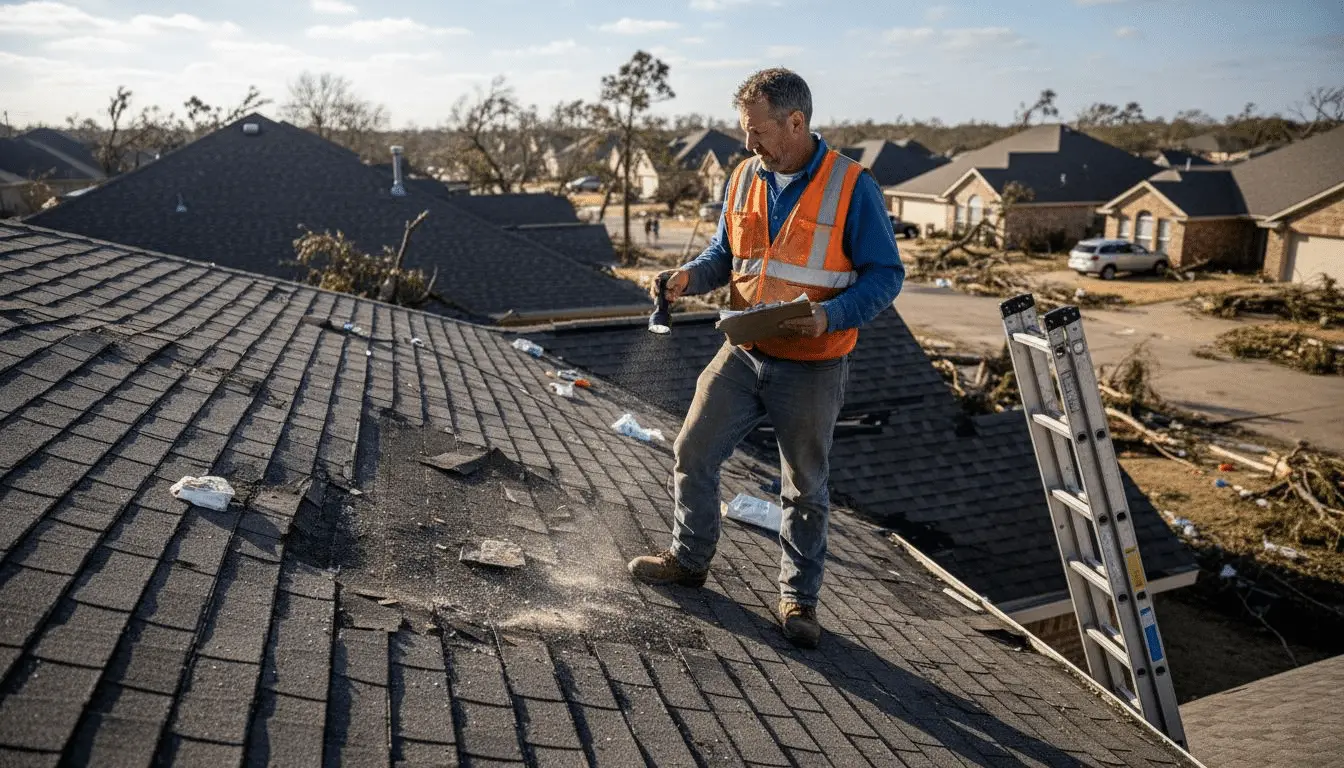
Heavy storms in Corpus Christi often leave homeowners scrambling to understand the true condition of their roofs. Most problems remain hidden until costly repairs or insurance issues arise, making regular inspections crucial in this coastal climate. Roofing experts follow a thorough protocol, checking for both visible and hidden damage across all material types. Storm-related roof damage and insurance claim eligibility depend on professional inspection, not just surface appearances.
Table of Contents
- Roof Inspection Basics And Misconceptions
- Types Of Roof Inspections For Storm Damage
- What Inspectors Evaluate After Severe Weather
- Legal And Insurance Requirements In Texas
- Common Risks, Mistakes, And Cost Implications
Key Takeaways
| Point | Details |
|---|---|
| Understanding Roof Inspections | Homeowners must realize that roof inspections involve detailed evaluations beyond visible damage, including material condition and installation quality. |
| Importance of Professional Assessments | Engaging certified inspectors, especially after storms, is crucial to identify hidden damage that may affect insurance claims. |
| Mismatch of Damage Types | Homeowners often confuse cosmetic issues for functional ones; understanding the distinction can save significant repair costs. |
| Legal Compliance and Documentation | In Texas, following inspection and insurance claim regulations is essential to ensure eligibility for coverage and avoid potential legal issues. |
Roof inspection basics and misconceptions
Most homeowners in Corpus Christi think they understand roof inspections. Then a storm hits, and they realize how little they actually know. Understanding the basics separates those who catch damage early from those facing expensive repairs.
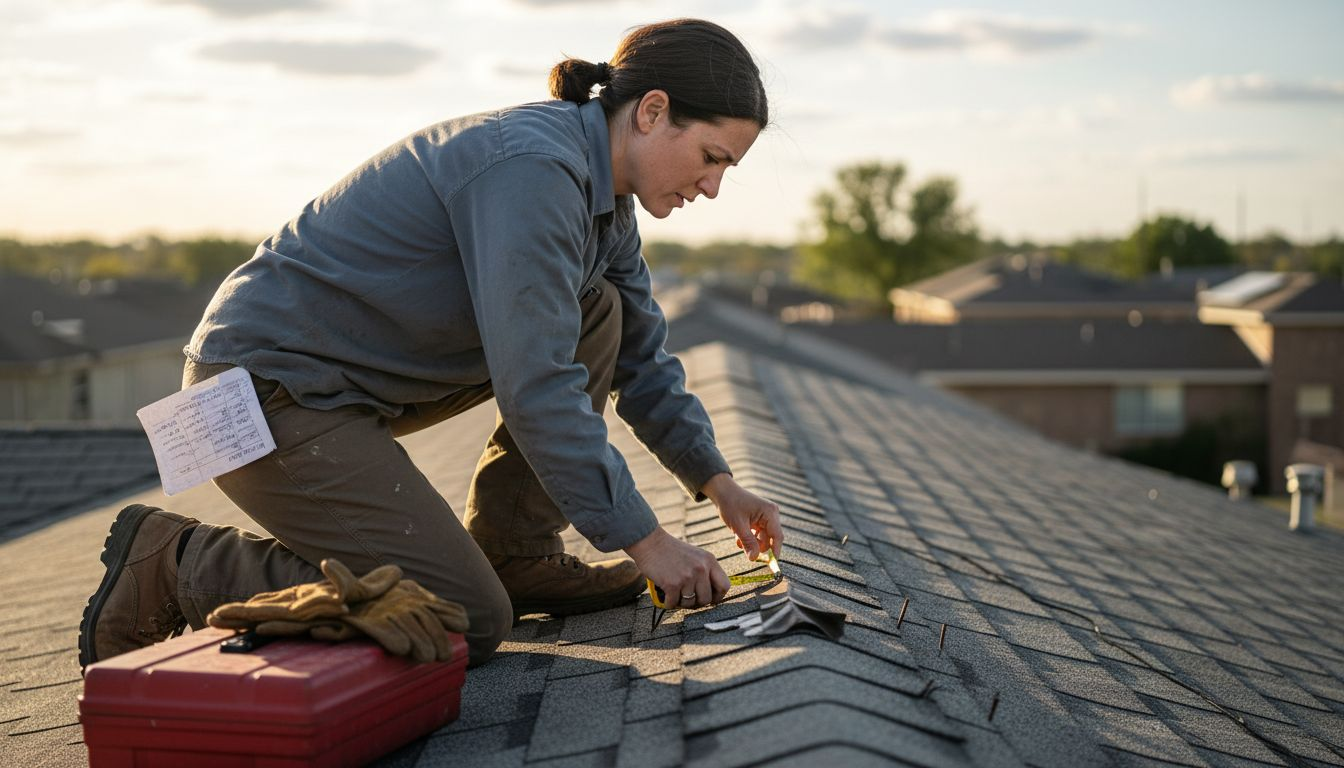
A roof inspection isn’t just looking up and spotting obvious holes. Professional inspectors evaluate multiple factors that determine whether your roof is truly sound. They check for issues that aren’t visible from the ground.
What Actually Happens During a Professional Inspection
Roof inspectors examine three critical areas:
- Material condition: The state of shingles, flashings, and underlying structures
- Drainage and water flow: Whether water properly moves away from vulnerable areas
- Installation quality: Checking if materials were installed correctly to begin with
This systematic approach catches problems before they become emergencies. When inspectors understand roof slope and construction details, they spot defects that homeowners miss entirely.
Each material type requires different evaluation. Asphalt shingles face different challenges than metal or tile roofs. Inspectors trained in various roofing materials and damage indicators know exactly what to look for.
The Biggest Misconceptions About Roof Inspections
Think you don’t need an inspection if your roof looks fine? That’s misconception number one. Damage exists that you cannot see from ground level or even from your attic.
Another common belief: new roofs don’t need inspections. Wrong. Installation errors today become leaks tomorrow. Poor workmanship isn’t always obvious immediately.
Here’s what homeowners get wrong:
- Assuming all defects are immediately visible (they aren’t)
- Believing a new roof guarantees decades of trouble-free performance
- Thinking cosmetic issues equal functional damage (they don’t)
- Trusting their own visual assessment instead of professional evaluation
- Expecting roofs to last without regular maintenance or inspection
In Corpus Christi’s coastal climate, salt spray and intense sun damage roofing materials faster than in other regions. What looks fine today deteriorates quickly under these conditions.
Storm damage and manufacturing defects aren’t always obvious at first glance—professional inspections reveal what your eyes cannot.
Misdiagnosing roof problems leads to treating symptoms instead of causes. A leak might result from poor drainage rather than a hole. Addressing the drainage issue prevents future leaks.
Most homeowners also misunderstand wind damage. Not every lifted shingle means your roof failed. Understanding the difference between cosmetic damage and functional failure saves money on unnecessary repairs.
Pro tip: Schedule inspections after major storms and annually before hurricane season in Corpus Christi—catching small issues prevents them from becoming insurance claim headaches.
Types of roof inspections for storm damage
Not all roof inspections are created equal. After a storm batters your Corpus Christi home, you need the right type of inspection to catch hidden damage. Different inspection methods reveal different problems.
Standard inspections work fine for routine maintenance. Storm damage requires specialized approaches that look beyond surface-level issues. The wrong inspection type might miss costly problems that compromise your roof’s integrity.
Comprehensive Storm Damage Inspections
A comprehensive inspection follows a systematic protocol covering your entire property. Professional inspectors evaluate multiple zones to ensure nothing gets missed.
The inspection covers these essential areas:
- Interior spaces: Ceilings, walls, and attics for water intrusion signs
- Attic examination: Structural damage, insulation damage, and roof deck condition
- Perimeter inspection: Gutters, downspouts, and exterior walls for secondary damage
- Garage evaluation: Overhead doors and enclosed structures
- Rooftop assessment: Shingles, flashing, vents, and chimney condition
This five-zone protocol approach ensures inspectors identify both visible and hidden damage that homeowners typically overlook. Water can travel through your roof system before pooling in unexpected locations.
Comprehensive inspections take longer than standard walkthroughs. They cost more upfront but prevent expensive surprises later. After hurricanes or hail storms, this thorough approach is essential.
Specialized Storm Damage Assessment Methods
Certain inspection types target specific types of storm damage. Forensic inspections examine roof systems in detail, comparing current condition to pre-storm documentation.
These specialized methods include:
- Forensic roof inspections: Detailed analysis comparing before-and-after conditions
- Leak detection inspections: Pinpointing exact water infiltration sources
- Impact damage assessments: Evaluating hail and wind damage patterns
- Documentation inspections: Creating photographic records for insurance claims
LeakFREE and Forensic ROOF designations indicate inspectors with advanced training. They understand how storms damage different roofing materials in distinct ways. One storm might crack tile differently than asphalt shingles.
Professional inspectors follow standardized protocols ensuring consistent evaluation and accurate damage documentation for insurance purposes.
In coastal regions like Corpus Christi, salt spray and wind-driven rain create unique damage patterns. Specialized inspectors recognize these localized issues that generalist inspectors might miss.
Timing matters too. Inspections conducted immediately after storms document fresh damage. Insurance companies require timely documentation to process claims fairly. Waiting weeks allows weather to complicate the damage assessment.
When to Schedule Each Inspection Type
Schedule comprehensive inspections after severe weather events. Don’t wait for visible leaks to appear. Storm damage often manifests slowly as water gradually infiltrates roof systems.
Routine annual inspections before hurricane season catch deterioration before storms arrive. This preventative approach strengthens your roof’s ability to withstand coastal weather.
Pro tip: Document your roof’s condition with photos before storm season, then schedule specialized storm damage inspections immediately after severe weather—this documentation protects your insurance claim.
What inspectors evaluate after severe weather
After a storm passes through Corpus Christi, inspectors have a precise checklist of what to examine. They’re not just looking for obvious damage—they’re hunting for hidden problems that threaten your roof’s integrity and your insurance claim’s validity.
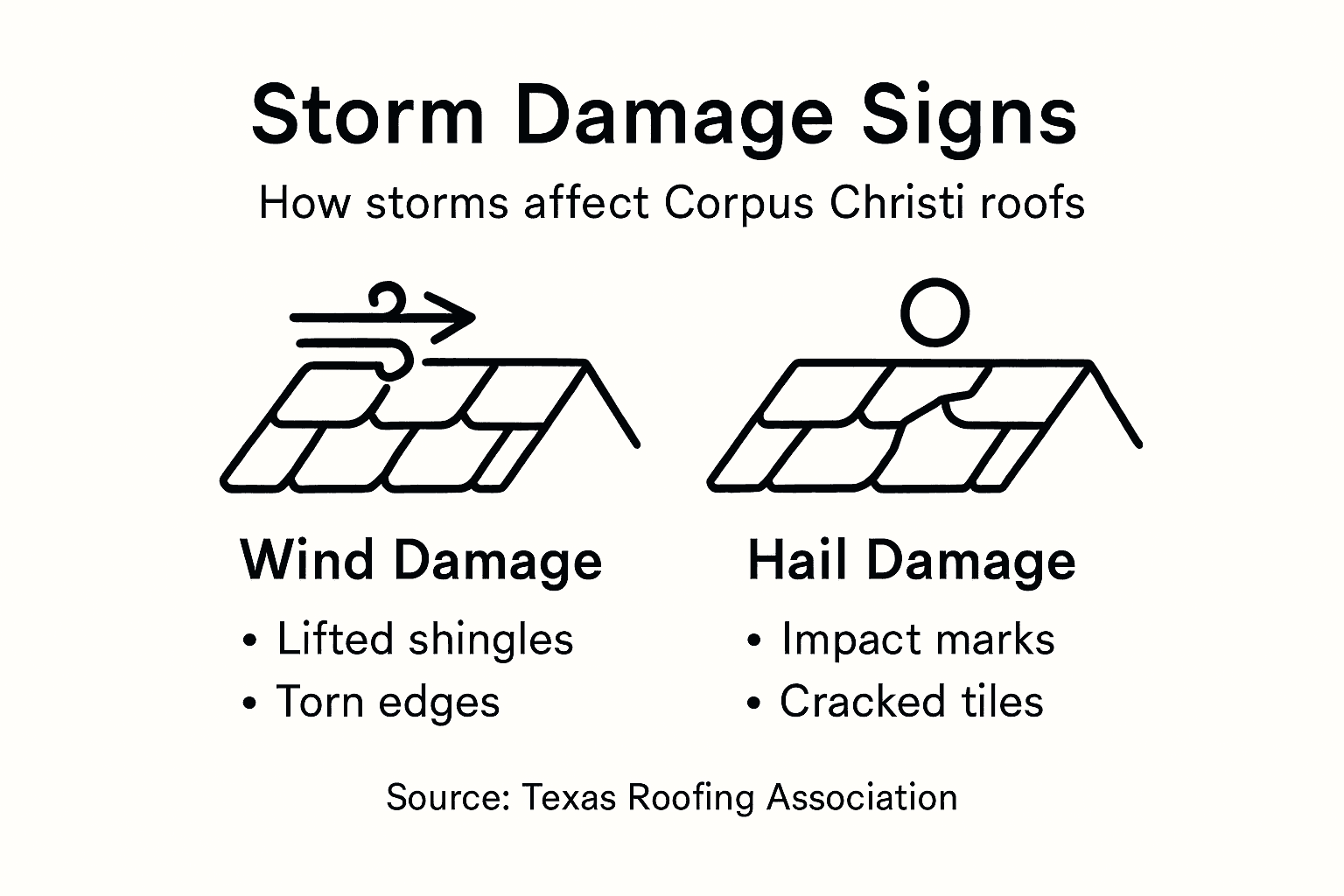
Inspectors understand that storms damage roofs in predictable patterns. Hail creates specific impact marks. Wind lifts shingles at characteristic angles. Rain finds vulnerabilities in flashing and seams. Understanding these patterns helps inspectors spot damage homeowners miss entirely.
Structural Integrity and Building Code Compliance
First, inspectors verify that your roof meets current building codes. Coastal regions like Corpus Christi have strict wind-resistance requirements. Older homes sometimes fail to meet modern standards, which affects insurance eligibility.
Inspectors evaluate these structural elements:
- Roof framing and decking: Checking for cracks, splits, or separation
- Fastening systems: Verifying proper attachment methods that resist wind uplift
- Structural connections: Ensuring walls, rafters, and foundations hold together
- Load-bearing capacity: Confirming your roof can withstand future storms
Wind and hail resistance compliance directly impacts whether insurers will cover damage. A structurally sound roof withstands storms better and qualifies for better coverage rates.
Building code violations discovered during inspections can actually help your claim. They document pre-existing conditions versus storm-caused damage, protecting your credibility with insurance companies.
Material-Specific Damage Assessment
Different roofing materials fail in distinct ways during storms. Inspectors trained in multiple material types know what to look for.
Hail damage varies by material:
- Asphalt shingles: Granule loss, soft spots, bruising, and cracking
- Metal roofs: Denting, paint chipping, and fastener damage
- Tile roofs: Cracking, chipping, and displaced pieces
- Wooden shakes: Splitting, splintering, and moisture absorption
Specific hail damage indicators include understanding hailstone size, shape, and impact direction. A quarter-sized hailstone creates different damage than golf-ball-sized ice. Inspectors document this detail for insurance claims.
Wind damage follows separate patterns. Lifted shingles, torn edges, and exposed nails indicate wind stress. Water damage appears as staining, mold, or deterioration in attic spaces.
Here’s how different roofing materials respond to common storm hazards:
| Roofing Material | Typical Storm Damage | Inspection Focus |
|---|---|---|
| Asphalt Shingles | Granule loss, bruising, cracks | Soft spots, missing granules |
| Metal Roofing | Dents, chipped paint | Fastener integrity, rust spots |
| Tile Roofing | Cracking, displaced pieces | Broken tiles, shifted alignment |
| Wooden Shakes | Splits, moisture absorption | Wood rot, splintering |
Inspectors document damage location, severity, and probable cause—this documentation determines whether your claim gets approved or denied.
Flashing around chimneys, vents, and skylights receives special attention. These transition points often fail first, allowing water infiltration that spreads throughout your home.
Secondary and Collateral Damage
Storms damage more than just roofing. Inspectors evaluate your entire home’s exterior as part of comprehensive assessment.
They check for secondary damage including:
- Gutter and downspout damage: Denting, separation, and debris accumulation
- Exterior wall damage: Siding tears, paint stripping, and impact marks
- Window and door frame damage: Broken seals and water intrusion points
- Landscaping debris impact: Fallen branches puncturing roofs or gutters
Collateral damage claims sometimes exceed primary roof damage claims. A fallen tree branch that punctures your roof causes water damage inside walls and attic spaces. Proper documentation of all damage types maximizes your insurance recovery.
Pro tip: Take timestamped photos immediately after storms before cleanup crews arrive, then schedule a professional inspection within 48 hours—this documentation sequence strengthens your insurance claim significantly.
Legal and insurance requirements in Texas
Texas has specific legal rules governing roof inspections and insurance claims after storms. Corpus Christi homeowners must understand these requirements to protect their claims and avoid costly mistakes. Ignoring these rules can result in denied claims or legal liability.
The Texas Department of Insurance sets standards for windstorm inspections, contractor behavior, and claim documentation. These aren’t suggestions—they’re requirements that affect whether you receive fair compensation after storm damage.
Windstorm Inspection Requirements
Coastal properties in Corpus Christi require windstorm inspections for insurance eligibility. This isn’t optional if you want coverage in hurricane-prone regions. Windstorm inspection protocols for coastal homes include specific certification processes and documentation standards.
The inspection covers these compliance areas:
- Building code adherence: Verifying your roof meets current Texas standards
- Structural certification: Confirming proper installation and materials
- Documentation requirements: Creating official records for insurance purposes
- Inspector credentials: Ensuring evaluators hold proper certifications
Inspectors must be certified by the Texas Department of Insurance. Anyone claiming to perform windstorm inspections without credentials is operating illegally. Your insurance company won’t accept reports from uncertified inspectors.
These inspections determine your eligibility for windstorm coverage. A failed inspection means higher premiums or coverage denial. That’s why hiring a certified professional matters more than cutting costs.
Contractor Licensing and Legal Protections
Hiring unlicensed contractors puts you at legal and financial risk. Texas requires roofing contractors to hold proper licenses. Verify credentials before signing any contract.
When hiring contractors after storm damage, watch for these red flags:
- Illegal deductible waivers: Contractors offering to waive your deductible violate Texas law
- Upfront payment demands: Never pay full cost before work completion
- Pressure tactics: Legitimate contractors don’t rush your decision
- No written estimates: Get detailed quotes in writing
- Unsolicited door-to-door solicitation: Most scammers work this way
Contractor scams targeting storm victims cost Texans millions annually. Scammers prey on homeowners desperate for repairs. Take time to verify any contractor’s licensing, insurance, and reputation.
Licensed contractors carry liability insurance protecting you from injury claims. They follow building codes. Their work carries warranties. These protections cost money, which explains why legitimate contractors charge more than unlicensed operators.
Illegal deductible waivers aren’t discounts—they’re insurance fraud that can void your entire policy and create legal liability for you.
Insurance Claim Documentation and Deadlines
Texas law requires prompt claim reporting. Waiting weeks before notifying your insurance company jeopardizes your claim. Document damage immediately with photos and written descriptions.
Follow these steps to protect your claim:
- Report damage to your insurer within 30 days of discovery
- Take timestamped photos before any cleanup or repairs
- Keep receipts for temporary repairs or additional living expenses
- Provide written descriptions of each damaged area
- Request professional inspection documentation
- Keep copies of all correspondence with insurers
Insurance companies may deny claims lacking proper documentation. They argue that without evidence, they cannot verify coverage eligibility or damage cause. Your photos and inspection reports provide that critical evidence.
Pro tip: Contact your insurance company within 48 hours of storm damage and request the names of certified inspectors they recommend—this ensures your inspection meets all legal requirements and strengthens claim approval odds.
Common risks, mistakes, and cost implications
Skipping roof inspections after storms creates a domino effect of problems. Small issues become major expenses. Insurance claims get denied. Structural damage spreads throughout your home. Understanding these risks helps you avoid costly mistakes.
The financial stakes are real. A $5,000 repair today becomes a $25,000 reconstruction tomorrow. Corpus Christi’s coastal climate accelerates deterioration when damage goes undetected. Delaying action multiplies costs exponentially.
The Cost of Delayed Inspections
Water intrusion is the biggest culprit behind escalating repair costs. It starts with a small roof leak. Within weeks, it damages attic insulation, ceiling drywall, and wall framing. Within months, mold colonizes affected areas. By the time you notice the problem, structural damage requires extensive reconstruction.
Delayed inspections lead to these cascading problems:
- Water damage spread: Initial leak becomes systemic water intrusion
- Mold growth: Moisture triggers toxic mold in attics and walls
- Structural compromise: Wet wood loses load-bearing capacity and rots
- Insurance denial: Claims filed after obvious damage suggests negligence
- Increased repair scope: What started as roof repair now requires drywall, flooring, and framing replacement
Comprehensive roof inspections prevent costly structural compromise by catching small problems before they spread. Regular evaluations extend roof lifespan, reduce emergency repairs, and protect your home’s foundation.
A professional inspection after a storm costs $300-$500. Ignoring damage costs $10,000-$50,000 in repairs. The return on investment is immediate and substantial.
The table below outlines the financial risks of delayed inspections versus prompt action:
| Action Timing | Typical Upfront Cost | Common Long-Term Expenses | Insurance Impact |
|---|---|---|---|
| Prompt Inspection | $300-$500 | Minor repairs ($500-$1,500) | Claim approved, faster payout |
| Delayed Inspection | $0 initially | Major repairs ($10,000-$50,000+) | Claim denied or partial reimbursement |
Common Inspection Mistakes
Do-it-yourself assessments miss critical problems. Standing on the ground looking up doesn’t reveal damage on roof valleys, under shingles, or in attic spaces. Your untrained eye cannot spot the difference between cosmetic damage and functional failure.
Homeowners commonly make these mistakes:
- Assuming visual damage is all damage: Hidden problems exist inside roof layers
- Waiting for visible leaks: Damage appears long before water enters your home
- Ignoring minor issues: Small cracks become catastrophic under coastal weather
- Trusting contractor estimates only: Get multiple professional evaluations
- Deferring inspections after storms: Immediate assessment protects insurance claims
Proactive risk identification and mitigation prevent costly delays. Professional inspectors bring specialized training, proper equipment, and liability insurance. They document findings with photos and detailed reports.
Undetected leaks and deferred inspections transform minor roof damage into premature replacement costs totaling $15,000-$30,000.
Financial Impact of Poor Storm Preparation
Homeowners who skip annual inspections before hurricane season face worse outcomes when storms strike. Your roof already has undetected vulnerabilities. Storm damage compounds existing problems. Insurance companies question why previous damage went uncorrected.
Prepare financially for these storm-related scenarios:
- Pre-storm maintenance costs: $500-$1,500 annually for inspections and repairs
- Post-storm inspection fees: $300-$500 for professional assessment
- Deductibles and out-of-pocket costs: $1,000-$10,000 depending on coverage
- Temporary emergency repairs: $500-$2,000 for tarping and water mitigation
- Full restoration costs: $8,000-$30,000+ for complete roof replacement
Coastal properties in Corpus Christi experience weather stress year-round. Salt spray, intense sun, and wind-driven rain deteriorate roofing materials faster than inland regions. Regular inspections catch accelerated wear before storms compound the damage.
Insurance companies deny claims lacking documentation of pre-existing conditions. If your roof already showed wear and a storm hits, establishing what damage came from the storm versus pre-existing deterioration determines claim approval. Professional inspection records prove you maintained your property.
Pro tip: Schedule annual inspections before hurricane season and immediately after storms—this documentation trail proves maintenance diligence to insurance companies and prevents claim denials worth thousands of dollars.
Protect Your Home with Expert Roof Inspections and Storm Damage Repairs
Understanding the critical role of thorough roof inspections after storms is the first step toward safeguarding your home from costly damage. This article highlights the importance of identifying hidden issues such as poor drainage, installation flaws, and subtle storm damage, which can lead to expensive repairs if left unaddressed. Don’t let roofing problems escalate in Corpus Christi’s challenging coastal climate. Trust the experts who specialize in detailed assessments and comprehensive solutions tailored to your roofing material and local weather conditions.

At Buffalo Roofing & Exteriors, we deliver professional inspection and repair services that ensure your roof’s integrity year-round. Whether you need a prompt storm damage evaluation or ongoing maintenance, our team is ready to help you avoid insurance claim headaches and costly reconstruction. Explore our services through the Roofing Archives and Repairs Archives. Visit / today for a free estimate and take the first step toward a stronger, more weather-resistant home.
Frequently Asked Questions
What happens during a professional roof inspection?
A professional roof inspection involves examining the material condition, drainage and water flow, and the quality of installation of the roof, ensuring all potential issues are identified, even those not visible from the ground.
How often should I schedule roof inspections?
Homeowners should schedule roof inspections annually, especially before hurricane season, and immediately after major storms to catch any potential damage early.
What are the common misconceptions about roof inspections?
Common misconceptions include believing that all defects are visible, that new roofs don’t need inspections, and that cosmetic issues equate to functional damage, which can lead to costly repairs if overlooked.
Why is it important to document roof conditions with photos?
Documenting roof conditions with timestamped photos helps in assessing damage accurately after a storm and is crucial for insurance claims, as it provides evidence of the roof’s state before and after an event.
Recommended
- How to Identify Storm Damage on Your Roof Easily
- What to Do After a Storm Damages Your Roof | Buffalo Roofing & Exteriors | San Antonio to Corpus Christi, TX
- Why Professional Roof Inspections Matter Most
- Why is it Important to Get Home Exteriors and Roofing Repaired Quickly? | Buffalo Roofing & Exteriors | San Antonio to Corpus Christi, TX
- Roof Replacement Explained: Protecting Your Home – Astrotech Construction
- Roofing Company Corpus Christi TX
- Roofing Company San Antonio TX
- Roofing Company Victoria TX