TL;DR:
- Coastal Texas conditions accelerate roof deterioration, making timely inspections and durable materials essential for property protection.
- Choosing experienced, insured contractors who understand local challenges ensures quality repairs, warranties, and long-term durability.
Many property owners in Portland, TX underestimate how fast coastal weather can turn a small roof problem into a major financial headache. A missing shingle after a Gulf storm, a hairline crack in flashing, or a slow-draining flat roof can quietly cause thousands of dollars in structural damage before anyone notices. This article walks you through everything you need to know about choosing the right roofing contractor, understanding your material options, navigating storm damage restoration, and making smart exterior upgrades that protect your property for the long haul.
Table of Contents
- Understanding your roofing needs in Portland, TX
- How to choose a reliable roofing contractor
- Roof repair, replacement, and weather protection
- Storm damage restoration and exterior renovations
- A fresh perspective: What most contractors don’t tell you
- Connect with Portland’s trusted roofing and restoration experts
- Frequently asked questions
Key Takeaways
| Point | Details |
|---|---|
| Coastal climate challenges | Roofing in Portland, TX requires materials and maintenance adapted to humidity, sunlight, and storms. |
| Contractor selection | Selecting a proven local contractor ensures quality, reliability, and effective storm recovery. |
| Storm damage actions | Rapid inspection and documentation post-storm are vital for insurance and repairs. |
| Exterior upgrades | Renovation projects like siding, decks, and windows boost both protection and property value. |
| Long-term savings | Proactive planning and transparent contractor relationships prevent costly mistakes. |
Understanding your roofing needs in Portland, TX
Portland sits right on the Corpus Christi Bay, which means your roof faces a punishment that inland properties simply don’t deal with. High humidity, salt air, intense UV radiation, and the constant threat of tropical storms and hurricanes combine to accelerate roof wear at a rate that surprises most property owners. What might last 25 years on a roof in Central Texas could show serious wear in 15 years here.
The material you choose matters enormously in this environment. Asphalt shingles are the most common choice for residential homes because they’re affordable and widely available, but not all asphalt shingles are created equal. Class 4 impact-resistant shingles, for example, are rated to withstand hail and high winds far better than standard options. Metal roofing has gained significant popularity in coastal Texas because it resists corrosion, reflects heat, and can handle wind speeds that would strip lesser materials right off the deck. Tile roofing, while beautiful, requires a reinforced structure to support its weight and can crack under severe hail impact.
Commercial properties in Portland face a different set of challenges. Flat roofs and low-slope systems are common on warehouses, retail buildings, and office spaces. These roofs rely on membrane systems like TPO (thermoplastic polyolefin) or EPDM (ethylene propylene diene monomer) rubber to stay watertight. Standing water is the enemy of any flat roof, and even a small ponding issue can lead to membrane failure and interior leaks within months.
Here’s a quick breakdown of what affects your roofing needs most in Portland, TX:
- Salt air corrosion accelerates rust on metal fasteners and degrades adhesives in shingle systems
- Wind uplift from Gulf storms can peel back improperly fastened roofing materials
- UV intensity in South Texas breaks down roofing materials faster than in northern climates
- Thermal cycling from hot days and cooler nights causes expansion and contraction that stresses seams and flashing
- Hurricane season runs June through November, making pre-season inspections critical
Our roofing services in Portland are built specifically around these coastal conditions, not generic one-size-fits-all solutions. If you’re already dealing with visible damage, roof repair in Portland is the first step to stopping further deterioration before it reaches your interior walls and insulation.
Pro Tip: Schedule a professional roof inspection every spring before hurricane season starts. Catching small issues in March is far cheaper than emergency repairs in September.
How to choose a reliable roofing contractor
Once you understand your roofing needs, picking the right contractor makes all the difference. The roofing industry, unfortunately, attracts its share of storm chasers and fly-by-night operators who show up after major weather events, collect deposits, and disappear. Protecting yourself starts with knowing exactly what to look for.
Step-by-step contractor vetting process:
- Verify local licensing and insurance. Texas requires roofing contractors to carry general liability insurance and workers’ compensation. Ask for certificates of insurance directly, not just verbal confirmation. If a worker gets injured on your property and the contractor has no coverage, you could be held liable.
- Check their local track record. A contractor who has been working in Portland and the greater Corpus Christi area for several years understands coastal-specific challenges. Ask how many projects they’ve completed in your zip code.
- Read reviews on multiple platforms. Google, the Better Business Bureau, and Houzz all provide independent customer feedback. Look for patterns, not just the star rating. A contractor with 50 four-star reviews is often more reliable than one with three five-star reviews.
- Request a written estimate with line items. Vague estimates lead to surprise charges. A trustworthy contractor will break down material costs, labor, disposal fees, and permit costs separately.
- Ask about warranties. Quality contractors offer both manufacturer warranties on materials and separate workmanship warranties on their labor. These are two different things, and you want both in writing.
- Inspect previous projects. Ask for references from jobs completed in the last two years. Drive by completed roofs if possible, or ask to speak with past clients directly.
Here’s a comparison to help you evaluate your options:
| Criteria | Reputable contractor | Red flags |
|---|---|---|
| Insurance | Provides certificates on request | Verbal assurance only |
| Estimate | Detailed line-item breakdown | Single lump sum |
| Warranty | Written material and labor warranty | No warranty offered |
| Local experience | Years of coastal Texas projects | No local references |
| Communication | Responds within 24 hours | Hard to reach after deposit |
| Licensing | Verifiable Texas registration | Cannot provide documentation |
Working with a qualified exterior contractor in Portland means you get someone who understands not just roofing but the full picture of your property’s exterior, including siding, gutters, and windows that all interact with your roof system.
Pro Tip: Only hire contractors who carry comprehensive insurance and communicate clearly in writing. A contractor who struggles to provide documentation before the job starts will be even harder to reach if problems arise afterward.
Roof repair, replacement, and weather protection
Once you have a reliable contractor, it helps to know what to expect with repairs and replacements. Not every roofing issue requires a full replacement, but knowing the difference between a repair and a replacement situation can save you from being oversold or undersold on the solution.
Delaying storm repairs is one of the costliest mistakes a property owner can make. Water infiltration that starts at a damaged shingle or cracked flashing can travel through decking, insulation, and drywall within days, turning a $500 repair into a $10,000 interior restoration project.
Minor repairs typically involve replacing individual shingles, resealing flashing around chimneys or vents, patching small membrane punctures on flat roofs, or clearing and resealing gutters. These jobs can often be completed in a single day and cost a few hundred to a couple thousand dollars depending on the scope.
Full roof replacement in Portland becomes necessary when more than 30 percent of the surface is damaged, when the decking beneath the shingles has rotted, or when the roof has simply reached the end of its useful life. Residential replacements typically take two to four days. Commercial flat roof replacements can take a week or more depending on building size and the membrane system being installed.
Here’s a practical overview of timelines and cost ranges:
| Scope | Typical timeline | Estimated cost range |
|---|---|---|
| Minor shingle repair | 1 day | $300 to $1,500 |
| Flashing replacement | 1 day | $500 to $2,000 |
| Residential full replacement | 2 to 4 days | $8,000 to $20,000+ |
| Commercial flat roof replacement | 5 to 10 days | $15,000 to $60,000+ |
| Emergency storm patch | Same day | $200 to $800 |
Weather-resistant upgrades are worth the investment in coastal Texas. Impact-resistant shingles, reinforced underlayment, and sealed roof decking all add layers of protection that standard installations skip. Emergency roof repair Texas services exist precisely because storms don’t wait for business hours, and having a contractor you already trust means you’re not scrambling to find help when your roof is actively leaking.
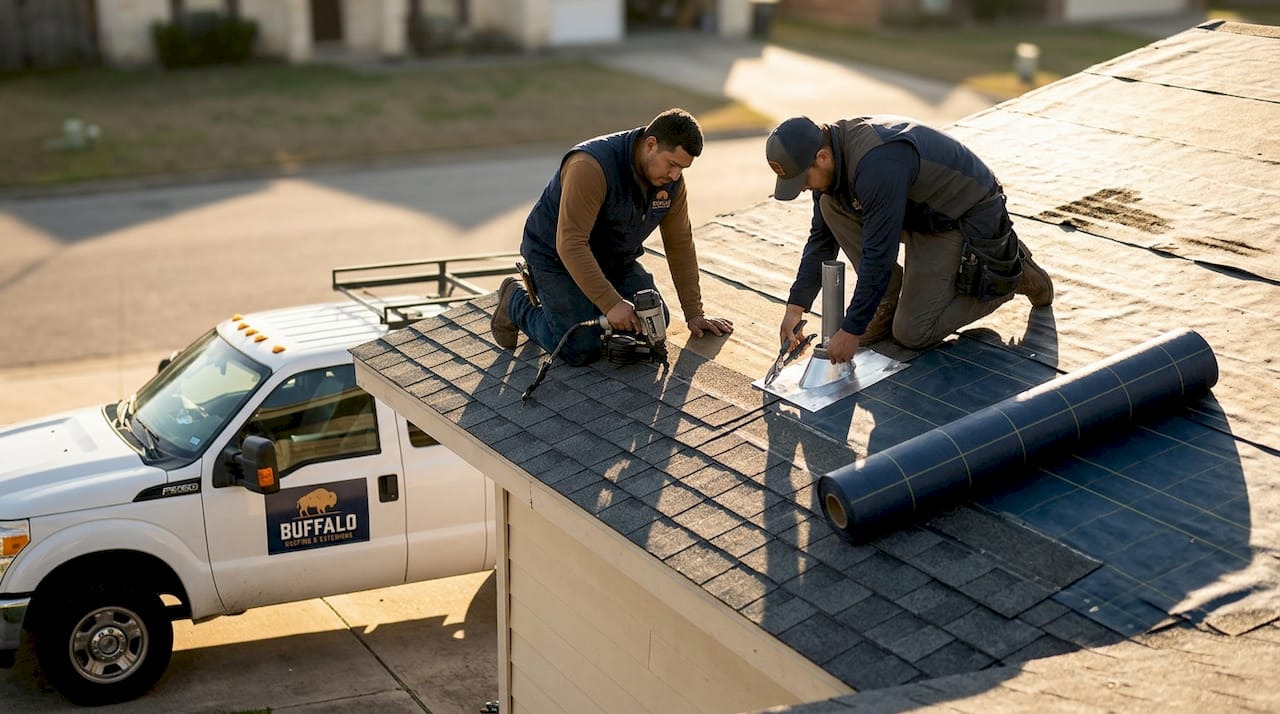
For commercial property owners, flat roof options have advanced significantly in recent years. TPO membranes with heat-welded seams offer superior waterproofing compared to older built-up roofing systems, and reflective coatings can reduce cooling costs by a measurable amount during South Texas summers.
Key weather protection upgrades to discuss with your contractor:
- Secondary water barrier under the primary roofing material to stop leaks if the outer layer is breached
- Hurricane straps and clips to reinforce the connection between the roof deck and wall framing
- Impact-resistant shingles rated Class 3 or Class 4 for hail resistance
- Sealed roof deck with self-adhering underlayment to prevent water infiltration during high-wind events
Storm damage restoration and exterior renovations
Beyond basic roofing, storm recovery and renovation are critical for coastal Texas properties. After a major storm event, the process of getting your property back to full function involves more than just patching holes. A structured restoration approach protects your investment and makes the insurance process far smoother.
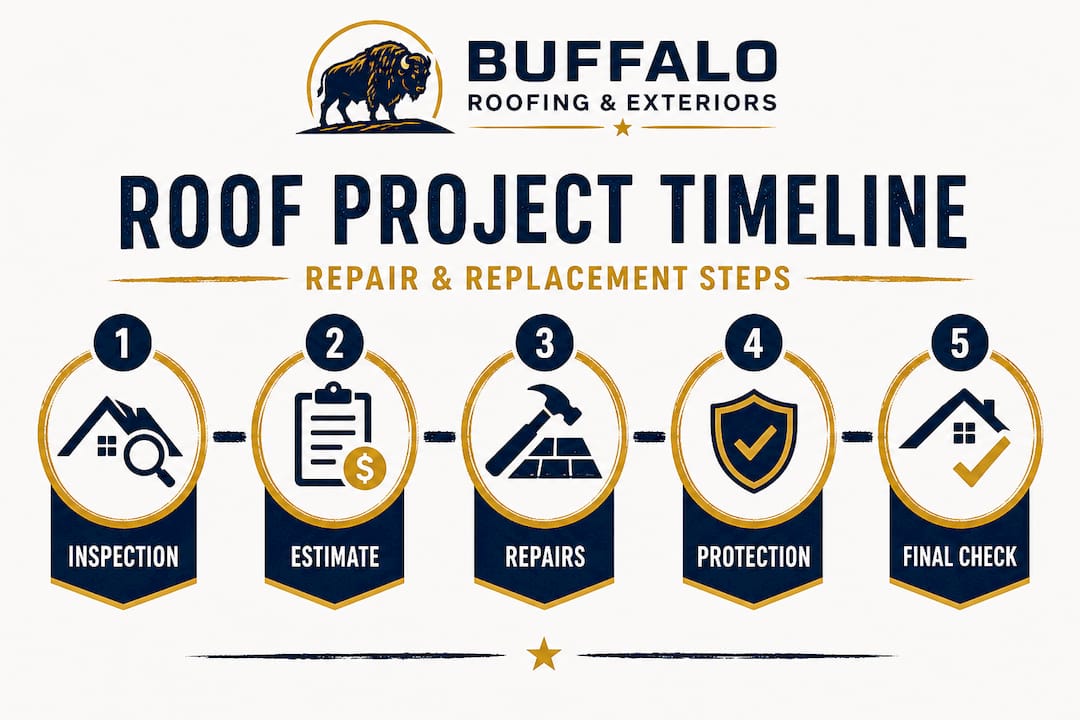
The storm damage restoration process, step by step:
- Immediate safety assessment. After a storm passes, check for downed power lines, structural instability, or active water intrusion before entering your property. Safety comes first.
- Document everything. Take photos and videos of all visible damage before any cleanup or temporary repairs begin. Date-stamp your images. This documentation is essential for your insurance claim.
- Contact your insurance company. File your claim promptly. Most policies have time limits on storm damage claims, and delays can complicate or reduce your payout.
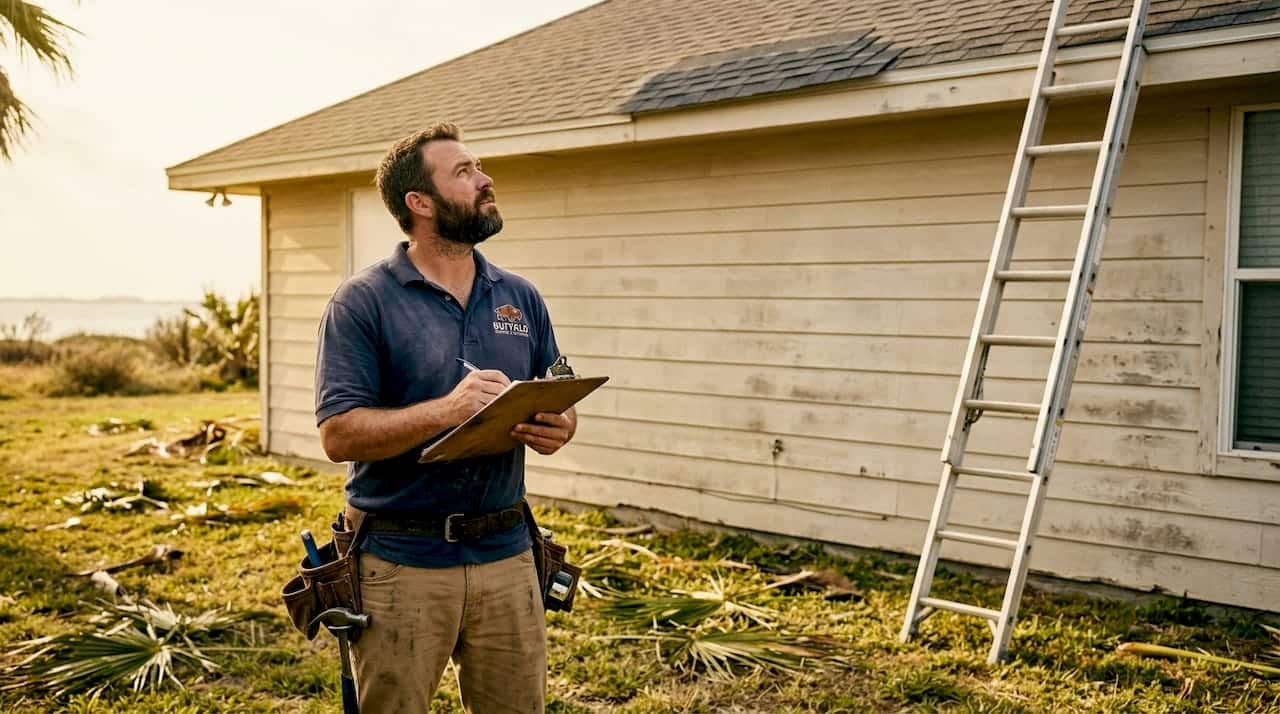
- Schedule a professional inspection. A qualified contractor will identify damage that isn’t visible from the ground, including lifted flashing, cracked decking, and compromised seals around penetrations.
- Emergency mitigation. Temporary tarps, board-ups, and waterproofing stop ongoing damage while permanent repairs are planned. This step is critical to prevent secondary damage from rain.
- Permanent repair or replacement. Once the insurance adjuster has completed their assessment, your contractor can begin the full scope of work with proper materials and permits.
- Final inspection and documentation. A reputable contractor will walk you through the completed work and provide documentation for your records and for future insurance purposes.
The storm damage repair Texas homes process we follow at Buffalo Roofing & Exteriors is designed to reduce stress and keep your project moving efficiently from the first call to the final inspection.
Pro Tip: Document all storm damage with photos and written notes immediately after the storm. A timestamped photo taken the day after the storm is far more useful to your insurance adjuster than one taken a week later.
Exterior renovations go hand in hand with storm recovery. When you’re already replacing damaged siding or repairing a deck after a storm, it’s the perfect opportunity to upgrade to more resilient materials. Fiber cement siding, for example, resists moisture, insects, and impact far better than traditional wood. Composite decking materials handle the humidity and UV exposure of coastal Texas without warping or rotting the way pressure-treated lumber eventually does.
Renovation options that add value and protection:
- Fiber cement or vinyl siding for moisture and impact resistance
- Composite or PVC decking for durability in high-humidity environments
- Impact-resistant or double-pane windows to reduce wind pressure and improve energy efficiency
- Seamless gutters to manage the heavy rainfall that accompanies Gulf storms
- Soffit and fascia replacement to eliminate entry points for moisture and pests
A fresh perspective: What most contractors don’t tell you
Having covered the practical side, here’s what most guides miss and what we’ve learned first-hand working in coastal Texas for years.
The roofing industry has a short-term problem. Many contractors are incentivized to complete jobs quickly and move on. That means they’ll fix what’s visibly broken and walk away, leaving underlying issues that will cost you more money in two or three years. We’ve seen it repeatedly: a homeowner gets a “repaired” roof after a storm, only to call us two years later with the same leak in a different spot because the original contractor never addressed the compromised decking beneath the shingles.
Transparent pricing is rarer than it should be. Many contractors bundle everything into a single number because it’s easier to sell and harder for you to question. Insist on line-item estimates. When you can see exactly what you’re paying for materials, labor, and disposal, you can make informed comparisons and catch inflated costs before you sign anything.
The best investment you can make isn’t a new roof. It’s a relationship with a contractor who will inspect your property regularly, catch problems early, and give you honest advice about what needs immediate attention versus what can wait. That kind of relationship saves money over time because you’re never caught off guard by a failure that’s been building for years.
Regular inspections are where the real savings live. Most visible roof failures, like sagging sections, widespread granule loss, and interior leaks, are the end result of a process that started months or years earlier. A professional inspection catches the early signs: minor flashing separation, small areas of granule loss, soft spots in the decking. Addressing these issues costs a fraction of what a full repair or replacement costs after the damage has progressed.
You can read more about making the right call on roof repair advice before a small problem becomes a large one.
Connect with Portland’s trusted roofing and restoration experts
Ready to protect your property and improve its value? Taking the next step is straightforward when you know where to turn.
At Buffalo Roofing & Exteriors, we serve Portland, TX homeowners and commercial property owners with roofing inspections, storm damage restoration, and exterior renovations built for coastal conditions. Browse our roofing image examples to see completed projects similar to yours, or work through our storm restoration guide to understand what the recovery process looks like from start to finish. If you’re still deciding on materials, our roof materials resource breaks down every major option with honest pros and cons. Contact us today for a free estimate and let’s build a plan that keeps your property protected through whatever the Gulf Coast throws at it.
Frequently asked questions
What are the most durable roofing materials for coastal Texas homes?
Metal, asphalt, and composite shingles are proven to withstand coastal weather in Texas and offer longer lifespans than standard materials in high-humidity, high-wind environments.
How quickly should I schedule repairs after a storm?
Immediate inspection is recommended after storm damage to prevent further deterioration and to support a faster, more complete insurance claim.
Do roofing contractors in Portland, TX offer warranties?
Most reputable contractors provide both material and workmanship warranties; always request the details in writing before signing any contract.
What exterior renovation options can increase my property’s value?
Siding and decks boost value and storm protection, and energy-efficient windows add curb appeal while reducing utility costs in South Texas’s intense climate.
How can I verify a roofing contractor’s credentials in Portland, TX?
Check for local licensing and reviews along with insurance certificates and project references before signing any agreement.