

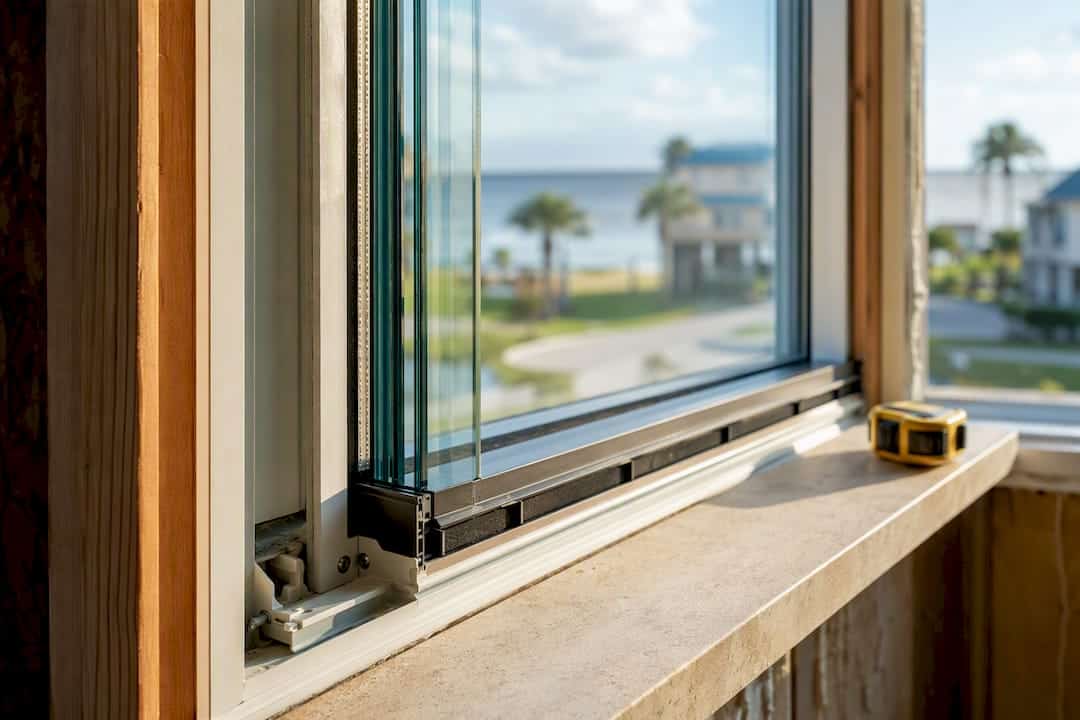
Expect $15 to $400 per window for basic sealing and treatments, roughly $250 to $1,200 per window for interior acoustic inserts, and $1,000 to $3,500 or more per window for full sound-focused replacement, according to aggregated 2026 pricing guides. A home with multiple windows can cost a few thousand to several tens of thousands of dollars depending on the chosen soundproofing method and product types. Method, glass type, and labor complexity decide where you fall in that range.
TL;DR:
- Installing basic soundproof treatments like weatherstripping or curtains costs $15 to $400 per window and provides limited noise reduction.
- Interior acoustic inserts range from $250 to $1,200 per window and are effective if existing frames are sound, while storm and retrofit attachments cost similar but add exterior noise reduction benefits.
- Full replacement windows cost between $1,000 and $3,500 or more, with laminated glass and larger air gaps delivering the best low-frequency noise performance.
- Sound ratings such as OITC are crucial; aim for at least 30 to 35 if exterior noise like traffic is the main concern.
- Structural issues like rotted frames require full replacement rather than inserts, and site assessments should include detailed, itemized quotes to account for possible hidden damages.
Table of Contents
- How Much Do Soundproof Windows Cost by Type?
- Which Soundproofing Method Actually Works Best?
- What Factors Actually Change Your Soundproofing Quote?
- How Do You Choose Between Inserts and Replacement?
- What Does a Professional Window Assessment Include?
- Does Soundproofing Actually Pay Off?
- Ready to Get a Real Quote on Your Windows?
- Sources
How Much Do Soundproof Windows Cost by Type?
The number on a quote depends entirely on what’s actually being installed, and quotes that look wildly different can be describing three completely different products.
Budget treatments and sealing sit at the bottom of the price ladder, often between $15 and $400 per opening. This category covers weatherstripping, acoustic caulk, door sweeps for window tracks, and heavy soundproof curtains. These reduce rattling and close small air gaps, but they don’t touch the glass itself, which is where most airborne noise gets through. Think of them as a stopgap, not a fix.
Interior acoustic inserts run $250 to $1,200 per window installed. These are a second pane, typically laminated glass in its own frame, mounted a few inches inside your existing window on tracks or magnetic seals. Custom sizing adds cost for bay windows or oddly proportioned openings, and lead times commonly run two to six weeks since most are built to measure.
Storm-style and retrofit attachments occupy similar territory to inserts but mount closer to the exterior. The Department of Energy notes that modern low-e storm windows can deliver energy savings comparable to full replacement at roughly a third of the cost, and the same attachments often cut noticeable street noise as a side benefit. A retrofit case study in Provo, Utah found material costs near $19.80 per square foot and installation around $12.60 per square foot for a comparable low-e panel system, though payback varies by building.
Full acoustic window replacement is the most expensive and most permanent option, typically $1,000 to $3,500 or more per opening installed. Angi’s pricing data puts the broader replacement market at $300 to $1,500 per window with a national average near $900, but that average includes plenty of standard energy-efficient units that aren’t built for acoustic performance. True sound-rated replacements with laminated interlayers and wider air gaps cost more because the glass, the frame seals, and the installation all have to work together as a rated system.
A few cost drivers show up in almost every quote:
- Laminated or acoustic-interlayer glass costs more per square foot than standard double-pane units.
- Custom frame colors, finishes, or non-standard shapes add a line item most buyers don’t anticipate.
- Access charges apply for second-story or higher installations, sometimes requiring scaffolding or lift rental.
- Permits are occasionally required for full-frame replacement, depending on your local building code, and add a modest fee on top of materials and labor.
Which Soundproofing Method Actually Works Best?
Not every “soundproof” product performs the same against the noise you’re actually dealing with, and the rating most manufacturers advertise doesn’t always tell you what you need to know.
Windows carry two different sound ratings. STC (Sound Transmission Class) measures performance against speech frequencies. OITC (Outdoor Indoor Transmission Class) measures performance against lower-frequency exterior noise, like traffic, trucks, and trains. If your problem is a busy road or a flight path, OITC is the number that matters, and a window with a high STC can still let plenty of rumble through. Aim for an OITC around 30 to 35 or higher if road noise is your main complaint.
Here’s how the common methods stack up against each other:
- Inserts work well when your existing frame is sound. They add a second glazing layer and an air gap without touching the original window, and they’re fully removable, which matters for renters.
- Laminated glass with a varied pane thickness and a wide air gap consistently outperforms symmetric triple-pane glass for low-frequency noise, because matched panes tend to resonate at the same frequencies and cancel out the benefit of the extra layer.
- Full replacement becomes necessary once a frame shows rot, repeated seal failure, or won’t operate properly. No insert or storm panel fixes a structural problem underneath it.
- DIY treatments (curtains, caulk, weatherstripping) buy modest, immediate relief for under $400 but won’t get you into insert or replacement territory for noise reduction.
Durability and upkeep differ by method too. Inserts need periodic seal checks but leave your original window untouched for ventilation. Full replacements eliminate that maintenance layer entirely but cost more upfront and are permanent.
Pro Tip: Ask any installer for the OITC rating of the complete installed assembly, not just the glass sample. Lab-tested glass numbers drop once real hardware, frames, and perimeter seals are factored in, so a rating quoted for glass alone can overstate what you’ll actually experience.
What Factors Actually Change Your Soundproofing Quote?
Two identical-looking windows can price hundreds of dollars apart once you account for a handful of variables installers weigh every time they write an estimate.
- Size and shape: bay, bow, and picture windows need custom glass and framing, which raises both material and labor cost compared to a standard double-hung unit.
- Glass selection: laminated interlayers, thicker panes, and wider air gaps all cost more than standard glazing, but they’re also what actually moves the needle on noise reduction.
- Frame condition: a sound frame supports an insert; a rotted or failing frame forces full replacement, which brings in carpentry and trim work most insert jobs skip entirely.
- Access and complexity: second-story and multi-story installs sometimes require scaffolding, and permit requirements vary by municipality and project scope.
- Project scale: contractors frequently discount per-unit pricing on multi-window jobs, and mixing inserts on sound frames with replacement on damaged ones often stretches a whole-house budget further than choosing one method for every opening.
A field pricing rule worth knowing: expect roughly a $300 to $600 premium per opening for full-frame replacement over an insert at comparable window quality. That gap is the carpentry, trim, and frame labor an insert never touches.
How Do You Choose Between Inserts and Replacement?
Start with the frame. If it’s sound, structurally solid, and operates correctly, an insert is almost always the lower-cost, faster path to quieter rooms. If it shows rot, repeated seal failure, or won’t stay closed, replacement becomes the only real fix, since no acoustic product performs well mounted to a compromised frame.
Ask every bidder the same three questions:
- What is the OITC rating of the complete installed assembly, and can you provide test documentation for it?
- What does the written warranty cover, and for how long?
- What happens to the price if hidden rot or frame damage turns up once work starts?
Walk away from any bidder who skips an on-site visit, gives a vague or unwritten warranty, quotes far below every other estimate you’ve collected, or won’t put a contingency clause in writing for frame surprises.
Pro Tip: Build in a 10 to 15% budget contingency on any full-frame replacement project. Older homes especially tend to reveal water damage or rot once trim comes off, and that discovery shouldn’t blow your whole budget plan.
What Does a Professional Window Assessment Include?
A proper site visit checks frame condition, takes exact measurements, and documents a specific recommendation, insert or replacement, with an itemized written quote you can actually compare against other bids. That itemization should separate materials, labor, and any anticipated frame or trim work so nothing shows up as a surprise later.
Buffaloroofingandexteriors handles window replacement as part of its broader exterior services, alongside siding, roofing, and storm damage repair, with financing options and written warranties available for qualifying projects. Understanding how window frames affect both energy and noise performance helps you evaluate any quote you receive, whether it comes from Buffaloroofingandexteriors or another contractor.
- DIY inserts make sense for renters or anyone testing whether sound is even the main issue before spending on replacement.
- Call a professional once rot, drafts, or repeated seal failure show up. That’s a structural problem, not an acoustic one.
Does Soundproofing Actually Pay Off?
Replacement windows tend to pay back through comfort and energy use, not full cost recovery at resale. That’s fine. If a bedroom is unusable because of traffic noise, that’s a quality of life problem worth solving on its own terms, and the DOE’s guidance on storm windows and low-e attachments backs treating retrofit options as genuinely cost-effective, not just a cheaper compromise.
Full replacement earns its keep more clearly when it’s part of a whole-house exterior upgrade, when curb appeal or a sale is on the horizon, or when frame failure leaves no other option. For a realistic read on what you’d recover at resale, this breakdown of window replacement ROI is worth a look before you commit.
— Results
Ready to Get a Real Quote on Your Windows?
You’ve seen the ranges. What actually determines your number is a site visit, not a guess from a blog post. A professional contractor typically checks your frames, measures every opening, and provides an itemized quote instead of a ballpark estimate, so you know exactly what you’re paying for before any work starts.

Window replacement is commonly included in exterior services lineups, alongside siding, roofing, and storm damage repair, with financing options and written warranties sometimes available on qualifying projects. If you’re weighing inserts against full replacement, or you’ve got a frame you suspect is further gone than it looks, bring photos and any past repair history to your appointment. It speeds up the assessment and gets you a more accurate number the first time. You can also pair a window project with broader exterior work using this homeowner’s guide to planning exterior renovations if you’re tackling more than one upgrade at once. For a whole-room approach to noise, interior door solutions from One Day Doors & Closets complement window work well.
Start your window replacement estimate today and get a written, itemized quote based on an actual inspection of your home.
Sources
- Soundproof Windows Cost: 2026 Project Price Guide
- How Much Do Soundproof Windows Cost? 2026 Data
- Hi-R low-e window retrofit system — full report (LBL)