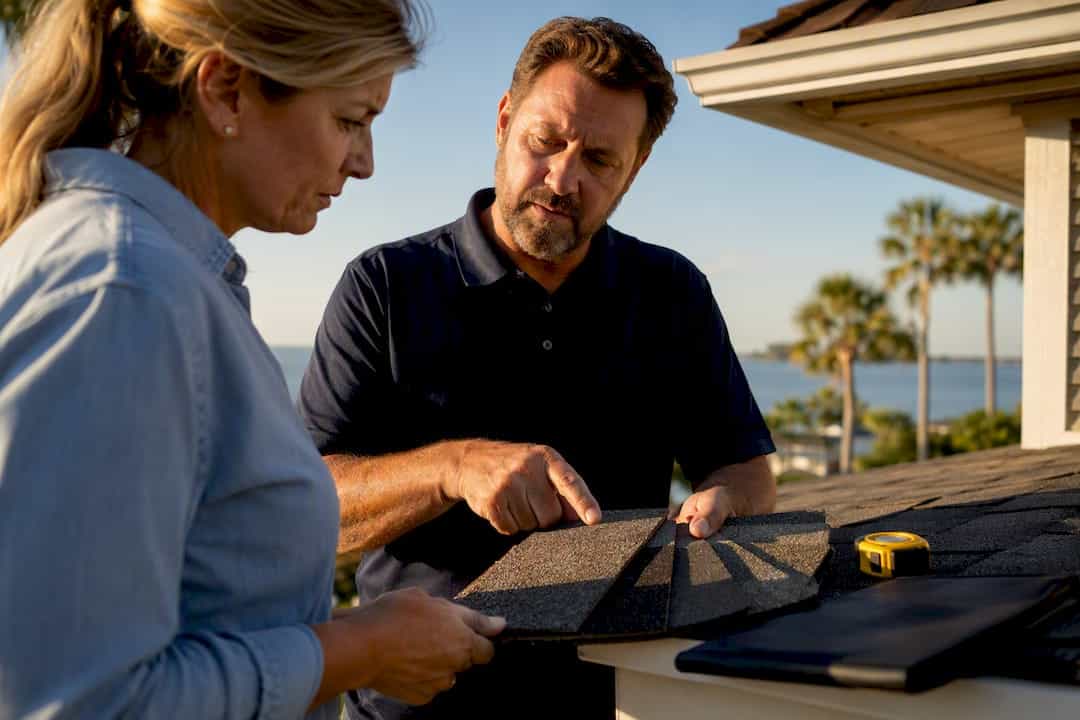
Most homeowners associations require written approval before you replace a roof or change its color, material, or profile, even if the roof itself is old and clearly needs work. The single most important next move is to pull your CC&Rs and architectural guidelines, build a complete application package, and get that package to the architectural review committee in writing before you sign a contractor. Skip that step and you risk a delay turning into a fine or an order to redo the work.
TL;DR:
- Submitting a complete roof application package with all required documents can significantly reduce approval time and prevent delays.
- Many HOAs restrict roof materials to a limited list, and deviations in color or material often trigger rejection unless justified or approved through a variance.
- Getting written confirmation that your application is complete starts the statutory review clock, so request it immediately upon submission.
- Approved roof materials are usually specified with exact color codes, samples, and contractor credentials, while incomplete or poorly documented requests face higher rejection risk.
- Engaging an experienced contractor who provides detailed documentation, including scaled diagrams and product sheets, can streamline approval and support insurance claims.
Table of Contents
- What HOAs Can and Cannot Require About Roofs
- Where to Find Your Rules and How to Read Them
- How Does the HOA Roof Approval Process Work Step by Step?
- What Goes Into a Complete Roof Application Package?
- Handling Approvals, Conditions, Denials, and Appeals
- Emergency Repairs and Coordinating Insurance Claims
- Common Causes of Delay or Denial and How to Avoid Them
- How a Professional Roofer Supports Your HOA Approval
- What Should You Do First to Get Your Roof Approved?
- Where to Find HOA Approval Templates and State Rules
- Sources
What HOAs Can and Cannot Require About Roofs
Your CC&Rs (Covenants, Conditions, and Restrictions) and architectural guidelines are the controlling documents. They set the rules for anything visible from the street or a neighboring lot, and roofs almost always qualify. A well-written set of guidelines typically spells out approved materials, acceptable color families, maximum profile height, and sometimes even which contractors or manufacturer lines are pre-approved.
What that means in practice:
- Materials: Many associations restrict roofs to a narrow list of types such as asphalt shingles, clay tile, or standing seam metal in specific finishes, and reject anything outside that list without a variance.
- Color: Boards usually maintain an approved palette or require samples matched against neighboring homes.
- Profile and pitch: Some guidelines regulate visible roof lines, particularly in communities with a uniform architectural style.
- Contractor rules: Some HOAs require licensed, insured contractors and may ask for proof before approval.
A like-for-like repair, patching a few damaged shingles with the identical product, usually does not trigger review. A full replacement or any visible material or color change almost always does. Community Associations Institute guidance stresses that architectural review committees, or ARCs, should apply objective, written criteria from those governing documents rather than subjective taste, and that denials without a written basis often invite disputes. It is also worth knowing that some state laws limit what an HOA can restrict. Solar panel installations and certain accessibility modifications are common examples where state statutes override an association’s general preferences. Check your state’s specific rules before assuming a rejection is final.
Where to Find Your Rules and How to Read Them
Start with your HOA’s online portal or resident dashboard, most management companies post CC&Rs, design guidelines, and the architectural modification request (AMR) form there. If you cannot find them online, call the management company directly or request copies at the county recorder’s office, since CC&Rs are typically recorded against the property. Neighbors who have already been through a roof replacement are also a fast, informal source for the real-world version of how the process actually runs.
When you read the documents, copy down these specific items:
- The exact name of the application form (often called an AMR, ACC request, or architectural review application).
- The phrase defining a “complete application”, this determines when your review clock actually starts.
- The stated review timeline, commonly 30 to 60 days, and whether your state has a “deemed approved” statute if the board misses that deadline.
- The appeal process and deadline for challenging a denial.
- Submission method: mail, portal upload, or in person, and who confirms receipt.
Recording the completeness date matters more than most homeowners realize. An incomplete application typically does not start the statutory review clock, so a vague acknowledgment email is not enough. Ask, in writing, for confirmation that your submission is complete.
How Does the HOA Roof Approval Process Work Step by Step?
Think of this as a 12 week roadmap, though plenty of straightforward requests move faster.
1. Weeks 1 to 2: Confirm requirements and pick materials. Reread your architectural guidelines for approved roofing categories, then narrow your material and color choice to something that already matches or closely resembles what is allowed. This is also when you should request quotes from two or three contractors and ask each for their license number, proof of insurance, and manufacturer product data sheets.
2. Weeks 2 to 3: Assemble and submit the application. Complete the AMR form, attach material specs, physical samples if required, a site plan or roof diagram, and your contractor’s credentials. Submit through whatever method your HOA specifies, and immediately request written confirmation that the package is complete. Cedar Management Group notes that a standard complete package includes a project description, material specifications with samples, a site or roof plan, and contractor license and insurance proof, and some communities also require a signed neighbor acknowledgment.
3. Weeks 4 to 8: ARC and board review. The architectural review committee evaluates your submission against the written guidelines and issues one of four outcomes: approval, conditional approval, denial, or a request for more information. RoofVista’s timeline model for HOA roof replacements generally puts submission in weeks 1 to 3, committee review in weeks 4 to 8, and final approval landing somewhere between weeks 6 and 12. Nonstandard materials or color variances often need full-board sign-off rather than committee approval alone, which can push the timeline to 60 to 90 days.
4. Weeks 6 to 12: Written approval and scheduling. Once approved, you should receive a letter specifying the approved materials, any conditions, and an expiration date, most approvals lapse if work does not start within a set window, often six months to a year. Only after you have that letter in hand should you pull municipal permits and schedule the crew. Our guide to the roof replacement process walks through what happens once permits and scheduling begin.
Pro Tip: Request written confirmation of “complete application” status the same day you submit, even if it means a follow-up email. That single sentence in writing is what starts your review clock and protects you if the board drags past its deadline.
What Goes Into a Complete Roof Application Package?
Incomplete packages are the single biggest cause of delay, and the fix is simple: assemble everything before you submit rather than trickling in documents as the committee asks for them.
Your package should include:
- The completed AMR or architectural modification form with a clear project description.
- A scaled site plan or roof diagram showing the affected area.
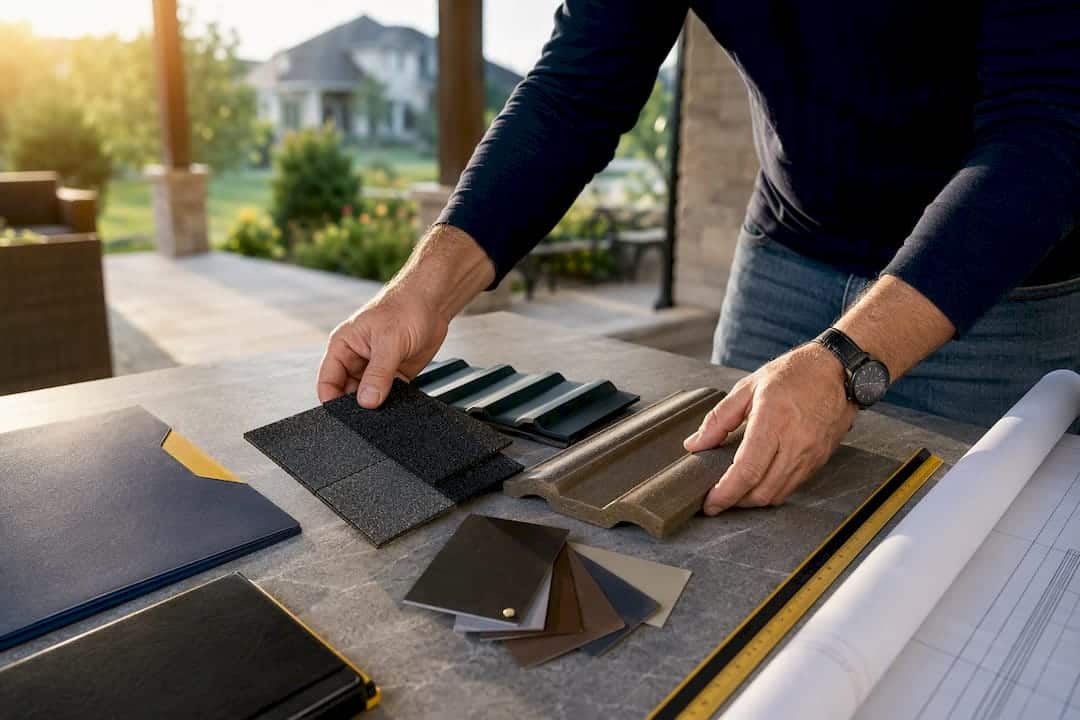
- Manufacturer product data sheets, exact color codes, and a physical sample or swatch when required.
- A signed contractor proposal listing license number, proof of insurance, and a projected work schedule.
- Current photos of the existing roof from multiple angles.
- A copy of your municipal permit application, if your jurisdiction requires one before work starts.
- Signed neighbor acknowledgment forms, if your governing documents call for them.
- A short cover letter explaining the project and, if you are requesting a variance, why the proposed material is a reasonable equivalent to what is already approved.
Reviewing our roof design guide before you finalize material choices can help you land on an option that already fits common HOA palettes, which saves a round of back and forth with the committee.
Handling Approvals, Conditions, Denials, and Appeals
A proper approval letter states the exact materials and colors approved, any conditions attached (matching a specific shingle line, for instance), and an expiration date for starting work. If your approval comes with conditions, respond in writing confirming you will meet them, and keep photos documenting compliance once the work is done.
If you get a denial, here is what to do:
- Request the specific CC&R or guideline provision the committee relied on. A denial that only cites vague “community character” language without a written citation may be arbitrary, and Hoa recommends demanding that citation before deciding whether to appeal.
- Gather evidence of comparable approvals elsewhere in the community, if a neighbor has the same material approved, that is relevant to your appeal.
- File your appeal to the full board within whatever deadline your governing documents state, and attend the hearing in person if you can. Showing up with material samples in hand tends to help.
- If the internal appeal fails and you believe the denial violates your state’s HOA statutes, consider a formal complaint through your state’s regulatory channel or a consultation with an attorney who handles community association law.
Pro Tip: Bring the same physical sample to your appeal hearing that you submitted with your original application. Committees remember what they saw in person far better than what they read in a file.
Emergency Repairs and Coordinating Insurance Claims
Storm damage that causes active water intrusion is different from a routine replacement, and most CC&Rs recognize that. You do not need to wait for committee approval before tarping a hole or making a temporary repair to stop ongoing damage, but you do need to document everything.
Follow this sequence:
- Photograph the damage immediately, before and during any temporary fix.
- Notify the HOA in writing within a day or two that an emergency repair was made and why, RoofVista’s guidance on emergency provisions recommends acting to prevent further loss first, then submitting a full AMR package promptly afterward.
- Once your insurance adjuster completes an inspection, submit that report along with your photos as part of your formal application.
- If your insurance settlement only covers a material that does not match HOA-approved options, raise that directly with the committee, boards often grant a variance when a homeowner can show the insurance payout drives the material choice.
- Keep dated copies of every email, photo, and form. If a dispute arises later, that paper trail is what protects you.
Our storm damage restoration guide covers documentation strategies in more depth if you are dealing with an active claim.
Common Causes of Delay or Denial and How to Avoid Them
Most rejected or stalled applications trace back to the same handful of mistakes:
- Missing samples or specs. A package without a physical color sample or manufacturer sheet often gets bounced back, restarting your review clock.
- Nonstandard materials with no justification. Requesting a material outside the approved list without an equivalency argument is close to an automatic denial.
- Bad timing. Submitting right before a holiday break or outside your ARC’s regular meeting schedule can add weeks with no fault on your part.
- Weak contractor paperwork. Missing license numbers, expired insurance certificates, or no permit application attached are all easy fixes that homeowners overlook.
Pro Tip: Call the management company and ask when the ARC actually meets before you submit. Timing your application two weeks ahead of a scheduled meeting, instead of right after one, can shave a full month off your wait.
How a Professional Roofer Supports Your HOA Approval
A contractor who has been through this process before can shorten your timeline considerably, mostly by handing you documents you would otherwise have to chase down yourself.
Look for a contractor who provides:
- A detailed written scope of work matched to your HOA’s material categories.
- Manufacturer product data sheets with UL or ASTM ratings attached.
- Physical samples ready to bring to an ARC meeting.
- A current certificate of insurance and verifiable license number.
- A scaled roof diagram or site plan, prepared to the specifications your committee expects.
RoofVista’s research on contractor documentation found that scaled diagrams, delivered samples, and manufacturer sheets with recognized ratings substantially cut down requests for additional information from review committees. Some professional roofing contractors prepare that kind of documentation as a standard part of project planning, and can attend an ARC meeting if your community requires contractor presence. That same paperwork doubles as support for an insurance claim, since adjusters and boards are often asking for overlapping proof.
What Should You Do First to Get Your Roof Approved?
Pull your CC&Rs today and read the roofing section twice, once for materials and once for the submission process itself. Build your complete package before you talk to a single contractor, and get written confirmation the moment your HOA calls it complete. If your project involves any material that deviates from what is already approved, bring in a contractor who has navigated HOA review before rather than learning the hard way through a denial. Keep every email and photo. Paper trails win appeals.
— Results
Where to Find HOA Approval Templates and State Rules
For a deeper procedural breakdown, the Cedar Management Group guide to architectural approval walks through typical application requirements in more detail, and Community Associations Institute publishes broader guidance on how ARCs should structure fair review. Check your own state’s statutes for “deemed approved” language, since the exact deadline and remedy varies by jurisdiction, and ask your management company for a sample AMR form you can adapt as your request letter template.
Ready to start your application with contractor documentation already in hand? Buffaloroofingandexteriors can prepare the scope, samples, and certified proposal your ARC needs to move your request through on the first pass, serving homeowners from Corpus Christi to San Antonio and Victoria.
Sources
- HOA architectural approval process | Cedar Management Group
- CAI guidance on architectural review (Community Associations Institute)
- HOA Architectural Review Process | AffordableHOA
- HOA roof replacement guide: approval & rules | RoofVista