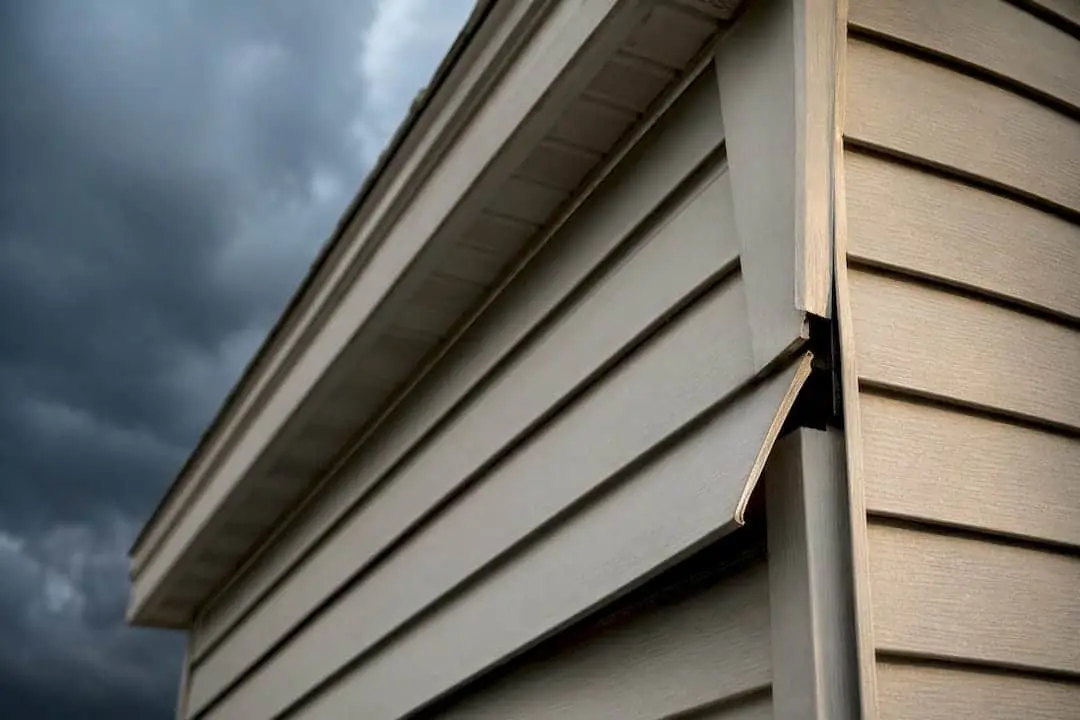
Exposed housewrap or sheathing after a storm means water is already getting behind your wall, and that’s an emergency. If the panels are loose or lifted but still cover the drainage plane, it’s usually cosmetic and can wait a day or two. Either way, photograph everything with a timestamp, cover any exposed areas to keep water out, and call a contractor or your insurer.
TL;DR:
- Exposed housewrap or sheathing after a storm indicates a true envelope failure, requiring urgent inspection and possible professional repair.
- Loose or lifted panels might be cosmetic if the drainage plane remains intact, but any signs of exposed sheathing or cracked panels signal structural damage.
- Single cracked vinyl panels are simple to repair with proper tools, but extensive damage, exposed sheathing, or soft spots require professional intervention.
- Insurance coverage often excludes pre-existing deterioration; timely documentation and clear evidence are essential for a successful wind damage claim.
- Routine maintenance checks on fasteners, caulk, and tree limbs can significantly reduce the risk of wind-related siding damage.
Table of Contents
- How Do You Secure Missing or Hanging Vinyl Siding After a Storm?
- What Should You Check to Tell Cosmetic Damage From Structural Damage?
- Can You Repair a Single Vinyl Panel Yourself, or Do You Need a Pro?
- Will Homeowners Insurance Cover Wind Damage to Vinyl Siding?
- What Maintenance Reduces the Risk of Wind Damage to Siding?
- Does Wind Speed or Storm Type Change How Vinyl Siding Fails?
- What Happens if Wind Damage to Siding Goes Unrepaired?
- How Does Buffalo Roofing & Exteriors Handle Wind-Damaged Siding Calls?
- Need Emergency Siding Help Right Now?
- Sources
How Do You Secure Missing or Hanging Vinyl Siding After a Storm?
The first hour after a storm sets the tone for everything that follows. Move fast, but move safely.
- Stay grounded and scan first. Walk the perimeter from a safe distance. Skip the ladder if winds are still gusting, and watch for downed power lines, loose gutters, or panels still rattling in the wind.
- Photograph before you touch anything. Wide shots, close-ups, and anything with a visible timestamp. This record matters more than you’d think once an adjuster gets involved.
- Cover exposed housewrap immediately. A heavy-duty tarp works for smaller gaps; for larger breaches, screw plywood directly into the sheathing (not just the siding) so it holds through follow-up wind.
- Re-hook panels that are simply unlatched. Wind often causes one panel to pop loose at the bottom lock, which can cascade into the panel above it, since vinyl siding fails sequentially once one panel unlatches. Pushing a still-intact panel back into its track is fine as a stopgap.
- Log every call you make. Note who you contacted, when, and what they told you. This becomes part of your claim file.
Anything beyond a quick tarp or a re-hooked panel is where DIY should stop.
Pro Tip: A tarp secured only at the edges will tear loose in the next gust. Sandwich the edges between furring strips and screw through both layers into solid framing, not just into the siding itself.
What Should You Check to Tell Cosmetic Damage From Structural Damage?
Not every dented or displaced panel means trouble. The real question is whether the building envelope, the layer that actually keeps water out, has been breached.
Walk the damaged wall section and check for:
- Exposed housewrap or bare sheathing anywhere along the wall
- Panels hanging loose, missing entirely, or visibly cracked and brittle
- Multiple pulled or popped fasteners in one area, not just one
- Staining, dark patches, or soft spots on visible sheathing
- Gaps around window trim, vents, or other penetrations that weren’t there before
Inspectors make this call by checking whether the housewrap or sheathing is actually exposed, because exposure of either one signals a real envelope failure, not a surface issue. Before you attempt any repair, flex the panels next to the damaged one. Vinyl gets brittle with age and sun exposure, and a panel that cracks during a routine repair often means your siding is due for a broader look, not just a patch.
If you spot sheathing rot, several failed fasteners clustered together, or any sign the wall itself has shifted, stop documenting and start calling a contractor. That’s outside what any repair kit can fix.
Can You Repair a Single Vinyl Panel Yourself, or Do You Need a Pro?
A single cracked or punctured panel is genuinely one of the more forgiving repairs in home maintenance. It’s repairable one panel at a time with the right tools, and the process follows a predictable sequence.
- Unlock the panel directly above the damaged one using a zip tool, sliding it along the seam to release the lock.
- Pull the nails from the damaged panel and slide it out from under the panel above.
- Slide the replacement panel into place, matching the lock profile at the bottom.
- Nail it back in, but leave a 1/16-inch gap between the nail head and the vinyl so the panel can expand and contract with temperature swings. Drive nails flush and you’ll get buckling or cracking within a season.
- Re-lock the panel above and check that it seats evenly across its full length.
Before any of that, though, check what’s underneath. If housewrap is torn or missing, patch or replace it first, and look at the sheathing for soft spots or staining. Covering damaged housewrap with a fresh panel just hides a problem that keeps getting worse.
Hand this off to a professional when you’re dealing with:
- Exposed sheathing that shows moisture staining or softness
- More than one or two panels failing across a wall section
- Fasteners that pulled straight through the vinyl instead of releasing cleanly
- Any repair that requires opening up housewrap or flashing around windows and doors
A professional siding repair typically includes replacing compromised housewrap, checking sheathing moisture content, and correcting the attachment system, not just swapping the visible panel. That’s the difference between a repair that lasts and one that fails again in the next storm.
Will Homeowners Insurance Cover Wind Damage to Vinyl Siding?
Most standard homeowners policies, including the common HO-3 form, cover siding damage from sudden events like windstorms and hail, but they draw a hard line at wear and neglect. A panel that cracked because it was already brittle from 15 years of Texas sun probably won’t get the same treatment as one that blew off in a documented storm.
Two things trip up homeowners every time they file:
- Matching coverage isn’t automatic. Some policies include matching siding coverage that pays to replace undamaged sections when your exact vinyl color or profile is discontinued, but plenty of policies don’t, so check yours before assuming a full-wall replacement is covered.
- Percentage deductibles can wipe out small claims. Many policies apply a wind/hail deductible calculated as a percentage of your dwelling value rather than a flat dollar figure.
Statistic Callout: A 2% wind/hail deductible on a $300,000 home means the first $6,000 of damage comes out of your pocket. A few damaged panels rarely clear that bar, which is why checking your declarations page before calling an adjuster matters more than the repair itself.
Adjusters also weigh whether damage looks storm-caused or long-developing, so maintenance records and dated photos of your siding’s condition before the storm can strengthen your case. Keep contractor estimates, a written timeline, and every photo you took in one file.
What Maintenance Reduces the Risk of Wind Damage to Siding?
Most wind failures start small: one loose fastener, one gap at a corner trim, one branch that finally lets go in a gust. A short seasonal check catches these before a storm turns them into a bigger repair.
- Check the starter strip at the bottom of the wall; if it’s loose, every panel above it is more likely to unlatch in wind.
- Look for fasteners backing out or corners pulling away from trim.
- Inspect caulk around windows, doors, and vent penetrations, and re-caulk anywhere it’s cracked or missing.
- Trim tree limbs that hang within falling distance of the roofline before storm season starts.
- Secure or store outdoor furniture, grills, and anything else that can become airborne debris.
Pro Tip: If more than a few panels on one wall have gone brittle or badly faded, patching them one at a time gets expensive fast. At that point, a broader siding replacement usually costs less over time than repeated single-panel repairs.
Does Wind Speed or Storm Type Change How Vinyl Siding Fails?
Vinyl siding doesn’t fail the same way in every storm. The mechanism changes with wind speed and what’s riding along with the wind.
At lower sustained wind speeds, the main risk is a single panel unlatching at a weak point, such as a loose fastener or a corner where the lock profile never seated properly. That one failure can cascade, exposing the panel above it to the same pressure.
Higher sustained wind speeds cause pressure across whole wall sections rather than single panels, leading to warping, buckling, and multiple fasteners pulling loose at once, especially on the windward side where pressure is highest.
Hailstorms add a different failure mode entirely: direct impact punctures. A vinyl panel that’s flexible and undamaged can absorb a glancing hit, but aged or sun-brittle vinyl cracks or punctures on contact, even from hail that wouldn’t dent a newer panel. Debris carried by tropical storms and hurricanes compounds this. Tree limbs and airborne yard debris cause impact damage that looks nothing like wind pressure damage, but shows up on the same wall.
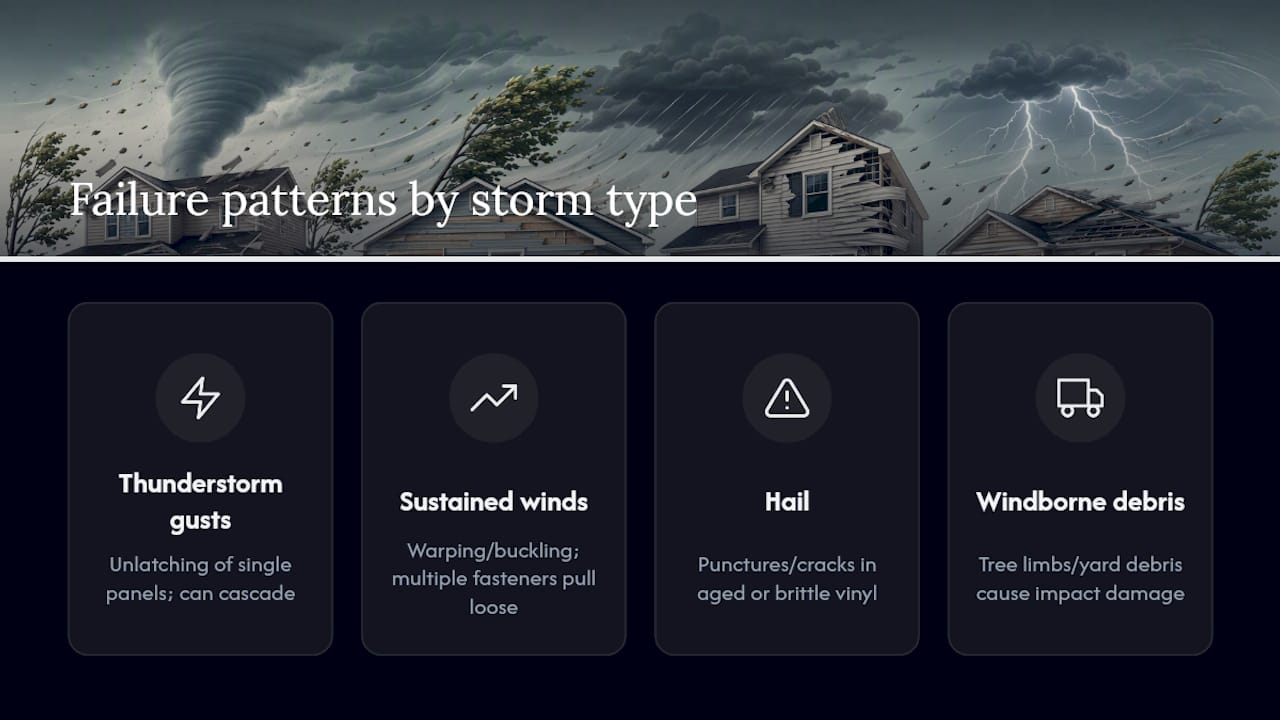
The practical takeaway: a fast moving thunderstorm with brief high gusts tends to unlatch a few panels. A sustained tropical system with hours of wind and flying debris tends to produce widespread punctures and multiple attachment failures across the same wall. Your inspection should match the storm type, not just look for one kind of damage.
What Happens if Wind Damage to Siding Goes Unrepaired?
A cracked panel left alone doesn’t stay a cosmetic problem. It becomes an entry point.
Once housewrap or sheathing is exposed, every rain event pushes more moisture behind the wall. Sheathing, typically oriented strand board or plywood, absorbs that moisture and starts to soften. Left long enough, soft sheathing loses its ability to hold fasteners securely, which means the next storm pulls out even more of them. This is exactly the failure pattern inspectors look for when they assess whether an attachment system needs a full repair rather than a spot fix.
Moisture trapped behind siding also feeds mold and wood rot inside wall cavities, problems that often go unnoticed until insulation, drywall, or framing needs replacing. What started as a $200 panel swap turns into a wall-opening repair job costing thousands.
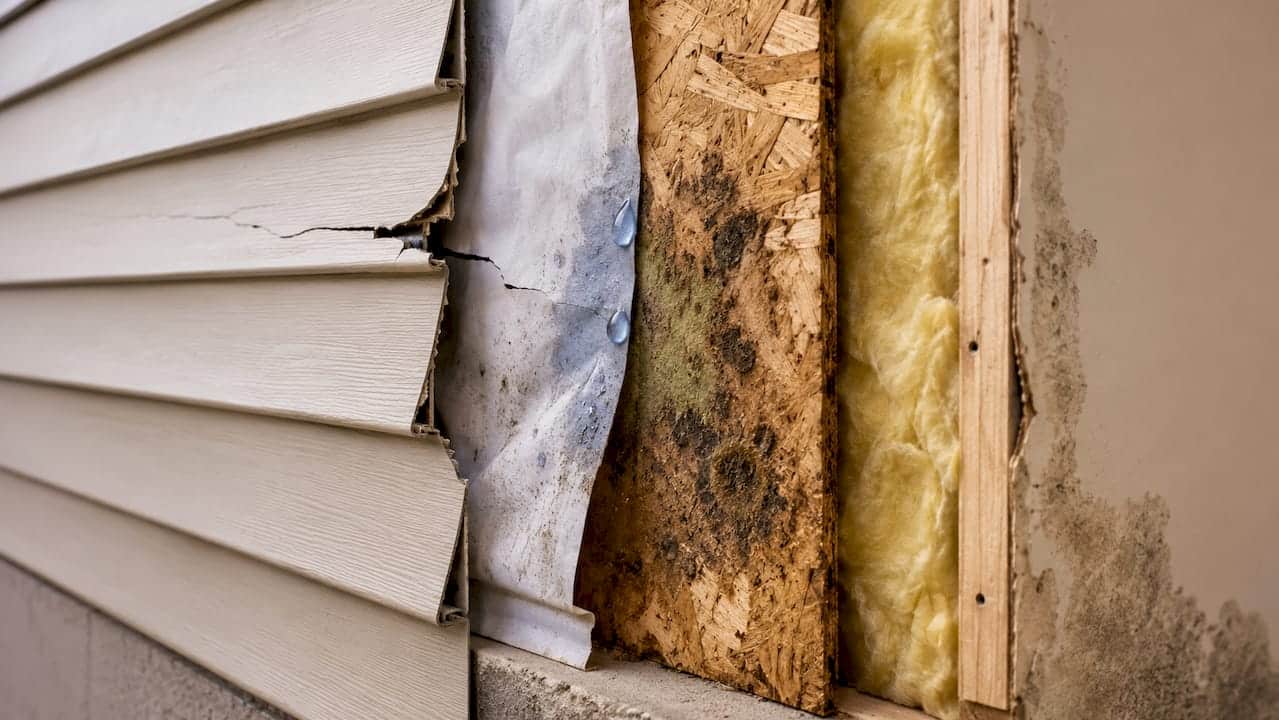
There’s a compounding cost on the insurance side too. Damage that clearly happened during a documented storm is a straightforward wind claim. Damage that developed over months of unaddressed exposure looks like neglect, and adjusters are trained to spot that difference. Waiting doesn’t just risk more physical damage. It risks the claim itself.
How Does Buffalo Roofing & Exteriors Handle Wind-Damaged Siding Calls?
Professionals approach every wind-damaged siding call the same way: document the damage, secure exposed areas with temporary covering, assess whether the issue is cosmetic or structural, then repair. That sequence protects the home immediately while giving homeowners a clear picture before any work starts.
Estimates and financing options may be available for repairs that go beyond a quick patch. Timelines vary with scope, but a single-panel repair moves faster than a project involving housewrap or sheathing replacement. If you want a second opinion on damage you’re not sure how to read, requesting an inspection is an option worth considering.
— Results
Need Emergency Siding Help Right Now?
Some local contractors handle situations like wind-damaged siding that need a fast, correct call between a quick patch and a full repair. If you’re staring at a hanging panel or exposed housewrap right now, the smartest move is getting a second set of eyes on it before you decide whether insurance should even get involved.

Buffalo Roofing & Exteriors offers storm damage restoration built around that exact decision point, backed by free estimates and financing options so cost isn’t a barrier to getting an honest assessment. The team also handles broader exterior siding work when a storm reveals that patch repairs won’t hold much longer. And if the same wind event compromised door seals or weatherproofing around openings, proper door winterization is worth checking too, since wind damage rarely stops at the siding.
Your next step is simple: document what you’re seeing, then request a free estimate through the storm damage restoration page so a professional can tell you exactly what you’re dealing with before the next storm makes the decision for you.
Sources
- Does homeowners insurance cover siding? | Progressive
- Does homeowners insurance cover wind damage? | American Family Insurance
- How to fix a damaged vinyl siding | FixUpFirst
- Does Homeowners Insurance Cover Siding Damage? | LegalClarity