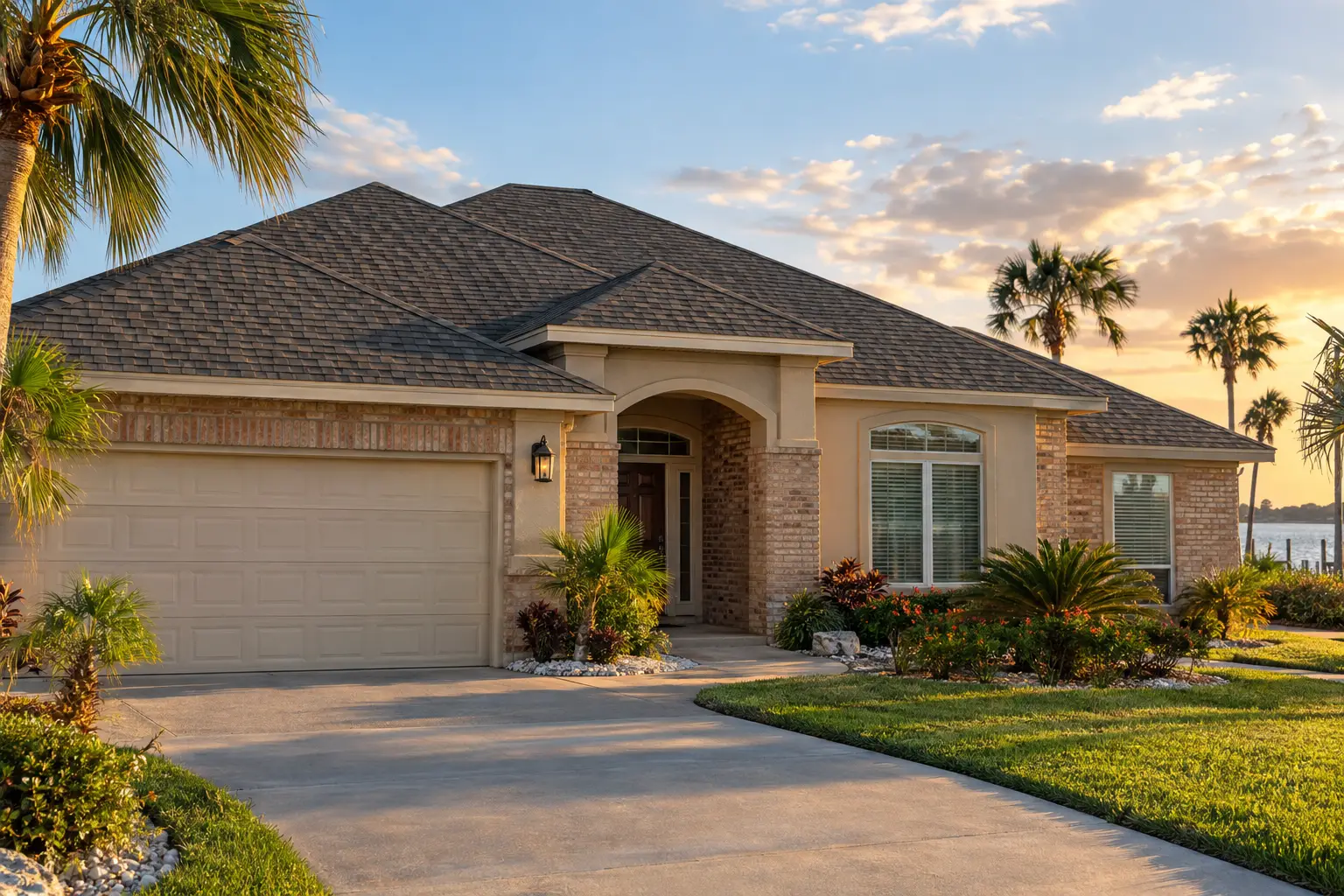
TL;DR: In Corpus Christi, the biggest roof replacement cost factors are roof size and pitch, the material, tear-off layers, the condition of the decking, and Texas windstorm code work. On the coast, the 2024 windstorm code and WPI-8 inspection add materials and steps. Inland in Bee County, hail and heat matter more.
The main roof replacement cost factors in Corpus Christi are roof size and pitch, the material you choose, how many old layers come off, the condition of the wood decking underneath, and Texas windstorm code work on the coast. Access, vents and flashing add smaller amounts. Two homes the same size can get different quotes for these reasons.
This guide explains each factor so you can read an estimate with confidence. It doesn’t list prices. For typical ranges, see our Corpus Christi roof replacement price guide.
What are the main roof replacement cost factors in Corpus Christi?
Six things set most of the price. Here is how each one works.
- Size. Roofers measure in squares. One square is 100 square feet. More squares means more material, more labor and more debris to haul off.
- Pitch and shape. A steep roof, or one with many valleys, hips and dormers, takes longer. It also needs more safety gear and more cut pieces.
- Material. Shingles, metal, tile and flat-roof membranes each cost different amounts to buy and to install.
- Tear-off. Each old layer adds labor and disposal weight.
- Decking. Rotten or unsuitable wood under the old roof has to be fixed before the new roof goes on.
- Windstorm code. In Nueces, San Patricio and Aransas counties, the roof must be built and inspected to the Texas windstorm code.
Smaller items add up too. These include pipe boots, roof vents, drip edge, flashing around chimneys and walls, and how easy it is to park a dumpster near the house.
How do Texas windstorm rules affect cost on the coast?
On the coast, windstorm rules add materials, labor steps and an inspection. That makes a coastal roof cost more than an inland roof of the same size. The Texas Department of Insurance (TDI) is the state agency that regulates insurers. It runs a windstorm inspection program for 14 coastal counties, including Nueces, San Patricio, Aransas and Kleberg. TDI includes the entire county for each county on its map. So a home in Banquete is in the program, just like one in Aransas Pass.
Some coastal homes have wind and hail coverage through the Texas Windstorm Insurance Association (TWIA), the state’s coastal wind insurer. For those homes, the new roof must be certified with a WPI-8. A WPI-8 is TDI’s Certificate of Compliance. It shows the work was inspected and met the windstorm code. According to TDI’s adopted building codes page, starting April 1, 2026, windstorm certification must follow the 2024 International Residential Code or the 2024 International Building Code.
The newer code changes what goes on your roof. TDI treats the whole catastrophe area as a high wind area. For asphalt shingles, that means using one of the approved underlayment methods, such as two layers of mechanically fastened underlayment. The City of Corpus Christi’s building bulletin on the 2024 codes lists a basic wind speed of 150 mph for windstorm areas. Extra underlayment, high-wind nailing and inspection visits all show up in your estimate.
Salt air and humidity matter too. Near the bay, fasteners, flashing and metal trim rust faster. Parts that stand up better to corrosion cost more up front but last longer.
Inland, the cost picture is different. Bee County is not one of TDI’s windstorm counties, so a roof in Beeville doesn’t need a WPI-8. There, hail damage and long, hot South Texas summers have more effect on the material choice than wind code does.
What can change the price once the old roof comes off?
Hidden damage under the old roof is the most common reason the final bill differs from the first number. A clear estimate tells you up front how those items will be priced, such as per sheet of decking or per foot of trim.
Decking condition
The decking is the wood your roof is nailed to. Leaks, attic moisture and age can leave it soft or rotted. TDI’s windstorm inspection checks that the existing decking is a nailable surface. Bad boards have to be replaced before the new roof is installed.
Some older Corpus Christi homes have plank decking. That means long boards, sometimes with gaps between them, instead of plywood sheets. Depending on their condition, planks may need repairs or a layer of new sheathing over them. One customer, Clay, wrote: “We had a difficult situation on an older house with plank roof decking which was handled with great expertise by Buffalo Roofing.”
Old layers
The model International Residential Code does not allow a new roof over an old one if the roof already has two or more layers. The same applies if the old roof is water-soaked or worn out, or if it’s tile. Every layer that comes off adds labor and disposal fees.
Vents, fascia and flashing
Rotted fascia boards, cracked vents and rusted flashing often turn up during tear-off. In the windstorm program, roof vents, turbines and skylights are part of what gets inspected, so they need to meet the code too.
How does your material choice change the cost?
Material is the factor you control most. Each option trades up-front cost against lifespan, storm resistance and upkeep. Costs vary with the product, the roof and the season.
| Material | Up-front cost (relative) | What adds cost locally | Good fit when |
|---|---|---|---|
| Architectural asphalt shingles | Lowest of these options | High-wind install and extra underlayment in windstorm counties | You want a proven roof on a tighter budget |
| Impact-resistant shingles | Higher than standard shingles | Product premium; must carry a Class rating label | Hail is a concern, or you want to ask your insurer about a credit |
| Standing seam metal | Higher | Panel gauge, coatings and fasteners suited to salt air; skilled labor | You plan to stay in the home a long time |
| Concrete or clay tile | Higher | Weight, special underlayment, careful handling; can’t go over an old roof | You want to match the home’s style |
| TPO (flat or low-slope) | Varies with insulation and drainage work | Removing old layers, new insulation, fixing ponding | Commercial buildings and low-slope sections |
TPO stands for thermoplastic polyolefin. It’s a single-ply membrane, usually white, used on flat and low-slope roofs. Impact-resistant roofing is tested and rated from Class 1 to Class 4. TDI publishes an impact-resistant roofing installation form because some insurance companies offer a premium discount for these roofs. Each insurer sets its own discount, so ask your agent before you decide.
If a storm caused the damage, your insurance company decides what the claim covers, and you pay your deductible. It’s also worth asking your agent whether your policy pays for code-required items like the extra underlayment.
When does replacement make more sense than another repair?
Replacement usually makes sense when problems keep coming back or the damage covers a large part of the roof. A single leak or a few missing shingles can often be fixed. Our shingle roof repair service handles those jobs, and our roof repair cost guide explains what drives repair pricing.
Signs it’s time to call a pro about a replacement:
- Shingles are curling, cracking or losing granules on several slopes, not just one spot.
- You’ve had more than one leak in a year, or ceiling stains keep coming back.
- From the attic, you see daylight, sagging or dark water stains on the decking.
- A hurricane, tropical storm or hail storm damaged more than one slope.
- Flashing and metal trim are rusted or lifting from salt air.
- You’re buying or selling an older coastal home, and the roof has no WPI-8 on file.
Why Coastal Bend homeowners work with Buffalo Roofing & Exteriors
- We are a locally owned South Texas roofing and exterior contractor, owned by Diego Garcia.
- We are BBB Accredited.
- We have more than 200 five-star Google reviews, and our Corpus Christi office holds a 4.9 rating.
- Our team holds WPI-8 windstorm certification, and we build coastal roofs to the Texas windstorm code.
- Customers often mention our Corpus Christi team by name, including office manager Veronica and project supervisor Omar.
- Estimates are free.
- Financing is available through Synchrony, subject to credit approval, and you can see if you prequalify with no impact to your credit score.
- On insurance claims, we inspect, photograph the damage and meet your adjuster; your insurer decides the claim.
Want to know which of these factors apply to your roof? Book a free estimate with Buffalo Roofing & Exteriors. We’ll measure the roof, look at the attic and explain every line of the quote.
Frequently Asked Questions
Do homes in Beeville need a WPI-8 for a new roof?
No. Bee County is not one of TDI’s designated windstorm counties, so WPI-8 certification isn’t part of a Beeville re-roof. There, cost depends more on material choice, hail resistance and the condition of the decking.
Will impact-resistant shingles lower my insurance premium?
They might. TDI says some insurers offer a discount for impact-resistant roofing, and each company sets its own amount. Call your agent before you choose a material, and keep the installation paperwork after the job.
Can I get an accurate roof replacement price over the phone?
Not really. Size, pitch, number of layers, decking condition and windstorm requirements all change the number, and each one has to be checked at the house. A free estimate on site gives you a quote based on your actual roof.
Is financing available for a roof replacement?
Yes. Financing is offered through Synchrony, subject to credit approval. You can see if you prequalify with no impact to your credit score.
Recommended Reads
- How Much Does a Roof Replacement Cost in Corpus Christi? (2026 Price Guide)
- Window Replacement Services Corpus Christi, TX
- What Roof Repair Costs in Corpus Christi (2026 Price Guide)