
TL;DR:
- Wind mitigation strengthens homes against storm damage by installing verified structural features that qualify for insurance discounts. Inspections are quick and focus on roof, wall, and opening protections, which significantly lower premiums, especially for impact-resistant windows and hurricane straps. Updating these features during renovations and keeping thorough documentation ensures homeowners maximize their credits and storm resilience.
Wind mitigation is the process of strengthening a home against storm damage by installing and verifying specific structural features that reduce the destructive force of high winds. Licensed inspectors document these features using state-mandated forms like Florida OIR-B1-1802, and insurers are legally required to apply premium discounts when qualifying features are confirmed. Under Florida Statute 627.0629, those discounts are not optional. They are a legal mandate. For homeowners in coastal Texas and other storm-prone regions, wind mitigation is one of the most direct ways to reduce both physical damage risk and annual insurance costs.
What is wind mitigation and which features qualify?
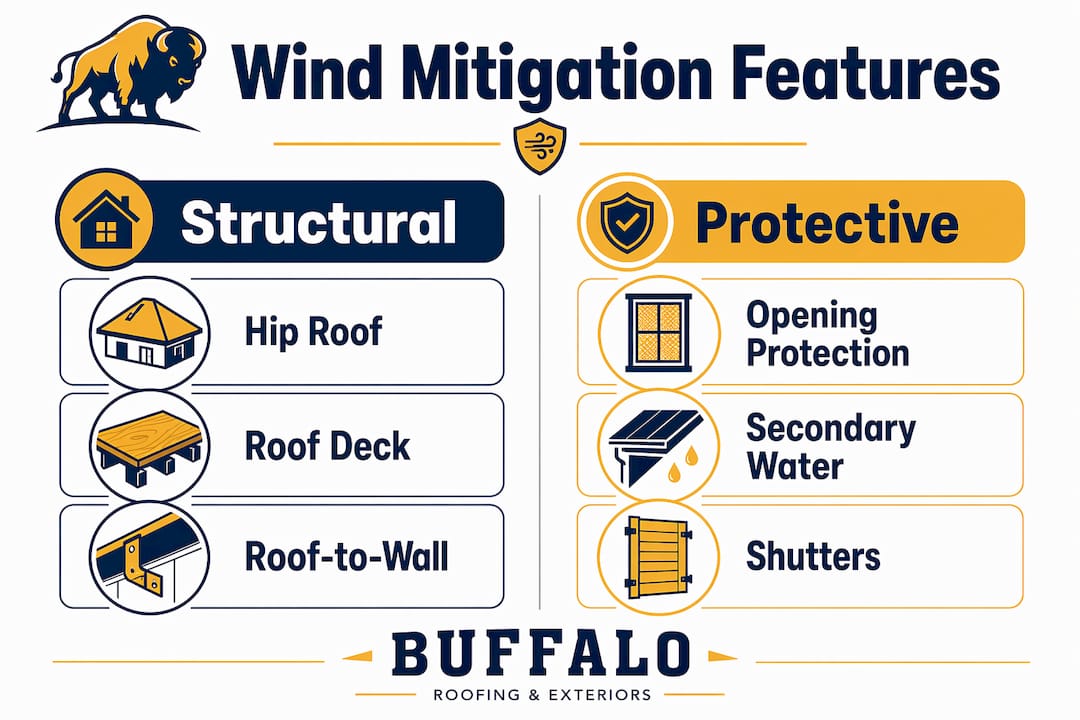
Wind mitigation covers a specific set of structural and protective features that inspectors verify during a formal assessment. Each feature addresses a different way that storm winds damage homes, from roof uplift to water intrusion through broken windows. Understanding which features qualify helps you know where to focus upgrade spending.
Hip roofs
A hip roof slopes on all four sides rather than ending in vertical gable walls. That shape deflects wind more evenly than a standard gable roof. Hip roofs are one of the most recognized wind-resistant home features in inspection programs and typically earn meaningful insurance credits.
Roof deck attachment
Inspectors check how the roof deck (the plywood or OSB panels under your shingles) is fastened to the rafters. Closer nail spacing and longer nails create a stronger bond. A weak deck attachment is one of the first failure points in a hurricane, so this category carries significant weight in discount calculations.
Roof-to-wall connections
Hurricane straps or clips connect roof framing directly to the wall framing below. Without them, high winds can lift an entire roof off a house. Inspectors access the attic to photograph the connectors and nail patterns. This single feature has a large impact on a home’s overall wind resistance score.
Secondary water resistance
Secondary water resistance (SWR) is a sealed layer applied under the roof covering to prevent water intrusion if shingles are torn away. It is one of the most cost-effective upgrades available to existing homeowners. SWR and opening protection offer the largest credit opportunities for homes that were not originally built to current standards.
Opening protection
Opening protection covers every window, door, and skylight on the home. Rated shutters or impact-resistant glazing must cover all openings to earn this credit. Windstorm premium discounts can reach up to 45% for opening protection alone, making it the single highest-value category on the inspection form.
Pro Tip: Schedule a pre-inspection walkthrough of your home before the official assessment. Note every window, door, and skylight, and confirm each one has rated protection. A single unprotected opening eliminates the entire opening protection credit.
| Feature | Typical discount range |
|---|---|
| Opening protection (impact windows/shutters) | 10%–45% |
| Hip roof shape | Varies by insurer |
| Roof deck attachment (nail pattern/spacing) | Moderate credit |
| Roof-to-wall connections (hurricane straps) | Significant credit |
| Secondary water resistance | Moderate credit |
What happens during a wind mitigation inspection?
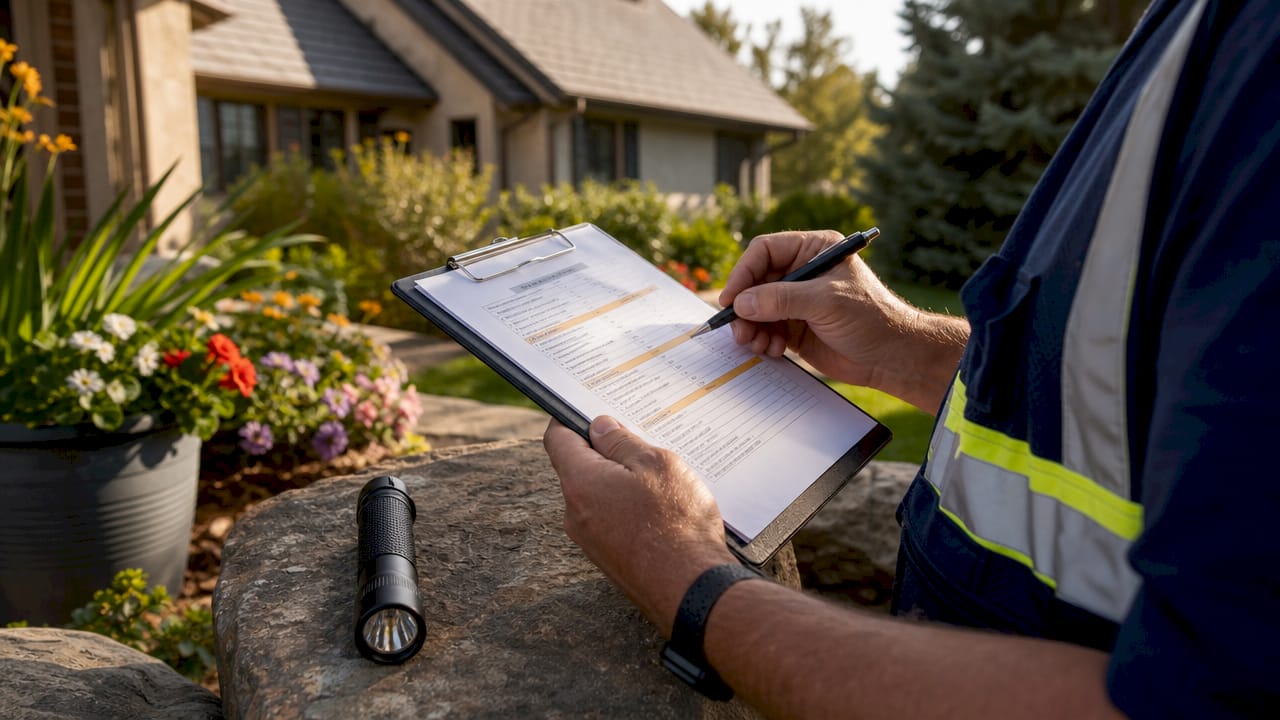
A wind mitigation inspection is not the same as a general home inspection. It focuses narrowly on structural resilience to storms, and only licensed professionals can perform it. In Florida, that means licensed contractors, engineers, or home inspectors with the appropriate credentials. Texas has its own licensing requirements, but the structural focus is the same.
The inspection typically takes 30–60 minutes for a standard single-family home. The inspector examines the roof covering, attic framing, wall connections, and every exterior opening. Results are recorded on a standardized state form, and the completed report is valid for five years as long as no structural changes occur.
Here is what inspectors check, in order:
- Roof covering type and age. The inspector identifies the material and confirms it meets current wind standards.
- Roof deck attachment. The inspector enters the attic and photographs nail patterns and spacing on the deck panels.
- Roof-to-wall connections. Connectors, clips, or hurricane straps are photographed and classified by strength level.
- Secondary water resistance. The inspector checks for a sealed underlayment layer beneath the roof covering.
- Roof shape. The geometry of the roof (hip, gable, flat) is documented and classified.
- Opening protection. Every window, door, and skylight is verified for rated protection.
Documentation is the part most homeowners overlook. Inspectors mark features as “unknown” when they cannot visually confirm them, and “unknown” defaults to the lowest possible credit. Providing building permits, contractor receipts, and product specifications prevents that outcome.
Pro Tip: Clear your attic access point before the inspector arrives. Remove stored boxes or insulation blocking the hatch. Attic access is critical for photographing roof-to-wall connections and deck fasteners, and a blocked hatch can delay or reduce inspection accuracy.
How does wind mitigation affect your homeowners insurance?
Wind mitigation credits are a legal requirement, not a negotiation. Florida Statute 627.0629 requires insurers to apply premium discounts when a licensed inspector verifies qualifying features. That law exists because the windstorm portion of a coastal homeowner’s premium can represent 30%–70% of the total annual cost. Discounts applied to that portion produce real dollar savings.
The opening protection category carries the most financial weight. Credits range from 10% to 45% of the windstorm premium depending on the type of protection installed. Impact-rated windows and doors earn more than basic shutters. The catch is the all-or-nothing rule.
One unprotected or non-compliant opening eliminates the entire opening protection credit. A single standard window in a garage or sunroom can cost a homeowner hundreds to thousands of dollars annually in lost discounts. Opening protection follows a strict all-or-nothing standard with no partial credit.
The table below shows how credits stack across feature categories.
| Feature category | Credit type | Notes |
|---|---|---|
| Opening protection | 10%–45% of windstorm premium | All openings must comply |
| Roof shape (hip) | Percentage reduction | Full hip earns maximum credit |
| Roof deck attachment | Tiered credit | Based on nail size and spacing |
| Roof-to-wall connections | Tiered credit | Clips earn more than toe-nails |
| Secondary water resistance | Flat credit | Requires verified sealed layer |
Wind mitigation premium credits are a legal mandate, not a courtesy. Homeowners who skip the inspection leave verified savings unclaimed every renewal cycle.
What upgrades can existing homes realistically make?
Most wind-resistant home features are easiest to build in during original construction. That said, existing homes have real upgrade paths that produce measurable insurance savings.
The upgrades with the best cost-to-credit ratio for existing homes include:
- Impact-resistant windows and doors. Replacing standard glazing with impact-rated windows is the most direct way to earn the opening protection credit. The upfront cost is significant, but the annual premium reduction often shortens the payback period considerably.
- Hurricane shutters. For homeowners not ready to replace all windows, rated shutters over every opening can qualify for opening protection credit at a lower initial cost. Every opening must be covered.
- Secondary water resistance. During a roof replacement, adding a self-adhering underlayment qualifies as SWR. This upgrade costs relatively little when done alongside a re-roof and earns a permanent credit.
- Hurricane straps. Adding metal connectors between roof framing and wall plates is possible in many existing homes through attic access. A licensed contractor can assess feasibility and install them without major structural work.
Some features are fixed at original construction and cannot be changed without major renovation. Roof shape is the clearest example. Converting a gable roof to a full hip roof requires rebuilding the entire roof structure. The cost rarely justifies the credit for most homeowners.
Pro Tip: Time your upgrades to coincide with a scheduled roof replacement. Adding secondary water resistance and upgrading fastener patterns during a re-roof costs a fraction of what standalone installation would. Buffaloroofingandexteriors can assess your current roof system and identify which exterior upgrades qualify for inspection credits during the same project.
The smartest approach is to get a wind mitigation inspection first, then use the report to identify which missing credits are worth pursuing. The report tells you exactly where your home falls short and what each upgrade would add to your discount profile.
Key takeaways
Wind mitigation is the most direct way for coastal homeowners to reduce storm damage risk and lower insurance premiums through verified structural features.
| Point | Details |
|---|---|
| Opening protection is the highest-value credit | All openings must comply; one gap eliminates the entire 10%–45% discount. |
| Documentation prevents lost credits | Provide permits and receipts so inspectors can verify features rather than marking them “unknown.” |
| Inspections are fast and legally binding | A 30–60 minute inspection produces a report that insurers must honor under state law. |
| Upgrades work best during renovations | Adding SWR or hurricane straps during a re-roof costs far less than standalone installation. |
| Re-inspection matters after upgrades | A new inspection after qualifying upgrades unlocks credits that the previous report did not include. |
Wind mitigation is about more than the discount
After working with homeowners across coastal Texas, the pattern I see most often is this: people get a wind mitigation inspection because their insurance agent mentioned a possible discount, and they treat it as a paperwork exercise. That framing misses the point.
The inspection report is a structural audit of your home’s ability to survive a major storm. The insurance discount is a byproduct of that audit. What the report actually tells you is whether your roof will stay attached, whether your windows will hold, and whether water will pour in the moment shingles lift. Those are not abstract risks in Corpus Christi or along the Texas Gulf Coast.
Storm damage restoration after a major hurricane costs far more than any upgrade. The homeowners who fare best after a storm are the ones who treated wind mitigation as a preemptive strategy, not a discount hunt. They upgraded their opening protection completely, they added SWR during their last re-roof, and they kept their inspection report current.
The documentation piece is where I see the most money left on the table. Homeowners who cannot produce a permit or a contractor receipt for work done years ago watch inspectors mark features as “unknown” and lose credits they legitimately earned. Keep every receipt, every permit, and every product specification sheet in a dedicated folder. That folder is worth real money at renewal time.
Get re-inspected after every qualifying upgrade. The five-year validity period on inspection reports does not mean you should wait five years. A new report after adding impact windows or hurricane straps captures credits immediately.
— Buffalo Roofing and Exteriors
How Buffalo Roofing and Exteriors helps you strengthen your home
Buffalo Roofing and Exteriors works with homeowners across Corpus Christi, San Antonio, and Victoria to assess and upgrade the exterior features that matter most in a wind mitigation inspection.
The team at Buffaloroofingandexteriors specializes in weather-resistant roofing systems, impact window installation, secondary water resistance underlayment, and reinforced roof-to-wall connections. These are the exact features that licensed inspectors verify and that insurers are required to credit. Whether you need a full re-roof with upgraded fastening patterns or a targeted window replacement to complete your opening protection, Buffaloroofingandexteriors can assess your current structure and identify the upgrades with the best return. Contact the team for a free estimate and find out which improvements will move the needle on your next inspection report.
FAQ
What is wind mitigation for a home?
Wind mitigation is the process of installing and verifying structural features that reduce storm wind damage, such as impact windows, hurricane straps, and reinforced roof decks. A licensed inspector documents these features on a state-mandated form used by insurers to apply premium discounts.
How much can wind mitigation save on insurance?
Premium discounts can reach up to 45% of the windstorm portion of your premium for opening protection alone, with total combined discounts potentially reaching 88%. The windstorm portion of a coastal homeowner’s premium often represents 30%–70% of the total annual cost.
How long does a wind mitigation inspection take?
A standard inspection takes 30–60 minutes and covers the roof, attic, wall connections, and all exterior openings. The resulting report is valid for five years if no structural changes occur.
What happens if one window is not impact-rated?
One non-compliant opening eliminates the entire opening protection credit under the all-or-nothing rule. That single gap can cost hundreds to thousands of dollars annually in lost insurance discounts.
Do I need a wind mitigation inspection if I already have impact windows?
Yes. The discount only applies after a licensed inspector verifies and documents the qualifying features on the official state form. Having impact windows without a current inspection report means your insurer has no basis to apply the credit.