Texas coastal homeowners face a surprising reality: your home’s exterior siding isn’t just about curb appeal. With Texas averaging 140 tornadoes per year and hurricanes regularly battering the Gulf Coast, choosing the right siding material can mean the difference between minor repairs and catastrophic damage. Many residents underestimate how quickly standard siding fails under coastal conditions, leading to water intrusion, mold growth, and insurance headaches. This guide cuts through the confusion, explaining which siding materials truly protect your investment and how proper installation maximizes storm resilience in 2026’s increasingly volatile weather patterns.
Table of Contents
- Understanding The Importance Of Siding For Texas Coastal Homes
- Siding Material Options: Balancing Durability, Cost, And Weather Resistance
- The Critical Role Of Proper Siding Installation In Coastal Storm Resilience
- Practical Steps To Choose And Maintain Siding That Protects Your Home And Wallet
- Protect Your Coastal Home With Expert Siding Solutions
Key takeaways
| Point | Details |
|---|---|
| Storm protection is critical | Coastal Texas homes need impact-resistant siding to withstand hurricanes, tornadoes, and hail damage that occur frequently in the region. |
| Material choice affects longevity | Fiber cement and steel siding outlast vinyl by decades, reducing replacement costs and insurance claims over time. |
| Installation quality matters most | Even premium siding fails without proper fasteners, flashing, and moisture barriers designed for salt air and humidity. |
| Budget vs. durability tradeoff | Vinyl costs less upfront but requires more maintenance and replacement compared to fiber cement’s 50+ year lifespan. |
| Regular maintenance extends life | Inspecting seals, cleaning salt deposits, and timely repairs prevent corrosion and water damage in coastal environments. |
Understanding the importance of siding for Texas coastal homes
Your home’s siding serves as the first line of defense against relentless coastal weather. Salt spray, extreme humidity, hail storms, and hurricane-force winds create a perfect storm of conditions that accelerate material degradation. Unlike inland properties, coastal homes face constant moisture exposure that penetrates weak points in siding systems, leading to rot, mold, and structural damage.
The numbers tell a sobering story. Siding loss occurs at EF1 tornado winds of just 35-79 mph, speeds that Texas coastal regions experience regularly during severe thunderstorms and tropical systems. When siding fails, water intrusion follows immediately, compromising insulation, framing, and interior finishes. The financial impact extends beyond repair costs, as insurance premiums rise and property values decline when homes show visible exterior damage.
Many homeowners focus exclusively on roof protection while overlooking how vulnerable walls are to wind-borne debris. A single hailstone or flying branch can crack vinyl siding, creating entry points for moisture that spreads unseen behind the facade. This hidden damage often goes unnoticed until mold appears or energy bills spike from compromised insulation.
Consider these coastal-specific challenges your siding must withstand:
- Salt-laden air corrodes metal fasteners and degrades painted surfaces faster than inland conditions
- Humidity levels above 70% promote mold growth on organic materials and beneath improperly sealed joints
- UV radiation in southern Texas breaks down polymer-based sidings, causing brittleness and color fading
- Wind-driven rain forces water through microscopic gaps that would remain dry in calmer climates
“Proper siding reduces water intrusion by up to 85% compared to deteriorated or poorly installed materials, directly impacting a home’s structural integrity and indoor air quality.”
The connection between exterior renovations and coastal home resilience becomes clear when you calculate the true cost of neglect. A $15,000 siding replacement today prevents $50,000+ in water damage, mold remediation, and structural repairs tomorrow. Smart homeowners view siding as an investment in long-term protection rather than a cosmetic upgrade.
Siding material options: balancing durability, cost, and weather resistance
Choosing the right siding material for coastal Texas requires understanding how each option performs under real-world stress. The market offers three primary choices, each with distinct advantages and limitations that affect your home’s protection and your wallet.
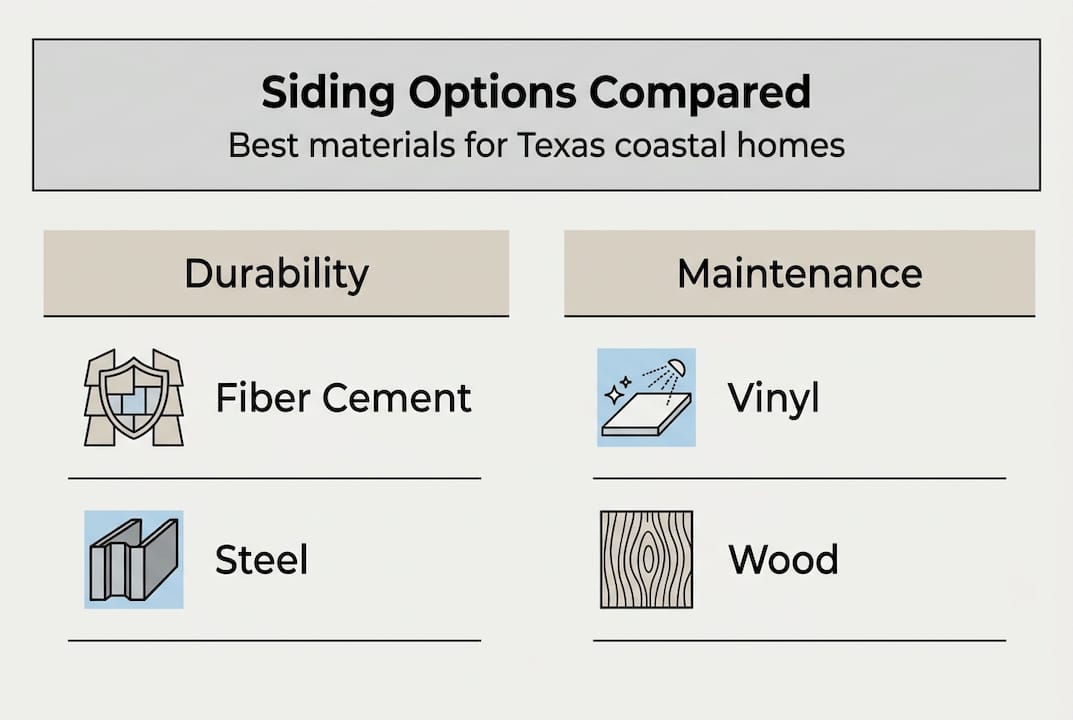
Fiber cement siding delivers 50+ years of service with exceptional fire rating and strong resistance to hail and moisture, making it the sweet spot for coastal applications. This engineered product combines cement, sand, and cellulose fibers into panels that won’t rot, warp, or attract pests. It handles temperature swings without expanding or contracting significantly, maintaining tight seals around windows and doors. The material accepts paint well and holds color longer than alternatives, reducing maintenance frequency.
Steel siding provides superior wind resistance and Class 4 impact rating, preventing uplift in hurricane-force winds that would peel away lesser materials. Interlocking panels create a continuous barrier that distributes wind loads across the entire wall system rather than concentrating stress at individual fastener points. Steel’s non-combustible nature offers maximum fire protection, a consideration for homes near wildland interfaces. The primary drawback is cost, typically running 40-60% higher than fiber cement for comparable coverage.
Vinyl siding remains popular at $3-7 per square foot with a 20-30 year lifespan, but coastal conditions expose its vulnerabilities. Heat warping occurs when dark colors absorb intense Texas sun, causing panels to buckle and gaps to form. UV exposure gradually breaks down the polymer chains, leading to brittleness that makes the material prone to cracking during hail impacts. Fading becomes noticeable within 5-7 years, requiring complete replacement rather than simple repainting.
Here’s how the three materials compare across critical factors:
| Material | Lifespan | Cost per sq ft | Wind resistance | Impact rating | Maintenance |
|---|---|---|---|---|---|
| Fiber cement | 50+ years | $8-12 | High | Class 3-4 | Repaint every 15 years |
| Steel | 40-60 years | $12-18 | Very high | Class 4 | Minimal, check fasteners |
| Vinyl | 20-30 years | $3-7 | Moderate | Class 2-3 | Replace cracked panels |
Pro Tip: Calculate total cost of ownership over 30 years, not just installation price. Fiber cement’s higher upfront cost becomes the economical choice when you factor in vinyl’s two replacement cycles and steel’s premium installation requirements.
The decision matrix shifts based on your specific situation. Homes in direct hurricane paths benefit most from steel’s ultimate wind resistance. Properties with mature trees nearby need fiber cement’s impact resistance against falling branches. Budget-conscious buyers can use vinyl successfully if they commit to vigilant maintenance and accept shorter service life.
Color selection matters more than most realize. Lighter shades reflect heat and reduce thermal stress on all materials, extending lifespan by 15-20% compared to dark colors. This consideration applies especially to vinyl, where dark panels can reach 180°F in direct summer sun, accelerating degradation.
Understanding different siding materials available for coastal Texas homes helps you match product capabilities to your home’s exposure level and your maintenance preferences. The right choice protects your investment while fitting your budget constraints.
The critical role of proper siding installation in coastal storm resilience
Even premium siding materials fail without expert installation that addresses coastal-specific challenges. Poor installation leads to water intrusion and corrosion despite using durable products, negating your material investment. The difference between adequate and exceptional installation determines whether your siding survives a Category 2 hurricane or requires complete replacement.
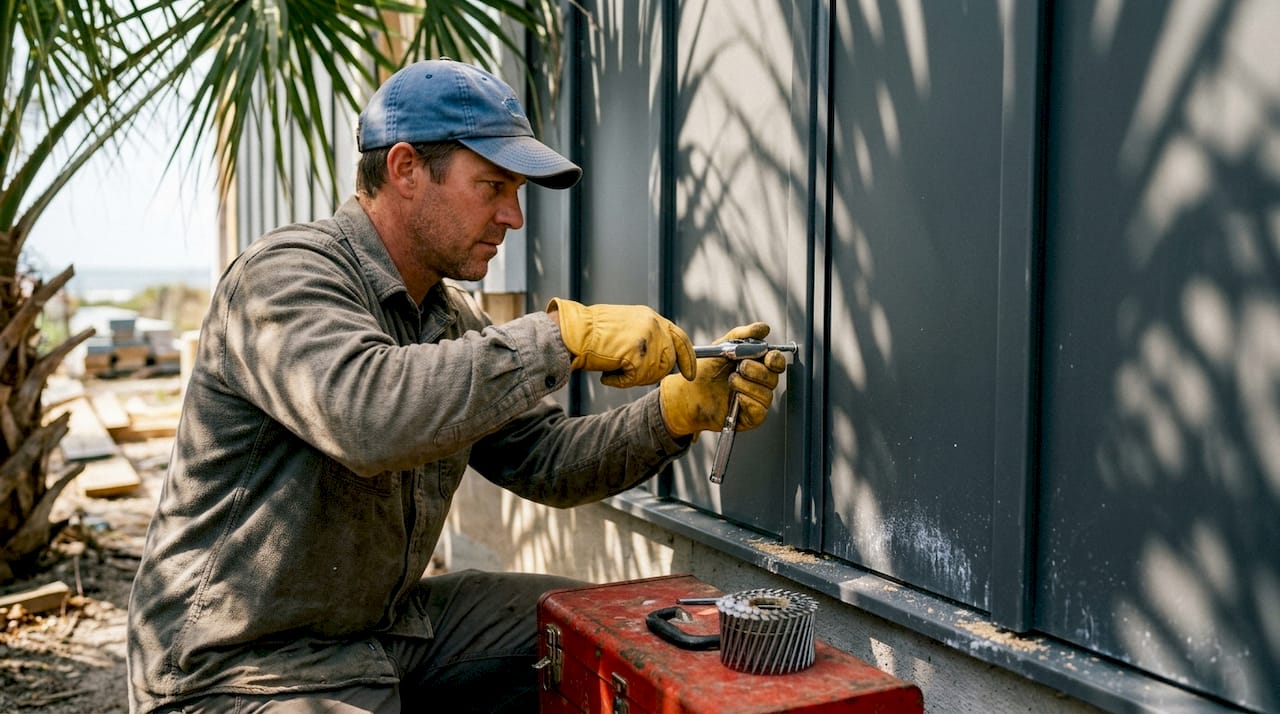
Reinforced fasteners form the foundation of storm-resistant installation. Standard nails corrode within 3-5 years in salt air, losing holding power and allowing panels to lift during wind events. Stainless steel or hot-dipped galvanized fasteners resist corrosion for decades, maintaining the mechanical connection between siding and sheathing. Proper fastener placement matters equally, as over-driving creates stress points while under-driving leaves gaps for wind infiltration.
Weatherproof flashing protects vulnerable transitions where siding meets windows, doors, and roof lines. These junctions concentrate water flow during wind-driven rain, requiring overlapping layers that direct moisture away from the building envelope. Salt spray accelerates corrosion in non-resistant materials, making marine-grade flashing tape and sealants essential rather than optional upgrades.
Follow these numbered steps for maximum storm resilience:
- Install a continuous weather-resistant barrier over sheathing before siding application to create a secondary moisture defense
- Use corrosion-resistant fasteners spaced according to manufacturer specifications, typically 16 inches on center for coastal applications
- Apply marine-grade flashing at all penetrations and transitions, lapping each layer to shed water downward and outward
- Seal all horizontal joints with flexible, paintable caulk rated for coastal UV and salt exposure
- Ensure proper panel overlap of at least 1.5 inches to prevent water infiltration during horizontal rain
- Leave expansion gaps at corners and trim to accommodate thermal movement without buckling
Pro Tip: Schedule installation during dry weather with temperatures between 50-85°F. Materials expand and contract with temperature changes, and installing during extreme conditions can create gaps or buckling when weather normalizes.
Ventilation behind siding prevents moisture accumulation that leads to mold and rot. A 1/4 inch air gap allows water vapor to escape while blocking bulk water penetration. This seemingly minor detail extends siding life by 30-40% in humid coastal climates where condensation forms regularly on cool surfaces.
Quality control during installation catches problems before they become failures. Inspecting each wall section for proper fastener depth, consistent overlap, and complete flashing coverage takes time but prevents callbacks and warranty claims. Experienced installers understand that coastal homes require extra attention to details that inland properties can overlook.
Understanding proper siding installation techniques for coastal Texas homes empowers you to verify your contractor follows best practices rather than cutting corners to save time. Your home’s protection depends on these installation details as much as material selection.
Practical steps to choose and maintain siding that protects your home and wallet
Applying your knowledge requires a systematic approach that balances immediate costs against long-term value. Start by assessing your home’s specific exposure to wind, salt spray, and storm frequency. Properties within 5 miles of the coast face harsher conditions than those 20 miles inland, justifying premium materials and installation techniques.
Consider these factors when selecting your siding system:
- Total cost of ownership including installation, expected maintenance, and replacement timeline over 30 years
- Wind zone rating for your location, which determines minimum fastener requirements and panel specifications
- HOA restrictions or local building codes that may limit material choices or color options
- Your long-term ownership plans, as shorter timelines may favor lower upfront costs
Hiring qualified professionals familiar with coastal demands prevents costly mistakes. Ask potential contractors about their experience with hurricane-resistant installation, corrosion-resistant fastener systems, and moisture barrier applications. Request references from coastal projects completed at least 5 years ago, allowing you to verify how installations have performed through multiple storm seasons.
Regular inspections catch small problems before they escalate. Walk your home’s perimeter twice yearly, looking for cracked panels, loose fasteners, separated joints, or discolored areas indicating moisture intrusion. Spring and fall inspections align with seasonal weather transitions when thermal stress reveals weak points.
Maintenance requirements vary by material but share common elements. Clean salt deposits quarterly using a garden hose and soft brush, as accumulated salt accelerates corrosion and staining. Inspect caulk joints annually and re-seal any gaps before moisture penetrates. Trim vegetation to maintain 12 inches clearance, preventing constant moisture contact and pest access.
Here’s how different sidings compare on key ownership factors:
| Siding type | 30-year total cost | Insurance impact | Maintenance hours/year | Storm damage risk |
|---|---|---|---|---|
| Fiber cement | $18,000-24,000 | 5-10% discount | 4-6 hours | Low |
| Steel | $24,000-32,000 | 10-15% discount | 2-4 hours | Very low |
| Vinyl | $15,000-28,000 | No discount | 8-12 hours | Moderate to high |
Note: Vinyl’s 30-year cost includes one complete replacement cycle, while fiber cement and steel typically survive the full period with only maintenance.
Fiber cement siding reduces maintenance frequency and insurance claims by lasting over 50 years compared to vinyl’s tendency to crack and require panel replacement. This longevity translates to fewer contractor visits, less disruption to your household, and more predictable long-term expenses.
Document your siding condition with photos after installation and following major storms. This visual record helps insurance claims by proving pre-existing condition and demonstrating storm-related damage. Many insurers offer discounts for impact-resistant siding, but you must provide documentation of material ratings and proper installation.
Staying current with siding maintenance practices for 2026 ensures your protection system performs as designed throughout its service life. Proactive care costs far less than reactive repairs after damage occurs.
Protect your coastal home with expert siding solutions
Your home deserves protection that matches the intensity of Texas coastal weather. Making informed decisions about siding materials and installation sets the foundation, but partnering with experienced professionals ensures those choices deliver real-world results.
Buffalo Roofing & Exteriors brings specialized expertise to siding installations throughout Corpus Christi, San Antonio, and Victoria. Our team understands the unique demands of coastal environments, from selecting corrosion-resistant fasteners to implementing moisture barriers that withstand salt air and humidity. We help you navigate material options, explaining how each choice performs under local conditions rather than pushing one-size-fits-all solutions. Our exterior renovation services extend beyond siding to create comprehensive protection for your entire home envelope. Every installation follows proven techniques for coastal applications, ensuring your investment withstands whatever weather comes your way. Contact us today for a free consultation and discover how quality siding transforms your home’s resilience and value.
FAQ
What type of siding is best for Texas coastal storms?
Fiber cement and steel sidings rank as top choices for coastal storm protection. Fiber cement offers excellent impact resistance, moisture tolerance, and fire rating at moderate cost, making it ideal for most coastal applications. Steel provides maximum wind resistance and Class 4 impact rating, justifying its premium price for homes in direct hurricane paths. Vinyl works for budget-conscious projects but requires frequent maintenance and replacement in harsh coastal conditions. Learn more about siding material options for coastal Texas to match products to your exposure level.
How does proper installation affect siding durability?
Installation quality determines whether siding achieves its rated lifespan or fails prematurely. Proper installation uses corrosion-resistant fasteners, marine-grade flashing, and continuous moisture barriers that prevent water intrusion and wind damage. Poor installation with standard fasteners and inadequate sealing allows moisture penetration and panel uplift during storms, regardless of material quality. The difference between adequate and expert installation often means 20-30 additional years of service life. Discover why proper installation techniques matter for coastal homes.
What maintenance helps extend siding life in coastal Texas?
Regular cleaning removes salt deposits that accelerate corrosion and staining, preserving both appearance and structural integrity. Inspect caulk joints and flashing twice yearly, re-sealing any gaps before moisture intrudes behind panels. Check fasteners for rust or looseness, replacing corroded hardware immediately to prevent panel loss during wind events. Trim vegetation to maintain clearance and prevent constant moisture contact. These simple steps extend siding life by 30-40% compared to neglected installations. Follow our comprehensive siding maintenance guide for detailed seasonal checklists.
How much does quality siding cost for a typical coastal home?
Material and installation costs vary based on home size, siding type, and project complexity. Fiber cement typically runs $8-12 per square foot installed, totaling $12,000-18,000 for an average 1,500 square foot home. Steel siding costs $12-18 per square foot, reaching $18,000-27,000 for similar coverage. Vinyl appears cheaper at $3-7 per square foot initially, but factor in replacement costs every 20-30 years for accurate comparison. Quality installation adds 20-30% to material costs but prevents failures that cost far more to repair. Request detailed quotes that include all fasteners, flashing, and moisture barriers rather than comparing basic material prices alone.