Coastal Texas commercial roofs face intense challenges from hurricane force winds, salt laden air, and severe weather that accelerate deterioration by 40% compared to inland properties. Property owners who ignore systematic maintenance schedules face emergency repairs costing 3 to 5 times more than preventive care while risking operational shutdowns during critical business periods. A seasonally adjusted maintenance checklist tailored to coastal vulnerabilities can double your roof’s expected lifespan, reduce insurance claims, and protect your bottom line through proactive care rather than reactive crisis management.
Table of Contents
- How To Choose And Prioritize Commercial Roof Maintenance Tasks
- Quarterly Commercial Roof Maintenance Tasks
- Post-Storm Commercial Roof Inspection Protocol
- Flashings, Seams, And Perimeter Edge Reinforcement
- Drainage And Ponding Water Management
- Documentation, Inspection Frequency, And Advanced Techniques
- Summary Comparison And Situational Recommendations
- Protect Your Investment With Expert Commercial Roofing Services
Key Takeaways
| Point | Details |
|---|---|
| Quarterly Maintenance Prevents Damage | Regular inspections every three months catch small issues before storms turn them into catastrophic failures. |
| 48-Hour Post-Storm Protocol Critical | Immediate post-storm inspections reduce damage escalation by 60% and provide documentation for insurance claims. |
| Flashing and Seam Maintenance Essential | These vulnerable points require consistent monitoring and FM-approved repairs to maintain warranty validity. |
| Drainage Management Protects Investment | Standing water exceeding 48 hours voids most warranties and accelerates membrane degradation by years. |
| Professional Inspections Uncover Hidden Issues | Infrared scans and expert assessments detect moisture intrusion invisible during visual walkthroughs. |
How to Choose and Prioritize Commercial Roof Maintenance Tasks
Selecting the right maintenance tasks for your coastal Texas commercial property requires understanding how environmental factors accelerate wear patterns unique to Gulf Coast buildings. Salt air penetrates microscopic cracks in roofing membranes, causing corrosion of metal components and premature material breakdown. High winds during tropical storms stress perimeter edges and attachment points, while intense UV exposure degrades sealants and surface coatings faster than properties located inland.
You should schedule maintenance around seasonal weather patterns rather than arbitrary calendar dates. Building managers should conduct roof inspections at least twice per year, preferably in spring and fall, and immediately after major weather events, as recommended by the NRCA. Pre-hurricane season inspections in April and May allow you to reinforce vulnerable areas before storm activity peaks, while post-season November checks assess damage accumulated during active weather months.
Balancing DIY surveillance with professional expertise creates the most cost effective approach. Your maintenance team can handle quarterly visual walkthroughs following a standardized roof maintenance checklist, documenting obvious issues like debris accumulation, visible membrane damage, or drainage problems. However, complex assessments including moisture detection, structural evaluation, and warranty compliance verification require licensed contractors with specialized equipment and training.
Essential prioritization criteria include:
- Storm exposure level: Properties within 5 miles of coastline need monthly visual checks during hurricane season
- Roof age and material type: Aging systems require more frequent professional assessment
- Insurance and warranty requirements: Document all inspections to maintain coverage validity
- Operational criticality: Facilities with temperature sensitive inventory or 24/7 operations need zero tolerance for leak risks
Pro Tip: Create a digital maintenance calendar synced with local weather alerts. When the National Weather Service issues severe storm watches, automatically trigger pre-storm and post-storm inspection protocols to catch damage while evidence is fresh and claims processing moves faster.
Quarterly Commercial Roof Maintenance Tasks
Establishing a consistent quarterly routine prevents minor issues from becoming emergency repairs that shut down operations. Debris clearance, flashing inspections, and HVAC curb checks are critical quarterly routines to avoid storm damage and extend roof life. These systematic walkthroughs take 2 to 3 hours for most commercial properties but deliver returns exceeding 300% through avoided emergency service calls and extended material lifespan.
Your quarterly maintenance checklist should include:
- Clear all debris from roof surface, gutters, and drainage areas to prevent water backup and organic growth that traps moisture against membranes
- Inspect and tighten flashing around penetrations, edges, and equipment curbs, looking for loose fasteners, gaps in sealant, or wind lifted sections
- Check HVAC unit supports and curbs for shifting, cracking, or separation from roof deck that creates leak pathways
- Document ponding water locations that persist more than 48 hours after rain, photographing depth and extent for drainage improvement planning
- Test emergency drainage systems by running water through secondary scuppers and overflow drains to verify clear flow paths
- Photograph all findings with GPS tagged images and detailed notes for maintenance history tracking and future comparison
Maintaining detailed records transforms routine tasks into valuable asset management data. Each inspection report should note weather conditions, findings by roof section, repairs completed, and items requiring professional follow up. This documentation proves invaluable during warranty claims, insurance disputes, and when planning capital improvement budgets.
Your maintenance team should use a standardized checklist app that auto populates inspection dates, weather data, and photo timestamps. This eliminates handwritten logs that get lost and creates searchable records accessible during emergency situations when you need quick access to roof condition history.
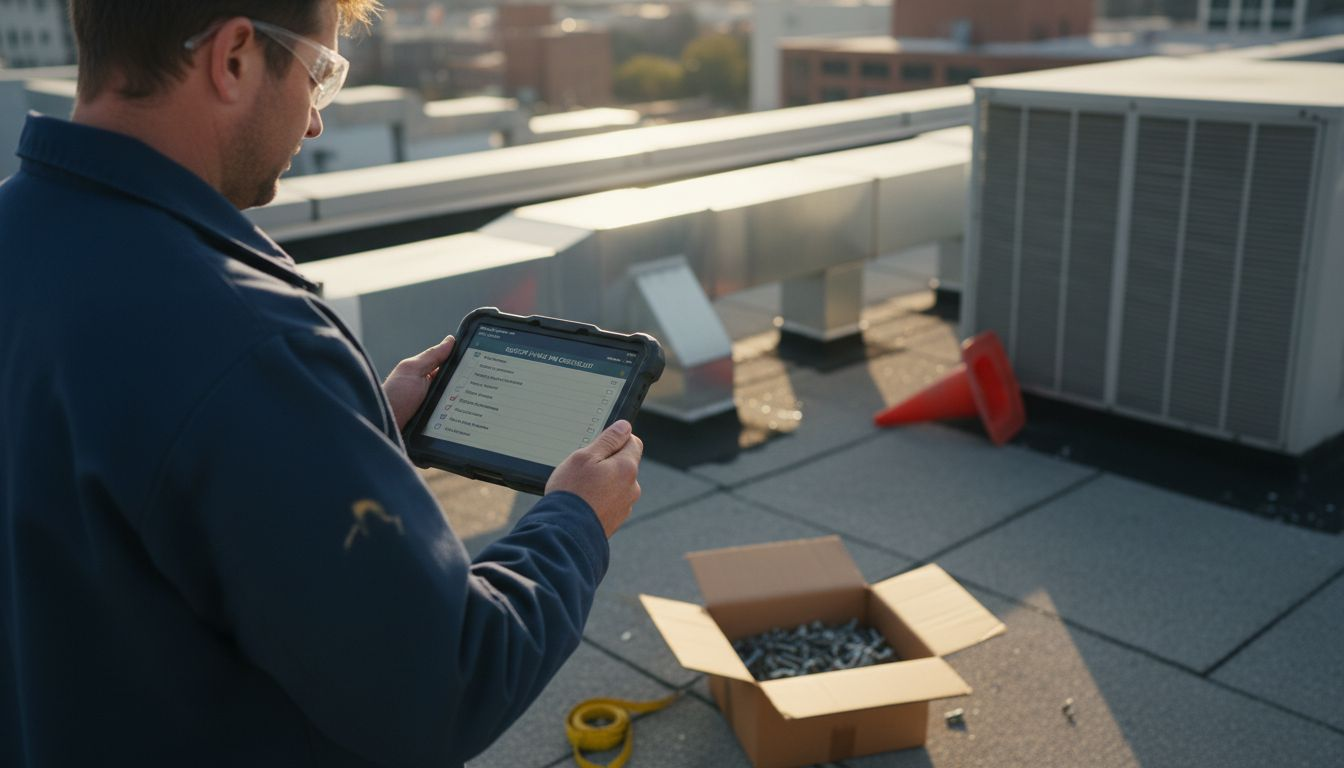
Pro Tip: Schedule quarterly inspections for the first week after season changes when weather typically stabilizes. Spring inspections in early April, summer checks in early July, fall walkthroughs in early October, and winter assessments in early January create consistent intervals that align with natural weather pattern shifts along the Texas coast.
Post-Storm Commercial Roof Inspection Protocol
Hurricanes, hailstorms, and severe wind events require immediate assessment protocols distinct from routine quarterly maintenance. Post-storm inspections within 48 hours help reduce damage escalation and provide strong photographic evidence for insurance claims. Waiting even 72 hours allows water intrusion to spread through insulation layers, creating hidden damage that becomes exponentially more expensive to remediate.
You need a rapid response checklist that maintenance staff can deploy immediately after severe weather passes and safety conditions permit roof access. This inspection focuses on damage documentation rather than comprehensive system evaluation, prioritizing photography and temporary protection measures over detailed analysis.
Immediate post-storm actions include:
- Safety first assessment checking for electrical hazards, structural damage, or unstable equipment before allowing roof access
- Comprehensive photo documentation capturing wide angle shots showing overall conditions plus close ups of every damaged area with ruler or scale reference
- Membrane integrity check looking for punctures, tears, lifted seams, and areas where wind stripped protective granules or coatings
- Flashing and edge metal examination documenting bent, torn, or completely removed components that compromise weatherproofing
- Penetration sealing verification inspecting every pipe boot, equipment curb, and rooftop unit for shifted or damaged weatherproofing
- Emergency leak mitigation applying temporary patches, tarps, or sealants to prevent water intrusion until permanent repairs can be scheduled
Notify your roofing contractor within hours of discovering significant damage. Contractors face overwhelming demand after major storms, and properties that report damage quickly get priority scheduling over those who delay assessment. Your detailed photo documentation accelerates the claims process by providing adjusters with immediate evidence rather than requiring multiple site visits.
Create a storm response team with assigned roles including safety officer, documentation specialist, and emergency repair coordinator. When severe weather threatens, this team should pre-position tarps, sealants, and temporary patching materials in accessible ground level storage so response time measures in minutes rather than hours after storm passage.
Flashings, Seams, and Perimeter Edge Reinforcement
The majority of commercial roof failures initiate at transition points where different materials meet rather than in the main membrane field. FM-approved anchors and high-quality sealants are recommended for flashing and seam repairs to meet windstorm code compliance. These vulnerable locations experience stress concentrations during wind events that can peel back properly installed materials if maintenance lapses allow minor defects to progress.
Flashing serves as the critical barrier preventing water infiltration at roof penetrations, edges, and material transitions. Metal flashings expand and contract with temperature swings exceeding 100 degrees between summer highs and winter lows along the coast, gradually loosening fasteners and opening gaps in sealant joints. Regular inspection catches these movements before they create leak pathways.
Priority flashing inspection points include:
- Pipe penetrations where plumbing vents, electrical conduits, and gas lines pass through the roof deck
- Equipment curbs surrounding HVAC units, exhaust fans, and rooftop mechanical systems
- Parapet walls at the junction between vertical wall surfaces and horizontal roof membranes
- Expansion joints that accommodate building movement and prevent stress cracks
- Perimeter edges where roof membranes terminate at fascias, gutters, or gravel stops
Seam integrity determines whether single ply membrane systems maintain their monolithic weatherproofing barrier. TPO and PVC roofs rely on heat welded or chemically bonded seams creating permanent connections between membrane sheets. EPDM systems use tape or liquid adhesives more susceptible to UV degradation and thermal cycling stress. Inspect seams for delamination, peeling edges, or areas where you can insert a probe between membrane layers.
| Component | Inspection Frequency | Common Issues | Repair Method |
|---|---|---|---|
| Metal Flashing | Quarterly | Loose fasteners, rust, bent sections | Re-secure with code-approved anchors, replace corroded pieces |
| Membrane Seams | Bi-annually | Delamination, peeling, thermal contraction gaps | Heat weld repairs, patch with compatible membrane material |
| Pipe Boots | Quarterly | Cracked rubber, separated base flange | Replace entire boot assembly, never attempt patch repairs |
| Edge Metal | Post-storm | Wind damage, detachment, improper slope | Reinstall with upgraded fastener density per windstorm codes |
| Parapet Caps | Annually | Sealant failure, metal corrosion, water infiltration | Remove and replace cap flashing with improved drainage design |
Repair frequency depends heavily on roof age, material quality, and accumulated storm exposure. New installations less than 5 years old typically need only sealant touch ups and fastener tightening during routine maintenance. Systems between 5 and 15 years require periodic component replacement as materials reach the end of their service life. Roofs exceeding 15 years need comprehensive assessment to determine whether continued repairs remain cost effective compared to replacement.
Drainage and Ponding Water Management
Water accumulation exceeding 48 hours after rainfall creates the single most damaging condition for commercial flat and low slope roofs common throughout Texas. Standing water accelerates membrane deterioration, adds structural load stressing roof decks, and creates ideal conditions for organic growth that traps moisture against waterproofing layers. Most manufacturer warranties specifically exclude coverage for damage in areas where ponding water persists.
Coastal Texas receives 30 to 40 inches of annual rainfall concentrated in intense storm events that overwhelm inadequate drainage systems. A single severe thunderstorm can deposit 3 to 5 inches of rain in under an hour, creating temporary ponds that should drain within 24 hours if your system functions properly. Persistent ponding indicates design deficiencies, clogged drains, or structural settlement requiring correction.
Essential drainage maintenance includes:
- Monthly drain cleaning removing leaves, debris, and sediment from primary roof drains, scuppers, and overflow systems
- Quarterly downspout inspection verifying clear water flow from roof level to ground discharge with no blockages or disconnections
- Bi-annual gutter service clearing accumulated material and checking for proper slope toward drainage points
- Immediate post-storm clearing removing debris deposited by high winds before it blocks drainage pathways
- Annual capacity testing running measured water volumes through drainage systems to verify design flow rates
Ponding problems often require structural solutions beyond routine maintenance. Roofs that consistently pond in the same locations need professional assessment to determine whether inadequate slope, insufficient drains, or structural deflection causes the issue. Solutions range from installing additional drains and tapered insulation systems to complete roof replacement with improved drainage design.
| Drainage Issue | Typical Cause | Impact if Ignored | Solution Approach |
|---|---|---|---|
| Ponding near drains | Debris blockage, inadequate slope | Membrane degradation, leak development within 2-3 years | Clear blockages, install secondary drains, add tapered insulation |
| Edge overflow | Clogged gutters, undersized scuppers | Fascia rot, interior water damage, foundation undermining | Upsize drainage components, add overflow scuppers |
| Widespread ponding | Structural deflection, poor initial design | Catastrophic membrane failure, deck collapse risk | Structural reinforcement, complete drainage redesign |
| Localized depressions | Settlement, equipment weight concentration | Isolated leak points, accelerated aging in affected areas | Fill depressions with lightweight concrete, redistribute loads |
Proper drainage management protects warranty validity and prevents the most common cause of premature commercial roof replacement. Insurance adjusters specifically look for ponding water evidence when evaluating claims, often denying coverage for damage in areas where maintenance records show persistent drainage problems.
Documentation, Inspection Frequency, and Advanced Techniques
Systematic record keeping transforms roof maintenance from reactive emergency response into proactive asset management that extends service life and protects your investment. Industry experts recommend bi-annual inspections in spring and fall plus after major weather events to catch emerging problems early. However, documentation quality matters as much as inspection frequency when proving maintenance history to insurance carriers, warranty administrators, and potential property buyers.
Your documentation system should capture photo evidence, written observations, repair records, and contractor reports in searchable digital format accessible from any device. Cloud based platforms eliminate lost paperwork and provide timestamped proof of inspection dates that insurance adjusters require when evaluating claims. Include GPS coordinates with every photograph so you can return to exact problem locations during follow up visits.
Advanced inspection technologies include:
- Infrared moisture scanning that detects trapped water in insulation layers invisible during visual inspection, allowing targeted repairs before leaks develop
- Drone aerial photography providing comprehensive overhead documentation without safety risks of walking steep or fragile roof surfaces
- Electronic moisture meters giving quantitative readings to track drying progress after leaks and verify repair effectiveness
- Thermal imaging cameras revealing heat loss areas indicating missing or wet insulation requiring attention
Schedule professional inspections with certified contractors who provide written reports documenting current conditions, recommended repairs, and projected remaining service life. These third party assessments carry more weight with insurance carriers than in-house maintenance logs alone. Request detailed reports including marked up roof plans showing problem locations, prioritized repair recommendations, and cost estimates for budget planning.
Maintain organized inspection records tracking roof health over time. Create a digital folder structure organized by year and inspection date containing all photos, reports, repair invoices, and contractor correspondence. This historical record proves invaluable when evaluating whether continued maintenance remains cost effective compared to replacement as your roof ages.
Pro Tip: Many insurance policies offer premium discounts for properties with documented preventive maintenance programs meeting industry standards. Provide your carrier with annual maintenance summaries showing consistent inspection schedules and prompt repair completion to potentially reduce coverage costs by 5% to 15% while improving claims approval rates.
Summary Comparison and Situational Recommendations
Understanding when to deploy different maintenance strategies helps property managers allocate resources effectively while maximizing roof protection. Each inspection type serves distinct purposes, from routine surveillance catching minor issues to emergency protocols documenting storm damage for insurance purposes. Your maintenance program should integrate all three approaches into a comprehensive strategy tailored to your property’s specific vulnerabilities.
| Inspection Type | Frequency | Primary Focus | Key Tasks | Estimated Time | Performed By |
|---|---|---|---|---|---|
| Quarterly Maintenance | Every 3 months | Prevention and early detection | Debris removal, drainage clearing, visual damage check | 2-3 hours | In-house maintenance team |
| Post-Storm Assessment | Within 48 hours of severe weather | Damage documentation and mitigation | Photo documentation, emergency repairs, contractor notification | 1-2 hours | In-house team with professional follow-up |
| Professional Annual Inspection | Spring and fall | Comprehensive system evaluation | Moisture scanning, structural assessment, warranty compliance | 3-4 hours | Licensed roofing contractor |
| Emergency Response | As needed for leaks or failures | Immediate damage control | Temporary patching, water extraction, occupant protection | Variable | 24/7 emergency contractor |
Proactive maintenance delivers cost benefits exceeding 400% compared to reactive emergency repair approaches. Properties following comprehensive inspection schedules average 25 to 30 year roof lifespans from systems designed for 20 year service, while neglected roofs often fail after just 12 to 15 years. The annual cost of preventive maintenance typically runs $0.15 to $0.25 per square foot compared to emergency repair costs averaging $2 to $4 per square foot when small problems become large failures.
Prioritize tasks based on these factors:
- New construction or recent replacement: Focus on warranty compliance documentation and drainage optimization during first 5 years
- Mid-life systems (10-15 years): Increase inspection frequency and budget for component replacements as materials age
- High storm exposure: Monthly visual checks during hurricane season and immediate post-storm protocols
- Temperature controlled facilities: Zero tolerance for leaks requiring redundant drainage and rapid response procedures
- Historic or specialized buildings: Engage contractors experienced with unique roofing systems and preservation requirements
Engage professional contractors immediately when you discover structural damage, widespread membrane failures, or persistent leaks despite attempted repairs. Delaying expert intervention allows small problems to cascade into catastrophic failures requiring complete roof replacement rather than targeted repairs. Maintain relationships with licensed contractors who understand coastal Texas building codes and can respond quickly during emergency situations.
Protect Your Investment with Expert Commercial Roofing Services
Implementing a comprehensive maintenance program requires expertise in coastal building science, material compatibility, and local code requirements that most in-house teams lack. Professional inspections using advanced moisture detection and thermal imaging reveal hidden problems years before they become visible failures, allowing cost-effective repairs instead of emergency replacements.
Buffalo Roofing & Exteriors specializes in commercial roofing solutions engineered for Texas Gulf Coast conditions, from flat roof systems designed for superior drainage to weather-resistant materials that withstand hurricane force winds and salt air exposure. Our maintenance programs combine quarterly inspections, emergency storm response, and long-term asset planning customized to your property’s specific needs and budget constraints.
Explore our comprehensive selection of commercial roof materials designed specifically for coastal Texas applications, or contact our team to develop a maintenance plan that extends your roof’s lifespan while protecting your bottom line through proactive care.
Frequently Asked Questions
How often should I schedule professional roof inspections for my commercial property?
Schedule comprehensive professional inspections twice yearly in spring and fall, plus within 48 hours after any major storm event producing hail, sustained winds over 50 mph, or significant debris impact. Properties within 5 miles of the Gulf Coast should add mid-summer inspections during peak hurricane season. Professional assessments using infrared moisture scanning and structural evaluation detect hidden damage that visual inspections miss, catching problems when repairs cost hundreds rather than thousands. Maintain detailed records of all inspection dates and findings to satisfy insurance and warranty documentation requirements.
What are the key signs of drainage problems I should watch for on my roof?
Look for standing water lasting more than 48 hours after rainfall, visible sagging in membrane or deck areas, and staining patterns indicating repeated ponding in specific locations. Check all roof drains, scuppers, and gutters monthly for debris blockages, and verify water flows freely during and immediately after rain events. Dark streaks on membranes, algae growth, and premature granule loss in ponding areas signal chronic drainage issues requiring professional assessment and correction before warranty coverage becomes void.
How does maintaining flashing and seams affect my roof warranty?
Most manufacturer warranties explicitly require regular inspection and prompt repair of flashings, seams, and penetration seals as conditions of continued coverage. Neglecting these vulnerable points typically voids warranty protection, leaving you responsible for 100% of repair costs when failures occur. Document every inspection with dated photographs and written reports proving consistent maintenance, and use only FM-approved materials and certified contractors for repairs. Warranty administrators routinely deny claims for properties lacking maintenance records, even when damage results from manufacturing defects rather than poor upkeep.
Can I perform commercial roof maintenance with my own staff or do I need contractors?
Your maintenance team can handle routine quarterly tasks including debris removal, visual inspections, drainage clearing, and photo documentation using standardized checklists. However, technical assessments requiring infrared moisture scanning, structural evaluation, warranty compliance verification, and complex repairs demand licensed contractors with specialized equipment and training. This hybrid approach maximizes cost efficiency while ensuring critical issues receive expert attention. Attempting repairs beyond your team’s qualifications risks voiding warranties and creating liability exposure if improper techniques cause additional damage or injury.
What documentation should I maintain to support insurance claims and warranty compliance?
Create comprehensive digital records including dated photographs with GPS coordinates, written inspection reports noting all findings and repairs, contractor invoices and certifications, weather event logs, and maintenance schedules proving consistent care. Store records in cloud-based systems accessible during emergencies when proving maintenance history becomes critical for claims approval. Include wide-angle shots showing overall roof conditions plus close-ups of specific issues with measurement references. Insurance adjusters and warranty administrators routinely request 3 to 5 years of maintenance history, and properties lacking proper documentation face claim denials and coverage disputes regardless of actual care quality.