Choosing the right siding for your coastal Texas home is critical to protecting your investment from hurricanes, salt air, and extreme humidity. With 95% of FORTIFIED™ homes showing strong resilience during major storms, selecting durable, weather-resistant materials can mean the difference between minor repairs and catastrophic damage. This guide breaks down the top siding options for 2026, comparing fiber cement, metal, engineered wood, and stucco to help you make an informed decision that balances protection, energy efficiency, and long-term value.
Table of Contents
- Understanding Key Criteria For Coastal Texas Siding
- Top Siding Materials For Coastal Texas Homes
- Comparing Siding Materials: Durability, Maintenance, And Cost
- Choosing The Best Siding Material For Your Coastal Texas Home
- Protect Your Coastal Texas Home With Expert Siding Solutions
- Frequently Asked Questions About Siding Materials For Coastal Texas Homes
Key takeaways
| Point | Details |
|---|---|
| Fiber cement leads for coastal durability | This material resists hurricane-force winds up to 190 mph and handles moisture better than vinyl or wood alternatives. |
| Metal siding excels with proper coating | Galvalume® or galvanized finishes provide superior corrosion resistance against salt air and high winds. |
| Stucco struggles in coastal climates | Despite energy benefits, stucco absorbs moisture and cracks easily in shifting coastal soils. |
| Engineered wood demands regular maintenance | Proper sealing and upkeep are essential to prevent moisture damage and extend lifespan. |
| Installation quality determines performance | Even premium materials fail without correct fastening and compliance with local Windstorm standards. |
Understanding key criteria for coastal Texas siding
Before comparing specific materials, you need a clear framework to evaluate siding options for coastal environments. The right choice depends on how well each material performs across five essential criteria that directly impact your home’s protection and long-term costs.
Durability against rot, termites, and warping tops the list. Coastal humidity and salt air accelerate deterioration in many traditional materials, so your siding must resist biological threats and structural breakdown over decades of exposure.
Wind resistance should match the hurricane-force conditions common along the Texas coast. Materials need to withstand sustained winds and flying debris without tearing loose or cracking. Look for products tested to regional standards.
Corrosion resistance to salt air is non-negotiable for metal components and critical for wood-based options. When sourcing materials for coastal or storm-prone regions, consider salt spray test results and premium coatings to ensure longevity. Galvalume® or similar protective systems prevent rust and degradation.
Maintenance requirements directly impact your total cost of ownership. Some materials demand frequent sealing, painting, or cleaning to maintain performance, while others offer decades of protection with minimal intervention. Factor in the time and expense you’re willing to commit.
Energy efficiency reduces cooling costs in Texas’s brutal summer heat. Reflective finishes, insulated backing, and thermal barriers help keep your home comfortable while lowering utility bills. This becomes especially valuable as energy costs rise.
Pro Tip: Create a scoring matrix for these five criteria based on your priorities. If you value low maintenance over upfront cost, weight that factor heavier when comparing options.
These criteria form the foundation for evaluating specific siding types. Understanding how each material performs across these dimensions helps you match products to your home’s unique needs and your budget constraints. The next section explores how popular siding options stack up against these standards, with special attention to weather-resistant exteriors for Texas coastal homes.
Top siding materials for coastal Texas homes
Four main siding types dominate the coastal Texas market, each offering distinct advantages and tradeoffs. Understanding how fiber cement, metal, engineered wood, and stucco perform in harsh coastal conditions helps you narrow your choices.
Fiber cement stands out as the premium choice for coastal durability. Fiber cement demonstrates superior resistance to environmental factors compared to vinyl and engineered wood. This composite material combines cement, sand, and cellulose fibers to create panels that resist moisture damage, termites, and rot. It handles hurricane-force winds exceptionally well and won’t warp or crack under salt air exposure. The material accepts paint beautifully and holds color for decades with minimal fading.
Metal siding delivers outstanding performance in coastal environments when properly specified. Galvanized steel effectively resists saltwater corrosion, a critical advantage for homes near the Gulf. Aluminum and steel panels with protective coatings stand up to high winds and flying debris better than most alternatives. Metal reflects solar heat, reducing cooling loads in summer. However, you need premium paint systems to prevent scratching and maintain appearance.
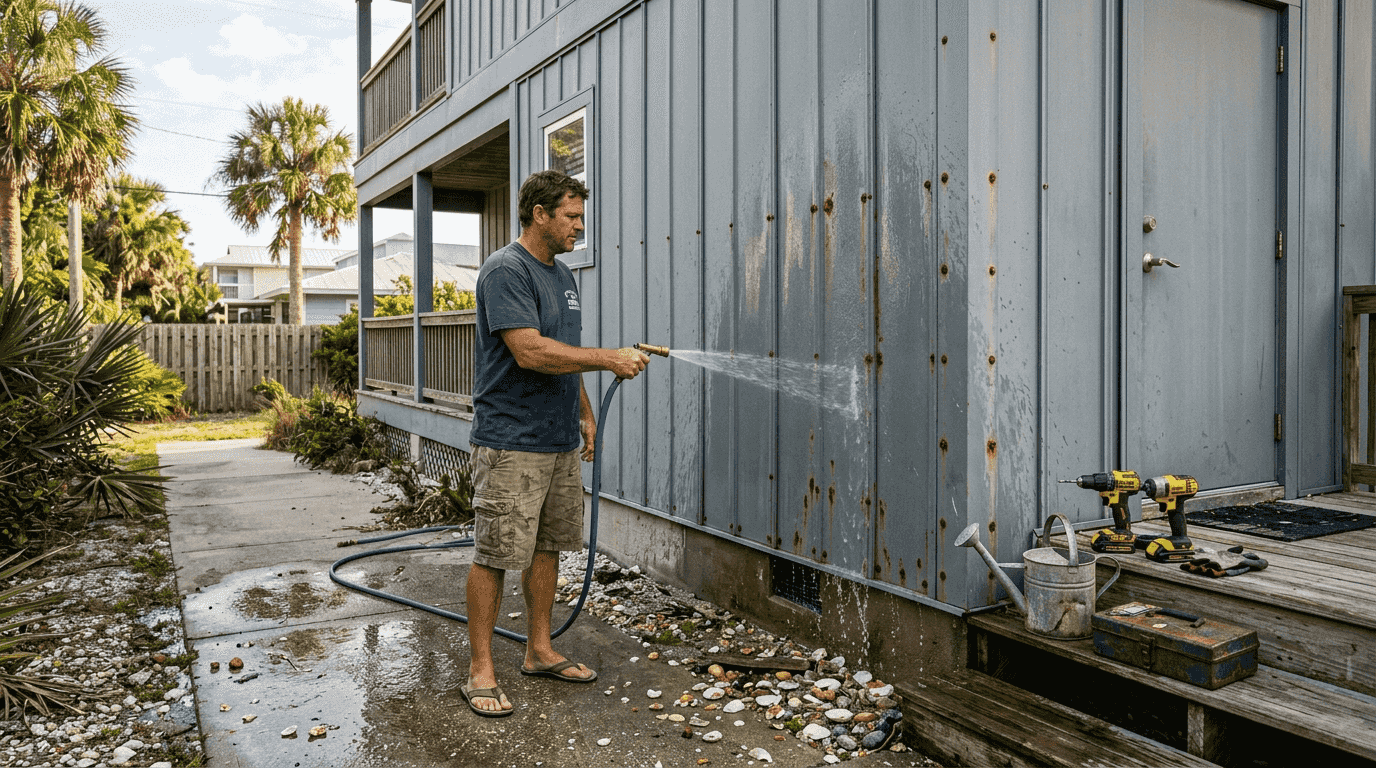
Engineered wood offers a middle ground between cost and performance. Engineered wood provides improved pest resistance compared to natural wood but requires diligent sealing to prevent moisture damage. These composite products mimic traditional wood grain at a lower price point than fiber cement. The catch is maintenance: you must reseal and repaint every few years to maintain moisture barriers. Skip this upkeep and you’ll face rot and delamination.
Stucco presents a problematic choice for coastal Texas despite its popularity inland. Stucco’s vulnerability to moisture absorption makes it unsuitable for humid coastal areas prone to cracking. While it offers excellent energy efficiency and a distinctive aesthetic, the material traps moisture against your home’s structure. Coastal humidity and shifting soils create conditions where stucco cracks, allowing water infiltration that damages framing and insulation.
- Fiber cement: Best overall for coastal durability, moderate maintenance, higher upfront cost
- Metal siding: Excellent wind and corrosion resistance, requires periodic cleaning, mid to high cost
- Engineered wood: Budget-friendly option, demands regular sealing, moderate durability
- Stucco: Strong energy performance, poor moisture resistance, not recommended for coastal areas
Each material brings specific strengths to your home’s exterior. The key is matching those capabilities to your location’s weather patterns, your maintenance capacity, and your budget. Next, we’ll compare these options side by side across the critical factors that determine long-term performance and value. For detailed guidance on installation best practices, explore proper siding installation for coastal Texas homes.
Comparing siding materials: durability, maintenance, and cost
A direct comparison reveals how fiber cement, metal, engineered wood, and stucco stack up across the factors that matter most for coastal Texas homes. This side-by-side analysis helps you weigh tradeoffs and identify the best fit for your specific situation.
| Material | Wind Resistance | Moisture/Salt Resistance | Maintenance Level | Typical Cost per Sq Ft | Energy Efficiency |
|---|---|---|---|---|---|
| Fiber Cement | Excellent (up to 190 mph) | Excellent | Moderate (repaint every 10-15 years) | $6-12 | Good |
| Metal (Galvalume®) | Excellent (140+ mph) | Excellent with coating | Low (clean annually) | $7-14 | Very Good |
| Engineered Wood | Fair to Good (100-130 mph) | Fair (needs sealing) | High (seal every 3-5 years) | $4-8 | Fair |
| Stucco | Poor to Fair (vulnerable to cracks) | Poor (absorbs moisture) | Moderate (repair cracks) | $6-9 | Excellent |
Fiber cement dominates the durability category. Fiber cement withstands hurricane-force winds reaching 190 mph, far exceeding the performance of vinyl and engineered wood. This material resists moisture penetration and salt air corrosion without degrading. You’ll need to repaint every 10 to 15 years to maintain appearance, but the substrate remains structurally sound for 50 years or more. Installation costs run higher due to the material’s weight and specialized cutting requirements.
Metal siding excels in corrosion and wind resistance when you choose the right coating system. Galvalume® coatings offer superior protection compared to standard galvanized steel in coastal environments. The panels shed water immediately and reflect solar heat, reducing cooling costs by 10 to 20 percent. Maintenance involves annual washing to remove salt buildup and prevent finish degradation. Properly installed metal siding lasts 40 to 60 years with minimal intervention.
Engineered wood appeals to budget-conscious homeowners but demands consistent upkeep. The material costs 30 to 50 percent less than fiber cement upfront, making it attractive for large projects. However, you must apply water-repellent sealers every three to five years and address any damage immediately to prevent moisture infiltration. Skip this maintenance and you’ll face rot, swelling, and delamination within a decade. In coastal climates, this high maintenance burden often negates the initial savings.
Stucco delivers the lowest durability in coastal Texas despite its energy benefits. The material’s tendency to absorb moisture creates ongoing problems in humid environments. Cracks develop from foundation settling and thermal expansion, providing pathways for water to reach your home’s structure. While stucco offers excellent insulation value, the moisture risks make it unsuitable for coastal applications. Repair costs add up quickly as you chase new cracks and water damage.
Pro Tip: Calculate total cost of ownership over 20 years, including installation, maintenance, and expected repairs. A material with higher upfront costs often delivers better value when you factor in reduced maintenance and longer lifespan.
- Fiber cement offers the best balance of durability and moderate maintenance for most coastal homeowners
- Metal siding provides superior performance if you’re willing to invest in premium coatings and annual cleaning
- Engineered wood makes sense only if you commit to rigorous sealing schedules and regular inspections
- Stucco should be avoided in coastal Texas unless you’re prepared for ongoing moisture management challenges
The comparison makes clear that no single material wins across all categories. Your choice depends on which factors matter most for your home’s location, your budget constraints, and your willingness to perform regular maintenance. Understanding these tradeoffs prepares you to make a final decision that balances protection, cost, and long-term value. For ongoing care strategies, review the siding maintenance guide 2026 to maximize your investment.
Choosing the best siding material for your coastal Texas home
Making your final siding choice requires considering location-specific factors, budget realities, and your capacity for ongoing maintenance. The right decision balances upfront investment with long-term protection and cost efficiency.
Start by verifying that your chosen material meets local Windstorm certification requirements. Texas coastal counties mandate specific performance standards for wind resistance and impact protection. Products without proper certification may void your insurance coverage or fail inspection. Check the Windstorm product evaluations database to confirm your siding qualifies.
Consider FORTIFIED™ standards as your performance benchmark. FORTIFIED™ homes showed minimal damage during Hurricane Sally, with over 95 percent demonstrating strong resilience. This designation requires specific installation practices and material choices that significantly reduce storm damage. While not mandatory, FORTIFIED™ certification often qualifies you for insurance discounts that offset higher material costs.
“The difference between a home that survives a hurricane and one that suffers catastrophic damage often comes down to installation quality and material selection. Proper fastening, flashing, and weatherproofing matter as much as the siding itself.”
Evaluate installation quality as rigorously as material choice. Poor fastening, inadequate flashing, and shortcuts during installation undermine even premium siding materials. Hire contractors experienced with coastal installations who understand moisture management and wind load requirements. Request references from coastal projects and verify licensing and insurance coverage.
Balance upfront cost against long-term value using this framework:
- Calculate total installed cost including materials, labor, and required prep work
- Estimate annual maintenance costs based on manufacturer recommendations and contractor quotes
- Project major maintenance events like repainting or resealing over a 20-year period
- Add potential insurance savings from impact-resistant or FORTIFIED™ certified installations
- Compare total 20-year costs across your top material choices
This analysis often reveals that fiber cement or metal siding, despite higher initial costs, deliver better value than cheaper alternatives requiring frequent maintenance. The math changes based on your specific situation, so run the numbers for your home.
Regular upkeep remains essential regardless of which material you select. Even the most durable siding fails prematurely without proper care. Schedule annual inspections to catch damage early, clean surfaces to prevent buildup, and address repairs immediately to prevent water infiltration. These simple practices extend lifespan and maintain appearance.
Your location within coastal Texas influences material performance. Homes directly on the Gulf face more severe salt exposure than properties 10 miles inland. Barrier islands experience stronger winds than mainland communities. Match your material choice to your specific exposure level rather than assuming all coastal locations are identical.
For comprehensive protection strategies beyond siding, explore impact-resistant upgrades reduce coastal damage and learn how exterior siding protection and cost savings work together to safeguard your investment. These resources help you build a complete defense against coastal weather threats.
Protect your coastal Texas home with expert siding solutions
Choosing the right siding material is just the first step. Professional installation that meets 2026 Windstorm standards and ongoing maintenance ensure your investment delivers maximum protection and value. Buffalo Roofing & Exteriors specializes in siding services engineered specifically for coastal Texas conditions, from Corpus Christi to Victoria and San Antonio.
Our team understands the unique challenges coastal homes face and installs fiber cement, metal, and engineered wood siding systems built to withstand hurricanes, salt air, and extreme humidity. We follow proper siding installation protocols that ensure compliance with local codes and maximize material performance. When storms strike, our storm damage restoration services get your home protected quickly. Contact us today for a free estimate and discover how the right siding solution enhances both your home’s protection and curb appeal.
Frequently asked questions about siding materials for coastal Texas homes
How does fiber cement compare to metal siding for hurricanes?
Both materials excel in hurricane conditions but through different mechanisms. Fiber cement absorbs impact energy and resists winds up to 190 mph through its dense composite structure. Metal siding deflects debris and handles sustained winds through flexibility and secure fastening systems, typically rated to 140 mph or higher with proper installation.
What maintenance does metal siding require near the coast?
Metal siding needs annual washing to remove salt deposits that can degrade protective coatings over time. Inspect fasteners and seams every six months for corrosion or loosening. Touch up any scratches or chips in the paint system immediately to prevent rust from starting underneath the finish.
Are there cost differences between fiber cement and engineered wood?
Fiber cement typically costs 50 to 100 percent more than engineered wood for materials and installation. However, fiber cement requires less frequent maintenance and lasts twice as long, often making it more cost effective over 20 years when you factor in resealing, repainting, and replacement costs.
Why is proper siding installation crucial for durability?
Even premium materials fail when installed incorrectly. Proper fastening prevents wind uplift, correct flashing stops water infiltration, and adequate ventilation prevents moisture buildup behind panels. Installation quality determines whether your siding performs as designed or fails prematurely during the first major storm.
Can siding impact energy efficiency in coastal homes?
Absolutely. Reflective metal finishes reduce solar heat gain by 20 to 30 percent compared to dark vinyl or wood. Insulated backing systems add R-value to your walls, reducing cooling loads. Properly installed siding with sealed joints eliminates air leakage that forces your HVAC system to work harder, cutting energy bills by 10 to 15 percent year-round.
What is the lifespan of different siding materials in coastal climates?
Fiber cement lasts 50 years or more with periodic repainting. Metal siding with quality coatings performs well for 40 to 60 years. Engineered wood typically survives 20 to 30 years with diligent maintenance. Stucco degrades within 15 to 25 years in coastal humidity, often requiring extensive repairs well before replacement.