


TL;DR:
- A well-maintained deck can provide a high return on investment, especially when tailored to market norms and conditions. Proper inspection, maintenance, and documentation are essential, particularly in coastal areas prone to weather damage, to maximize resale value. Strategic design, size, and storm-resistant features enhance buyer appeal and can lead to significant insurance discounts.
A well-maintained deck is one of the highest-returning exterior investments a homeowner can make, with the role of decks in home value measured in both dollars recovered at resale and the emotional pull that drives buyer offers. The 2025 Cost vs. Value Report shows a typical wood deck addition achieves roughly 94.9% ROI, placing it among the top exterior projects for resale return. For homeowners in coastal or storm-prone markets like Corpus Christi, the calculus goes deeper than square footage. Material choice, structural integrity, and storm resilience all shape what your deck actually adds to your property’s selling price.
What is the real ROI for decks in home value?
Return on investment is the most direct way to measure the impact of decks on property, and the numbers vary significantly by material. Wood decks average an 82–83% ROI, while composite decks land closer to 60–65%. That gap reflects the higher upfront cost of composite, not a failure of the material itself.
A standard wood deck costs $16,000–$22,000 to build and adds roughly $13,000–$18,000 in resale value. Composite decks run $22,000–$28,000 and return $14,000–$17,000. The numbers look better for wood on paper, but composite’s longer service life and lower maintenance costs change the real-world math over time.
ROI figures also shift by market. A deck in a coastal Texas neighborhood where outdoor living is a year-round expectation carries more weight than the same deck in a colder climate where it sits unused for months. ROI calculations also differ between perceived resale value and formal appraisal market value, so treat these figures as directional benchmarks rather than guarantees.
Wood vs. composite: a side-by-side comparison
| Deck Type | Typical Build Cost | Resale Value Added | Average ROI | Expected Lifespan |
|---|---|---|---|---|
| Pressure-Treated Wood | $16,000–$22,000 | $13,000–$18,000 | 82–95% | 10–15 years (coastal) |
| Composite | $22,000–$28,000 | $14,000–$17,000 | 60–65% | 25–30 years |
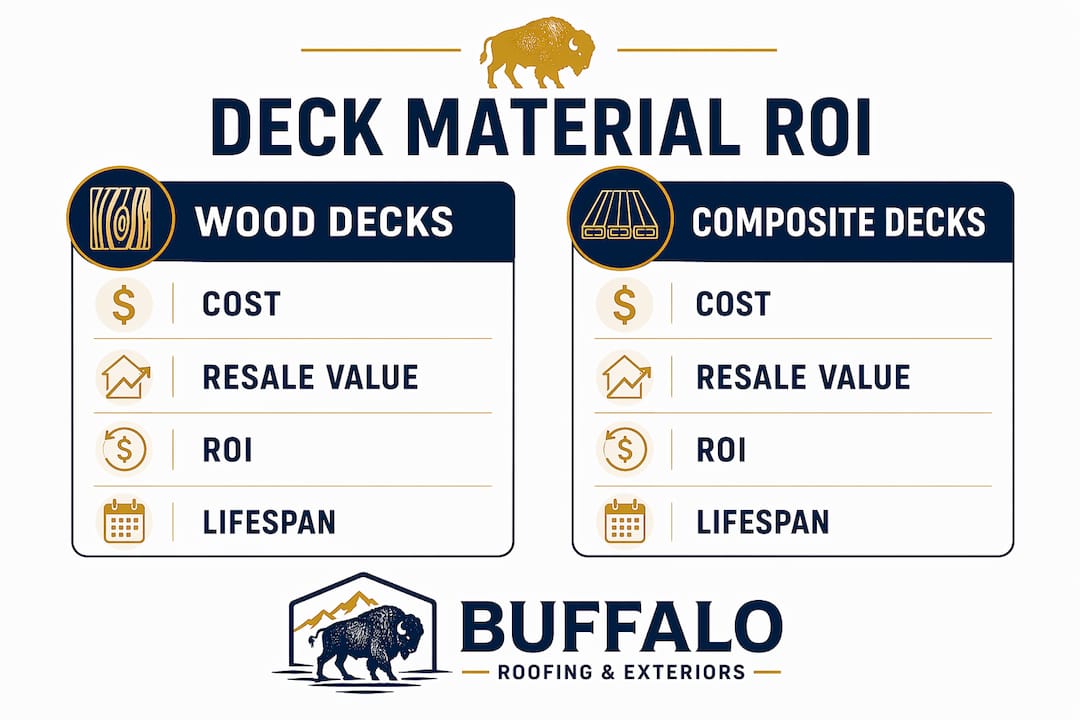
The table makes one thing clear: wood wins on short-term ROI percentage, but composite wins on longevity and total cost of ownership, especially in salt-air environments.
How does deck condition affect value in coastal markets?
Deck condition is where home value with outdoor decks either gets protected or quietly eroded. A worn or aging deck with visible rot, soft boards, or failing railings gives buyers negotiating leverage and triggers inspection delays. Those issues translate directly into lower offers or repair credits demanded at closing.

Coastal environments accelerate this deterioration. Salt air corrodes fasteners, warps untreated wood, and breaks down surface finishes faster than inland conditions. Pressure-treated decks in salt-air climates typically need re-staining every 12–18 months and full replacement every 10–15 years. Composite decks sidestep most of that maintenance cycle, which is why they are the preferred choice for coastal Texas homes despite the higher initial price.
Pre-sale deck condition matters more than most homeowners realize. Buyers in coastal markets are experienced with weather-related damage. They look for soft spots, discoloration, and loose ledger boards. A deck that fails a visual inspection before the formal home inspection even begins sets a negative tone for the entire transaction.
Here is what to address before listing your home:
- Surface boards: Replace any soft, cracked, or visibly rotted boards before listing.
- Railings and balusters: Loose railings are a safety flag and an inspection red flag. Tighten or replace them.
- Ledger board connection: This is where most structural failures begin. Have it professionally inspected.
- Fasteners and hardware: Salt air corrodes standard steel hardware. Upgrade to stainless steel or hot-dipped galvanized fasteners.
- Finish and stain: A fresh coat of stain signals care and adds perceived value at minimal cost.
Pro Tip: Schedule a professional deck inspection 60–90 days before listing your home. That window gives you time to make repairs without rushing, and a clean inspection report becomes a selling point you can share with buyers.
How deck size and design shape buyer perception
Deck size and design are where many homeowners overspend without realizing it. An oversized or elaborate deck disproportionate to the home’s value leads to diminishing returns. A $40,000 multi-level deck on a $250,000 home will not recoup its cost, regardless of how well it is built. The neighborhood sets the ceiling.
The general rule of thumb is that a deck should cover roughly 10–15% of the home’s total square footage. That proportion feels natural to buyers and fits within the visual scale of most properties. Going beyond that threshold often signals overbuilding, which appraisers and buyers both notice.
Design matters as much as size. Functional outdoor zones that buyers can picture using daily drive stronger emotional connections and stronger offers. A defined dining area, a seating zone with clear sightlines to the yard, and a smooth transition from the interior to the deck all increase perceived livability. These are not expensive additions. They are intentional design choices.
Small updates also carry real weight. Refreshed railings, defined seating areas, and curb appeal improvements like updated lighting or privacy screens can increase perceived value without a full renovation. Buyers respond to spaces that feel finished and usable, not just structurally sound.
Here is what design decisions actually move the needle:
- Defined use zones: Separate dining and lounging areas signal thoughtful design, not just open planking.
- Proportional sizing: Match deck size to home size and neighborhood norms to avoid over-improvement.
- Interior-to-exterior flow: Wide door access and matching floor levels make the deck feel like part of the home.
- Lighting: Low-voltage deck lighting extends perceived usability and photographs well for listings.
What do storm-prone markets require from deck construction?
Storm-prone markets like coastal Texas add a layer of complexity that most general deck guides skip entirely. Structural deck quality directly affects wind mitigation insurance discounts, and those discounts are real money. Some Florida homeowners see 40–60% reductions on the wind portion of their insurance premium when storm-resistant features qualify. That figure reflects what is possible when construction meets documented wind mitigation criteria.
The deck-to-house connection is the most critical structural point in a storm. A poorly attached ledger board can cause the entire deck to separate from the home under high wind loads. That failure creates structural damage to the house itself, not just the deck. Exterior upgrades that meet wind mitigation standards protect both the structure and the homeowner’s insurance position.
Documentation is the part most homeowners skip and later regret. Keeping permits, inspection records, and material specifications for your deck gives buyers confidence and supports insurability. Structural deck issues often exceed visible surface damage, and professional inspections prevent sellers from underestimating repair costs that affect the final sale price.
Here is a practical checklist for storm-prone area homeowners:
- Pull permits for all deck work. Unpermitted structures create title and insurance complications at resale.
- Use hurricane-rated hardware. Simpson Strong-Tie connectors and stainless steel fasteners are the standard for coastal construction.
- Document material specs. Keep records of composite brand, board grade, and fastener type for future inspections.
- Schedule a wind mitigation inspection. A certified inspector can identify qualifying features and generate the report your insurer needs.
- Address ledger board attachment. This single connection point determines whether your deck survives a major storm or becomes a liability.
Pro Tip: Ask your contractor for a copy of all permits and inspection sign-offs at project completion. Store them with your home’s records. That file is worth real money when you sell or file an insurance claim.
Key takeaways
A well-built, properly maintained deck consistently returns 60–95% of its cost at resale, with the highest returns going to homeowners who match deck size to neighborhood norms, maintain the structure, and document storm-resistant construction.
| Point | Details |
|---|---|
| Wood vs. composite ROI | Wood decks return 82–95%; composite returns 60–65% but lasts longer in coastal climates. |
| Condition drives negotiation | Visible rot or structural damage gives buyers leverage to reduce offers or demand repair credits. |
| Size to home ratio matters | Keep deck size at 10–15% of home square footage to avoid over-improvement and diminishing returns. |
| Storm documentation adds value | Permits and wind mitigation records support insurance discounts and buyer confidence at resale. |
| Coastal materials cost more upfront | Composite and stainless hardware cost more initially but reduce long-term maintenance and replacement cycles. |
The honest truth about deck investments i’ve learned over the years
Most homeowners think about decks as a lifestyle upgrade first and an investment second. That order of thinking leads to the most common mistake I see: building what you want instead of what the market will pay for.
The homes that recoup the most from their decks are not the ones with the most elaborate builds. They are the ones where the deck is well-maintained, proportional to the home, and structurally sound. A clean, functional deck on a well-kept home signals to buyers that the entire property has been cared for. That signal is worth more than any premium material choice.
In coastal markets specifically, deferred maintenance is the silent value killer. A deck that looked fine two years ago can develop serious structural problems after one bad hurricane season. The signs of deck replacement are often hidden under the surface, in the ledger board, the joists, and the post bases. By the time the damage is visible from the outside, the repair cost has already climbed.
My honest advice: treat your deck like a mechanical system, not a piece of furniture. Inspect it annually, address small issues before they compound, and consult a local exterior contractor before you list your home. The cost of a pre-sale inspection is a fraction of the repair credit a buyer will demand if they find problems first.
— Buffaloroofingandexteriors
How Buffaloroofingandexteriors helps you protect and maximize deck value
If you are a homeowner in Corpus Christi, San Antonio, or Victoria thinking about how your deck affects your property’s resale potential, Buffaloroofingandexteriors brings the expertise to help you make the right call. From coastal deck renovations built to handle Gulf Coast weather to structural inspections that uncover hidden damage before it costs you at closing, the team knows what buyers and appraisers look for in storm-prone Texas markets.

Buffaloroofingandexteriors specializes in deck repairs, material upgrades, and storm-resistant exterior construction that supports both your home’s durability and its long-term value. Whether you need a full deck replacement or a targeted repair before listing, the team offers free estimates and financing options to make the process straightforward. Reach out today to schedule your consultation and get a clear picture of what your deck is worth.
FAQ
How much does a deck increase home value?
A wood deck typically adds 82–95% of its cost back in resale value, while composite decks return 60–65%. The exact amount depends on deck condition, size relative to the home, and local market expectations.
Are decks worth the investment in coastal areas?
Composite decks are generally the better investment in coastal markets because they resist salt air and require far less maintenance than pressure-treated wood, which needs re-staining every 12–18 months and replacement every 10–15 years.
How does deck condition affect a home appraisal?
A worn or structurally compromised deck can reduce appraised value and create inspection issues that delay or derail a sale. Visible rot, loose railings, and ledger board problems are the most common triggers for buyer negotiation and repair credits.
What deck features qualify for storm insurance discounts?
Decks built with hurricane-rated hardware, properly attached ledger boards, and documented wind mitigation features can contribute to insurance premium reductions. Some homeowners in storm-prone states see 40–60% reductions on the wind portion of their premium when qualifying features are verified.
How big should a deck be to maximize home value?
A deck sized at 10–15% of the home’s total square footage hits the sweet spot for most markets. Larger decks on modestly priced homes tend to over-improve the property and rarely recoup their full cost at resale.