TL;DR:
- Commercial building exteriors use durable materials like fiber cement panels, metal systems, and stucco to attract tenants and protect investments. Biophilic and climate-responsive facades reduce energy costs and meet sustainability standards, while strategic maintenance enhances curb appeal and property value. Regular inspections, proper coatings, and targeted upgrades offer the highest return on exterior investments.
A commercial building exterior is the envelope of materials, finishes, and architectural elements that define a structure’s identity, durability, and market value. The best examples of commercial exteriors prove that material selection, facade design, and ongoing maintenance work together to attract tenants, reinforce brand identity, and protect long-term property investment. Architects and developers who treat the facade as a strategic asset, not an afterthought, consistently outperform those who focus only on interiors. Brands like Sherwin-Williams, James Hardie, and SOM have each shaped how the industry thinks about commercial building designs, from coating chemistry to cantilevered green facades.
1. What are the leading types of commercial exterior materials and finishes?
Material selection defines every other decision in commercial facade design. The wrong substrate or coating fails fast, while the right combination lasts decades with minimal upkeep.
- Fiber cement panels. James Hardie and Nichiha both produce fiber cement siding and panel systems that resist moisture, impact, and fire. These panels suit retail centers, medical offices, and mixed-use buildings where low maintenance and clean lines matter most.
- Architectural metal panels. PAC-CLAD metal panel systems deliver sharp, modern profiles in aluminum and steel. They work well on office towers, warehouses converted to creative offices, and high-end retail facades where a contemporary look is the goal.
- Wood-look and composite cladding. Thermally modified wood and composite cladding products replicate the warmth of natural timber without the rot risk. Layering these with metal or fiber cement creates the depth and contrast that defines modern exterior architecture.
- Stucco and masonry. Traditional stucco and brick remain common in commercial construction across the South and Southwest. They perform well in dry climates but require proper sealing in coastal or high-humidity markets.
- Direct-to-metal coatings. On metal door frames, flashing, and panel joints, substrate-specific DTM coatings prevent premature failure that standard masonry paint causes within 12–18 months in high-exposure conditions. This is a detail many property owners miss until they are repainting far too soon.
Pro Tip: Always specify the substrate in writing before ordering coatings. A coating specified for masonry applied to metal will fail regardless of brand or price point.
2. Which commercial exterior designs best combine aesthetics with sustainability?
Biophilic and climate-responsive facades are the defining commercial exterior design trend of 2026. They reduce energy loads, meet certification requirements, and create buildings people genuinely want to occupy.
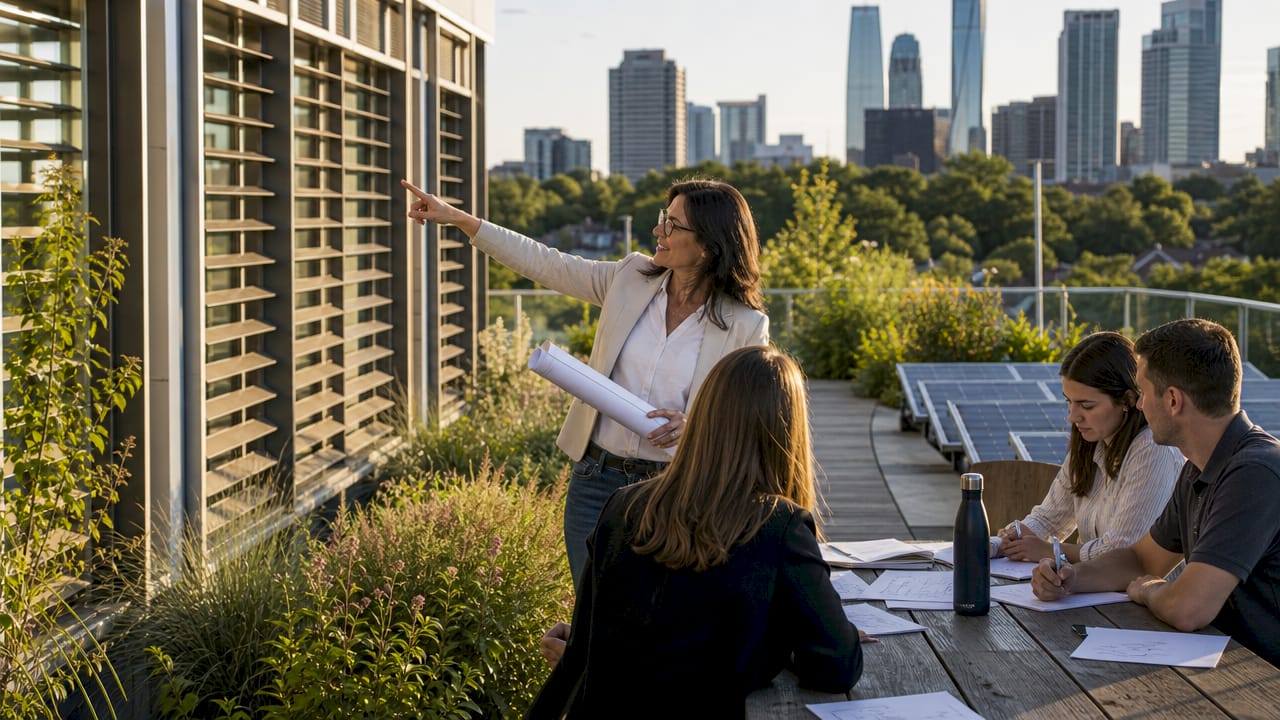
SOM’s Taiwan Power Nangang CR1 office tower is one of the clearest examples of this approach. Its cantilevered balconies carry planted greenery across the building’s face, and the result is measurable. Vertical greenery reduces solar heat gain by approximately 35%, cutting cooling loads and improving occupant comfort without mechanical intervention. That single design decision affects energy bills, HVAC sizing, and tenant satisfaction simultaneously.
Operable louvers and dynamic curtain wall systems take this further. They adjust to sun angle and wind conditions throughout the day, reducing glare and heat without blocking views. Buildings using these systems align naturally with LEED and ASHRAE sustainability standards, which are increasingly required by multinational corporate tenants.
Biophilic, climate-responsive buildings are now an emerging necessity for corporate headquarters seeking top-tier sustainability certifications. Indoor-outdoor connectivity, natural ventilation, and planted facades are no longer premium features. They are baseline expectations for Class A commercial space in 2026.
3. What are compelling examples of impactful storefront facade design?
High-traffic retail facades do two jobs at once: they protect the building and they sell the brand. The most effective examples of storefront facades treat every surface as a communication tool.
KFC Claremont’s slatted Timmdek facade is a textbook case. The vertical timber-look slats create a textured screen that filters light, adds depth, and signals a premium, modern brand identity without a full structural overhaul. The material choice alone repositioned the building in its retail context.
KFC Beyers Park took a different approach. Layered 3D teak cladding combined with black metal detailing creates a facade that reads as bold and contemporary from the street. The contrast between warm wood tones and sharp black elements breaks the building’s massing and gives it visual energy that a flat painted surface never achieves.
“Contrasting textures and the layering of materials like metal cladding with natural wood-look composites create depth and dynamic visual interest imperative for modern commercial facades in busy retail environments.” — Timmdek
Multi-surface painting strategies matter here too. Applying consistent brand colors across walls, soffits, columns, and trim ties a facade together visually. Without that coordination, even premium cladding materials look disjointed. Color is the cheapest tool in commercial property curb appeal, and it is consistently underused.
4. How can commercial exterior maintenance and upgrades maximize curb appeal?
A well-maintained exterior sends a direct psychological signal to prospective tenants. Professional exterior upkeep influences high-quality tenant decisions and renewal rates faster than interior factors in many cases. That finding should change how property managers allocate maintenance budgets.
CertaPro Painters completed a full exterior refresh for a Costco location in Denver in just 6 days. The project included power washing, spot priming, and two coats of premium paint on walls and stucco, all with minimal disruption to business operations. That timeline proves that a meaningful facade upgrade does not require closing a property or staging a months-long renovation.
Incremental exterior upgrades like shade structures, seating areas, and retractable screens boost curb appeal cost-effectively without full-scale renovation. These additions improve the pedestrian experience, signal active property management, and directly reduce vacancy periods.
| Upgrade type | Cost level | Impact on curb appeal | Best for |
|---|---|---|---|
| Full facade repaint | Medium | High | Aging stucco or brick buildings |
| DTM coating on metal | Low | High | Buildings with exposed metal frames |
| Shade structures and seating | Low to medium | Medium to high | Retail and mixed-use properties |
| Planted vertical greenery | Medium to high | Very high | Office towers and corporate campuses |
| Cladding replacement | High | Very high | Outdated or damaged panel systems |
Pro Tip: Schedule facade refreshes during your slowest occupancy or traffic period. A 6-day repaint during a low-traffic week costs the same as one during peak season but causes far less disruption to tenants and customers.
5. What role does exterior renovation play in commercial property value?
Exterior renovation is the process of upgrading a building’s outer envelope to improve performance, appearance, and market position. It covers everything from replacing deteriorated cladding to installing new window systems and applying fresh coatings. For commercial property developers, it is one of the highest-return investments available because it affects both lease rates and asset valuation.
Visible investment in exterior upkeep strongly correlates with attracting and retaining quality tenants by signaling professional management. A building that looks neglected from the street tells prospective tenants something about how the landlord operates. That perception is difficult to reverse once it forms.
Targeted facade refreshes outperform full renovations in most cases because they deliver visible results at a fraction of the cost. Replacing a dated cladding system, repainting with a contemporary color palette, and adding modern signage can reposition a building in its submarket without the timeline or budget of a ground-up renovation. For boosting business value in competitive Texas markets, this approach consistently delivers measurable results.
6. How do different styles of building exteriors serve different commercial uses?
Different styles of building exteriors exist because different commercial uses demand different performance profiles. A medical office building needs clean, durable surfaces that read as professional and hygienic. A creative office conversion needs texture, character, and materials that signal an unconventional culture. A retail center needs bold color, legible signage zones, and facades that hold up under constant foot traffic and direct sun.
Industrial and warehouse buildings increasingly use architectural metal panels and large-format glazing to signal that the space has been upgraded for creative or tech tenants. This repositioning strategy works because the exterior communicates the interior upgrade before a prospective tenant ever walks through the door.
Hospitality exteriors prioritize warmth and welcome. Natural stone, warm-toned stucco, and wood-look cladding create an arrival experience that sets guest expectations. The facade is the first moment of the brand experience, and in hospitality, that moment carries significant weight.
Mixed-use buildings face the most complex exterior design challenge. The ground-floor retail zone needs to read as active and inviting, while upper residential or office floors need a quieter, more refined material palette. The best mixed-use facades use a clear material hierarchy to separate these zones without creating visual conflict.
Key takeaways
The most effective commercial exteriors combine the right materials, a clear design intent, and consistent maintenance to deliver lasting tenant appeal and property value.
| Point | Details |
|---|---|
| Material choice drives longevity | Specify substrate-matched coatings like DTM on metal to prevent premature failure. |
| Biophilic facades reduce energy loads | Vertical greenery cuts solar heat gain by approximately 35%, lowering cooling costs. |
| Maintenance signals management quality | Professional exterior upkeep reduces vacancy periods and improves tenant retention rates. |
| Incremental upgrades deliver strong returns | Shade structures, seating, and targeted repaints boost curb appeal without full renovation. |
| Layered textures create brand identity | Combining metal, wood-look cladding, and bold color gives retail facades depth and visual energy. |
What I’ve learned from watching commercial facades age
The most common mistake I see on commercial buildings is treating the exterior as a one-time decision. Owners specify good materials at construction, then ignore the facade for a decade until something fails visibly. By that point, the repair cost is three times what a maintenance program would have cost, and the building has already lost tenants who noticed the decline before the owner did.
The second mistake is applying the wrong coating to the wrong substrate. I have watched property managers repaint metal door frames with standard masonry paint because it was cheaper and faster. Within 18 months, the paint is peeling and the frames look worse than before. Substrate-specific preparation is not a premium option. It is the baseline for any coating that is supposed to last.
What actually works is a simple cycle: inspect annually, address surface prep issues immediately, and plan a full refresh every 5–7 years depending on climate exposure. In coastal Texas markets, that cycle shortens because salt air and UV intensity accelerate material degradation faster than inland markets. Buildings that follow this cycle consistently outperform their neighbors in tenant retention and lease rates.
The 2026 design trends toward biophilic facades and operable systems are real, but they are not accessible to every budget. For most commercial property owners, the highest-return move is still the basics: clean surfaces, consistent color, good lighting, and materials that are correctly specified and properly maintained. That combination outperforms any trendy facade treatment applied to a poorly maintained building.
— Buffalo Roofing and Exteriors
Commercial exterior and roofing services from Buffalo Roofing and Exteriors
Buffalo Roofing and Exteriors works with commercial property owners and developers across South Texas, from San Antonio to Corpus Christi, on exterior renovations, roofing upgrades, and facade maintenance projects. The team specializes in the kind of work that actually moves the needle on property value: proper surface preparation, material-matched coatings, and durable systems built for coastal weather conditions.
Whether you need a flat roof replacement for a commercial building or a full exterior renovation to reposition a property in its submarket, Buffaloroofingandexteriors delivers workmanship backed by warranties and free estimates. View the commercial project portfolio to see completed work across the region, or request a quote to get started.
FAQ
What materials work best for commercial building exteriors?
Fiber cement panels from brands like James Hardie, architectural metal systems like PAC-CLAD, and stucco with proper sealing are the most common high-performance choices. The best material depends on climate, building use, and maintenance budget.
How often should a commercial exterior be repainted or refreshed?
Most commercial exteriors need a full refresh every 5–7 years, though coastal and high-UV markets like South Texas shorten that cycle. Substrate-specific coatings and proper surface prep extend intervals significantly.
Does exterior curb appeal actually affect tenant retention?
Yes. Professional exterior upkeep directly influences tenant leasing and renewal decisions, often faster than interior factors. A well-maintained facade signals professional management to prospective tenants before they ever enter the building.
What is the fastest way to improve commercial property curb appeal?
A targeted exterior repaint with power washing, spot priming, and two premium coats can be completed in as few as 6 days with minimal business disruption. Adding shade structures and updated signage delivers additional impact at low cost.
What are the top commercial exterior design trends for 2026?
Biophilic facades with vertical greenery, operable louver systems, and indoor-outdoor connectivity are the leading 2026 design trends. These features align with LEED and ASHRAE standards and are increasingly required by corporate tenants seeking sustainability-certified space.