TL;DR:
- Proper roof safety measures, such as fall protection and correct anchor installation, are essential to prevent accidents and damage.
- Ground-level inspections, like binocular checks and thermal imaging, offer safe ways to assess roof condition without climbing.
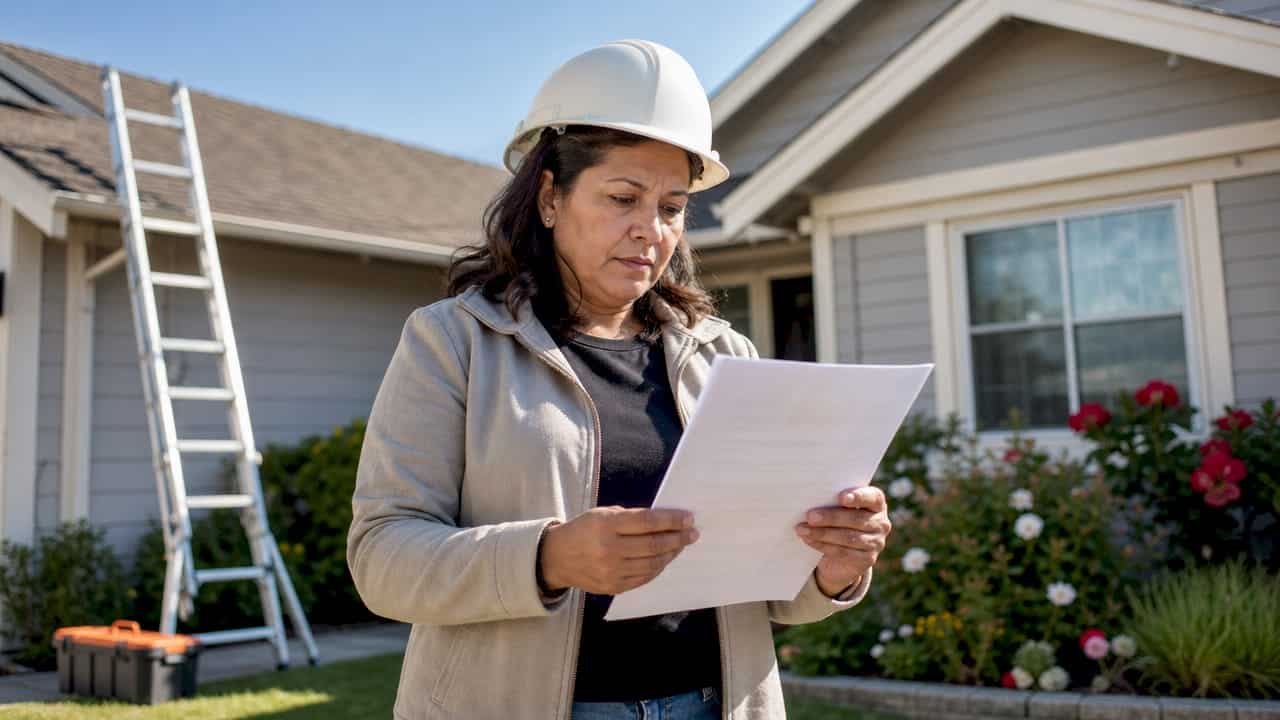
Essential roof safety tips are the practical measures and standards that prevent falls, structural accidents, and costly damage during roof inspections and maintenance. OSHA mandates fall protection for any roof work at heights of 6 feet or greater, a standard that applies to licensed contractors and homeowners alike. In storm-prone regions like coastal Texas, where hurricanes and heavy rain cycles stress roofs year-round, following proper roof safety guidelines is not optional. Skipping them puts lives at risk and can void your insurance coverage before a single repair is made.
1. What are the essential roof safety tips for fall protection?
Fall protection is the single most critical element of safe roofing practices. OSHA requires guardrails, safety nets, or a personal fall arrest system (PFAS) for steep-slope roofs. Warning lines, which are sometimes used on low-slope commercial roofs, are prohibited on steep residential roofs.
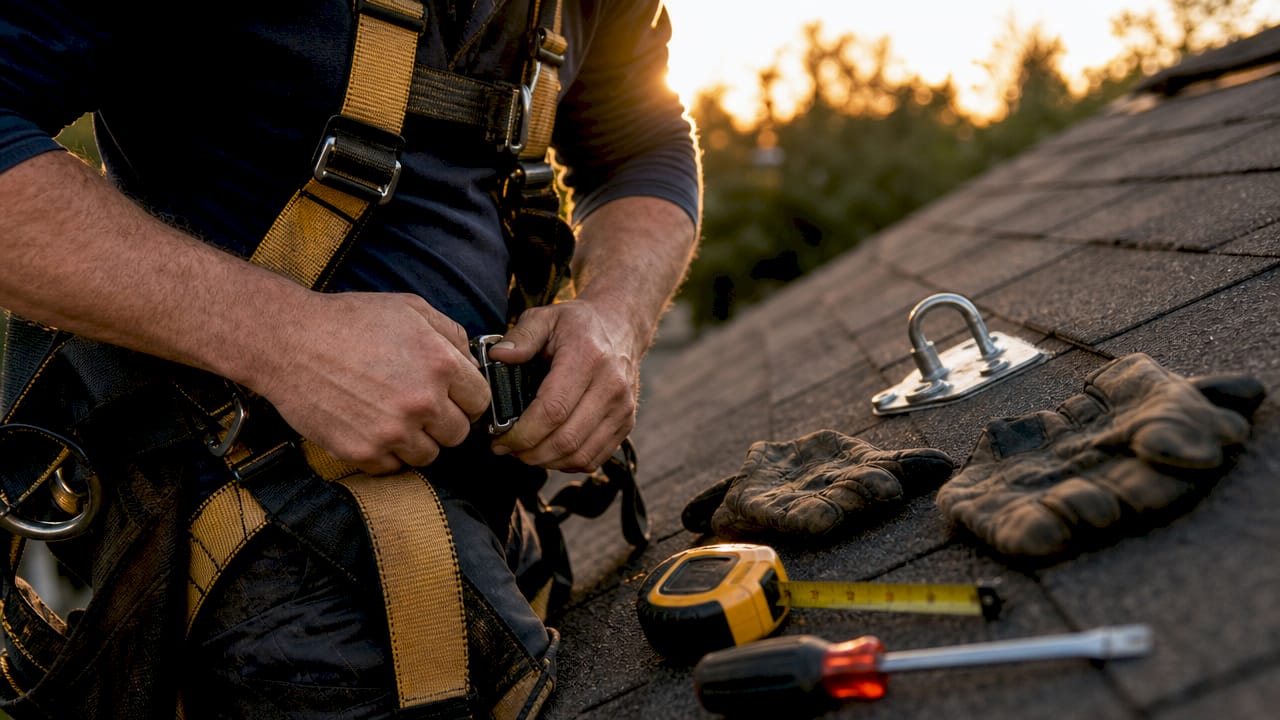
A PFAS includes three components: a full-body harness, a connecting lanyard, and a roof anchor. Each part must work together correctly. A shock-absorbing lanyard reduces the force on your body during a fall. A self-retracting lifeline automatically locks when you move too fast, giving you more freedom of movement with less slack to manage.
Harness fit is critical: no more than two fingers of slack should fit under any strap. A loose harness does not prevent a fall. It causes secondary injuries when the straps snap tight against an unprotected body.
Pro Tip: Before putting on a harness, lay it flat on the ground and check every buckle and strap for fraying or cracking. A damaged harness fails silently.
As of 2026, OSHA also requires written, site-specific fall protection plans tailored to the roof’s geometry and crew. If you hire a contractor, ask to see that plan before work begins.
2. How to install roof anchors correctly
Anchor placement determines whether your fall protection system actually works. Roof anchors must attach to structural members like rafters or trusses, not just the roof decking or sheathing. Sheathing alone cannot support the load.
A properly installed anchor must be rated to support 5,000 pounds during fall arrest. Use a stud finder to locate rafters before drilling. Anchoring into the wrong spot means the anchor pulls free during a fall, which defeats the entire system.
Temporary anchors work for single-day jobs. Permanent ridge anchors are a better investment for homeowners who access their roof seasonally for cleaning gutters or inspecting storm damage. Either way, the attachment point is everything.
3. Safe roof inspection methods that don’t require climbing
The safest roof inspection requires no climbing at all. Ground-level checks with binoculars let you spot missing shingles, lifted flashing, and visible sagging without stepping off the ground. This approach works well after storms when wet surfaces make roofs especially dangerous.
Professional attic inspections using thermal imaging detect moisture intrusion and insulation gaps invisible from the surface. These inspections typically take 45–60 minutes and reveal problems that no amount of rooftop walking would uncover. Thermal imaging finds wet insulation, hidden rot, and air leaks before they become structural failures.
Drones offer another ground-level option. A drone with a camera gives you a close-up view of ridge lines, valleys, and flashing without any physical risk. Many professional inspectors now include drone footage as part of their standard roof inspection service.
Pro Tip: After any major storm, do your first check from the attic, not the roof. Water stains on the underside of the decking tell you exactly where the roof is failing.
Hidden water damage and rot, create soft spots that look solid from above but collapse under foot pressure. A roof that looks intact from the ground can be structurally compromised underneath.
4. Ladder setup and climbing rules that prevent accidents
Proper ladder angle is not a suggestion. Place the base one foot away from the wall for every four feet of ladder height. For a 16-foot ladder, the base sits 4 feet out. Too steep and the ladder tips backward. Too shallow and it slides out at the base.
Extend the ladder at least 3 feet above the roof edge. This gives you a stable handhold when you step onto and off the roof. Secure the top of the ladder to the fascia or a roof bracket, and stake or tie the base to prevent it from shifting on uneven ground.
Maintain three points of contact at all times while climbing: two hands and one foot, or two feet and one hand. Never rush this. One moment of imbalance on a ladder is enough to cause a serious fall.
Never carry tools while climbing. Use a pull-up rope to hoist your tool bag after you reach the roof safely. Tool belts shift your center of gravity and reduce your grip strength on the rungs.
Pro Tip: Set your ladder on firm, level ground. If the ground is soft, place a wide board under the feet to distribute the load and prevent sinking.
5. Footwear choices that actually grip the roof
Footwear is underrated in most roof maintenance safety tips, but it directly affects your grip on every step. Soft-soled, rubber-grip shoes outperform hard-soled work boots on asphalt shingles. The soft rubber conforms to the shingle surface and creates more contact area.
Avoid leather-soled shoes, flip-flops, or any footwear with worn treads. Wet shingles reduce grip dramatically regardless of shoe type, which is why weather conditions matter as much as footwear selection.
Roofing-specific shoes with textured soles designed for pitched surfaces are available at most safety supply retailers. They are worth the investment if you access your roof more than once or twice a year.
6. Weather conditions that make roofs dangerous
Weather is the most overlooked hazard in roof work safety. Wet, icy, or shaded roofs stay slippery for hours after rain ends. The general rule: wait at least two hours after rain before stepping onto any roof surface. Even then, shaded north-facing slopes dry more slowly than sun-exposed sides.
Wind above 25 mph creates instability on any pitched surface. High winds also affect ladder stability, making the climb itself dangerous before you reach the roof. Check the forecast before scheduling any roof access.
Watch for these structural warning signs before stepping onto any roof:
- Sagging sections or visible dips in the roofline
- Missing or curled shingles that expose the decking
- Daylight visible through boards in the attic
- Soft or spongy areas when you press on the decking from inside
Skylights deserve special attention. They look solid but most residential skylights cannot support body weight. A fall through a skylight is a fall through the ceiling. Mark skylight locations before any roof access and stay at least 6 feet away from them.
7. When to call a professional instead of doing it yourself
DIY roof work carries risks that go beyond physical injury. DIY repairs frequently void roofing warranties and insurance claims, leaving you responsible for the full cost of future failures. A repair that costs $300 today can void coverage on a $15,000 roof replacement tomorrow.
Licensed contractors carry their own liability insurance and are trained in fall protection compliance. They bring the right equipment, know how to read structural damage, and can spot secondary problems you would miss. A professional roof maintenance checklist covers far more ground than a homeowner walking the perimeter.
Hire a professional after any of these events:
- A named storm, hurricane, or hail event
- Visible interior water stains or ceiling damage
- Roof age exceeding 15 years without a formal inspection
- Any repair involving flashing, valleys, or ridge caps
Buffalo Roofing and Exteriors recommends scheduling a professional inspection at least once a year in coastal Texas, and immediately after any significant weather event. The cost of an inspection is a fraction of the cost of storm damage restoration that goes undetected for months.
Key Takeaways
Roof safety requires fall protection compliance, correct equipment use, and knowing when professional help is the only responsible choice.
| Point | Details |
|---|---|
| OSHA fall protection applies at 6 feet | Steep-slope roofs require guardrails, safety nets, or a PFAS. Warning lines are not permitted. |
| Anchor to rafters, not sheathing | Roof anchors must attach to structural members rated to support 5,000 pounds during fall arrest. |
| Inspect from the ground first | Binoculars and attic thermal imaging reveal damage safely without stepping onto the roof. |
| Ladder angle and extension matter | Set the base one foot out per four feet of height and extend the ladder 3 feet above the roof edge. |
| DIY repairs can void warranties | Unauthorized repairs often invalidate roofing warranties and insurance, creating larger financial risk. |
What I’ve learned from watching homeowners underestimate their roofs
The most dangerous assumption a homeowner makes is that a roof looks fine from the driveway, so it must be safe to walk on. I’ve seen that logic lead to falls through rotted decking that showed no visible signs of damage from below. A roof that survived the last storm is not necessarily a roof that will hold your weight today.
The second mistake is treating ladder safety as common sense. People who have climbed ladders their whole lives skip the angle check, skip securing the base, and carry a drill in one hand. That confidence is exactly what gets them hurt. Three-point contact is not a beginner rule. It is the rule, every time, for everyone.
Fall protection equipment only works when it fits correctly and anchors into the right spot. I’ve seen harnesses worn so loosely they would have caused serious injury on their own during a fall. And I’ve seen anchors drilled into sheathing that would have pulled free under any real load. The equipment is only as good as the person who sets it up.
The homeowners who stay safe are the ones who treat every roof access as a deliberate decision, not a casual task. They check the weather, set up the ladder properly, wear the right shoes, and call a professional the moment anything looks structural. That mindset is the real safety system.
— Buffalo Roofing and Exteriors
Roof safety and professional service from Buffalo Roofing and Exteriors
Coastal Texas homeowners face storm seasons that test roofs harder than most regions in the country. Buffalo Roofing and Exteriors provides professional roof inspections, storm damage assessments, and repairs across Corpus Christi, San Antonio, and Victoria, with every job performed under current fall protection standards.
If your roof has taken storm damage or hasn’t been inspected in the past year, the risk of hidden structural failure grows with every weather event. Buffalo Roofing and Exteriors offers free estimates and weather-resistant roofing solutions built for the Texas coast. Get a professional assessment before the next storm season arrives.
FAQ
What height triggers OSHA fall protection for roof work?
OSHA requires fall protection at 6 feet or higher for all roofing work. This applies to both contractors and homeowners performing their own repairs.
Can I inspect my roof without climbing on it?
Ground-level binocular checks and attic thermal imaging inspections are the safest methods. They detect most damage without any roof access.
How long should I wait after rain before going on a roof?
Wait at least two hours after rain stops before accessing any roof surface. Shaded areas and north-facing slopes take longer to dry and remain slippery well after sun-exposed sections.
Does DIY roof repair void my warranty?
Yes. Unauthorized DIY repairs frequently void manufacturer warranties and homeowner insurance claims, which can result in full out-of-pocket costs for future roof failures.
How often should a roof be professionally inspected in storm-prone areas?
Professional inspections are recommended at least once per year in coastal and storm-prone regions, and immediately following any named storm, hail event, or visible interior water damage.