TL;DR:
- New roofing materials combine advanced polymers and impact-resistant designs to protect homes from severe weather. Impact resistance, especially Class 4, is essential in storm-prone areas, with synthetic and polymer-modified asphalt shingles leading the market. Proper roof systems include all components, such as underlayment and ventilation, for optimal storm protection and energy efficiency.
New roofing materials are defined as engineered roofing products that combine advanced polymer chemistry, impact-resistant construction, and energy-efficient design to protect homes from severe weather. For homeowners and property developers in storm-prone regions like coastal Texas, the stakes are high. A roof that fails in a hurricane or hail storm is not just a repair bill. It is a safety crisis. The industry now recognizes Class 4 impact resistance as the gold standard for storm durability, and technologies like SBS polymer-modified asphalt and green roof systems have moved from specialty products to practical choices for residential and commercial builds.
What new roofing materials offer the highest impact resistance?
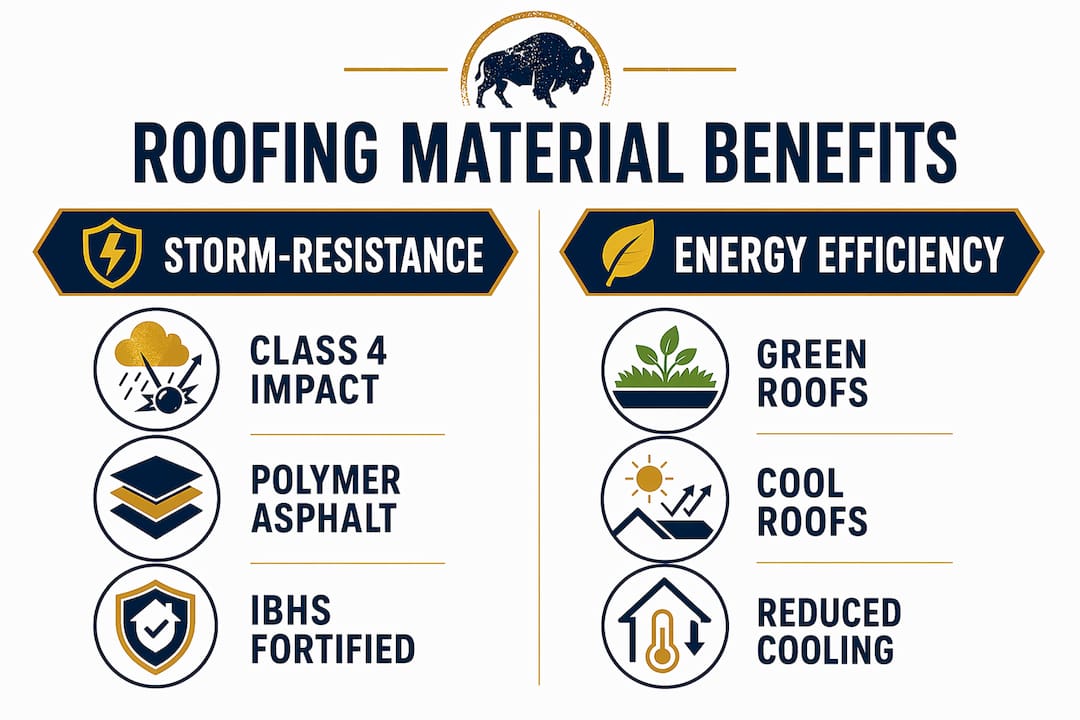
Impact resistance is the single most important performance metric for roofs in storm-prone areas. Class 4 impact resistance is the highest rating available, tested by dropping 2-inch steel or ice balls onto shingles with no cracking allowed. That test simulates large hail, which causes billions of dollars in roof damage across the Gulf Coast every year.
Synthetic shingles and polymer-modified asphalt shingles lead the field in meeting this standard. GAF Timberline UHDZ shingles, for example, carry a UL 2218 Class 4 rating backed by UltraMat fiberglass core technology that reinforces the shingle from the inside out. That internal reinforcement is what separates a Class 4 product from a standard architectural shingle.
The materials that consistently achieve Class 4 ratings share a few key characteristics:
- Polymer-modified or rubberized asphalt cores that flex under impact instead of cracking
- Reinforced fiberglass mats that hold the shingle together after a strike
- Enhanced granule adhesion that prevents surface erosion after repeated hail events
- High wind ratings that complement impact resistance, often rated to 130 mph or higher
Pro Tip: When comparing Class 4 products, ask your contractor for the UL 2218 test report, not just the marketing label. The test report confirms the exact ball size and drop height used, which tells you how the product was actually certified.
Impact resistance does not stop at the shingle surface. Ridge caps, starter strips, and hip shingles must also meet the same performance standard. A roof with Class 4 field shingles but standard ridge caps has a weak point at every peak and hip. Storm-ready roofing systems treat every component as part of the defense, not just the flat field area.
How does polymer-modified asphalt improve durability?
Traditional oxidized asphalt shingles harden over time. Temperature swings cause them to expand and contract, and after years of that cycle, they become brittle and crack. SBS polymer-modified asphalt solves this by blending styrene-butadiene-styrene rubber into the asphalt base. The result is a shingle that behaves like rubber, flexing with temperature changes instead of fracturing.
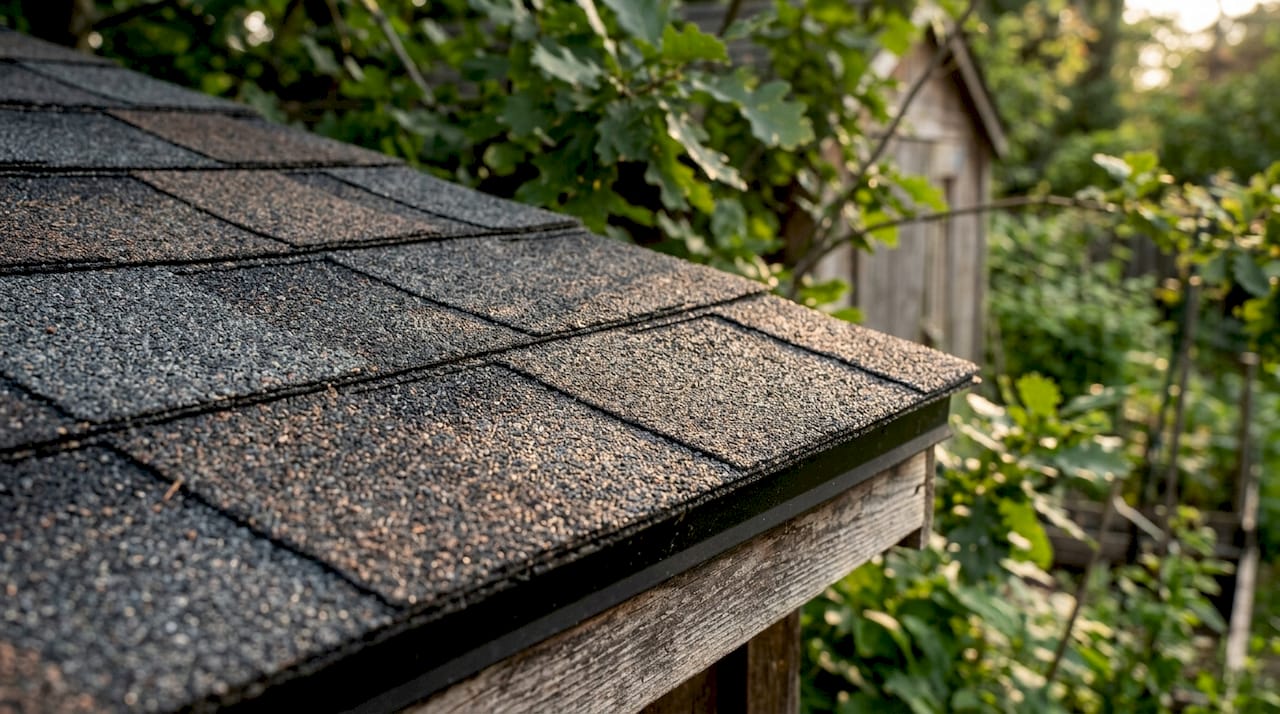
For coastal Texas homeowners, this matters because the climate swings between intense summer heat and cooler, wet winters. A shingle that cannot handle that range will fail early, losing granules and developing micro-cracks that let moisture in. Polymer-modified products maintain granule adhesion and structural integrity across those swings, extending the roof’s functional life.
The practical benefits of SBS polymer-modified asphalt include:
- Reduced brittleness in cold temperatures, preventing cracking during winter storms
- Better hail resistance because the rubber matrix absorbs impact energy
- Longer granule retention that protects the asphalt core from UV degradation
- Compatibility with recycled materials, with some manufacturers integrating recycled rubber or plastic into the compound
Pro Tip: Polymer-modified shingles cost more upfront than standard three-tab or basic architectural shingles. The price difference typically pays back through fewer repairs, longer warranty periods, and lower insurance premiums for certified products.
The sustainability angle is worth noting for property developers. Some polymer-modified products incorporate post-consumer recycled content, which can contribute to green building certification points under programs like LEED. That is a real advantage for developers building in markets where energy codes and environmental standards are tightening.
What energy-efficient roofing options reduce cooling and heating costs?
Energy performance is the second major driver behind the shift to newer roofing products. Two categories lead this space: green roofs and cool roofs. Both reduce the heat that enters a building through the roof, but they work in very different ways and suit different property types.
Green roofs use a layer of growing medium and vegetation installed over a waterproof membrane. The EPA reports that green roofs reduce indoor temperatures by up to 27°F and cut cooling loads by 70% compared to conventional roofing. Annual energy savings range from $0.15 to $0.57 per square yard for cooling and $0.18 per square yard for heating. Those numbers add up quickly on a large commercial or multi-family property.
Cool roofs use highly reflective materials, typically white or light-colored membranes or coatings, to bounce solar radiation away from the building. They are simpler to install than green roofs and work well on low-slope and flat roofs common in Texas commercial construction.
| Feature | Green roofs | Cool roofs |
|---|---|---|
| Cooling load reduction | Up to 70% | Significant, varies by reflectivity |
| Heating savings | Yes, insulation effect | Minimal in winter |
| Stormwater management | Strong: absorbs runoff | None |
| Installation complexity | High: requires structural support | Low to moderate |
| Best application | Flat commercial, multi-family | Flat or low-slope residential and commercial |
| Lifecycle cost | Higher upfront, strong long-term return | Lower upfront, moderate long-term return |
For homeowners on a tighter budget, cool roof coatings applied over existing flat or low-slope roofs offer an affordable entry point into energy-efficient roofing. For property developers building new construction, a green roof system delivers stormwater management benefits that can reduce municipal fees and meet local environmental requirements.
The steps to evaluate which option fits your property:
- Confirm your roof slope. Green roofs require a nearly flat surface with structural load capacity.
- Check local energy codes. Some Texas municipalities offer rebates for cool roof installations.
- Calculate your cooling season length. Coastal Texas properties run air conditioning for eight or more months, making cooling savings the dominant factor.
- Get a structural assessment before specifying a green roof. The growing medium adds significant weight per square foot.
What should you know about roofing systems beyond surface materials?
The biggest misconception in residential roofing is that the shingle is the roof. Engineered roofing systems treat the shingle as one component in an assembly that includes underlayment, fastening patterns, ventilation, and ridge design. A Class 4 shingle installed over inadequate underlayment on a poorly ventilated deck will fail before its rated lifespan.
The IBHS FORTIFIED Roof program addresses this directly. IBHS FORTIFIED certification covers every component of the roofing assembly, including shingles, underlayments, and fasteners, guaranteeing system-wide storm resistance rather than just surface performance. Homes built or retrofitted to FORTIFIED standards consistently outperform standard construction in hurricane and hail events.
The components that determine whether a roofing system performs under storm conditions:
- Underlayment: Synthetic underlayments outperform felt paper in moisture resistance and tear strength. FORTIFIED programs specify minimum underlayment standards.
- Fastening patterns: Ring-shank nails driven at the correct angle and spacing hold shingles in high-wind events. Staples and smooth-shank nails fail earlier.
- Deck integrity: A solid, properly spaced plywood or OSB deck is the foundation. Gaps or soft spots compromise every layer above.
- Ventilation: Proper attic ventilation prevents heat and moisture buildup that degrades shingles from below. Ridge-to-soffit ventilation is the standard for balanced airflow.
Pro Tip: Ask your contractor whether the installation qualifies for IBHS FORTIFIED designation before work begins. Insurance discounts for certified systems can reach up to 35% on annual premiums, which changes the financial math on a premium roofing system significantly.
Choosing impact-resistant roofing for Texas means specifying the full system, not just the shingle brand. The roofing industry’s shift toward treating roofs as engineered assemblies is one of the most important changes in residential construction in the past decade.
Key Takeaways
The most effective approach to storm-resistant roofing combines Class 4 impact-rated materials, SBS polymer-modified asphalt technology, and a fully certified installation system to deliver lasting protection in severe weather regions.
| Point | Details |
|---|---|
| Class 4 rating is the benchmark | Only materials tested with 2-inch steel ball impacts and showing no cracking earn this top storm-resistance rating. |
| Polymer-modified asphalt outperforms standard shingles | SBS rubber blending prevents brittleness, extends granule life, and improves hail resistance across temperature extremes. |
| Green roofs cut cooling loads by up to 70% | EPA data confirms green roofs reduce indoor temperatures by up to 27°F, delivering measurable energy savings annually. |
| The full system determines performance | Underlayment, fastening, and ventilation are as critical as the shingle. IBHS FORTIFIED certification covers all components. |
| Insurance savings reward certified roofs | Homeowners with Class 4 or FORTIFIED-certified roofs can qualify for premium discounts of up to 35%. |
What I’ve learned after years of watching roofing technology evolve
The roofing industry spent decades selling shingles as a commodity. Price per square was the conversation. What I see now is a genuine shift: homeowners and developers in storm-prone regions are asking better questions. They want to know the UL rating, the underlayment spec, and whether the installation qualifies for an insurance discount. That is a healthier conversation.
The part that still frustrates me is the gap between what the technology can do and what actually gets installed. A contractor can sell you a Class 4 shingle and then install it with the wrong fastening pattern over a worn deck. The shingle rating means nothing in that scenario. The 2026 roofing trends point clearly toward system-level thinking, but execution depends entirely on the installer.
Polymer-modified asphalt is the technology I would put my own money on for coastal Texas properties. The flexibility advantage in a climate that swings between 100°F summers and cold, wet winters is real and measurable. Green roofs are compelling for commercial developers who can absorb the upfront structural cost and want long-term energy and stormwater returns.
The insurance angle is underused. Homeowners who invest in a certified system and then fail to document it with their insurer leave money on the table. Discounts of up to 35% on annual premiums are available for qualifying roofs. That is not a minor footnote. On a $3,000 annual premium, that is $1,050 back in your pocket every year. The roofing industry needs to do a better job connecting that financial reality to the purchase decision. For those interested in how the roofing marketing side of this industry is evolving, roofing contractor SEO is increasingly shaping how homeowners find and evaluate contractors before they ever pick up the phone.
— Results
Buffaloroofingandexteriors: storm-resistant roofing built for Texas
Buffaloroofingandexteriors specializes in storm-resistant roofing for homeowners and property developers across Corpus Christi, San Antonio, and Victoria, Texas. The team installs Class 4 impact-rated systems, polymer-modified asphalt shingles, and complete IBHS FORTIFIED-qualified assemblies with warranties that back the work long after installation day.
If your property sits in a coastal or storm-prone area, a free estimate from Buffalo Roofing and Exteriors gives you a clear picture of what your roof actually needs. The team can also walk you through financing options for roofing that make a premium system accessible without a large upfront payment. See completed projects and material options at the Buffaloroofingandexteriors project gallery and contact the team for a consultation.
FAQ
What is Class 4 impact resistance in roofing?
Class 4 is the highest impact resistance rating for roofing materials, tested by dropping 2-inch steel or ice balls onto shingles with no cracking allowed. It is the standard most recommended for homes in hail-prone and hurricane-risk regions.
Are polymer-modified asphalt shingles worth the extra cost?
Yes. SBS polymer-modified shingles resist brittleness, retain granules longer, and perform better under hail and wind than standard asphalt shingles. The upfront cost difference is typically recovered through longer product life and lower insurance premiums.
How much can a green roof reduce energy costs?
Green roofs can reduce indoor temperatures by up to 27°F and cut cooling loads by 70% compared to conventional roofs, according to EPA data. Annual cooling savings range from $0.15 to $0.57 per square yard depending on climate and building type.
What is the IBHS FORTIFIED Roof program?
IBHS FORTIFIED is a certification program that sets minimum standards for every component of a roofing system, including shingles, underlayments, and fasteners. Homes certified under this program qualify for insurance premium discounts of up to 35% in many states.
Does the type of underlayment really affect roof performance?
Underlayment is a critical part of the roofing system. Synthetic underlayments provide stronger moisture resistance and tear strength than traditional felt paper, and IBHS FORTIFIED programs specify minimum underlayment standards as part of full system certification.