Coastal Texas homeowners face serious risks from hail and storm damage every year. Impact-resistant roofing can reduce hail damage claims by up to 50% in these vulnerable areas, yet many property owners remain confused about what impact resistance actually protects against and what it doesn’t. This guide clarifies the facts, explores material options, and helps you make informed roofing decisions that truly safeguard your investment.
Table of Contents
- Introduction To Impact Resistant Roofing
- How Impact Resistant Roofing Works: Materials And Mechanics
- Industry Standards And Ratings: What Do They Mean?
- Material Comparison: Metal, Asphalt, Tile
- Common Misconceptions About Impact Resistant Roofing
- Cost, Insurance, And Value: Making The Investment
- Maintenance And Post-Storm Care
- Conclusion: Making The Safe Choice For Texas Coastal Homes
- Protect Your Home With Buffalo Roofing & Exteriors
- Frequently Asked Questions
Key takeaways
| Point | Details |
|---|---|
| Impact resistant roofing reduces hail damage and extends roof life | Properly rated materials absorb impact energy and prevent punctures, cutting repair frequency significantly. |
| Materials vary with distinct tradeoffs | Metal, asphalt, and tile each offer different impact ratings, costs, and lifespans suited to different budgets. |
| UL 2218 ratings indicate protection levels | Class 1 through Class 4 ratings show how well roofing withstands steel ball drop tests simulating hail strikes. |
| Impact resistance covers hail, not wind | These ratings protect against debris impacts but don’t guarantee wind uplift resistance during hurricanes. |
| Insurance discounts reward high-rated roofs | Class 4 impact resistant installations often qualify for premium reductions offsetting higher upfront costs. |
Introduction to impact resistant roofing
Impact resistant roofing refers to materials engineered to withstand hail strikes and flying debris without cracking, puncturing, or sustaining damage that leads to leaks. For homeowners in Texas coastal regions, where severe thunderstorms, hail events, and tropical systems strike regularly, this specialized roofing provides critical protection. Standard roofing materials often fail under repeated hail impacts, forcing expensive repairs and premature replacements.
Texas coastal areas experience some of the nation’s highest hail frequencies, with Corpus Christi, San Antonio, and surrounding counties facing multiple severe weather events annually. These storms produce golf ball to baseball-sized hail capable of destroying conventional roofs in minutes. Impact resistant roofs reduce storm damage by up to 70% on Texas coasts, making them a smart investment for long-term property protection.
Impact resistant roofing addresses several damage types:
- Hail strikes that crack or puncture shingles and tiles
- Flying debris impacts during high winds
- Falling tree branches and storm-driven objects
- Repeated low-level impacts that weaken standard materials over time
By absorbing and dispersing impact energy, these roofing systems prevent the structural damage that leads to water intrusion, mold growth, and interior destruction. Lower repair frequency means reduced maintenance costs and fewer insurance claims over your roof’s lifetime. Homeowners who install weather resistant roofing benefit from extended roof lifespans and improved resale values.
The investment in impact resistant materials pays dividends through decreased emergency repair calls and longer intervals between replacements. When paired with proper warranties, these systems offer financial protection that standard roofing cannot match. Understanding why roofing warranties matter helps homeowners maximize their protection and avoid coverage gaps.
How impact resistant roofing works: materials and mechanics
Impact resistant roofing uses materials that absorb and dissipate impact energy to prevent damage. The physics behind this protection involves two key properties: material strength and flexibility. Strong materials resist penetration, while flexible materials bend slightly to absorb energy without cracking. The ideal impact resistant roof combines both characteristics.
When hail or debris strikes a roof, kinetic energy transfers into the roofing material. Conventional asphalt shingles are rigid and brittle, absorbing little energy before fracturing. Impact resistant materials either flex to dissipate force or feature reinforced cores that distribute energy across larger areas. This prevents concentrated stress points that cause cracks and punctures.
Common impact resistant roofing materials include:
- Metal roofing (steel or aluminum): Naturally durable with inherent flexibility that deflects impacts without denting when properly gauged
- Impact-resistant asphalt shingles: Modified formulations with rubberized asphalt or reinforced cores that increase toughness
- Tile roofing: Concrete or clay tiles with thickness and density that resist cracking under impact
Metal roofing typically offers the highest impact resistance, with steel and aluminum panels achieving UL 2218 Class 4 ratings easily. The material’s natural flexibility allows it to absorb hail strikes without permanent damage. Metal also resists cracking from temperature fluctuations, a common problem in Texas where summer heat exceeds 100 degrees regularly.
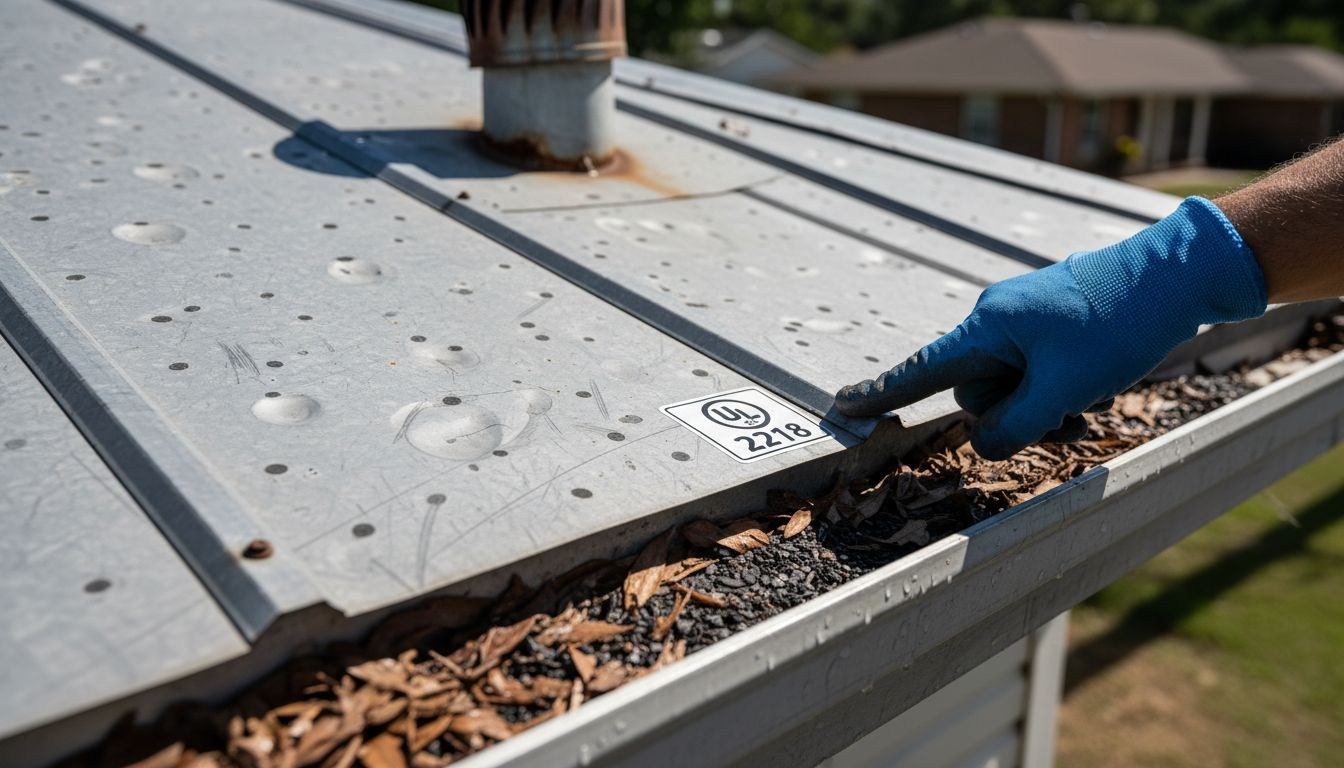
Impact-resistant asphalt shingles use specialized formulations that modify the asphalt polymer blend, creating more flexible and resilient products. Some manufacturers add fiberglass reinforcement layers or rubberized backing to improve impact performance. These shingles cost more than standard versions but significantly less than metal or tile alternatives.
Tile roofing offers variable impact resistance depending on thickness and composition. Concrete tiles generally outperform clay tiles in impact tests due to superior density and compression strength. However, both can crack under extreme impacts, and repairs require specialized skills. Understanding the roof installation workflow helps homeowners appreciate quality differences among contractors.
Proper underlayment also plays a role in overall impact protection. High-quality roofing underlayment creates a secondary barrier that prevents leaks even if surface materials sustain minor damage. This layered approach maximizes protection during severe weather events.
Industry standards and ratings: what do they mean?
UL 2218 is the primary standard for testing roofing impact resistance with four classes indicating protection levels. This testing protocol, developed by Underwriters Laboratories, simulates hail impacts using steel balls dropped from specific heights onto roofing samples. The test measures whether materials crack, puncture, or sustain damage that compromises waterproofing.
UL 2218 testing involves four impact classes:
- Class 1: Withstands 1.25-inch diameter steel ball dropped from 12 feet (simulates small hail)
- Class 2: Withstands 1.5-inch diameter steel ball dropped from 15 feet (simulates moderate hail)
- Class 3: Withstands 1.75-inch diameter steel ball dropped from 17 feet (simulates large hail)
- Class 4: Withstands 2-inch diameter steel ball dropped from 20 feet (simulates severe hail)
Class 4 represents the highest impact resistance available in residential roofing. Materials earning this rating can withstand hail approximately two inches in diameter, equivalent to golf ball-sized impacts. Most insurance companies recognize Class 4 as the threshold for premium discounts because it provides measurable damage reduction.
The UL 2218 test focuses exclusively on impact resistance, not wind resistance or other storm protection factors. Homeowners in coastal Texas must understand this distinction. A roof rated Class 4 for impact may still fail during hurricanes if it lacks proper wind resistant roofing features like reinforced fastening and sealed edges.
Wind resistance ratings come from separate testing standards, including ASTM D3161 and FM 4473, which measure uplift resistance during high winds. Coastal homeowners should verify both impact and wind ratings when selecting roofing systems. Many manufacturers now offer products that meet multiple certification standards, providing comprehensive storm protection.
The NRCA provides detailed guidance on impact resistance testing methodologies and industry best practices. Contractors familiar with these standards can recommend appropriate products for specific regional threats. Texas coastal conditions demand materials rated for both severe hail and hurricane-force winds to deliver reliable protection.
Pro Tip: Request certification documentation from your contractor showing both UL 2218 Class ratings and wind resistance ratings before finalizing material selections. Verify that chosen products meet or exceed local building code requirements for coastal installations.
Material comparison: metal, asphalt, tile
Choosing the right impact resistant material requires weighing multiple factors beyond just impact ratings. This comparison helps Texas coastal homeowners evaluate options based on complete performance profiles and budget constraints.
| Material | Impact Resistance | Lifespan | Cost Range | Aesthetics | Best For |
|---|---|---|---|---|---|
| Metal (steel/aluminum) | Class 4 (highest) | 40-70 years | $$$$ | Modern, industrial | Maximum durability, long-term value |
| Impact-resistant asphalt | Class 3-4 | 20-30 years | $$ | Traditional, varied colors | Budget-conscious, conventional appearance |
| Tile (concrete/clay) | Class 3-4 (variable) | 50+ years | $$$ | Mediterranean, elegant | Aesthetic priority, moderate durability |
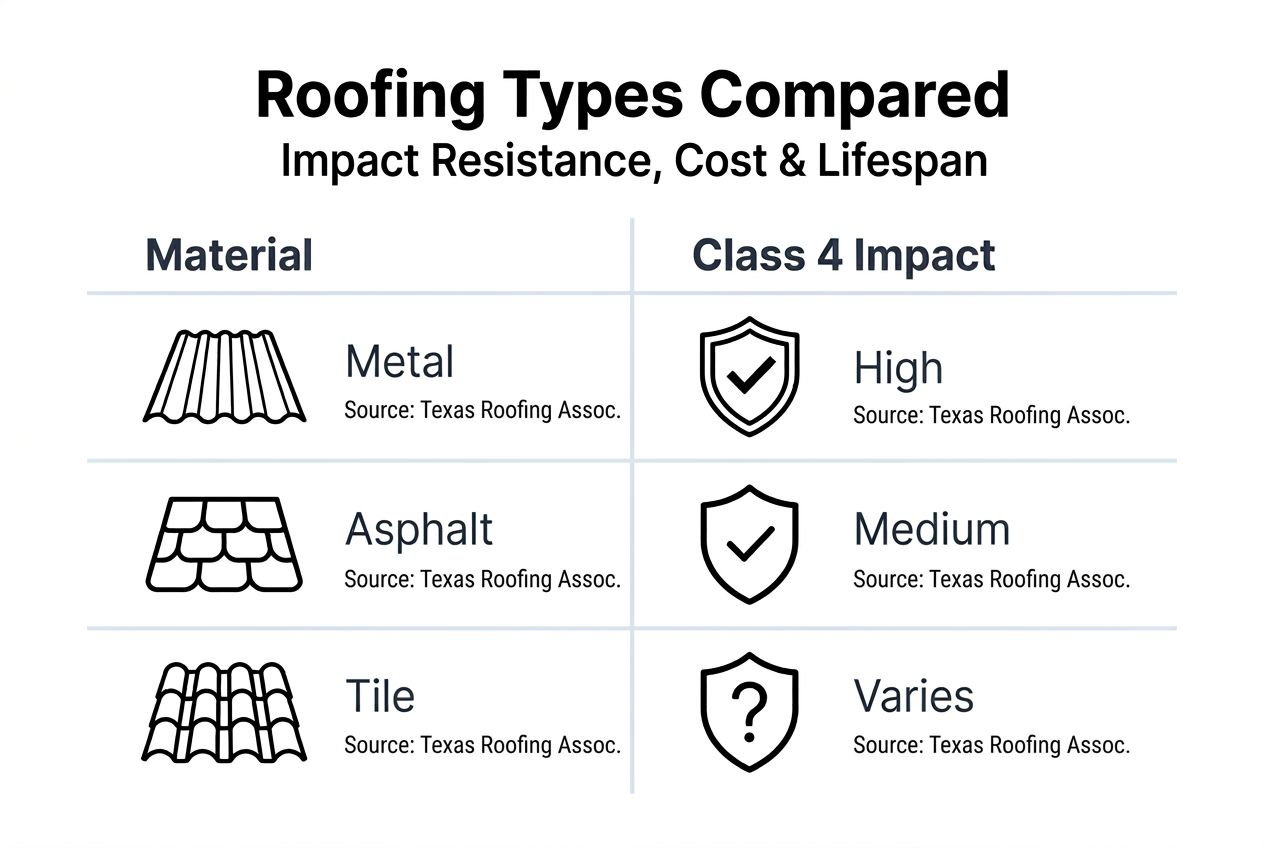
Metal roofing offers the highest impact resistance and longest lifespan among common residential options. Steel and aluminum panels consistently achieve Class 4 ratings while providing 40 to 70 years of service with minimal maintenance. The material naturally resists cracking, warping, and degradation from UV exposure. However, metal roofing costs significantly more upfront, typically running two to three times the price of asphalt alternatives.
Metal roofing benefits include:
- Consistent Class 4 impact resistance across all product lines
- Superior wind resistance with proper installation
- Energy efficiency through reflective coatings that reduce cooling costs
- Lightweight installation that doesn’t stress structural supports
- Recyclability at end of life
Asphalt shingles modified for impact resistance offer more affordable protection with respectable performance. Modern impact-resistant formulations achieve Class 3 or Class 4 ratings while costing only 10% to 30% more than standard shingles. These products provide 20 to 30 years of reliable service, making them practical for homeowners planning shorter ownership periods or working with limited budgets.
Tile roofing delivers aesthetic appeal with mixed impact performance. Concrete tiles generally outperform clay in impact tests, achieving Class 3 or Class 4 ratings depending on thickness. Clay tiles rate lower but offer distinctive Mediterranean styling prized in coastal architecture. Both types last 50 years or more but require stronger roof structures to support their weight. Tile installation and repair costs exceed other materials due to specialized labor requirements.
Exploring available roof materials helps homeowners understand the full spectrum of choices suited to Texas coastal conditions. Local building codes may restrict certain materials in hurricane zones, so verify compliance before finalizing decisions.
Pro Tip: Consider total cost of ownership, not just upfront price. A metal roof costing twice as much as asphalt but lasting three times longer delivers better value per year of service. Factor in reduced maintenance, lower insurance premiums, and fewer replacements when calculating real costs.
Common misconceptions about impact resistant roofing
Not all impact-resistant roofs look or perform the same; impact resistance only covers hail, not wind; higher cost doesn’t always mean better protection. These myths confuse homeowners and lead to poor purchasing decisions that leave properties vulnerable.
Myth 1: All impact-resistant roofs look and perform identically
Reality: Significant performance and aesthetic differences exist among materials and manufacturers. Metal roofing offers superior impact resistance compared to most asphalt products, while tile provides unique appearance but variable protection. Even within categories, formulations and construction methods vary widely. Two Class 4 rated asphalt shingles may use different technologies, resulting in different lifespans and real-world durability.
Myth 2: Impact resistance provides complete storm protection
Reality: UL 2218 ratings measure only impact resistance from hail and debris. They don’t address wind uplift, water infiltration, or structural integrity during hurricanes. Texas coastal homes need both impact and wind resistance to survive tropical storms and hurricanes. A Class 4 roof with poor wind ratings will fail catastrophically when hurricane-force winds tear off panels or shingles, regardless of hail protection.
Myth 3: Higher price automatically means better protection
Reality: Cost correlates with material quality and longevity but doesn’t guarantee superior impact resistance. Some expensive tile products rate lower than affordable impact-resistant asphalt shingles in UL 2218 testing. Installation quality matters as much as material selection. Even premium products fail when installed incorrectly, with improper fastening or inadequate underlayment.
Understanding what weather resistant roofing truly delivers helps homeowners set realistic expectations. Impact resistance protects against specific threats but doesn’t create an invincible roof. Combining impact-rated materials with proper wind resistance, quality installation, and regular maintenance delivers optimal protection.
Cost, insurance, and value: making the investment
Class 4 impact resistant roofs lead to 5% to 20% insurance premium discounts in Texas, offsetting 10% to 30% higher initial costs. This financial equation makes impact resistant roofing increasingly attractive as insurance rates climb in coastal regions.
Typical cost increases for impact resistant upgrades:
- Metal roofing: 100% to 200% more than standard asphalt
- Impact-resistant asphalt: 10% to 30% more than conventional shingles
- Impact-rated tile: 50% to 150% more than standard tile
Insurance companies recognize that Class 4 roofing reduces claim frequency and severity. Many Texas insurers offer premium discounts ranging from 5% to 20% for homes with certified impact resistant roofing. These annual savings accumulate over the roof’s lifetime, potentially recovering the extra upfront investment within 10 to 15 years.
Long-term value extends beyond insurance savings. Impact resistant roofing reduces repair costs by preventing damage that would otherwise require emergency fixes or full replacements. Homeowners avoid the stress and expense of repeated insurance claims, which can trigger rate increases or policy cancellations. Properties with impact resistant roofing also command higher resale values, appealing to buyers seeking move-in ready homes with modern protection.
Understanding roofing insurance coverage helps homeowners maximize benefits and avoid gaps. Document your roof’s impact rating with your insurance company immediately after installation. Request written confirmation of premium discounts and ensure the policy reflects the upgrade.
Pro Tip: Before committing to impact resistant roofing, contact your insurance agent to verify available discounts and requirements. Some insurers require specific certifications or inspection reports. Getting pre-approval ensures you receive promised savings without documentation hassles later.
Maintenance and post-storm care
Regular post-storm inspections and timely repairs prevent minor impact damage from causing leaks and structural issues. Even impact resistant roofing requires proper maintenance to deliver full protection throughout its lifespan.
Schedule professional inspections within days after significant hail or wind events. Trained inspectors identify subtle damage invisible from ground level, including hairline cracks in shingles, displaced fasteners, or damaged flashing. Early detection allows repairs before water infiltration causes interior damage or structural rot.
Signs of impact damage to watch for:
- Dents or dimples in metal panels
- Cracked or missing shingles
- Granule loss on asphalt surfaces
- Broken or displaced tiles
- Damaged or exposed underlayment
- Dented or damaged gutters and downspouts
Post-storm care steps:
- Document visible damage with photographs from multiple angles immediately after storms
- Contact a licensed roofing contractor for professional inspection within 72 hours
- File insurance claims promptly with complete documentation and inspection reports
- Schedule repairs immediately to prevent secondary damage from weather exposure
- Verify repairs use matching materials that maintain impact resistance ratings
Impact resistant materials require specialized repair techniques. Standard roofing contractors may lack experience with modified asphalt formulations or metal panel systems. Choose repair services familiar with impact resistant products to ensure proper fixes that preserve protective properties.
Exploring comprehensive storm damage repair services helps homeowners access qualified contractors who understand impact resistant systems. These specialists carry appropriate materials and tools for quality repairs that maintain warranty coverage.
Pro Tip: Create a post-storm inspection checklist before hurricane season arrives. Include contractor contact information, insurance policy numbers, and documentation procedures. Having this information ready reduces stress and speeds response when severe weather strikes.
Don’t wait for visible leaks to schedule inspections. Water damage often begins weeks before interior signs appear. Impact-resistant upgrades reduce coastal damage significantly, but only when properly maintained and promptly repaired after impacts occur.
Conclusion: making the safe choice for Texas coastal homes
Impact resistant roofing delivers measurable benefits for Texas coastal homeowners facing regular hail and storm threats. Materials rated Class 4 under UL 2218 testing reduce damage by up to 70%, extend roof lifespans significantly, and qualify for insurance premium discounts that offset higher initial costs. Metal roofing provides maximum protection and longevity, while impact-resistant asphalt offers more affordable options for budget-conscious buyers.
Selecting certified materials represents only half the equation. Professional installation by contractors experienced with coastal conditions ensures products perform as designed. Proper wind resistance ratings complement impact protection, creating comprehensive storm defense. Regular maintenance and prompt post-storm inspections preserve protection and maximize lifespan.
Texas coastal homeowners benefit from consulting experienced professionals who understand regional threats and material performance. Buffalo Roofing & Exteriors brings decades of coastal roofing expertise to help property owners make informed decisions that protect their investments. Don’t wait until the next hail storm to upgrade your protection. Proactive roofing choices today prevent costly damage tomorrow.
Protect your home with Buffalo Roofing & Exteriors
Now that you understand impact resistant roofing, it’s time to protect your Texas coastal home with professional solutions. Buffalo Roofing & Exteriors specializes in impact resistant installations throughout Corpus Christi, San Antonio, and Victoria, helping homeowners select materials perfectly suited to coastal weather challenges.
Our team guides you through roof materials selection based on your budget, aesthetic preferences, and protection needs. We install Class 4 rated metal, asphalt, and tile roofing systems backed by comprehensive warranties. Our experienced crews understand proper installation techniques that maximize impact and wind resistance, ensuring your investment delivers decades of reliable protection. Explore our weather resistant roofing options and schedule a free consultation with Buffalo Roofing & Exteriors today.
Frequently asked questions
What roofing materials offer the best impact resistance in Texas coastal areas?
Metal roofing provides the highest impact resistance with consistent Class 4 ratings, followed by impact-resistant asphalt shingles and concrete tile. Metal’s flexibility and strength make it ideal for severe hail protection while withstanding coastal wind and salt exposure.
Can impact resistant roofing withstand hurricane-force winds?
Impact resistance and wind resistance are separate properties measured by different standards. Many Class 4 impact resistant products also meet high wind ratings, but verify both certifications. Impact resistant upgrades work best when combined with proper wind resistant installation techniques.
Are there insurance discounts for installing impact resistant roofing in Texas?
Yes, most Texas insurance companies offer 5% to 20% premium discounts for Class 4 impact resistant roofing. Contact your insurer before installation to verify requirements and ensure proper documentation for discount approval.
How often should I inspect my impact resistant roof after a storm?
Schedule professional inspections within 72 hours after significant hail or wind events. Even impact resistant materials can sustain damage requiring repair, and early detection prevents water infiltration and more expensive secondary damage.