
TL;DR:
- Roofing manufacturers produce materials and systems designed for durability and warranty protection.
- Certified installation by verified contractors ensures roofing performance and qualifies for extended warranties and storm resistance.
Roofing manufacturers are specialized companies that design and produce the materials and complete engineered systems used to protect residential and commercial buildings from weather and wear. The U.S. roofing market is valued at $34.66 billion in 2026, growing at a 6.01% annual rate through 2031. That scale reflects how much homeowners and commercial property owners spend on roofing decisions every year. The right manufacturer choice, paired with certified installation, determines whether your roof survives the next major storm or fails under it. Buffaloroofingandexteriors works with leading manufacturer systems to deliver exactly that kind of protection across coastal Texas.
What are the main types of roofing materials from manufacturers?
Roofing manufacturers produce several distinct material categories, each engineered for specific performance goals and building types. Understanding these categories is the first step toward matching the right product to your project.
-
Asphalt shingles are the most widely used residential roofing material in the United States. The asphalt shingle market is dominated by a small number of vertically integrated manufacturers with deep certification networks and contractor loyalty programs. They offer the best balance of cost, ease of installation, and variety of warranty options for most homeowners.
-
Metal roofing covers both standing seam panels and metal shingles. It performs well in high-wind and high-heat environments, making it a strong choice for coastal Texas properties. Metal roofing typically carries longer lifespans than asphalt, with many products rated for 40–70 years.
-
Tile roofing (clay or concrete) delivers exceptional durability and fire resistance. It is heavier than other options and requires structural support, so it suits new construction or full renovations more than re-roofing projects.
-
Flat roofing membranes are the standard for commercial applications. The three main types are TPO (thermoplastic polyolefin), EPDM (ethylene propylene diene monomer), and PVC. Each offers different performance profiles for heat reflection, chemical resistance, and installation method. Buffaloroofingandexteriors covers all three through its commercial flat roofing services.
-
Modified bitumen and built-up roofing (BUR) remain common in commercial settings where multiple waterproofing layers are needed. These systems are especially effective on low-slope roofs with heavy foot traffic.
Residential projects lean heavily on asphalt shingles and metal roofing. Commercial projects favor flat membrane systems. The best commercial roofing materials in 2026 reflect a clear shift toward longer warranties and energy-efficient designs across both categories.
Why do manufacturer certifications and system installation matter?
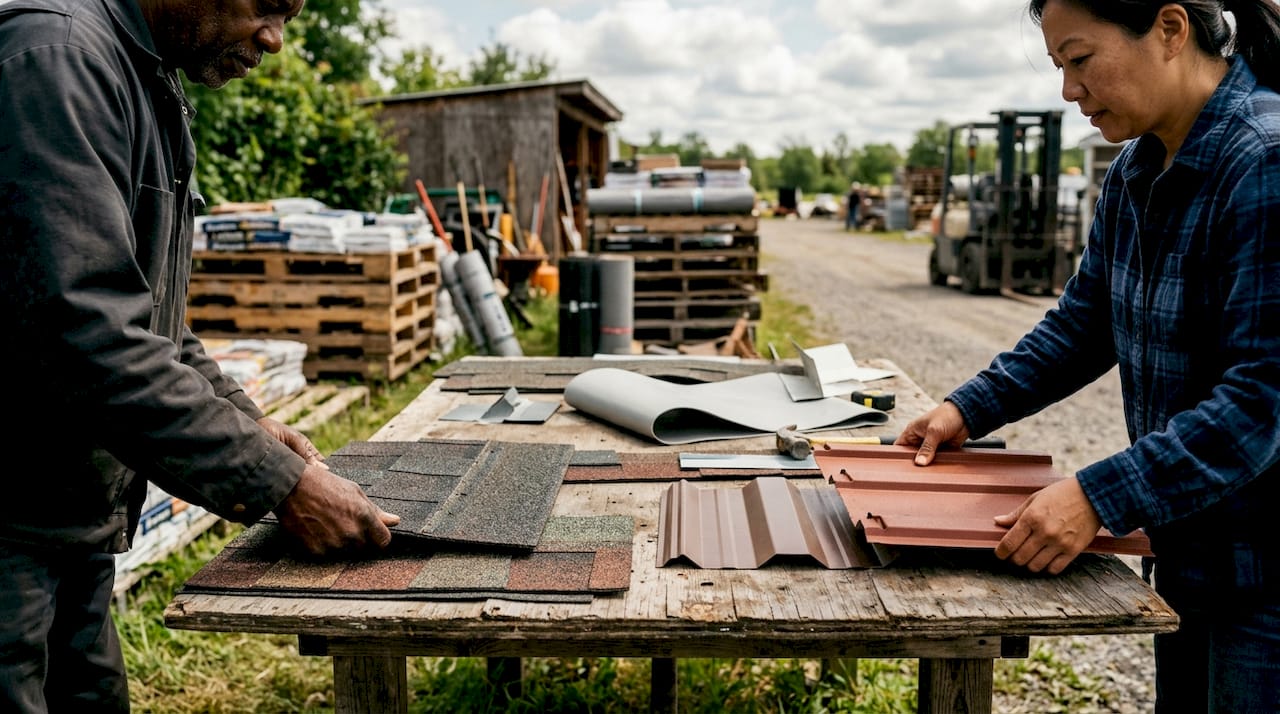
Manufacturer certification programs are the single most reliable quality signal in the roofing industry. A program like GAF Master Elite represents only about 2% of roofing contractors nationwide. That selectivity exists because manufacturers require contractors to meet training standards, maintain insurance, and demonstrate consistent installation quality before earning the designation.
The financial stakes are significant. Certified contractors can unlock material warranties up to 50 years, including labor coverage. Uncertified installers using the exact same materials reduce that coverage substantially. Most homeowners never realize the difference until they file a claim.
Complete system installation is equally critical. Roofing manufacturers design their products to work together as a system: shingles, underlayment, ridge caps, starter strips, and ventilation components. Mixing components from different brands undermines warranty validity and compromises wind and water resistance. This is one of the most common pitfalls of low-bid contractors.
Here is what to verify before signing any roofing contract:
- Confirm certification status. Ask for the contractor’s certification number and verify it directly on the manufacturer’s website.
- Request a full system scope. The bid should list every component by manufacturer and product name, not just “shingles.”
- Compare warranty tiers. Ask specifically whether the quote includes a workmanship warranty and what its duration is.
- Understand the price premium. Certified contractors often charge a 5–10% price premium over uncertified competitors. That premium buys you a warranty that actually holds.
- Check for labor coverage. A material-only warranty leaves you paying out of pocket if installation errors cause leaks. Labor coverage is the difference.
Pro Tip: Ask your contractor to show you the manufacturer’s installation manual for the specific product being installed. A certified contractor will have it on hand and follow it exactly. An uncertified one often will not.
Just as certified arborists deliver measurably better outcomes in tree care because of formal training standards, certified roofing contractors deliver better outcomes because manufacturers hold them accountable to specific installation requirements.
How do roofing manufacturers address storm resistance?
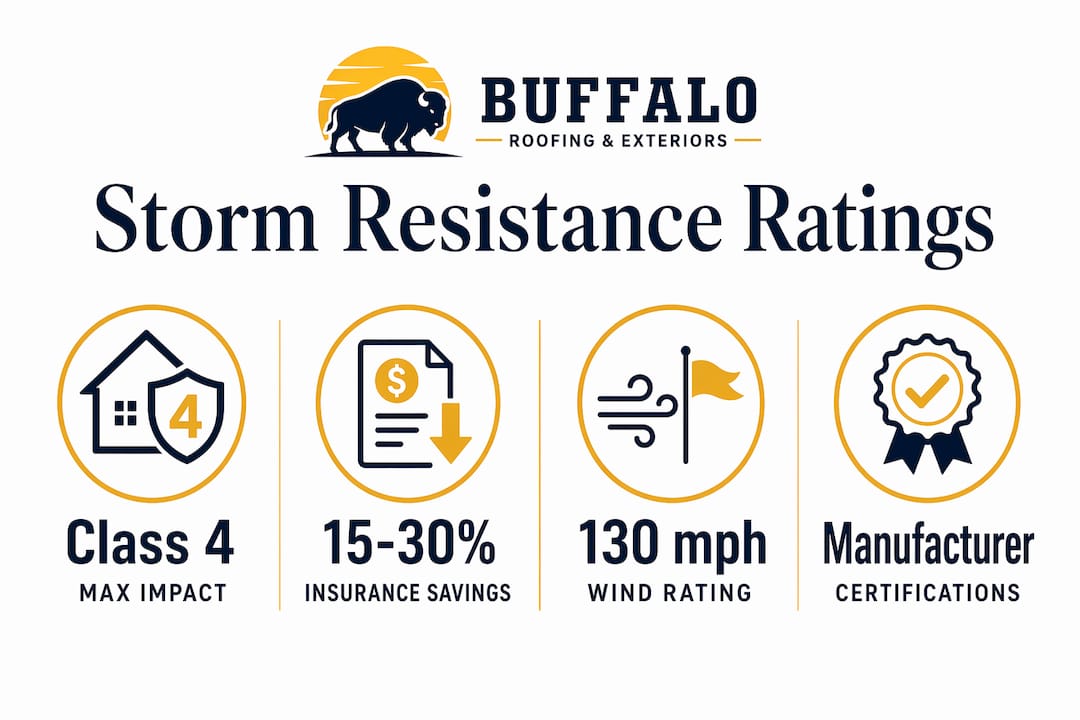
Storm resistance is now a primary design focus for leading roofing supply companies, especially in hail-prone and hurricane-affected regions. The key standard is UL 2218, which classifies impact resistance on a scale from Class 1 to Class 4. Class 4 is the highest rating and the one that matters most for homeowners in Texas and other storm-heavy states.
| Rating | Impact resistance | Typical use case | Insurance benefit |
|---|---|---|---|
| Class 1 | Minimal | Low-risk inland areas | None |
| Class 2 | Moderate | General residential | Minor discounts possible |
| Class 3 | Good | Storm-prone regions | Moderate discounts |
| Class 4 | Maximum (UL 2218) | Coastal and hail zones | 15–30% premium savings |
Homeowners in hail-prone regions frequently receive 15–30% discounts on annual homeowner’s insurance by installing Class 4 impact-resistant roofing. That discount can offset a meaningful portion of the upfront cost over just a few years. Buffaloroofingandexteriors specializes in impact-resistant roofing for Texas coastal homes where these savings are most relevant.
Product ratings alone do not guarantee storm performance. 130 mph wind-rated shingles require specific nail patterns and fastening techniques to achieve their rated resistance. Miss the nail count or placement, and the rating becomes meaningless. This is why installation quality outweighs brand differences for actual storm protection. A Class 4 shingle installed by a certified contractor outperforms a Class 4 shingle installed incorrectly, regardless of which manufacturer produced it.
Pro Tip: Before your next roof replacement, call your insurance provider and ask specifically whether they offer discounts for Class 4 UL 2218-rated roofing. Get the answer in writing before you finalize your material choice.
How to evaluate roofing manufacturers and suppliers for your project
Choosing between residential roofing brands and commercial roofing suppliers requires a structured approach. Price alone is a poor guide. Here is what actually separates a strong manufacturer and contractor pairing from a weak one.
-
Compare bids on identical systems. Require every contractor to quote the same manufacturer, the same product line, and the same system components. Comparing a full-system bid against a shingles-only bid is not a fair comparison, and the price difference will mislead you.
-
Research certification networks. Manufacturers publish their certified contractor directories online. Use them. A contractor who claims certification but does not appear in the manufacturer’s directory is not certified.
-
Verify warranty coverage details. Read the actual warranty document, not just the marketing summary. Confirm whether labor is covered, what voids the warranty, and how long the coverage lasts for each component.
-
Assess local experience. A manufacturer’s product may perform well nationally but require specific installation adjustments for your climate. Contractors with local experience in coastal or high-wind zones understand those adjustments. Buffaloroofingandexteriors has built its entire practice around the specific demands of South Texas weather.
-
Look beyond the brand name. Manufacturer certifications strongly correlate with quality and warranty assurance. Prioritizing a certified installer over a particular brand name alone produces better long-term results. The roofing myths that cost homeowners real money almost always trace back to choosing price or brand recognition over certified installation.
Understanding your roofing warranty options before signing a contract gives you the clearest picture of what you are actually buying.
Key Takeaways
The most effective roofing decision combines a Class 4-rated product from a reputable manufacturer with certified installation and a full-system warranty that covers both materials and labor.
| Point | Details |
|---|---|
| Manufacturer certification matters | Certified contractors unlock warranties up to 50 years, including labor coverage. |
| Full system installation is non-negotiable | Mixing components from different brands voids warranties and reduces storm resistance. |
| Class 4 shingles save money | UL 2218-rated roofing can cut homeowner’s insurance premiums by 15–30% in hail-prone areas. |
| Installation quality beats brand name | A certified installer with any reputable product outperforms an uncertified one using a premium brand. |
| Compare bids on identical systems | Require the same manufacturer and components across all bids for a true cost comparison. |
What I’ve learned after years of watching roofs fail
The roofing industry has a persistent problem: homeowners focus on brand names and price, while the real variable is the installer. I have seen Class 4 shingles from well-known manufacturers fail in moderate storms because the contractor skipped the correct nail pattern. I have also seen mid-tier products hold up through serious hail events because the certified installer followed the manufacturer’s specifications exactly.
The 2% figure for programs like GAF Master Elite is not a marketing number. It reflects how few contractors actually meet the training and accountability standards manufacturers require. When you find one, the 5–10% price premium is not a cost. It is insurance against a warranty claim that gets denied because the underlayment was the wrong brand.
My honest recommendation: start with certification, then choose your material category based on your climate and budget. In coastal Texas, that usually means Class 4 impact-resistant shingles or metal roofing installed by a contractor who can hand you the manufacturer’s installation manual without hesitation. The brand matters less than you think. The installer matters more than almost anyone admits.
— Buffaloroofingandexteriors
How Buffaloroofingandexteriors delivers certified manufacturer systems
Buffaloroofingandexteriors installs complete manufacturer-certified roofing systems for residential and commercial properties across Corpus Christi, San Antonio, and Victoria, Texas. Every project uses matched system components to protect your warranty and meet manufacturer installation standards.
Whether you need a new roof after storm damage or a planned replacement with Class 4 impact-resistant materials, Buffaloroofingandexteriors provides free estimates and flexible financing options to make quality roofing accessible. You can also browse completed roofing projects to see the quality of work firsthand. Contact Buffaloroofingandexteriors today for a free quote and a clear breakdown of your manufacturer warranty options.
FAQ
What are roofing manufacturers?
Roofing manufacturers are companies that produce roofing materials and complete engineered roofing systems, including shingles, membranes, underlayment, and accessories designed to work together for maximum durability and warranty protection.
How do I choose between roofing manufacturers?
Prioritize manufacturers with established certification programs and a network of verified local contractors. The installer’s certification status matters more than the brand name alone for long-term performance and warranty coverage.
What is a Class 4 impact-resistant shingle?
A Class 4 shingle meets the UL 2218 standard for maximum impact resistance. Homeowners in hail-prone areas can receive 15–30% discounts on homeowner’s insurance by installing Class 4-rated roofing.
Does mixing roofing brands void my warranty?
Yes. Using components from different manufacturers in a single roofing system typically voids the manufacturer’s warranty and reduces wind and water resistance, a common problem with low-bid contractors.
What is the difference between a material warranty and a workmanship warranty?
A material warranty covers defects in the roofing product itself. A workmanship warranty covers installation errors. Full coverage requires both, and labor warranties up to 50 years are only available through certified contractors.