

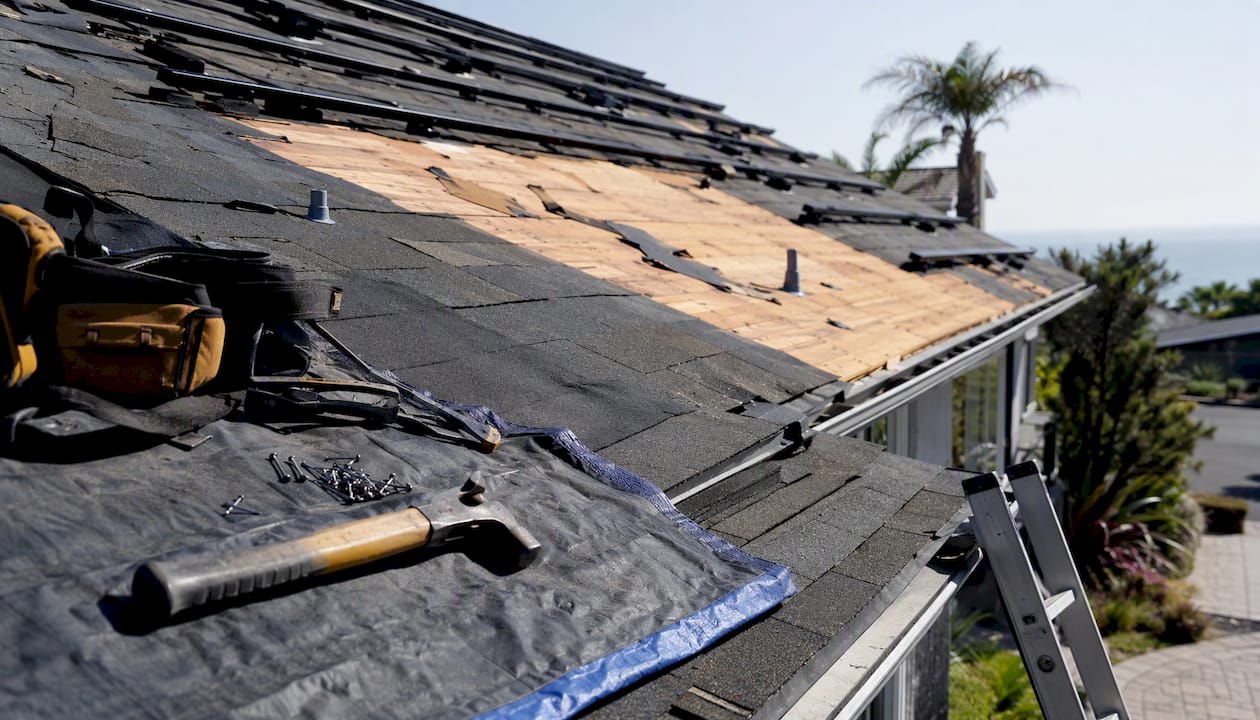
If your roof has less than 10 to 15 years of service life left, replace it before or alongside your solar installation. Doing the projects separately almost always costs more, mainly because panel removal and reinstallation adds $1,500 to $6,000 to a job you could have avoided entirely by sequencing the work correctly. Homeowners who coordinate the two projects save an average of about $4,000 compared to those who tackle solar first and reroof later, according to Department of Energy analysis.
Your immediate next step is simple:
- Schedule a full roof inspection before you sign any solar contract.
- Request separate, line-item quotes for roofing and solar work, never a single bundled number.
- Ask both contractors how they’d coordinate timing if you moved forward with both.
The math to remember: combining roof replacement and solar into one coordinated project typically saves homeowners thousands versus paying for removal and reinstallation down the road.
Key Takeaways
Coordinating roof replacement with solar installation saves homeowners an average of about $4,000 by eliminating duplicate mobilization and panel removal costs.
| Point | Details |
|---|---|
| Check remaining roof life | Reroof first if you have less than 10 to 15 years of service life left before installing solar. |
| Get line-item pricing | Insist on separate quotes for roofing and solar so you can verify costs and incentive eligibility. |
| Budget for removal if needed | Panel removal and reinstallation typically costs $1,500 to $6,000, or $75 to $300 per panel. |
| Choose durable materials | Standing-seam metal supports clamp mounting and often outlasts the solar system itself. |
| Document everything | Get written removal warranties and dated inspection photos before signing either contract. |
Table of Contents
- Roof and Solar Timing: How to Know When to Reroof First
- What Does It Cost to Combine Roof Replacement and Solar?
- What’s the Right Sequence for Roof Replacement and Solar Installation?
- Which Roofing Materials Work Best Under Solar Panels?
- How Do You Remove and Reinstall Solar Panels for a Reroof?
- How Should You Finance a Combined Roof and Solar Project?
- How Does a Roofing Contractor Coordinate With a Solar Team?
- What Homeowners Get Wrong About Coordinating Roof and Solar Work
- Frequently Asked Questions
- Sources
Roof and Solar Timing: How to Know When to Reroof First
The decision hinges on how much life is left in your current roof, not how it looks from the curb. Asphalt shingles run about 20 to 30 years, standing-seam metal typically lasts 40-plus years, and tile roofs often reach 50 years or more. If your roof falls inside that final 10 to 15 year window, reroofing before solar installation avoids paying twice for labor on the same square footage.
An inspection tells you more than a warranty document ever will. Look for these red flags:
- Soft or spongy decking when walked on, a sign of moisture damage underneath.
- Active leaks or water staining in the attic, even minor ones.
- Widespread granule loss on shingles, visible as bald patches or gritty runoff in gutters.
- Multiple prior patch jobs stacked on top of each other, which usually signals a roof past its useful repair life.
Before you commit to either project, ask your roofer:
- What’s the decking allowance if rot or damage turns up mid-tear-off?
- Is the attic ventilation adequate for the new roofing assembly, and will it stay adequate under panels?
- Can you document the inspection with dated photos I can share with my solar installer?
A detailed lifespan breakdown by material can help you pin down exactly where your roof stands before you make a call either way.
What Does It Cost to Combine Roof Replacement and Solar?
Running the numbers side by side makes the case for coordination obvious. A typical asphalt shingle roof replacement runs $8,000 to $15,000, while a residential solar system commonly lands in the low to mid five figures, with NREL modeling citing average system costs near $19,000 in earlier national studies. Panel removal and reinstallation adds extra labor and cost but can be avoided by proper sequencing.
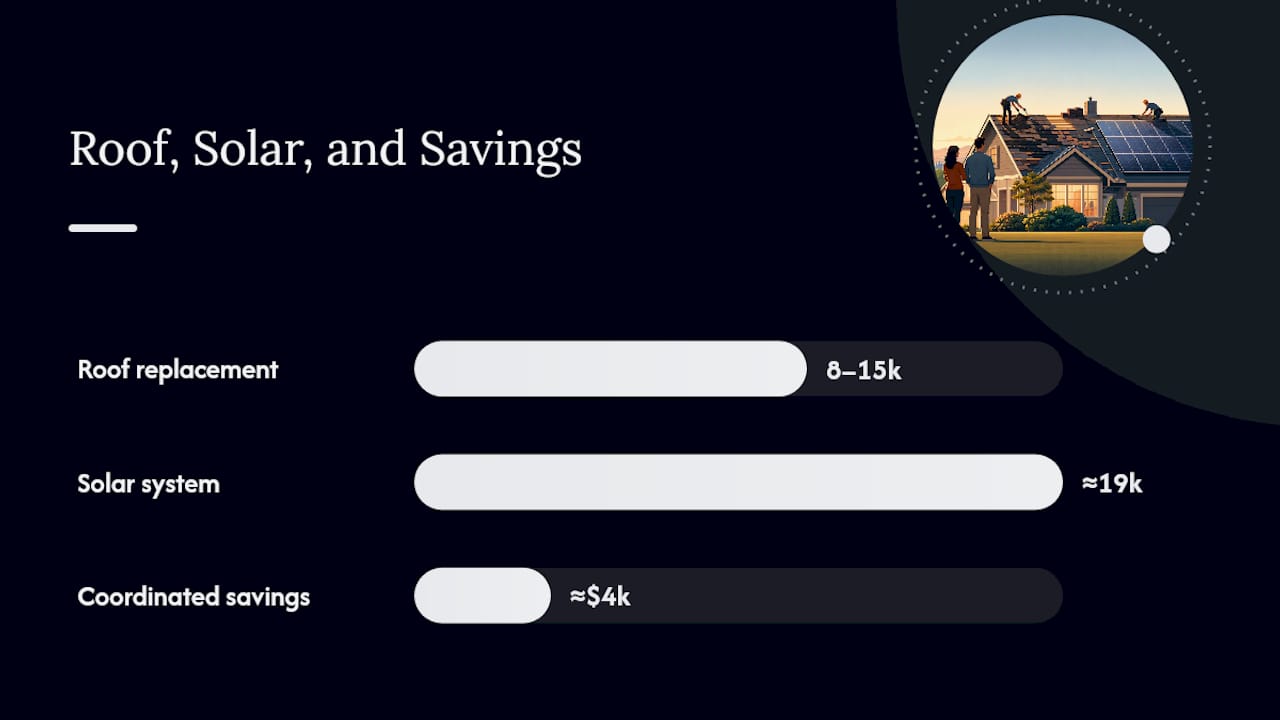
The gap adds up fast. Coordinating the two projects saves an average of roughly $4,000 in avoided duplicate mobilization and removal costs, and that figure assumes a straightforward system with no unusual mounting hardware or electrical complications. Larger arrays with more panels push the reinstallation range toward the higher end, since per-panel removal and reinstall fees commonly fall between $75 and $300 per panel depending on system size and roof pitch.
What’s the Right Sequence for Roof Replacement and Solar Installation?
A coordinated project runs on a predictable timeline once you know the order of operations. Get this sequence wrong and you risk a solar design that doesn’t match the roof underneath it, or a permit delay that stalls both crews.
- Inspection (1 day). A roofer assesses decking, flashing, and ventilation before anyone designs a solar layout.
- Permit review (1 to 3 weeks). Your municipality reviews both the roofing and electrical permits, often concurrently if you file early.
- Reroof (3 to 7 days). Tear-off, decking repair, underlayment, and final roofing material installation.
- Solar install (2 to 4 days). Racking, panels, and wiring go up on the finished roof surface.
- Interconnection approval (1 to 4 weeks). Your utility inspects and approves the system before it goes live.
Coordination matters more than speed. Share the roofer’s inspection photos and decking notes with your solar installer before final design, keep the two scopes of work separate in writing, and confirm in advance who’s responsible for storing panels if reroofing happens after an existing install. Align both contractors’ final walk-throughs so nobody signs off on work they haven’t actually seen finished.
Pro Tip: Ask your roofer to pre-install conduit chases during the reroof, even if solar comes months later. It typically saves $500 to $1,500 in labor that would otherwise require cutting into a finished roof.
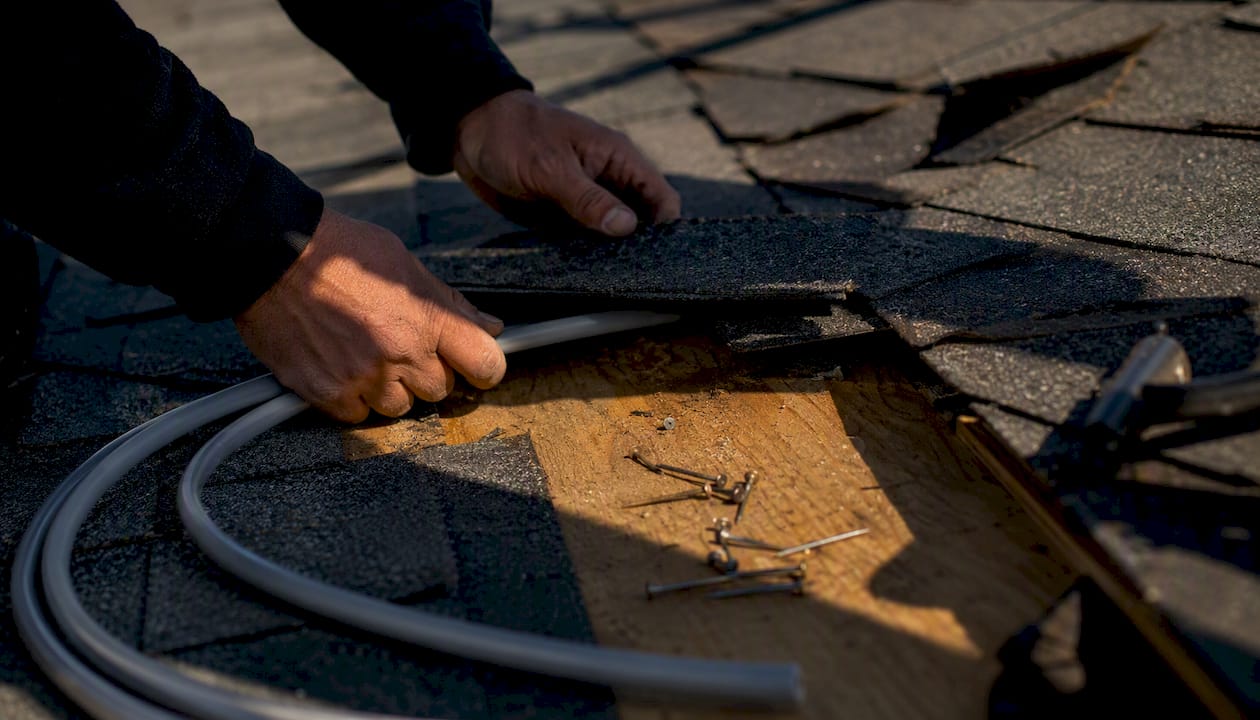
Before signing anything, confirm in the contract who physically removes and reinstalls panels if that applies, who’s liable for panel storage and damage, and whether the roofing warranty stays intact through the disruption. A clear roof replacement timeline helps you set expectations with both crews before either one shows up.
Which Roofing Materials Work Best Under Solar Panels?
Not every roofing material handles solar mounting the same way, and the cheapest surface option often becomes the most expensive decision over a 20-year horizon.
- Standing-seam metal allows clamp-mounted racking with zero roof penetrations, and it commonly outlasts the solar panels themselves, which means you may never remove panels for a reroof again.
- Asphalt architectural shingles remain the most common pairing with solar, workable and affordable, though mounting requires penetrating the roof deck and sealing each attachment point carefully.
- Tile and slate carry higher installation risk and cost, since brackets often require custom flashing and breakage during racking work is a real possibility.
- Flat membrane roofs need a choice between ballasted mounts, which add rooftop weight but no penetrations, and penetrative mounts, which need meticulous flashing to avoid leaks.
Specify the full roofing assembly, not just the top layer, when solar is part of the plan. That means confirming decking condition, flashing quality, and reinforcement in high-load zones where racking attaches. Paying more upfront for a longer-lived material like standing-seam metal often costs less over the life of the solar system, since you avoid the removal and reinstall cycle entirely.
How Do You Remove and Reinstall Solar Panels for a Reroof?
If you already have solar and your roof needs replacing, the panels have to come off before tear-off starts and go back on once the new roofing material is down. It’s a defined process, not a guessing game, but it does add cost and some warranty complexity.
- A typical crew disconnects the electrical system, removes racking hardware, and stores panels safely on-site or in a truck during the reroof.
- Total removal and reinstallation costs typically run $1,500 to $6,000 for most homes, often quoted at $75 to $300 per panel.
- Costs vary based on panel count, the type of mounting hardware originally used, how much electrical reconnection is needed, and whether panels require off-site storage and transport.
- Your original solar installer, when available, usually offers the smoothest removal and reinstall process since they already know the system’s wiring and mounting details.
Warranty coverage is the part homeowners overlook. Get a written removal warranty before work starts, confirm which company is liable if a panel is damaged during the process, and document panel condition with photos both before removal and after reinstallation.
How Should You Finance a Combined Roof and Solar Project?
A single combined loan simplifies your monthly payment and often qualifies for a lower blended rate, but it only works well when both contractors agree to transparent, itemized pricing inside that loan structure. Separate financing makes more sense when you’re using a program that only applies to one project, like a state rebate that covers roofing but not solar.
- Insist on line-item pricing regardless of financing structure. Bundled numbers make it nearly impossible to confirm which costs qualify for state and local incentive programs, and federal credit rules have shifted enough in recent years that you need to verify current eligibility rather than assume last year’s terms still apply.
- Power purchase agreements and solar leases remain an option if upfront cost is the barrier, though they typically don’t cover roofing work.
- Some states offer low-to-moderate-income programs that specifically assist with roof replacement tied to solar readiness, worth checking through your state energy office or the DSIRE database.
How Does a Roofing Contractor Coordinate With a Solar Team?
A contractor managing a coordinated project handles more than the tear-off. That means a full structural inspection before any solar design work begins, decking repair where needed, pre-installing conduit chases so the solar crew isn’t cutting into finished shingles later, and providing documented warranty paperwork that specifies coverage during and after the solar installation.
Buffaloroofingandexteriors handles roof replacement, storm damage restoration, and exterior upgrades across South Texas, and offers free estimates and financing options for homeowners planning coordinated projects. Before you sign with either a roofer or a solar installer, hand both companies the same checklist:
- Dated inspection photos of the roof deck and flashing.
- A written scope separating roofing costs from solar costs, line by line.
- Confirmation of who’s responsible for panel storage if removal becomes necessary.
- A copy of the roofing warranty terms that specify coverage during future solar work.
Pro Tip: Give both contractors the same document set at the same time. It prevents each one from assuming the other already covered a detail neither actually addressed.
If you’re weighing a broader exterior upgrade alongside your roof and solar decision, planning your exterior renovations as a single coordinated effort tends to save the same kind of duplicate costs you’d otherwise pay on siding, windows, or gutters done separately.
What Homeowners Get Wrong About Coordinating Roof and Solar Work
The advice you’ll find most often boils down to “get your roof inspected first,” which is true but incomplete. What actually protects your budget is insisting on separate, itemized pricing for every phase of the work, not just checking the roof’s age off a list.
Bundled quotes are where homeowners lose leverage. A single number covering “roof and solar” hides which contractor is charging what, makes it nearly impossible to confirm whether a listed discount is real, and complicates incentive eligibility when you can’t show which cost applies to which program. Contractors sometimes offer bundled discounts because coordinating one customer relationship instead of two lowers their acquisition cost, and that’s a legitimate reason to bundle. But you should still see the math broken out, because a “discount” you can’t verify against separate pricing isn’t one you can trust.
The conventional wisdom also underweights documentation. A written removal warranty, dated inspection photos, and a shared checklist between both contractors matter more than most homeowners assume until something goes wrong mid-project. Ask for the line items first. Everything else follows from that.
Frequently Asked Questions
Should I replace my roof before installing solar panels?
Replace your roof first if it has less than 10 to 15 years of remaining service life. Installing solar on an aging roof means you’ll likely pay for panel removal and reinstallation within the system’s 25-year lifespan, adding $1,500 to $6,000 in costs you could avoid by resequencing the work.
How much does it cost to remove and reinstall solar panels for a reroof?
Most homes fall between $1,500 and $6,000 for full removal and reinstallation, with per-panel costs commonly ranging from $75 to $300 depending on panel count and mounting hardware complexity.
Can I get one combined quote for roof replacement and solar installation?
You can, but insist on line-item pricing within that quote. Bundled numbers make it difficult to verify discounts, confirm which costs qualify for state incentives, and compare your proposal against other contractors.
What roofing material is best for solar panel installation?
Standing-seam metal allows clamp mounting without roof penetrations and often outlasts the solar array, while asphalt shingles remain the most common and affordable pairing when installed correctly with proper flashing.
Does reroofing after solar voids my solar warranty?
It can, depending on the installer and how removal is handled. Get a written removal warranty before work begins, and use your original solar installer when possible since they already know the system’s mounting and wiring details.
Sources
- Energy
- Do you need a roof replacement with solar panels? — EnergySage
- Database of State Incentives for Renewables & Efficiency — DSIRE
- Roof Replacement + Solar Panels guide — RoofVista