TL;DR: Corpus Christi’s salt air, humidity, and hurricane-force winds make siding selection and contractor vetting more critical than almost anywhere else in Texas. Fiber cement and coated metal top the list for coastal durability, and any exterior work in Nueces County must meet TDI windstorm code to keep your TWIA insurance intact. Here’s exactly what to ask before you sign a contract.
Replacing or repairing siding in Corpus Christi is not the same project it would be in Dallas or Austin. The Gulf Coast throws a combination of punches — salt-laden sea air, near-constant humidity, hurricane-season wind loads, and blistering UV — that turns the wrong siding material into an expensive regret within a few years.
If you’re in Corpus Christi, Alice, Aransas Pass, Banquete, or Beeville, this guide walks you through how to choose the right siding material, what the Texas windstorm code means for your project, and exactly what to look for — and watch out for — when hiring a siding contractor on the Coastal Bend.
Why Coastal Conditions Change Everything About Siding
Coastal homes face constant exposure to salt air, humidity, wind-driven rain, and UV rays that degrade lesser materials far faster than inland conditions. That’s not marketing language — it’s physics.
Salt particles can travel over 50 miles inland, carried by prevailing winds and high humidity. That means a home in Alice or Banquete — well away from the shoreline — still gets hit with corrosive salt-laden air on a regular basis.
Coastal zones are known for turbulent weather, including excessive heat and humidity which can lead to devastating corrosion on sub-par siding. Any time moisture builds up and lingers on the surface of the siding or underneath it, there can be an elevated threat of deterioration.
The bottom line: material choice and installation quality matter far more here than they do inland. Cutting corners on either is a decision you’ll pay for at the next storm — or at the next insurance renewal.
The Best Siding Materials for the Corpus Christi Area
Not every siding material performs equally in a coastal environment. Here’s how the most common options stack up for homeowners in Nueces County and the surrounding area.
Fiber Cement — The Coastal Gold Standard
Fiber cement siding consistently ranks as the top choice for coastal homes. Made from a blend of cement, sand, and cellulose fibers, this composition makes it incredibly tough and capable of withstanding salt spray, extreme humidity, and UV radiation.
Unlike wood or vinyl, fiber cement contains no organic material for saltwater to degrade, and no metal components to corrode. It also holds up structurally: it doesn’t warp, crack, or fade easily and is highly resistant to wind damage.
With proper installation and basic maintenance, fiber cement siding typically lasts 30–50 years in coastal environments. That kind of lifespan makes its higher upfront cost look far more reasonable over time.
Coated Metal (Aluminum and Steel)
Metal siding, particularly aluminum and coated steel, is a durable option that performs well in coastal regions when properly treated. Its strength and resistance to impact make it suitable for areas prone to storms and high winds. Aluminum siding is naturally resistant to corrosion, which is a major advantage in salt-heavy environments.
The coating matters enormously. Salt can accelerate corrosion in metals and break down protective coatings if they are not designed for marine exposure. PVDF and powder coating are two of your best finish choices when it comes to protecting your siding from saltwater.
For Aransas Pass homeowners — closer to open water — a coated aluminum panel with a marine-grade finish is worth the premium. Ask your contractor specifically which coating grade they’re specifying.
What About Vinyl?
Vinyl is the most affordable option and does resist moisture and basic salt spray. However, steer clear of wood, which can absorb excess moisture from the air and cause weakening and rot. Even moisture on the surface can lead to damage in the form of mold and mildew growth, which is common with vinyl siding and other plastic-based exteriors as well.
Standard vinyl is better suited to homes farther from direct coastal exposure. If you’re within a mile or two of Corpus Christi Bay or the Gulf, fiber cement or coated metal will serve you far better in the long run.
Installation Details That Matter as Much as the Material
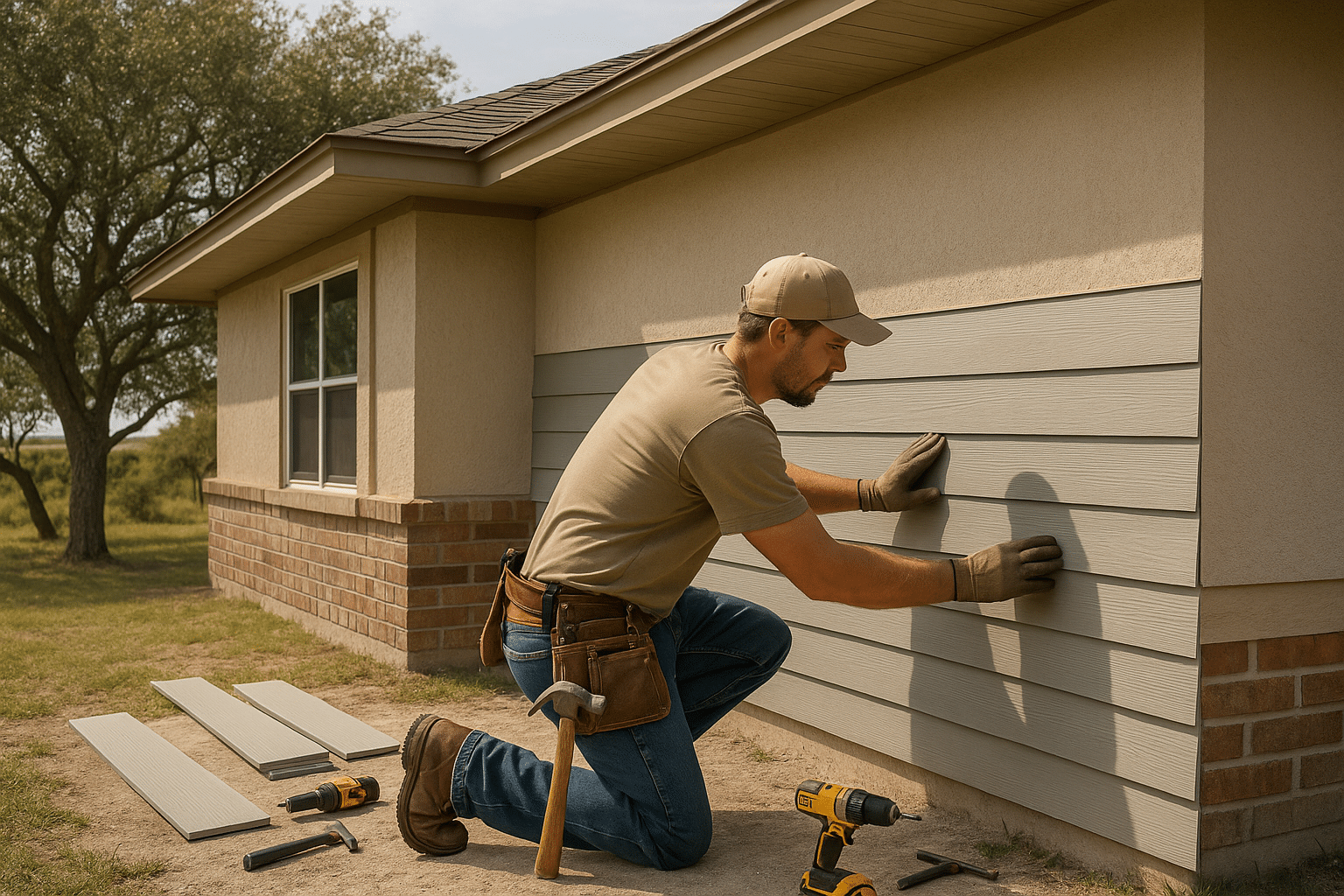
Regardless of the material, proper coastal installation — including stainless-steel fasteners, corrosion-resistant flashing, moisture barriers, drainage, and wind-rated fastening — is essential for long-term performance.
Ask any contractor you’re considering what fastener type they use and whether it’s rated for coastal exposure. This detail alone separates experienced coastal contractors from those who are just learning on your home.
Texas Windstorm Code: What Corpus Christi Homeowners Must Understand
This is where Gulf Coast homeownership gets genuinely complex — and where hiring the wrong contractor can cost you your insurance coverage.
The TDI Windstorm Program
The Texas Department of Insurance (TDI) administers windstorm building code requirements for designated coastal counties. In Texas, wind code compliance in the designated catastrophe area is directly tied to eligibility for TWIA windstorm insurance coverage. TDI’s designated catastrophe area includes 14 first-tier coastal counties and portions of adjacent second-tier counties.
The 14 first-tier Seacoast counties are Aransas, Brazoria, Calhoun, Cameron, Chambers, Galveston, Jefferson, Kenedy, Kleberg, Matagorda, Nueces, Refugio, San Patricio, and Willacy. Corpus Christi sits in Nueces County. Aransas Pass falls in San Patricio and Aransas counties. All are fully inside the TDI catastrophe area.
What Is a WPI-8?
A WPI-8 is a building code certificate of compliance issued by the Texas Department of Insurance. It certifies that a structure has been erected, altered, and/or repaired in accordance with building construction requirements for windstorm coverage in TWIA.
In plain terms: if you repair or replace siding (or any part of your exterior envelope) in a TDI-designated county and the work doesn’t meet windstorm code, you may lose your eligibility for TWIA wind and hail coverage. Without a Certificate of Compliance, TWIA lacks evidence that the structure conforms to applicable building codes, and it may be considered uninsurable and ineligible for coverage with TWIA.
Products installed in TDI-designated areas must meet specific wind resistance standards and carry appropriate product approvals. This applies to siding, windows, doors, and roof systems alike — not just the roof itself.
When you hire a siding contractor in Corpus Christi, Alice, or Aransas Pass, ask directly: Are you familiar with TDI windstorm requirements? Can you pull the necessary permits and work with a qualified inspector to ensure WPI-8 compliance? If they look blank, keep looking.
7 Things to Look For When Hiring a Siding Contractor on the Coastal Bend
1. License and Insurance — Non-Negotiable
A reputable siding contractor must carry both liability insurance and workers’ compensation. Liability insurance protects your property from accidental damage during the project. Workers’ compensation covers the contractor’s employees if they get injured on your property.
A trustworthy siding contractor should be able to show you the proper licenses and insurance coverage without hesitation. These aren’t just formalities — they protect both you and the crew. Ask for actual documentation, not verbal assurances.
2. Verified Local Experience
Gulf Coast siding is a specialty. A contractor who primarily works inland may not know coastal-grade fastener requirements, salt-resistant flashing details, or TDI-approved products. Ask how many coastal projects they’ve completed in Nueces, San Patricio, or Aransas counties specifically.
3. Coastal Material Knowledge
From vinyl to fiber cement and beyond, each contractor has materials they know best. Make sure what they’re good at matches what your project needs. Good contractors will explain the pros and cons of each option.
If a contractor pushes one material without asking about your home’s proximity to the water, your budget, or your long-term plans, that’s a flag. The right material recommendation depends on whether you’re in downtown Corpus Christi, on the Island, in Aransas Pass, or out in Banquete.
4. References from Recent, Local Projects
Ask for a list of references from recent siding jobs, especially within the past year. Ideally, those references should include homes in coastal conditions similar to yours. Talking directly to previous clients tells you more than any online listing.
5. A Detailed Written Estimate
Before signing, review the contract thoroughly to ensure it includes project details, materials, costs, payment schedule, and warranties. Never agree to a verbal contract — get everything in writing.
A proper estimate should name the specific product (brand, line, and color), fastener specification, moisture barrier brand, and warranty terms — not just say “fiber cement siding.”
6. Warranty Coverage — Both Materials and Labor
Look for siding contractors who back up both their work and the materials they use. A strong warranty shows they trust their skills and the products they install. Manufacturer warranties only cover the material; a workmanship warranty covers how it was installed. You need both.
7. Red Flags to Walk Away From
- Storm chasers asking for full payment upfront. Avoid contractors who request the entire project cost, or a large cash deposit, up front.
- No physical local address. The best way to avoid scams is to choose a local, trusted siding contractor. You can confirm this by checking their physical business address and validating their licensing.
- Can’t explain TDI requirements. In Corpus Christi and the surrounding coastal area, this is a basic competency test.
- Vague about fastener specs. Bad installation in these areas is why most siding fails. Good siding contractors will explain drainage, flashing tape, and sealants in detail.
Siding, Roofing, and Your Whole Exterior — Why One Contractor Makes Sense
Siding doesn’t exist in isolation. It connects directly to your roof edge, window and door frames, and any deck or outdoor structure attached to your home. When multiple contractors are involved, those transitions are where water finds its way in.
At Buffalo Roofing & Exteriors, siding installation is part of a complete exterior solution that also covers professional shingle roof repair, windows, doors, exterior painting, and deck staining and sealing — all under one roof (so to speak). That matters when you’re dealing with storm damage, an insurance claim, or a pre-sale renovation, because everything gets coordinated and documented together.
For commercial property owners and HOA boards in the Coastal Bend, our commercial roofing and exterior services cover everything from TPO flat roof systems to full building envelope work with the same licensed, insured team.
Financing Your Siding Project
Quality coastal siding is an investment, not an impulse buy. Buffalo Roofing & Exteriors offers Improvifi financing ranging from $1,000 to $50,000 with $0 down and no impact to your credit score just to check your options. That means you can move quickly after a storm — before the next one arrives — without draining your savings.
Ready for a Free Estimate?
Buffalo Roofing & Exteriors is a BBB-accredited, locally owned exterior contractor serving Corpus Christi, Alice, Aransas Pass, Banquete, Beeville, and the surrounding Coastal Bend. We’re licensed, insured, and familiar with TDI windstorm requirements for Nueces, San Patricio, Aransas, and Bee counties.
If your siding is showing its age — blistering paint, cracked panels, mold streaks, or storm damage — contact us for a free estimate. We’ll walk your exterior, discuss materials that make sense for your location and budget, and give you a clear written scope before any work begins.
Recommended Reads
- TPO Roof Repair in Corpus Christi, TX
- Flat Roof Repair in Corpus Christi, TX
- Professional Shingle Roof Repair in Corpus Christi, TX