

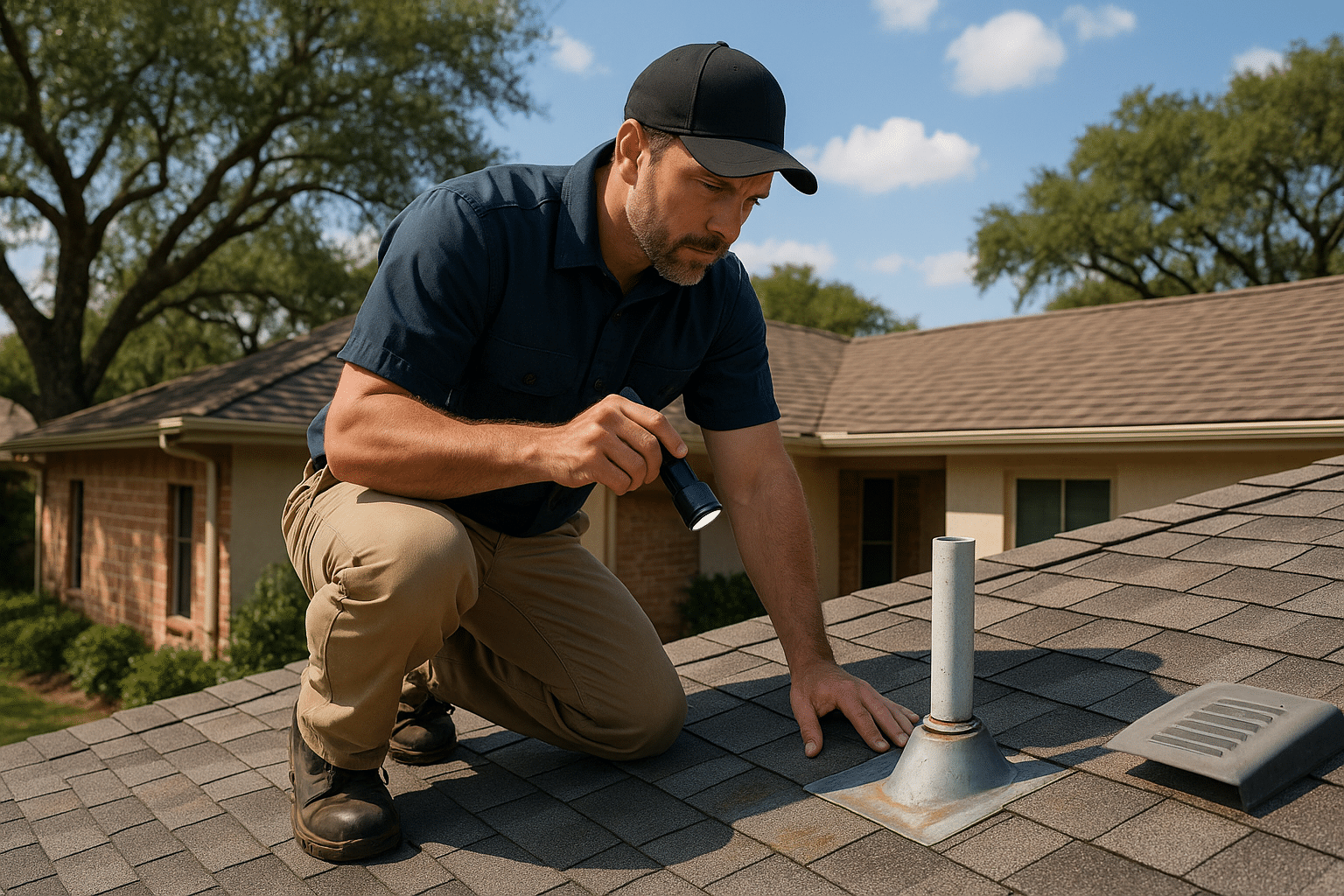
TL;DR: Most roof leaks can be traced to a handful of trouble spots — attic penetrations, flashing, gutters, and worn shingles — and the safest way to find one starts indoors, not on a ladder. This guide walks Corpus Christi, Alice, Aransas Pass, Banquete, and Beeville homeowners through the exact steps to narrow down a leak, the tools you need, and the point where it’s time to call a licensed roofer instead of climbing up yourself.
A ceiling stain rarely shows up directly under the hole in your roof. Water travels along rafters and decking before it ever drips into a room, which is exactly why so many Coastal Bend homeowners chase a leak in the wrong spot for weeks.
This guide walks you through the same logical process professional roofers use: start inside, narrow the search in the attic, then confirm from the outside only when it’s safe. Along the way we’ll flag the mistakes that waste time (or cause a second problem) and tell you honestly when it’s time to stop DIY-ing and call a licensed crew.
Why Roof Leaks Are Tricky to Pinpoint
The location of a stain inside the attic may not be directly underneath the actual roof leak, because water can travel along rafters, roof decking, and other surfaces before dripping into the attic.
That’s the single most important thing to understand before you start looking.
In Corpus Christi, Alice, Aransas Pass, Banquete, and Beeville, our humid Gulf climate and intense summer UV add two extra wrinkles: shingles age faster under constant sun exposure, and salt-laden air accelerates corrosion on flashing and fasteners in coastal zones like Aransas Pass. A pinhole of rust or a cracked pipe boot can leak for months before you ever see a ceiling stain.
What You’ll Need Before You Start
- A strong flashlight
- Binoculars (for a ground-level exterior check)
- A notepad or phone camera to document findings
- A moisture meter, if you have one
- Sturdy shoes and, if you enter the attic, gloves and a dust mask
Skip the ladder for now. The first and safest steps happen entirely indoors.
How to Find a Roof Leak, Step by Step
-
Note where water is showing up inside
Your first move shouldn’t be climbing a ladder — instead, head inside to the room directly below where you see signs of a leak.
Common clues include
water stains and discoloration on ceilings and upper interior walls, peeling or bubbling paint, and musty odors near roof joints or attic spaces
. -
Go into the attic with a flashlight
If you have attic access,
once you’re in the attic, scan the underside of the roof deck for water stains, dark spots, or signs of mold and mildew with your flashlight
.
Check whether the insulation is damp, compressed, or discolored — these are all red flags. -
Check the roof’s known weak points first
Methodically check the areas where leaks most often occur: around chimneys, roof vents, plumbing stacks, and skylights, since any place where something penetrates the roof is a potential weak point.
On older coastal homes, also check where two roof planes meet in a valley —
roof valleys channel large volumes of water, so any compromise here leads to significant leaks
. -
Follow the stain uphill, not down
Trace the path of the water stains in your attic back to their highest point — this upward trail is your best bet for finding the true entry point.
Mark the spot with chalk or a sticky note so you can find it again. -
Look for daylight and active drips
Turn off the attic lights and look for any daylight peeking through the roof boards — a sure sign of a hole.
If you can safely check during or right after a rainstorm,
inspect the attic during or shortly after a rainstorm
for active moisture. -
Do a ground-level visual check of the exterior
Once you have a general area narrowed down,
you can spot several red flags from the ground: shingles that are cracked, curled, buckling, or missing, and damaged flashing — the metal strips that seal joints — around chimneys, vents, and skylights.
Binoculars make this easier and safer than climbing. -
Check your gutters and downspouts
Clogged gutters are another warning sign — when water can’t drain properly, it can back up and seep under your roofing materials.
Also look for
shingle granules in the gutter system, which may indicate deteriorating materials
. -
Document everything before you call a roofer
Document any issues you find by taking notes and photos — this information will be helpful when consulting a roofing professional for repairs or when assessing the overall condition of your roof.
Photos also matter later if you end up filing an insurance claim.
Common Mistakes Homeowners Make
- Climbing onto the roof without fall protection. Roofing falls are a leading cause of injury in the trade, and the same physics apply to homeowners on a ladder. Professional crews follow strict OSHA ladder and fall-protection rules for a reason — a wet, sloped roof is not the place to improvise.
- Assuming the stain is directly below the hole. As noted above, water travels sideways along rafters and decking first.
- Ignoring a “small” attic stain. A minor leak left unaddressed can lead to
damaged insulation, stained ceilings, mold growth, and expensive structural repairs
. - Patching from the outside without finding the real source. Caulking over a shingle that looks damaged, when the actual entry point is a cracked pipe boot six feet away, wastes time and money.
- Skipping photo documentation. If the leak turns out to be storm or hail related, dated photos strengthen your insurance claim.
Local Factors That Make Leaks Worse Here
South Texas throws a few extra challenges at a roof that homeowners farther inland don’t deal with:
- Salt air corrosion. In Corpus Christi and Aransas Pass, airborne salt accelerates rust on exposed fasteners, flashing, and metal roof panels, turning small gaps into bigger ones faster than in inland towns like Alice, Banquete, or Beeville.
- Hurricane and high-wind exposure. Wind-driven rain can force water sideways under shingles and flashing during a tropical storm, even where the roof looks intact afterward.
- TDI windstorm rules.
Properties in the 14 first-tier coastal counties and designated portions of Harris County fall under Texas Department of Insurance windstorm certification, which imposes construction standards that exceed the base building code for wind resistance, underlayment, fastening, and inspection requirements.
Nueces County, home to Corpus Christi and Aransas Pass, is one of those counties, so re-roofs and major repairs there typically require a WPI-8 (Windstorm Resistant Construction Inspection, the TDI certificate confirming your roof meets code for Texas Windstorm Insurance Association coverage) on file before you can insure wind and hail damage.
Without a valid WPI-8, you cannot obtain or renew TWIA windstorm insurance coverage.
When to Stop and Call a Professional Roofer
DIY detective work has its limits.
Call a professional when you can’t find the leak, the roof has multiple damaged areas, or the attic shows signs of mold, wood rot, or extensive staining.
You should also call right away if:
- You’d need to get on a steep or high roof to inspect it
- The leak followed a hailstorm, high winds, or a hurricane
- You see sagging decking, soft spots, or a dipping ridge line
- You’re filing or considering an insurance claim and need documented, professional evidence
- Your property is in a coastal county and needs a WPI-8 for insurance purposes
Professional roofers also have tools homeowners typically don’t:
trained professionals use moisture meters, drones, and thermal imaging to identify hidden problems
in roof layers and structural components you can’t see from the attic alone.
What Happens During a Professional Roof Evaluation
When you call Buffalo Roofing & Exteriors for a free estimate, a licensed technician will check the same trouble spots you did — attic, flashing, penetrations, gutters — but with specialized equipment and the training to safely access the roof surface itself. We’ll show you exactly what we find, in plain language, before recommending a repair or replacement. If your leak turns out to be storm-related, we also help homeowners throughout Corpus Christi, Alice, Aransas Pass, Banquete, and Beeville navigate the insurance process; our guide on how the roof insurance claim process works in Texas walks through what to expect step by step.
If the leak points to a roof that’s simply past its service life, it helps to know your costs up front. Our roof replacement cost guide for Corpus Christi breaks down pricing by material and roof size, and if budget is a concern, Improvifi financing lets qualified homeowners spread the cost from $1,000 to $50,000 with $0 down and no impact to your credit score — details are in our roof financing guide.
The Bottom Line
Finding a roof leak is a process of elimination: start inside, work your way up through the attic, and only check the exterior once you’ve narrowed down the likely area. Most of what you need is a flashlight, patience, and a willingness to stay off the roof. When the trail goes cold, or the damage looks bigger than a single soft spot, that’s your signal to bring in a licensed crew with the right tools — and, if you’re in a coastal county, the right certifications to keep your insurance in good standing.
Recommended Reads
- How Much Does a Roof Replacement Cost in Corpus Christi? (2026 Price Guide)
- How to Choose the Right Roofing Contractor in San Antonio
- How Much Does a Roof Replacement Cost in San Antonio? (2026 Price Guide)
Sources