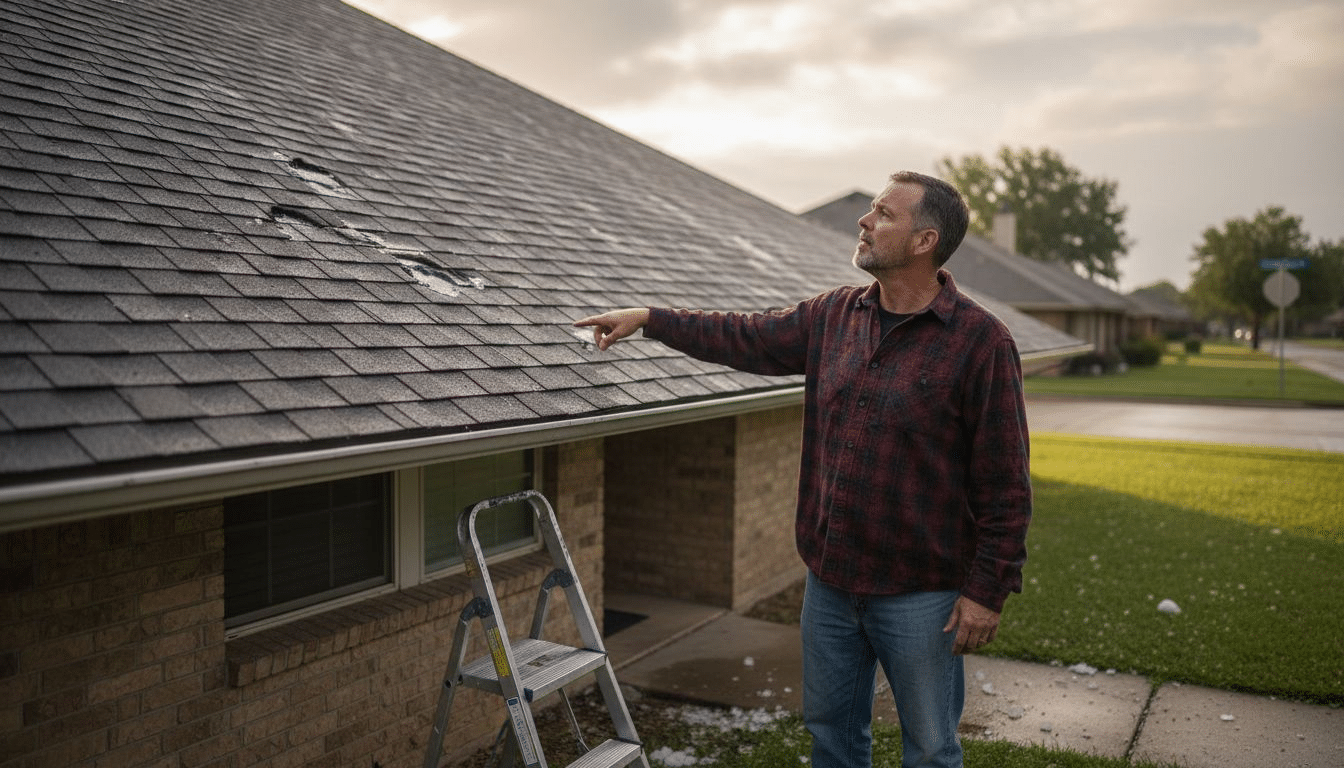
A fast-moving thunderstorm rolls through Corpus Christi or San Antonio and, before you know it, hail is pelting your home. For Texas homeowners, this scenario is all too common as the state leads the country in hail events each year. Understanding roof hail damage is more than just spotting dents or missing shingles—it is about knowing the risks to your property, the signs insurance adjusters look for, and how to act quickly after severe weather to protect your investment.
Table of Contents
- Defining Roof Hail Damage in Texas
- Types of Roof Hail Damage Explained
- Key Signs and How to Spot Damage
- Impact on Roof Longevity and Safety
- Insurance Claims for Hail Damage Repairs
- Repair Solutions and Prevention Tips
Key Takeaways
| Point | Details |
|---|---|
| Hail Damage Risk | Texas homeowners face significant hail damage risk, necessitating professional roof inspections post-storm. |
| Types of Damage | Key types of roof hail damage include granule loss, bruising, cracking, and punctures, each requiring specific repair strategies. |
| Insurance Claims | Timely reporting and thorough documentation are essential for effective insurance claims following hail damage. |
| Preventive Measures | Regular inspections and investing in impact-resistant materials can mitigate future hail damage risks for homeowners. |
Defining Roof Hail Damage in Texas
Hail represents a serious threat to Texas homeowners, with the state experiencing the highest frequency of hail events in the United States. Severe weather patterns in Texas consistently produce thunderstorms capable of generating destructive hailstones that can compromise residential roofing systems.
Roof hail damage occurs when hailstones impact roofing materials, creating small to significant structural imperfections. Hailstones measuring one inch or larger can puncture shingles, create granule loss, and generate microscopic cracks that compromise roof integrity. These impacts may not always be immediately visible, making professional assessment critical for identifying potential long-term damage.
The National Weather Service defines hail as frozen precipitation formed within thunderstorm updrafts, with sizes ranging from pea-sized to softball-sized. In Texas, hailstorms frequently produce stones between 1-2 inches in diameter, capable of causing substantial roof deterioration. Texas emergency management resources recommend comprehensive damage assessments following severe weather events to document and address potential roofing vulnerabilities.
Pro tip: Schedule a professional roof inspection within 30 days after a significant hailstorm to document potential damage and protect your insurance claim eligibility.
Types of Roof Hail Damage Explained
Roof hail damage manifests in multiple complex ways, with each impact creating unique structural challenges for Texas homeowners. Hailstone characteristics directly influence damage patterns, ranging from subtle surface abrasions to catastrophic material destruction. The severity depends on factors like hailstone size, wind velocity, and roofing material composition.
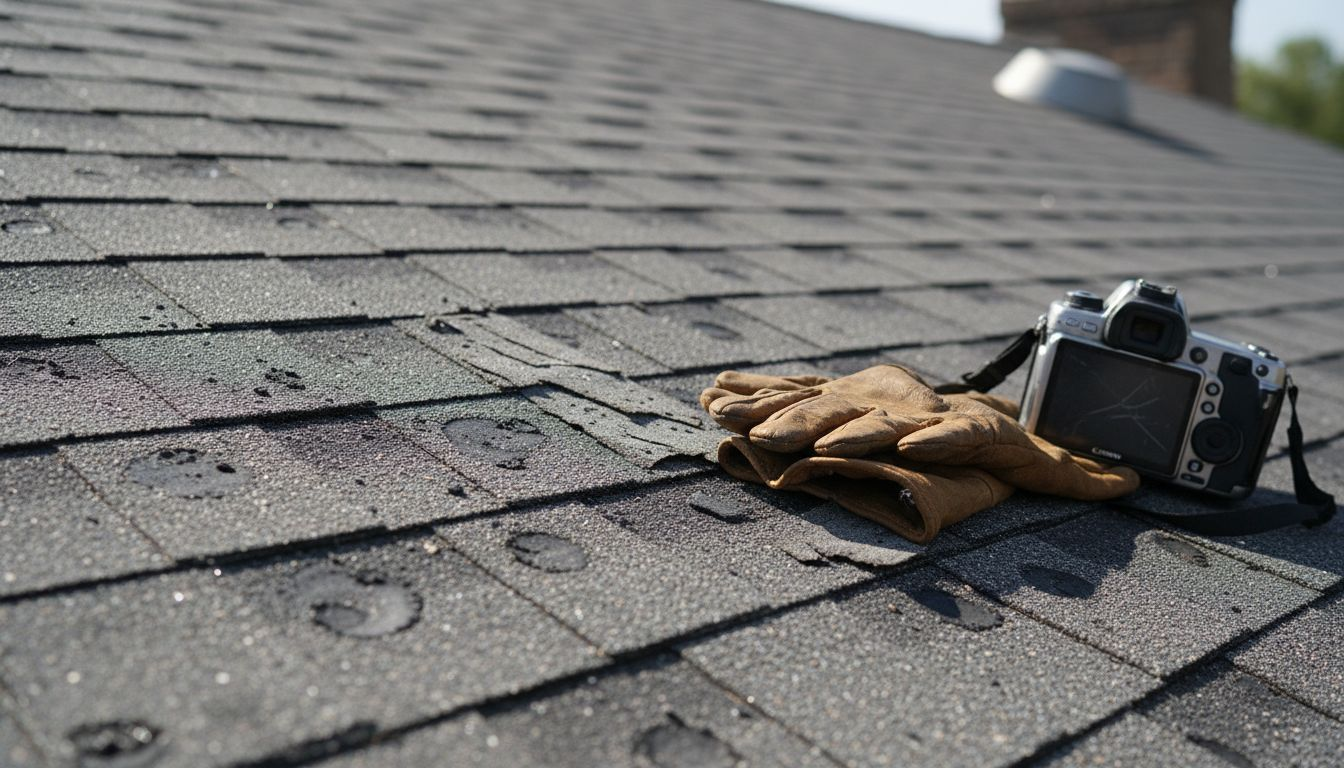
Primary types of roof hail damage include granule loss, bruising, cracking, and punctures. Smaller hailstones typically cause granule displacement, where protective mineral granules are knocked off asphalt shingles, exposing underlying materials to potential weathering. Medium-sized hailstones can create bruising – soft indentations that compromise shingle structural integrity without immediate visible rupture. Larger hailstones pose the most significant threat, capable of generating direct punctures, fracturing shingles, and creating vulnerabilities that can lead to potential water infiltration.
Wind direction and storm intensity further complicate hail damage assessment. Thunderstorm updrafts produce varied hailstone impacts, meaning roofs can experience different damage levels within the same storm event. Professional roofers understand that not all damage is immediately apparent, with some structural compromises developing gradually over months or years following the initial hail exposure.
Here’s a summary of common roof hail damage types and their effects:
| Damage Type | Visual Signs | Impact on Roof | Repair Complexity |
|---|---|---|---|
| Granule Loss | Bald spots, rough areas | Accelerated wear | Low |
| Bruising | Soft indentations, color changes | Reduced integrity | Moderate |
| Cracking | Fine lines, shingle separation | Higher leak risk | Moderate |
| Punctures | Holes, torn materials | Major vulnerability | High |
Pro tip: Document hail damage immediately after a storm by taking comprehensive photographs from multiple angles, which can provide critical evidence for insurance claims and professional assessments.
Key Signs and How to Spot Damage
Roof hail damage can be subtle yet destructive, requiring homeowners to develop a keen eye for identifying potential issues. Careful roof inspection techniques are critical for detecting early signs of damage that might otherwise go unnoticed. Visual inspection is the first line of defense in protecting your home’s most important structural barrier.
Homeowners should look for several key indicators of hail damage. Circular bruises or indentations on shingles are primary warning signs, often appearing as dark spots or areas where granules have been knocked loose. Cracked or missing shingles represent more severe damage, exposing the underlying roofing materials to potential water infiltration. Storm damage assessment involves checking multiple exterior surfaces, including gutters, siding, and surrounding areas for signs of impact that might indicate roof compromise.
Interior warning signs are equally important to monitor. Water stains on ceilings or walls, unexplained moisture in attic spaces, and unusual drafts can all signal potential roof damage resulting from hailstorms. Professional roofers recommend a comprehensive inspection within 30 days of a significant hail event, as some damage may not be immediately apparent and can worsen over time if left unaddressed.
Pro tip: Use binoculars or carefully photograph your roof from ground level to document potential hail damage without risking personal safety, creating a visual record for insurance and repair purposes.
Impact on Roof Longevity and Safety
Roof hail damage represents a serious long-term threat to Texas homes, potentially compromising structural integrity and homeowner safety. Hail damage accelerates roof degradation by breaking down protective materials and creating vulnerabilities that extend far beyond initial impact. Each hailstorm can significantly reduce a roof’s expected lifespan, transforming what should be a 20-30 year roofing system into a potential liability within months.
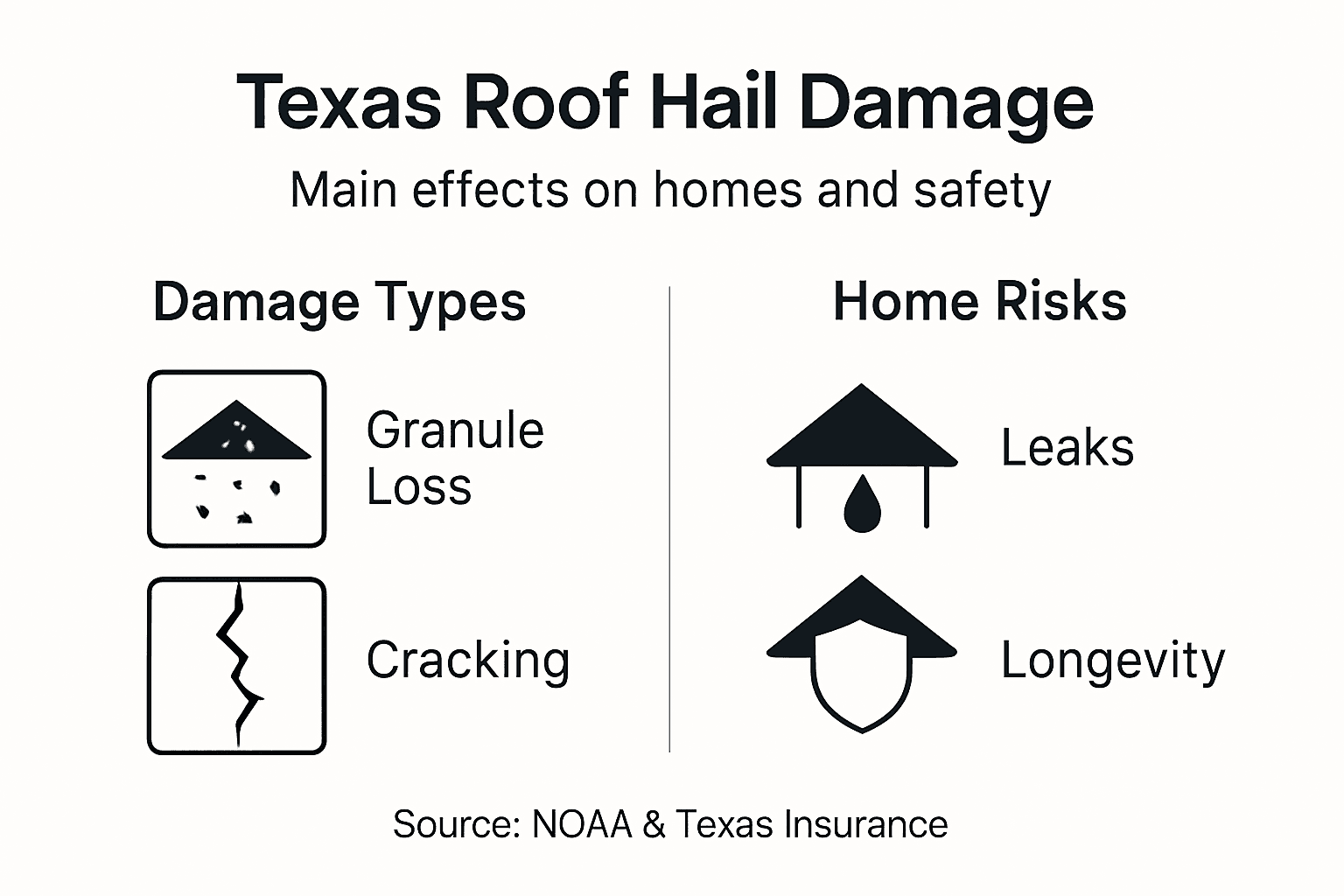
The cumulative impact of repeated hail events creates multiple layers of structural risk. Damaged granules expose underlying roofing materials to ultraviolet radiation and moisture, leading to premature deterioration. Microscopic cracks and bruises compromise shingle waterproofing, increasing the likelihood of water intrusion, mold growth, and potential interior damage. Economic losses from repeated hail events continue mounting nationwide, highlighting the critical importance of proactive roof maintenance and timely repairs.
Safety concerns extend beyond mere property damage. Compromised roofing structures can lead to unexpected failures during subsequent storms, potentially creating dangerous situations for residents. Weakened roof decking, deteriorated support structures, and unaddressed hail damage can ultimately result in partial or complete roof collapse, representing a significant risk to homeowner safety and property investment.
Pro tip: Schedule a professional roof inspection immediately following significant hailstorms, documenting all damage with photographs to protect your insurance claim and prevent long-term structural deterioration.
Insurance Claims for Hail Damage Repairs
Homeowners insurance plays a critical role in managing roof hail damage expenses for Texas residents. Hail damage claims have become increasingly prevalent across the state, with billions of dollars in annual insurance payouts highlighting the extensive impact of severe weather events. Understanding the claims process is essential for effectively navigating potential roof repair and replacement scenarios.
The claims process requires meticulous documentation and prompt action. Homeowners should photograph damage comprehensively, preserve evidence of impact, and contact their insurance provider quickly. Texas insurance regulations recommend immediate damage reporting to ensure proper claim processing. Professional roof inspections provide critical third-party documentation that strengthens insurance claims, helping homeowners secure appropriate compensation for storm-related damages.
Navigation of insurance claims involves understanding policy specifics, deductibles, and coverage limitations. Different policies offer varying levels of protection, with some covering full roof replacement and others providing partial reimbursement based on roof age and existing wear. Homeowners should review their specific policy details, consult with insurance representatives, and potentially seek professional guidance to maximize their claim’s potential and minimize out-of-pocket expenses.
Compare key insurance claim requirements for roof hail damage:
| Requirement | Why It’s Important | Effect on Claim Outcome |
|---|---|---|
| Timely Reporting | Prevents claim denial | Faster claim approval |
| Photographic Proof | Documents extent of damage | Stronger evidence for coverage |
| Professional Inspection | Third-party validation | Higher likelihood of full payout |
Pro tip: Create a comprehensive digital file containing storm photographs, repair estimates, and communication records to streamline your insurance claim process and protect your documentation.
Repair Solutions and Prevention Tips
Roof repair strategies for hail damage require a comprehensive approach that balances immediate restoration with long-term protection. Advanced prevention techniques help homeowners mitigate future risks by implementing strategic upgrades and proactive maintenance protocols. The goal is not just to repair damage, but to create a more resilient roofing system capable of withstanding severe Texas weather conditions.
Effective repair solutions involve systematic assessment and targeted interventions. Professionals recommend replacing damaged shingles, resealing potential leak points, and conducting thorough structural evaluations. Emerging technologies assist in precise damage assessment, utilizing advanced machine learning algorithms to identify subtle vulnerabilities that might escape traditional inspection methods. Homeowners should prioritize impact-resistant roofing materials designed specifically for high-hail-risk regions like Texas.
Preventive strategies extend beyond immediate repairs, focusing on comprehensive risk reduction. This includes regular roof inspections, maintaining surrounding landscape by trimming potential projectile-creating tree branches, and investing in protective modifications like specialized roofing underlayments and impact-resistant shingles. Homeowners can also explore additional protective measures such as installing protective screens over vulnerable roof features and ensuring proper attic ventilation to minimize potential damage during future hailstorms.
Pro tip: Schedule annual professional roof inspections before storm season and maintain a detailed maintenance log to demonstrate proactive care and potentially reduce insurance premiums.
Protect Your Texas Home From Costly Roof Hail Damage Today
Experiencing hail damage can be overwhelming, especially when it threatens the integrity and safety of your roof. Understanding the hidden dangers like granule loss, bruising, and punctures is vital. At Buffalo Roofing & Exteriors, we specialize in identifying and repairing hail damage before it leads to costly leaks or structural issues. Our expert team is ready to help you navigate repairs with trusted solutions tailored for Texas’ severe weather conditions.
Don’t wait until small hail damage becomes a major problem. Get a professional roof inspection from our trusted experts with proven experience in storm damage restoration. Visit our Roofing Archives to learn about our durable roofing options or explore Repairs Archives for tailored repair services. Act now to protect your home and ensure your insurance claim is fully supported. Request your free estimate today at Buffalo Roofing & Exteriors and safeguard your home against future hailstorms.
Frequently Asked Questions
What are the signs of roof hail damage?
Homeowners should look for circular bruises or indentations on shingles, cracked or missing shingles, and water stains on ceilings or walls as key indicators of potential roof hail damage.
How does hail damage affect the longevity of a roof?
Hail damage can significantly reduce the expected lifespan of a roof by exposing underlying materials to adverse conditions and increasing risks of water intrusion, leading to more rapid deterioration.
What steps should I take to file an insurance claim for hail damage?
Document the damage with comprehensive photographs, report it to your insurance provider promptly, and consider getting a professional roof inspection to strengthen your claim.
How can I prevent hail damage to my roof?
Preventive measures include regular roof inspections, maintaining surrounding trees and landscape to avoid projectiles, and investing in impact-resistant roofing materials designed for high-hail-risk areas.
Recommended
- 7 Essential Home Roofing Tips for Homeowners in Texas
- Why File Roofing Claims After Texas Storms
- Storm Damage Restoration Explained: Texas Essentials
- 7 Essential Roof Replacement Tips for Texas Homeowners
- Roof Repair Guide: Step-by-Step Fixes for Homeowners – J. A. Kelly Contracting Services
- Roofing Services in Corpus Christi TX