Keeping your Texas coastal roof in top shape can feel overwhelming when heat, humidity, and salt air are constantly working against you. One small issue, like a loose shingle or clogged gutter, can quickly grow into expensive water damage if not caught early. The combination of harsh weather and rapid material wear makes regular maintenance more critical than ever for your home’s safety.
The good news is you do not need to wait for a major leak to take action. With the right inspection steps, you can catch warning signs before they become costly repairs. These targeted roof inspection tips draw on expert advice to help you protect your investment and avoid hidden problems.
Get ready to uncover practical, hands-on strategies that make your next roof check both simple and effective. Each step reveals what to look for and why it matters, so you can feel confident maintaining your roof year-round.
Table of Contents
- 1. Inspect Shingles For Signs Of Damage
- 2. Check Flashing And Seals Around Roof Features
- 3. Clear Gutters And Downspouts Of Debris
- 4. Assess Attic Ventilation And Moisture Levels
- 5. Look For Mold, Algae, Or Moss Growth
- 6. Secure Loose Or Missing Roof Components
- 7. Schedule Annual Professional Roof Inspection
Quick Summary
| Takeaway | Explanation |
|---|---|
| 1. Regularly Inspect Shingles | Check for curling, missing shingles, or bald spots to prevent costly damage. |
| 2. Maintain Flashing and Seals | Ensure proper sealing at joints to avoid leaks caused by corroded metal and cracked sealant. |
| 3. Clean Gutters Frequently | Remove leaves and debris to prevent water backing up and damaging your roof and foundation. |
| 4. Ensure Proper Attic Ventilation | Check for moisture buildup and ventilation blockages to prolong roof lifespan and prevent mold. |
| 5. Schedule Annual Professional Inspections | Hire a professional to catch hidden issues early and maintain warranty compliance with documented findings. |
1. Inspect Shingles for Signs of Damage
Your roof shingles are the first line of defense against Texas weather. They take the brunt of intense sun, salt spray from coastal air, heavy downpours, and occasional hail. Over time, they wear down, and spotting damage early can save you thousands in repairs.
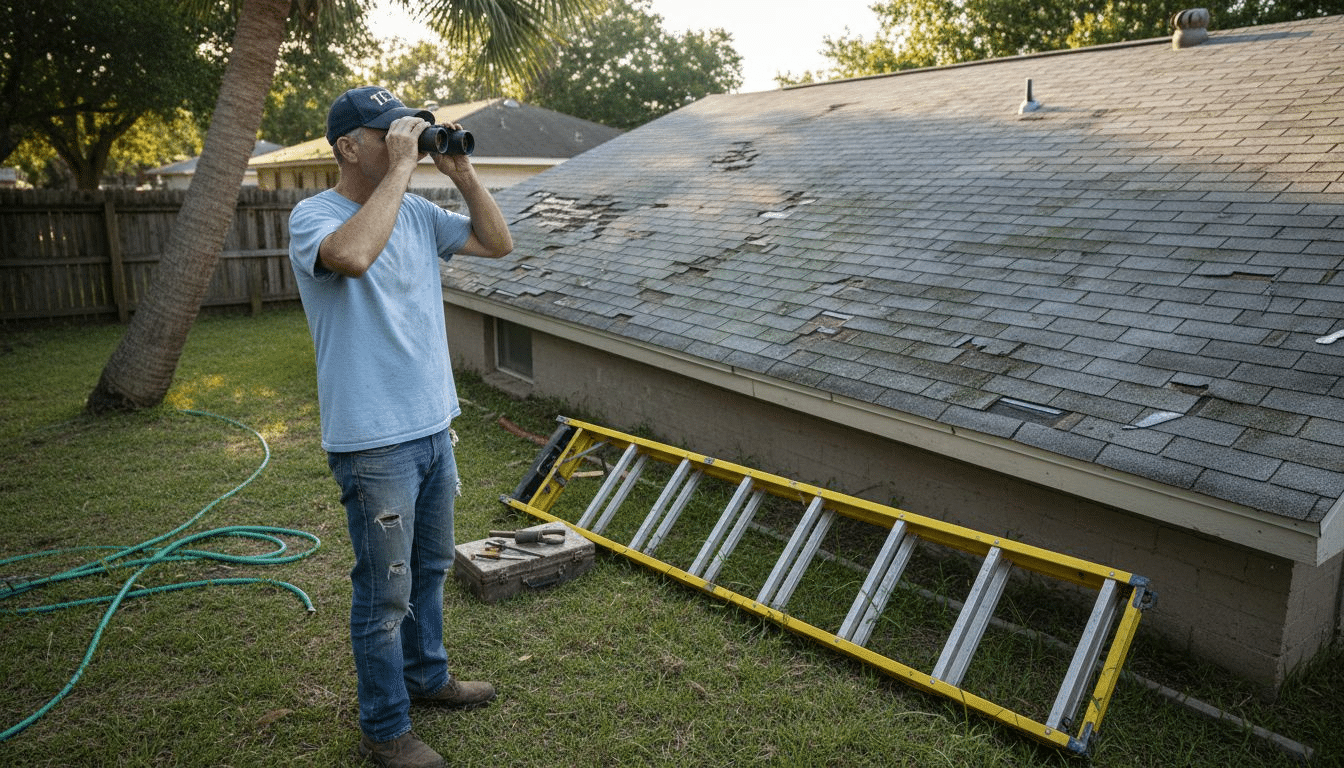
When you inspect your shingles, you’re looking for several specific warning signs. Curling or cupping happens when shingle edges bend upward or the center dips inward, typically from prolonged sun exposure combined with moisture. Bald spots appear where the protective granule coating has worn away, leaving the dark asphalt underneath visible. Missing shingles create obvious gaps in your roof’s protective layer. Cracks and splits usually start small but expand with temperature changes and wind stress. Discoloration, whether dark streaks from algae growth or fading from UV exposure, indicates the shingle is losing its integrity.
Texas coastal homes face unique challenges. Salt air accelerates shingle deterioration, and the intense summer sun beats down harder here than in most other states. Humidity levels fluctuate dramatically, causing materials to expand and contract constantly. This means your shingles age faster than the national average, so regular inspection becomes even more critical for your home’s longevity.
Here’s how to conduct a thorough inspection. First, walk your property from the ground level and scan the entire roof surface with binoculars. Look for the obvious issues mentioned above. Next, if you’re comfortable doing so, climb onto the roof and walk the perimeter systematically. Use a gentle hand to check for loose or lifted shingles. Pay extra attention to areas where water naturally flows, like valleys and around penetrations such as vents and chimneys. These spots accumulate moisture and fail first.
You should also understand that certain signs your roof needs repairs go beyond simple shingle damage. When multiple issues appear together, the underlying structure may be compromised. Document everything with photos and dates so you have a record of deterioration over time.
The importance of early detection cannot be overstated. One missing shingle allows water to penetrate the decking beneath. Water doesn’t just damage the wood underneath, it spreads laterally, rotting support beams and joists. Mold develops in dark, damp spaces. Attic insulation soaks up moisture and loses effectiveness. What started as a single damaged shingle becomes a structural problem costing ten times as much to repair.
For homes in Corpus Christi and surrounding coastal areas, consider conducting your first detailed inspection before hurricane season hits, typically by May. Schedule a second walkthrough in late September to assess damage from summer storms. Spring and fall provide mild weather for safe roof access and clear skies for quality photos.
Be honest about your comfort level with heights and roof work. If you experience any hesitation or fear, hire a professional. One slip from a two-story roof results in serious injury or worse. Your safety matters more than saving money on an inspection visit.
Pro tip: Mark your calendar for inspections right after major storms or when high winds are forecasted, as these events commonly damage shingles without immediate visibility from the ground.
2. Check Flashing and Seals Around Roof Features
Flashing is the thin metal material installed where your roof meets walls, chimneys, vents, and skylights. Sealant fills the gaps around these flashings. Together, they create a waterproof barrier at the most vulnerable points on your entire roof. Without proper flashing and seals, water finds its way inside faster than you might think.
Think of flashing and sealant as the rubber gasket on a water bottle. If the gasket degrades or gaps open up, liquid leaks everywhere. Your roof works the same way. Water doesn’t need a large opening to penetrate. A gap the size of a pencil lead allows moisture to seep through, travel along the decking, and eventually drip into your attic or walls. By the time you notice a water stain on your ceiling, the damage has already spread behind your walls.
Coastal Texas weather accelerates deterioration of flashing and sealant in particular ways. Salt air corrodes metal rapidly. Temperature swings from 95 degrees in the afternoon to 65 degrees at night cause constant expansion and contraction. Humidity levels fluctuate wildly, stressing sealant compounds. High winds can lift flashing edges, breaking the seal. Heavy rain comes at angles rather than straight down, forcing water against flashing joints where it searches for any weakness.
During your inspection, look for several specific problems. Corrosion and rust on metal flashing appears as discoloration, pitting, or orange staining. Cracks in sealant look like hairline fractures or gaps where the material has hardened and lost flexibility. Missing sealant appears as bare metal or a gap where the joint should be sealed. Loose or lifted flashing edges curl up or separate from the shingles or roof surface. Gaps around penetrations occur where pipes, vents, or other roof features poke through the surface.
When you spot roof leaks starting at flashing joints, addressing them immediately prevents far greater damage. Water damage spreads quickly through insulation, drywall, and framing once it enters your home.
Start your flashing inspection by walking around the entire perimeter of your roof from ground level. Use binoculars to examine the areas where your roof meets vertical surfaces. Look closely at all visible vent pipes, chimney bases, and skylight edges. If you can safely access your roof, get closer to each area and run your hand along the flashing and sealant. The sealant should feel flexible and intact. Metal flashing should be tight against the roof surface with no gaps underneath.
Pay special attention to the downhill side of penetrations. Water flows down and gravity pulls it toward lower ground, so these areas accumulate the most moisture stress. Chimneys receive particular attention because they’re hot, they expand and contract with temperature changes, and they naturally become a gathering point for wind driven rain.
The cost of addressing flashing problems early is minimal. A contractor can reseal or repair flashing for a few hundred dollars. If you ignore the problem, water damage eventually costs thousands. Rotted decking, damaged framing, mold remediation, and interior water damage restoration add up quickly. One flashing failure in 2024 might cost five times as much to repair in 2026 if water damage spreads unchecked.
Your inspection should occur before hurricane season and after any major storms. These are the times when flashing faces maximum stress and damage is most likely to occur.
Pro tip: Apply a fresh coat of high quality sealant around flashing joints every two to three years, even if no visible damage exists yet, as preventive maintenance costs far less than water damage repairs.
3. Clear Gutters and Downspouts of Debris
Gutters are your roof’s drainage system, channeling water away from your home’s foundation and structure. Downspouts carry that water safely to the ground or storm drains. When debris clogs these channels, water backs up, pools on your roof, and finds ways inside. A clogged gutter transforms from a protective feature into a liability.
Your gutters collect everything the wind and trees throw at them. Leaves, twigs, pine needles, dirt, and shingle granules accumulate throughout the year. Texas coastal properties face additional challenges. Salt air carries fine particulates that settle in gutters. Live oak trees shed leaves year round in some areas. Hurricane season dumps massive amounts of debris in single events. The combination means your gutters work harder here than in many other regions.
When gutters clog, water has nowhere to go except backward. It pools behind the blockage, adds weight to the gutter system, and backs up under your shingles. This standing water seeps into the roof decking, insulation, and eventually your attic. The damage spreads before you realize the problem exists. Additionally, pooled water becomes a breeding ground for mosquitoes, which thrive in Texas heat and humidity. Clogged gutters also direct water toward your foundation instead of away from it, causing erosion and potential basement flooding.
Look for visible signs of gutter problems during your inspection. Overflowing water spills over the edges during rain instead of flowing through downspouts. Sagging gutters dip downward in sections, typically from the weight of debris and water. Visible accumulation of leaves, twigs, or granules indicates blockage. Water stains on the fascia board or foundation suggest water is escaping where it shouldn’t. Pest activity around gutters points to standing water and decaying matter.
Shingle granules deserve special attention during your gutter inspection. These tiny pebbles protect shingles from UV damage and weather. When you find large quantities of granules in your gutters, it signals that your shingles are deteriorating faster than normal. This happens when shingles near the end of their lifespan shed granules as the asphalt breaks down. Finding granules in your gutters combined with the other damage signs you’ve already noted helps paint a complete picture of your roof’s condition.
The inspection process is straightforward. Get a stable ladder and position it safely. Wear gloves because gutter debris can be dirty and sharp. Scoop out leaves, twigs, and accumulated dirt into a bucket. As you remove debris, check the gutter bottom and sides for damage, rust, or holes. Trace each downspout from where it connects at the gutter all the way to where it discharges on the ground. Pour water through the gutter with a hose to confirm proper drainage away from your foundation is happening. The water should flow freely through the downspout without backing up.
Downspout discharge matters tremendously. Water should exit at least 5 to 6 feet away from your foundation. Better yet, connect it to storm drains or use an underground drainage system. If downspout water dumps directly against your foundation, it pools there and seeps into your basement or crawlspace. Over time, this moisture destabilizes the foundation itself.
Timing your gutter cleaning matters in Texas. Spring cleaning removes winter and early spring debris before the heavy rain season. Summer cleaning prevents mosquito breeding and removes heat damaged debris. Fall cleaning prepares your gutters for hurricane season and addresses accumulation from deciduous trees. Many homeowners aim for four cleanings per year, though your specific situation depends on tree coverage and weather patterns.
Consider installing gutter guards if you have significant tree coverage. These mesh or foam systems allow water through while blocking large debris. They reduce cleaning frequency from four times yearly to once or twice. While guards add upfront cost, they save time and reduce ladder safety risks in the long run.
Pro tip: Check your gutters after any major windstorm or heavy rain event, not just during your regular maintenance schedule, as a single storm can deposit months worth of debris overnight.
4. Assess Attic Ventilation and Moisture Levels
Your attic is the hidden battleground where roof health is won or lost. Proper ventilation allows air to flow through, carrying away moisture before it can cause damage. Poor ventilation traps humidity, creating an environment where mold thrives and roofing materials deteriorate rapidly. This step separates homeowners who catch problems early from those who discover expensive damage too late.
Moisture in your attic comes from multiple sources. Bathroom exhaust fans vent directly into attic spaces in some older homes. Kitchens release steam during cooking. Laundry dryers dump moisture filled air upward. In Texas coastal areas, humidity from outside air seeps through walls and into the attic space. Warm, humid air rises naturally and accumulates in your attic. Without proper ventilation, this moisture has nowhere to escape.
When moisture gets trapped, several problems cascade. Mold grows on wood framing, insulation, and roof decking. The wood weakens, losing structural integrity. Insulation absorbs moisture and becomes ineffective, raising cooling costs. Roofing materials deteriorate faster when constantly exposed to moisture. Metal flashing and fasteners rust. The wood sheathing that supports your shingles rots from underneath, and by the time you notice sagging from inside, significant structural damage has occurred.
Texas coastal humidity accelerates these problems dramatically. Corpus Christi and surrounding areas experience high humidity year round, with moisture levels reaching 80 to 90 percent on many days. Add salt air into the equation and you have an environment specifically designed to corrode metal and promote mold growth. Your attic ventilation must work overtime to handle this moisture load.
Proper ventilation works through a simple principle. Cool air enters through low vents near the soffit, while warm air exits through high vents near the ridge. This continuous air movement prevents moisture and heat accumulation. The math is straightforward: you need approximately 1 square foot of ventilation opening for every 150 square feet of attic space, with half the vents low and half high.
During your inspection, enter the attic safely and look for several indicators. Check for visible moisture by looking at wood framing for dark stains or discoloration. Run your hand across beams and joints. Wood that feels damp or soft indicates moisture problems. Look for mold growth which appears as black, green, or brown spots on wood or insulation. Examine existing vents to see if they’re blocked by insulation, stored items, or construction debris. Assess insulation condition by checking if it’s wet, compressed, or moldy. Look at nail heads protruding through the roof decking. If you see water stains or rust around them, moisture is condensing on metal in your attic.
You can also perform a simple moisture check. Visit your attic on a hot day after the sun has been beating down on your roof for hours. A properly ventilated attic should feel breezy and relatively cool. A poorly ventilated attic feels hot and stuffy. If you notice a musty smell, moisture and mold are likely present. These sensory clues combined with visual inspection give you a clear picture.
Temperature differentials matter too. In summer, a properly ventilated attic stays close to outdoor temperatures, usually 10 to 15 degrees warmer at most. A poorly ventilated attic can reach 150 to 160 degrees, which causes shingles to age faster and accelerates deterioration. Proper attic ventilation helps maintain roof integrity and prevents moisture buildup before it becomes a structural problem.
If you discover ventilation problems, solutions exist. You can add soffit vents if they’re blocked or missing. Ridge vents can be installed if your roof lacks them. Power ventilators can help in severe cases, though they cost more than passive ventilation systems. Ensure bathroom and dryer exhausts vent outside rather than into the attic. Some homes need vapor barriers under insulation to control moisture migration. The cost of addressing ventilation issues now pales compared to replacing rotted framing later.
Don’t skip this step because your attic is out of sight. What happens in that hidden space directly determines how long your roof lasts and how much it costs to repair damage.
Pro tip: Install a simple humidity gauge in your attic during summer months to monitor moisture levels, aiming for readings below 60 percent relative humidity to prevent mold and material deterioration.
5. Look for Mold, Algae, or Moss Growth
Biological growth on your roof shingles looks unsightly, but the real problem runs deeper. Mold, algae, and moss trap moisture against the shingle surface, preventing water from draining properly and creating conditions where deterioration accelerates. What starts as a cosmetic issue becomes a structural threat if left unchecked.
Texas coastal humidity creates a perfect breeding ground for these organisms. Mold spores float through salty, humid air and land on your roof constantly. Algae thrives in moisture and warm temperatures. Moss establishes itself anywhere shingles stay damp long enough for the plant to take root. Corpus Christi’s climate provides exactly the conditions these organisms need. Shade from trees makes the problem worse because shaded areas stay damp longer, especially on the north side of your roof where sun never fully dries the surface.
These growths cause real damage. As organisms establish themselves, they create a sponge like layer that absorbs and holds moisture. Shingles underneath remain perpetually damp. The asphalt binder in shingles breaks down faster when exposed to constant moisture. Granules lose adhesion and wash away during rain. The structural integrity of each shingle compromises, and the protective layer that keeps water out degrades from underneath. What takes five years to happen on a clean roof happens in two or three years under heavy biological growth.
Identifying these growths is straightforward. Algae appears as dark streaks or patches, usually green or black, running down the roof surface. Mold looks like fuzzy or slimy growth, typically black or dark brown, often in valleys or areas with poor drainage. Moss appears as fuzzy, textured patches that may stand up from the shingle surface, giving your roof a hairy appearance. Moss is the most destructive because it has root systems that dig into shingles.
When inspecting, pay special attention to areas that receive less sun. The north facing slope of your roof gets hit hardest. Shaded areas under tree branches accumulate growth faster. Low areas where water pools are prime locations. Valleys where water flows and concentrates create ideal damp conditions. After storms or during periods of high humidity, growth accelerates noticeably.
Removing mold, algae, and moss growth prevents moisture damage and extends shingle life. Regular cleaning should be part of your maintenance routine, not something you do only when growth becomes obvious.
Removing growth requires care because aggressive scrubbing damages shingles. A low pressure rinse works best, using a sprayer set to gentle mist rather than concentrated stream. Some homeowners use a mixture of bleach and water, though you should test this on a hidden section first to ensure it doesn’t discolor shingles. Commercial roof cleaning products designed for your shingle type are safest. Never use a pressure washer with pressure above 1200 PSI, as higher pressures tear away granules and damage the shingle structure.
For heavy moss growth, manual removal before washing helps. Use a soft brush or broom to gently dislodge moss. You may need to loosen it with your hands or a plastic scraper. Once loose material is removed, spray gently to clean away remaining organisms. Work from top to bottom so water flows downward naturally.
Prevention is smarter than repeated cleaning. If tree branches overhang your roof, trim them to improve air circulation and sunlight exposure. Ensure gutters are clean so water flows freely rather than pooling. Check that attic ventilation is working to reduce moisture levels in the sheathing below your shingles. In some cases, installing copper or zinc strips along the ridge line helps prevent algae growth by releasing minerals that inhibit organism growth.
Timing your cleaning matters. Spring and early summer offer the best window before heavy heat and summer storms arrive. This removes growth that accumulated over winter and prevents problems during the most damaging season. A second cleaning in fall after leaves have dropped keeps your roof in top condition heading into winter.
Pro tip: Apply a preventative algae inhibitor treatment after cleaning in spring, which releases slow acting compounds throughout the year to suppress new growth and reduce how often you need to clean.
6. Secure Loose or Missing Roof Components
A single loose or missing component creates an opening for water and wind to exploit your roof’s vulnerabilities. What seems like a minor issue compounds quickly as weather stresses the weakened area. Securing these components immediately prevents cascading damage that costs far more to repair.
Loose roof components include shingles that have lifted edges, flashing that has separated from the surface, fasteners that have backed out, and ridge caps that sit unevenly. Missing components mean shingles are gone entirely, flashing sections are absent, or fasteners have disappeared. Both situations allow water to penetrate and wind to get underneath and lift adjacent components.
The physics is straightforward. Wind pressure pushes upward under lifted shingles with surprising force. A 60 mile per hour wind creates about 25 pounds of pressure per square foot pushing upward on your roof. A loose shingle with a lifted corner multiplies this pressure. That corner curls up further, exposing more surface area to the wind. The wind lifts it higher. Adjacent shingles experience increased stress. What was one loose shingle becomes five. A section loosens. Wind tears it away. Now you have missing shingles and exposed decking.
Water works the same way. A loose flashing edge allows water to slip underneath. That water travels along the joint, finding cracks and gaps. It soaks the decking. Moisture reaches the insulation below. Before you realize a problem exists, water damage has spread throughout the roof system. Texas coastal weather accelerates all of this. Salt air corrodes fasteners, making them more likely to back out. Humidity keeps everything damp, promoting corrosion and deterioration. Wind gusts are frequent and forceful, constantly testing every loose point on your roof.
During your inspection, look for specific warning signs. Curled or lifted shingle edges appear at the corners or along the sides of shingles. Missing fasteners show as exposed nail holes where shingles should be nailed down. Separated flashing creates visible gaps where metal should be tight against the surface. Missing shingles leave obvious holes in your roof’s protective layer. Ridge caps that sit unevenly indicate fasteners have loosened. Buckled or wrinkled shingles mean something underneath is pushing up or the fastening has failed.
Small repairs are manageable if caught early. A lifted shingle can be re nailed or re sealed. Missing fasteners can be replaced. Loose flashing can be re secured. The cost is minimal and the work is straightforward. But delayed action leads to professional repair requirements. If wind tears away a section of shingles, the entire section needs replacement. If water damage reaches framing, structural repairs become necessary. A task that cost 50 dollars to fix today costs 500 dollars next month.
When you discover loose components, prioritize securing them immediately. For loose shingles, you have options. If the shingle hasn’t been damaged by curling or cracking, you can lift it gently and apply roofing cement underneath, then press it flat and let the cement cure. This works best on shingles that are simply loose but otherwise intact. Apply cement to the back of the lifted edge, not the exposed surface where rain hits. Press down firmly and let cure according to product instructions.
If the shingle is damaged or won’t stay flat, it needs replacement. Properly securing loose or missing components is critical before deterioration spreads. Remove the damaged shingle by lifting nails or cutting fasteners. Slide the new shingle into place and nail it down with roofing nails placed according to manufacturer specifications. Then apply roofing cement under the edges to seal against water infiltration.
For loose flashing, re secure it with roofing nails or fasteners appropriate for the material. Metal flashing should be nailed into solid wood or sheathing, not into voids. Apply roofing sealant around fasteners and along edges where water could penetrate. Check that the flashing sits properly against the surface below, creating a tight junction.
Missing fasteners should be replaced immediately. Use stainless steel or galvanized fasteners rated for roofing. Drive them at the proper angle and depth. Over driving crushes shingles and creates leaks. Under driving leaves fasteners protruding. The goal is fasteners that sit flush with the shingle surface.
Don’t delay this maintenance step. Every day a loose component remains unsecured, you risk additional damage. A major storm arriving tomorrow could convert a minor repair into a catastrophic failure. Professional roofers can address these issues quickly and correctly, applying the right techniques and materials. If you’re not comfortable working on a roof or unsure about proper repair methods, call a professional rather than creating additional problems through incorrect repairs.
Pro tip: After securing any loose component, inspect the surrounding area closely for secondary damage, as water and wind often damage material beyond the immediate problem site while the initial issue went unaddressed.
7. Schedule Annual Professional Roof Inspection
You’ve completed your own inspection and handled what you could observe from ground level. Now comes the step that truly protects your investment. A professional roof inspector brings expertise, specialized equipment, and accountability that your eyes alone cannot provide. This single action catches problems you missed and prevents expensive disasters.
Professional inspectors see what homeowners miss. They understand subtle warning signs that indicate developing problems. They access areas you cannot safely reach. They use moisture meters to detect hidden water damage in decking and insulation. They document their findings with photos and detailed reports that serve as proof of your roof’s condition. This documentation matters tremendously if you ever need to file an insurance claim or sell your home.
Texas roofs face unique stresses that demand professional attention. Salt air corrodes components at accelerated rates. Hurricane season brings wind damage that may not be immediately visible. Coastal humidity promotes moisture problems in attics and decking. Extreme temperature swings cause materials to expand and contract in ways that create vulnerabilities. A professional inspector trained in Texas coastal conditions knows exactly where problems hide.
Professional inspections also protect your warranty. Most roofing warranties require annual inspections and prompt repairs. If you skip inspections and damage occurs that should have been caught earlier, the manufacturer may deny your claim. The cost of an inspection, typically 300 to 500 dollars, pales compared to replacing a roof without warranty coverage because you failed to maintain the inspection requirement.
Timing your inspection matters. Schedule it for late spring before hurricane season arrives. This ensures any winter damage is documented and addressed before summer storms hit. A second inspection in early fall after hurricane season assesses any damage from summer storms and prepares you for winter weather. Some experts recommend four inspections yearly in Texas, but two is the industry standard minimum.
When you hire an inspector, ask the right questions. Verify they’re certified and insured. Ask if they use drone technology to inspect steep sections safely. Request a detailed written report with photos of all findings. Ask how they categorize issues (immediate repair needed, monitor, or cosmetic). Clarify their timeline for providing the report. A thorough inspection takes 45 minutes to over an hour depending on roof size and complexity.
During the inspection, the professional examines everything you’ve checked plus much more. They assess structural integrity of decking and framing. They evaluate flashing installations in detail. They inspect attic ventilation and moisture conditions. They check for signs of insect damage or pest nesting. They examine roof penetrations like vents and chimneys from inside the attic. They measure remaining shingle life by checking granule loss and material deterioration. They spot issues that won’t be visible until they become problems.
One critical advantage of professional inspections is early detection of water damage. A professional can tell if water has seeped into insulation or decking by checking moisture levels with specialized equipment. You can’t see this damage with your eyes. Water damage that spreads unchecked leads to mold, structural rot, and complete roof failure. Catching it early through professional inspection allows remediation before it becomes catastrophic.
Professional roof inspections detect hidden issues before they worsen and help extend roof life in Texas’s challenging weather conditions. The inspector provides concrete evidence of what needs to be done now versus what can be addressed later. This helps you budget and plan repairs strategically rather than facing emergencies.
After the inspection, you’ll receive findings and recommendations. Prioritize what needs immediate attention versus what can wait. Some issues require repair before the next storm season. Others can be monitored and addressed over time. Your inspector should clearly communicate urgency levels. Address immediate repairs quickly because each day of delay increases risk. Document all repairs with photos and invoices, creating a maintenance history that supports warranty claims and future home sales.
Don’t view professional inspections as an expense. View them as insurance against catastrophic failure. One major repair that could have been prevented through early detection costs more than years of inspections. The peace of mind of knowing your roof is being properly maintained is worth the investment alone.
Make the commitment today. Call a local professional and schedule your inspection before hurricane season arrives. Bring your checklist of items you’ve already examined so the inspector can focus on areas beyond your scope. Ask questions during the inspection so you understand their findings. Follow their recommendations for repairs and maintenance. This step completes your comprehensive roof maintenance program and ensures your roof protects your family for years to come.
Pro tip: Request a detailed written report from your inspector and file it safely, as this documentation proves maintenance compliance for warranty purposes and provides crucial evidence if you ever file an insurance claim for roof damage.
Below is a comprehensive table summarizing the article’s main steps and strategies for maintaining roof health in coastal Texas areas.
| Main Step | Key Actions | Benefits |
|---|---|---|
| Inspect shingles for damage | Look for curling, bald spots, missing shingles, splits, and discoloration, especially in areas vulnerable to coastal weather exposure. | Early detection prevents costly repairs and ensures roof integrity. |
| Check flashing and seals | Examine for corrosion, cracks, and separation around roof features such as chimneys, skylights, and vents. | Prevents water infiltration and increases roof lifespan. |
| Clear gutters and downspouts | Remove debris like leaves and shingle granules, check for effective water drainage, and address blockages. | Protects against water pooling and basement erosion. |
| Assess attic ventilation | Ensure proper airflow via soffit and ridge vents, monitor humidity levels, and prevent insulation and wood damage. | Reduces mold growth and extends roof material durability. |
| Manage mold, algae, and moss growth | Clean biological growth gently with appropriate solutions, and apply preventive inhibitors. | Maintains shingle functionality and appearance. |
| Secure loose or missing roof components | Repair or replace shingles, flashing, and fasteners immediately to avoid exposure and deterioration. | Minimizes risk of wind and water damage escalations. |
| Schedule professional roof inspections | Hire certified professionals to inspect and report on roof condition, unseen issues, and necessary repairs. | Provides thorough assessment and validates warranty compliance. |
Protect Your Texas Home With Expert Roof Care From Buffalo Roofing & Exteriors
Maintaining a sturdy, weather-resistant roof is essential for Texas homeowners facing coastal humidity, salt air, and storm threats. This 7-Step Roof Maintenance Checklist highlights critical tasks like inspecting shingles, securing loose components, and monitoring attic ventilation. However, tackling these challenges alone can be risky and overwhelming. By trusting the experienced team at Buffalo Roofing & Exteriors, you gain access to professional roofing inspections, expert repairs, and durable installations tailored to Corpus Christi and surrounding areas.
Ready to defend your home against costly water damage and storm wear? Visit our Roofing Archives | Buffalo Roofing & Exteriors today for detailed insights and get your comprehensive roof evaluation scheduled. Don’t wait until minor issues become major repairs. Contact us now at https://buffaloroofingandexteriors.com/ for a free estimate and take the first step toward lasting protection and peace of mind.
Frequently Asked Questions
How often should I conduct a roof inspection on my Texas home?
Conduct a roof inspection at least twice a year, ideally in late spring and early fall. This timing helps catch any damage before hurricane season and assesses the impact of summer storms.
What specific signs of damage should I look for on my roof shingles?
Look for curling edges, missing shingles, bald spots, and discoloration on your roof shingles. Spotting these issues early can prevent more costly repairs later, so inspect for these signs at least every six months.
How can I tell if my attic has proper ventilation and moisture levels?
Check for visible moisture or mold growth on the wood framing and insulation in your attic. Ideally, your attic should feel relatively cool and breezy; consider assessing it on a hot day after sun exposure to gauge ventilation effectiveness.
What steps should I take if I find mold, algae, or moss on my roof?
Carefully remove biological growth using a low-pressure rinse and avoid aggressive scrubbing to protect your shingles. For heavy growth, apply a mixture of water and mild bleach or a commercial cleaning solution, ensuring to follow up with preventive maintenance to avoid recurrence.
Why is a professional roof inspection necessary, even after my own inspection?
A professional roof inspection can detect hidden issues that a homeowner might miss, such as underlying water damage or compromised structural integrity. Schedule this inspection annually or after major storms to ensure comprehensive maintenance.
What should I do immediately after spotting a loose or missing roof component?
Secure any loose shingles, flashing, or other components as soon as possible to prevent further damage. Taking prompt action can save you money and prevent more extensive repairs down the line.