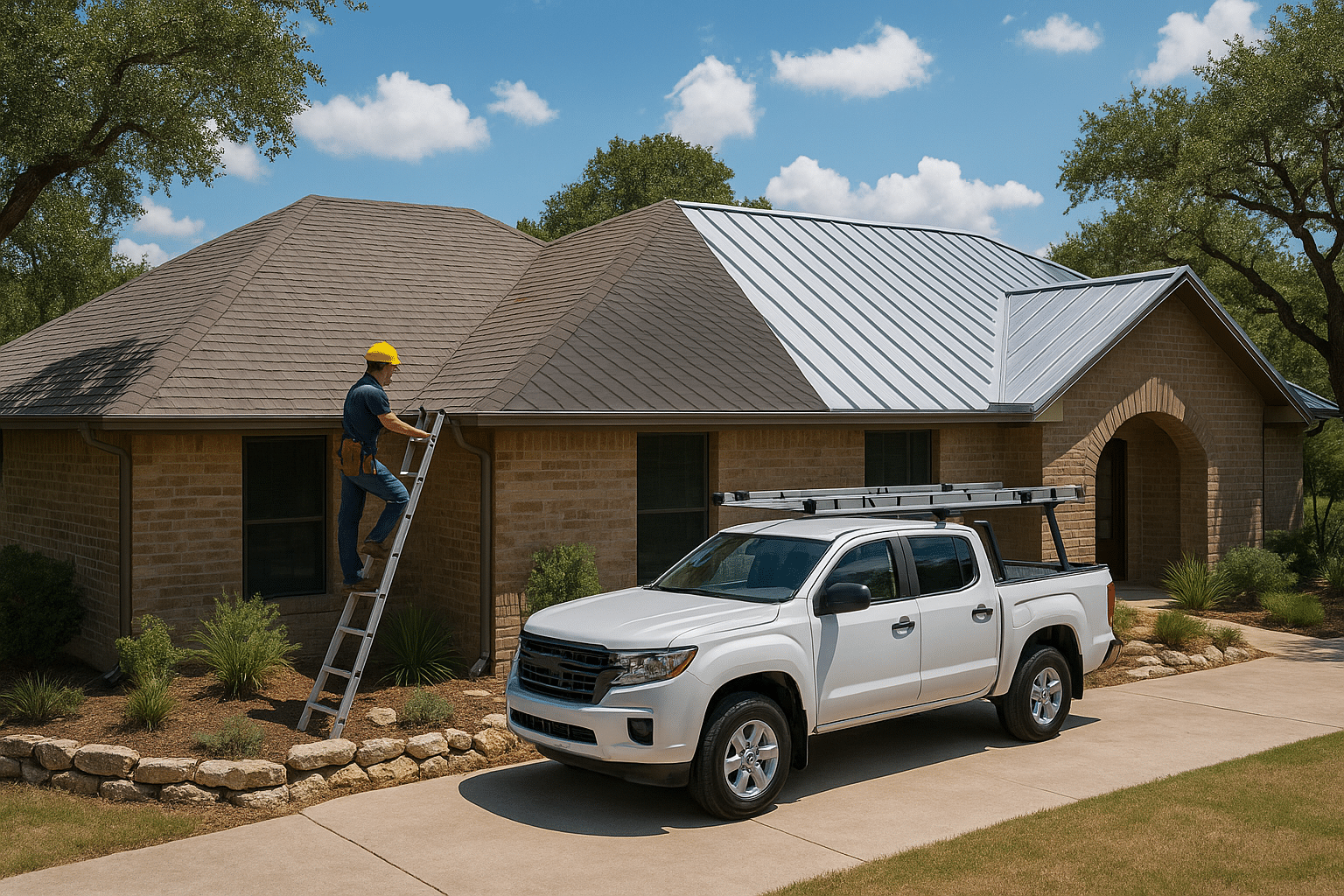
TL;DR: Asphalt shingles cost less upfront and remain the most common choice for South Texas homes, while metal roofing costs more initially but lasts longer, resists wind uplift better, and reflects more heat. The right pick depends on your budget, how long you’ll own the home, and whether you’re in a WPI-8 windstorm zone near the coast.
If you’re planning a roof replacement anywhere from Corpus Christi to Alice, Aransas Pass, Banquete, or Beeville, you’ll eventually land on the same question: asphalt shingles or metal?
Both materials work in South Texas. But they perform differently against our specific mix of hurricane wind, salt air, hail, and relentless summer heat. Here’s what actually matters for your home and your budget.
The Quick Answer
Asphalt shingles are the lower-cost, widely accepted option that works well for most inland homes and budget-conscious buyers. Metal roofing costs more upfront but lasts two to three times longer, handles high wind better, and reflects more heat — which matters a lot once you’re close to the Gulf.
Neither one is universally “better.” The right choice depends on your budget, how long you plan to stay in the home, and how exposed your property is to coastal wind.
Asphalt Shingles: What They Are and How They Hold Up
Asphalt shingles are layered mats of fiberglass or organic material coated in asphalt and mineral granules. They’re the most common roofing material in the country because they’re affordable and easy to install on almost any roof shape.
Lifespan and Performance
Asphalt shingles usually last 15 to 30 years in Texas conditions, and the state’s heat cycles and occasional wind-driven storms can cause shingles to crack, curl, or lift prematurely.
Standard shingles are rated for lower wind speeds than metal —
most standard asphalt shingles can handle wind speeds of up to 60 mph, although some specialized types can withstand up to 110 mph.
That gap matters directly on the coast.
A basic 3-tab asphalt shingle can start lifting off the roof at just 60 to 70 mph
— well below the sustained winds a landfalling hurricane can produce in Corpus Christi or Aransas Pass.
Impact-Resistant (Class 4) Shingles
For hail-prone inland areas like Alice, Banquete, and Beeville, upgrading to a Class 4 impact-resistant shingle is worth discussing with your contractor. These shingles are tested under UL 2218, a national standard where
a steel ball 2 inches in diameter is dropped from 20 feet onto the shingle, and a Class 4 sample must not crack or split when struck twice in the same spot.
Class 4 shingles often last 30 years or more instead of 20 to 25, and can qualify for a homeowners insurance discount.
If a hailstorm or high wind event has already damaged your roof, our team at Buffalo Roofing & Exteriors’ shingle repair services in Corpus Christi can assess whether a repair or full replacement makes more sense.
Metal Roofing: What It Is and How It Holds Up
Metal roofing comes in standing seam panels (concealed fasteners, raised interlocking seams) or exposed-fastener panel systems. Standing seam is the stronger option in wind and the one most often recommended for coastal Texas homes.
Lifespan and Wind Performance
Metal roofs are widely recognized for their lifespan, lasting 40 to 70 years with proper installation and minimal maintenance.
That’s double or triple what most shingle roofs deliver.
On wind, the difference is significant.
Standing seam metal is the gold standard for hurricane-prone areas — the panels lock together with raised seams that resist wind uplift much better than individual shingles, and most quality metal roofs are rated for 140 to 160 mph winds, with some products tested up to 180 mph.
That design detail is why metal consistently outperforms shingles once sustained coastal winds show up.
Energy Efficiency in South Texas Heat
Corpus Christi summers are long and brutal, and roof surface temperature has a direct line to your cooling bill.
Asphalt shingles absorb and retain heat, which elevates attic temperatures and increases cooling load, while metal roofs reflect a large percentage of the sun’s energy back into the atmosphere and cool rapidly once the sun goes down, resulting in much lower attic temperatures.
To be officially recognized as energy efficient,
a roofing material must reflect at least 25% of the sun’s energy to earn ENERGY STAR certification, and the best performing colors reflect as much as 70%.
You can check current ENERGY STAR roofing requirements directly from the EPA program. Real-world results back this up —
homeowners with metal roofs in hot climates report a 10-25% reduction in cooling costs.
Want a deeper look at how this applies locally? See why metal roofing is one of the best choices for Corpus Christi homes.
Cost Comparison
Upfront cost is where asphalt shingles win clearly. Installed pricing nationally runs roughly
$4 to $7 per square foot for asphalt shingles versus $9 to $16 per square foot for metal roofing — roughly double a standard asphalt job.
Actual pricing in South Texas varies by roof complexity, material grade, and current material costs, so a free, itemized quote from a local contractor is the only reliable number.
The long-view math shifts some of that advantage back toward metal. If a metal roof lasts 40–70 years against a shingle roof’s 15–30,
a homeowner who stays put for 40 years will likely buy two asphalt roofs, or one metal roof.
Wind, Salt Air, and the WPI-8 Factor for Coastal Homes
If your property sits in a designated Texas seacoast county — which includes Nueces, Kleberg, San Patricio, Aransas, and Refugio counties — your roof isn’t just a personal choice. It’s tied to your windstorm insurance eligibility.
The Texas Department of Insurance (TDI) issues a WPI-8 certificate of compliance for ongoing or completed construction in these coastal counties.
This certificate — known as windstorm construction compliance — confirms your roof and exterior envelope were built or repaired to the state’s wind-resistant standards.
The Texas Windstorm Insurance Association (TWIA) will not insure a structure that cannot show a Certificate of Compliance, Form WPI-8, for its roof and exterior envelope.
You can confirm your county’s status and look up existing certificates directly through TDI’s Windstorm Inspections page. Whether you choose shingles or metal, your roofer needs to document fastening patterns, underlayment, and flashing details to TDI’s specifications — this isn’t optional paperwork for coastal re-roofs, it’s the mechanism that keeps your windstorm coverage valid.
Salt air adds another wrinkle specific to Corpus Christi, Aransas Pass, and other near-coastal communities. Exposed metal fasteners and uncoated flashing corrode faster in salt-laden air, so material selection and detailing matter more here than they do thirty miles inland in Beeville or Banquete.
Hail: The Factor That Hits Inland Communities Hardest
Alice, Banquete, and Beeville sit further from the coast, so hurricane wind is less of a daily concern than it is in Corpus Christi or Aransas Pass. Hail is the bigger threat inland, and it changes the calculus slightly.
Standard metal panels can dent under large hail, while a quality Class 4 asphalt shingle is engineered specifically to absorb that kind of impact without cracking.
Homeowners with Class 4 roofing report up to 73% fewer repair needs following severe weather events, according to industry research.
If hail — not hurricane wind — is your primary concern, a Class 4 shingle is often the more cost-effective upgrade over base-grade metal.
Pros and Cons at a Glance
Asphalt Shingles
- Pros: Lower upfront cost, wide material and color selection, familiar to most roofers and insurers, Class 4 options available for hail resistance
- Cons: Shorter lifespan in Texas heat, lower standard wind rating, more frequent granule loss and curling over time
Metal Roofing
- Pros: 40–70 year lifespan, strong wind-uplift resistance with standing seam designs, reflects heat and can lower cooling costs, minimal maintenance
- Cons: Higher upfront cost, can dent under large hail if not impact-rated, fewer installers qualified to do it correctly
When Each Material Makes the Most Sense
- Choose asphalt shingles if: you’re on a tighter budget, plan to sell or move within 10–15 years, or your home is inland and less exposed to sustained hurricane wind.
- Choose metal if: you’re in a coastal wind zone, plan to stay in the home long-term, want to minimize cooling costs, or you’re tired of re-roofing every 15–20 years.
- Either way: get a written, itemized free estimate before deciding — roof complexity, decking condition, and your specific windstorm requirements all affect the real number.
Financing the Decision
Cost is usually the deciding factor, and it doesn’t have to be an all-or-nothing choice between what you want and what you can pay today. Buffalo Roofing & Exteriors offers Improvifi financing from $1,000 to $50,000 with $0 down and no impact to your credit score to check eligibility, which makes it realistic to choose the material that fits your home’s actual risk profile instead of just the lowest sticker price.
Get a Local, No-Pressure Comparison
Every roof in South Texas faces a slightly different mix of wind, heat, hail, and salt exposure depending on whether you’re a block from Corpus Christi Bay or further inland in Beeville. A local contractor who knows both WPI-8 requirements and inland hail patterns can tell you honestly which material fits your specific address — not a generic answer.
If you’re dealing with storm damage right now, our metal roof repair team in Corpus Christi can assess whether repair or full replacement is the smarter move, and help you navigate insurance claim assistance along the way.
Recommended Reads
- Professional Shingle Roof Repair in Corpus Christi, TX
- Metal Roof Repair in Corpus Christi, TX
- Roof Repair in Metal Roof Repair In San Antonio, TX | Buffalo Roofing & Exteriors